

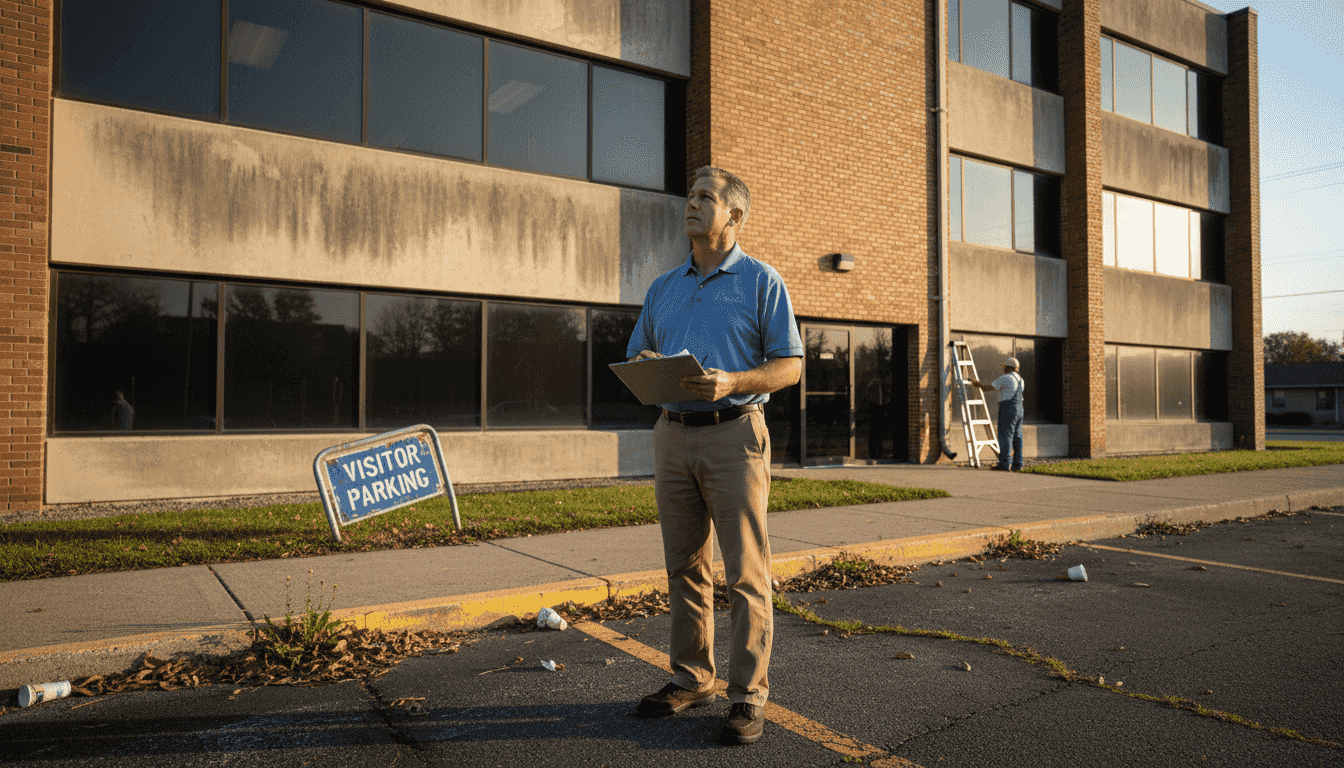
Property managers across Citrus County know the challenge of keeping their commercial exteriors looking sharp and meeting strict standards. With intense Florida sun, frequent rainstorms, and high humidity, surfaces deteriorate quickly—making routine care essential. A commitment to planned preventive maintenance stops expensive emergencies before they start and helps preserve property value. This guide reveals practical strategies that tackle weather, wear, and legal compliance so your buildings stay attractive, safe, and competitive.
Table of Contents
- Defining Commercial Property Exterior Maintenance
- Why Citrus County Property Managers Need to Understand This
- The Difference Between Reactive and Preventive Approaches
- Core Elements of a Maintenance Program
- Types of Exterior Maintenance Services
- Benefits of Regular Maintenance for Businesses
- Compliance Standards and Legal Responsibilities
- Common Mistakes and How to Avoid Them
Key Takeaways
| Point | Details |
|---|---|
| Regular Maintenance is Essential | Consistent exterior maintenance prevents costly emergency repairs and preserves property value. |
| Planned Preventive Maintenance is Cost-Effective | Proactively scheduling inspections and upkeep mitigates the risk of significant damage and unexpected costs. |
| Documentation is Crucial | Maintaining detailed records of inspections and repairs ensures compliance and protects against liability. |
| Seasonal Care is Necessary | Tailoring maintenance activities to Citrus County’s climate challenges prevents deterioration and enhances tenant satisfaction. |
Defining Commercial Property Exterior Maintenance
Commercial property exterior maintenance refers to the systematic upkeep of the building’s outer surfaces, structures, and systems. It goes beyond simple cleaning to include inspections, repairs, and preventive care that keep your property functional and attractive.
Unlike residential properties, commercial exteriors face unique challenges. Your building’s facade, roof, parking areas, landscaping, and building systems endure constant exposure to weather, foot traffic, and heavy use. The stakes are higher—property value, tenant satisfaction, and regulatory compliance all depend on consistent maintenance.
What Exterior Maintenance Actually Includes
Exterior maintenance covers more ground than most property managers realize. Here’s what falls under this umbrella:
- Structural surfaces: Roofing, siding, walls, and foundations
- Access points: Doors, windows, seals, and weatherstripping
- Ground-level areas: Parking lots, walkways, driveways, and landscaping
- Drainage systems: Gutters, downspouts, and grading to prevent water damage
- Safety features: Handrails, stairs, lighting, and signage
- Building systems: HVAC units, vents, and exterior mechanical equipment
Each category requires specific care and attention to prevent deterioration and costly emergency repairs.
Why Citrus County Property Managers Need to Understand This
Our humid, subtropical climate creates particular challenges for commercial properties. Salt spray near coastal areas, intense sun exposure, and frequent rainstorms accelerate wear on exterior materials. Mold and mildew growth happens quickly here—what takes months in drier climates happens in weeks in Citrus County.
Planned preventative maintenance isn’t optional in this environment. It’s a structured program that defines inspection, upkeep, and repair tasks to maintain building exteriors in sound condition. This approach guides timely interventions before small issues become expensive problems.
The Difference Between Reactive and Preventive Approaches
Many property managers wait until something breaks. That’s reactive maintenance—expensive and disruptive. Preventive maintenance stops problems before they start.
Consider how these two approaches play out:
| Aspect | Reactive | Preventive |
|---|---|---|
| Cost | Emergency repairs (often 3-5x higher) | Scheduled maintenance (controlled budget) |
| Timeline | Urgent, disrupts operations | Planned, minimizes downtime |
| Property impact | Damage spreads while waiting | Issues caught early |
| Tenant relations | Frustration, complaints | Professional, predictable |
The most effective commercial property maintenance is planned, not emergency-driven. Preventive care preserves value while keeping costs predictable.
Core Elements of a Maintenance Program
Proactive upkeep aimed at preserving property involves routine inspections, repairs, and servicing scheduled at set intervals. This prevents failures and extends the lifespan of your exterior systems.
Your maintenance program should include:
- Scheduled inspections – Regular walk-throughs to assess condition and identify emerging issues
- Routine cleaning – Professional pressure washing and cleaning to prevent material degradation
- Targeted repairs – Fixing problems promptly before they spread to surrounding areas
- Seasonal adjustments – Preparing for Florida’s rainy season and intense summer sun
- Documentation – Keeping detailed records of what was done and when
How This Affects Your Bottom Line
Maintaining your commercial property exterior directly impacts tenant retention, occupancy rates, and resale value. A well-maintained building attracts quality tenants and justifies premium rental rates. A neglected one becomes a liability.
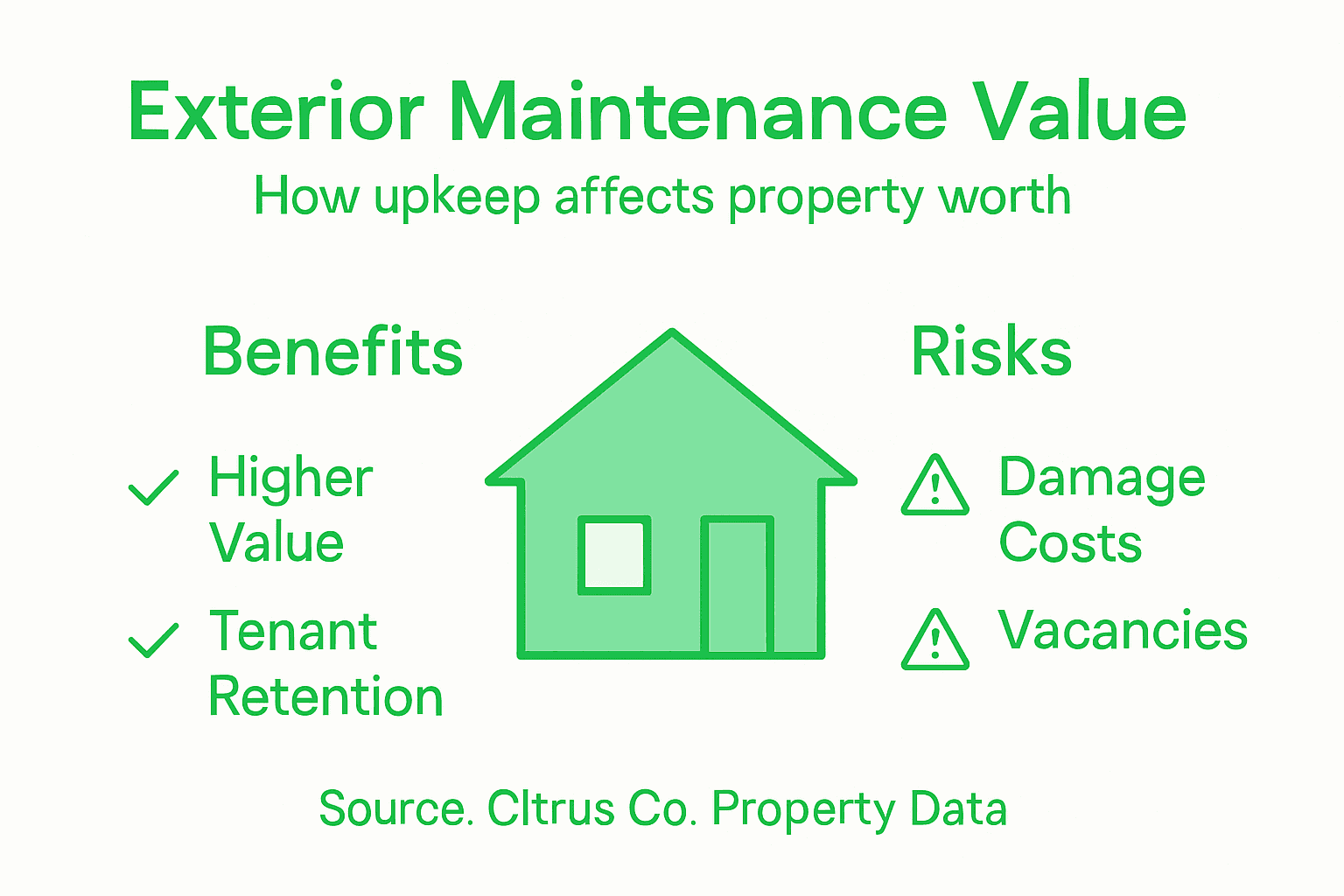
Property managers in Citrus County who invest in regular maintenance—including professional exterior cleaning services—report higher tenant satisfaction and lower vacancy rates. The upfront cost pays for itself through avoided emergency repairs and increased property value.
Pro tip: Schedule a professional exterior assessment twice yearly to identify maintenance needs before Florida’s rainy season and intense summer heat cause additional damage.
Types of Exterior Maintenance Services
Commercial property exterior maintenance breaks down into specific service categories, each addressing different parts of your building’s outer envelope. Understanding these services helps you budget effectively and ensure nothing gets overlooked.
Think of exterior maintenance like healthcare for your building. Some services are routine checkups (inspections), others are preventive care (cleaning and sealing), and some are treatments for existing problems (repairs). A comprehensive maintenance plan includes all three.
Inspection and Assessment Services
Regular inspections form the foundation of any maintenance program. These walkthrough assessments identify problems before they become emergencies.
Roofing inspection, facade repairs, window and door maintenance, and structural assessments ensure all components of your building exterior are preserved and functioning properly. Professional inspectors look for:
- Water damage, leaks, or moisture penetration
- Cracks, deterioration, or structural issues
- Seal failures around windows and doors
- Vegetation growth or biological damage
- Safety hazards or code violations
Scheduling inspections after severe weather events catches damage early. In Citrus County, that means post-storm assessments during hurricane season.
Cleaning and Surface Restoration
Cleanliness directly affects property value and tenant perception. Dirty exteriors signal neglect, even if underlying systems are fine.
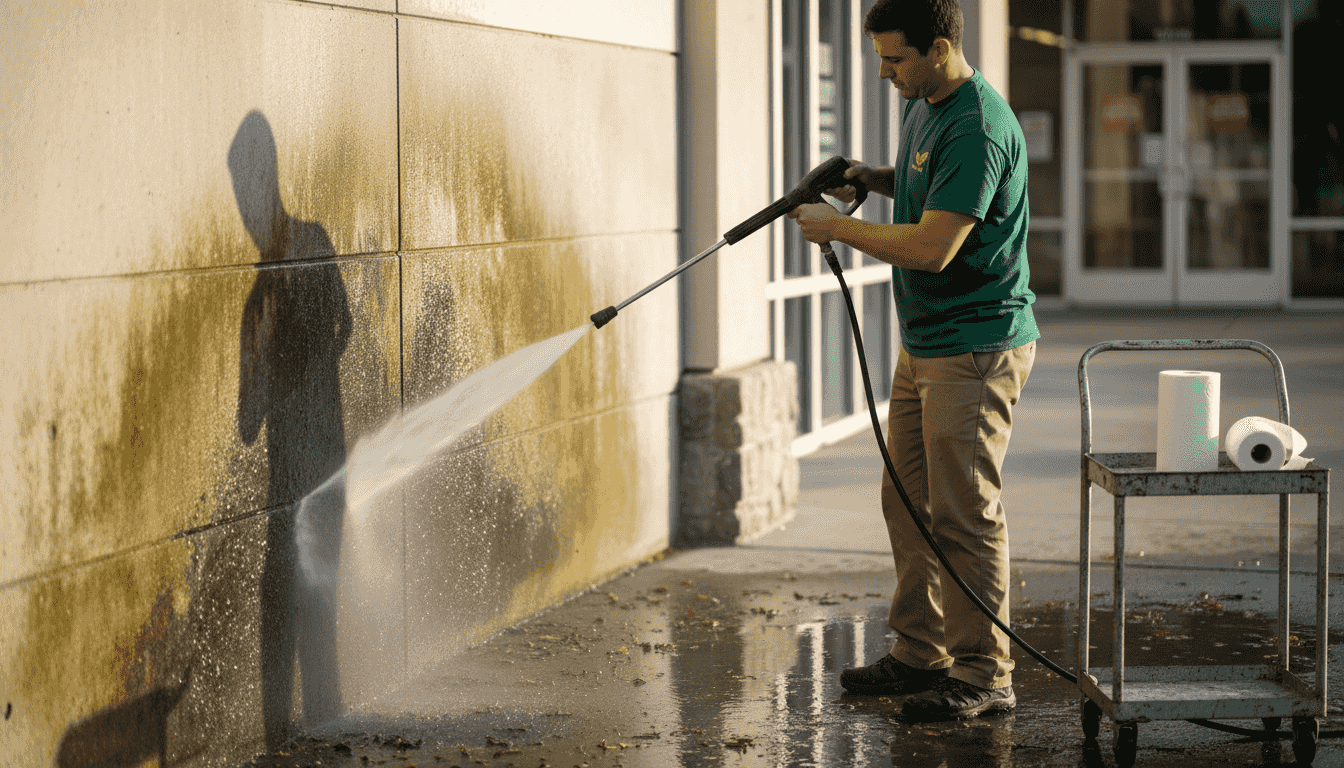
Professional pressure washing and cleaning removes accumulated dirt, mold, mildew, and biological growth that accelerates material deterioration. Parking lots, sidewalks, building facades, and roof surfaces all benefit from professional cleaning.
In Florida’s humid climate, mold and algae grow aggressively. Regular cleaning prevents these from damaging surfaces and creating slip hazards.
Repair and Restoration Services
Targeted repairs address specific problems identified during inspections. These prevent minor damage from spreading.
Common exterior repair services include:
- Roof repairs or re-coating
- Siding or facade restoration
- Window and door seal replacement
- Gutter and drainage system repairs
- Concrete sealing or resurfacing
- Caulking and weatherproofing
Timely repairs cost far less than waiting for damage to spread throughout your building envelope.
Building Systems and Equipment Maintenance
Your building’s exterior includes mechanical systems that need regular attention. HVAC unit maintenance, lighting fixture care, and drainage system cleaning keep exterior systems functioning properly.
These services maintain building envelope integrity and prevent water intrusion that damages interior spaces.
Seasonal and Preventive Maintenance
Florida’s weather demands proactive seasonal care. Before rainy season arrives, gutters should be cleared, seals checked, and drainage verified. Summer heat requires roof inspections and surface protection.
Preventive maintenance stops problems before they start. This might include applying protective coatings, clearing vegetation from drainage areas, or scheduling pre-season inspections.
The most cost-effective maintenance strategy combines regular inspections with prompt repairs and seasonal preventive care.
Creating Your Service Schedule
Not all services happen at the same frequency. Here’s a practical timeline:
- Quarterly: Visual inspections for obvious damage or debris accumulation
- Semi-annually: Professional cleaning and detailed condition assessments
- Annually: Comprehensive inspections and preventive treatments
- As-needed: Repairs and emergency response
Your property manager should track all services and maintain detailed records.
Pro tip: Partner with one reliable service provider for exterior maintenance—they’ll learn your building’s specific needs and catch recurring problems faster than rotating contractors.
Benefits of Regular Maintenance for Businesses
Regular exterior maintenance delivers concrete financial and operational benefits that directly impact your bottom line. For commercial property managers in Citrus County, these benefits translate into higher occupancy rates, stronger tenant relationships, and increased property value.
The math is simple: investing in routine maintenance prevents expensive emergencies. A small repair today costs a fraction of what major damage costs tomorrow.
Here is a summary of how regular exterior maintenance benefits commercial properties:
| Benefit Area | Operational Impact | Financial Outcome |
|---|---|---|
| Tenant Satisfaction | Fewer disruptions and safer facilities | Greater retention, reduced vacancy |
| Energy Efficiency | Well-sealed exteriors improve HVAC | Lower utility bills year-round |
| Property Value | Maintained aesthetics and durability | Higher resale and rental rates |
| Emergency Costs | Fewer unplanned repairs required | More predictable annual budgets |
Reduced Emergency Repair Costs
Unexpected breakdowns disrupt operations and drain budgets. Regular maintenance prevents most emergencies from happening in the first place.
Regular maintenance reduces emergency repair costs and extends the lifespan of building components by catching problems early. Small cracks become major leaks. Minor seal failures turn into water intrusion. A $500 inspection repair prevents a $5,000 emergency replacement.
Emergency repairs also force inconvenient scheduling. Your tenants face disruptions. Your staff manages crisis response instead of planned work.
Improved Operational Efficiency
Well-maintained buildings function better. Your HVAC systems run more efficiently. Drainage systems work as designed. Safety features operate reliably.
When exterior systems function properly, interior operations improve too. Better energy efficiency lowers utility costs. Reliable safety features reduce liability exposure. Functional drainage prevents water damage to interior spaces.
Enhanced Property Value and Curb Appeal
First impressions matter in commercial real estate. Potential tenants and investors notice a well-maintained exterior immediately.
Consistent maintenance preserves building integrity and aesthetics, helping businesses avoid costly unplanned repairs while enhancing reputation and property value. A clean, well-maintained property commands higher lease rates and attracts quality tenants who stay longer.
In Citrus County’s competitive market, curb appeal differentiates your property from competitors.
Stronger Tenant Retention and Satisfaction
Tenants notice when property managers care about their space. Regular maintenance signals professionalism and attention to detail.
Key benefits for tenants include:
- Fewer unexpected disruptions from emergency repairs
- Better-functioning building systems and amenities
- Safer environments with working safety features
- Professional, well-maintained surroundings
- Confidence in management reliability
Happy tenants renew leases. Unhappy tenants leave. Maintenance directly influences tenant satisfaction.
Compliance and Safety
Regular maintenance helps your property meet local building codes and safety standards. Documentation of maintenance activities protects you if safety issues arise.
Floor surfaces, handrails, stairs, and drainage systems all have safety implications. Proper maintenance ensures these function as designed.
Sustainability and Energy Efficiency
Well-maintained exterior systems improve energy performance. Clean roof surfaces reflect heat more effectively. Sealed windows and doors reduce HVAC strain. Proper drainage prevents water damage that compromises insulation.
Businesses that prioritize regular maintenance spend less on emergency repairs, attract better tenants, and maintain higher property values.
Financial Planning and Budgeting
Planned maintenance creates predictable costs. Emergency repairs create budget surprises. When you know maintenance happens quarterly and semi-annually, you can budget accordingly.
Establishing benchmark maintenance costs helps you allocate resources efficiently and compare your spending against industry standards.
Pro tip: Document every maintenance activity with dates, costs, and work performed—this record demonstrates due diligence to potential buyers and justifies your investment in regular upkeep.
Compliance Standards and Legal Responsibilities
Commercial property owners and managers face legal obligations to maintain their exteriors safely and in compliance with local building codes. Neglecting these responsibilities creates liability exposure, regulatory penalties, and potential accidents that damage both your property and your reputation.
Compliance isn’t optional. It’s a legal requirement that protects occupants, employees, tenants, and your business from serious consequences.
Building Codes and Safety Regulations
Building codes, safety regulations, and environmental standards applicable in the US govern exterior maintenance for commercial properties. These codes address structural integrity, fire safety, accessibility, and environmental protection.
Common compliance areas include:
- Roof systems: Load capacity, drainage, fire rating
- Fall protection: Handrails, guardrails, stair safety
- Accessibility: ADA-compliant ramps, entrances, pathways
- Drainage: Proper grading and water management
- Fire safety: Exterior materials, emergency exits, signage
- Environmental: Stormwater management, chemical storage
Local jurisdictions in Citrus County may have additional requirements specific to coastal properties or hurricane-prone areas.
Legal Distinction Between Maintenance and Construction
Maintenance and construction are legally different. This distinction matters for permits, liability, and code compliance.
Maintenance activities preserve existing building systems and ensure they meet safety and functional standards per local regulations. Construction involves adding new systems or making structural changes that typically require permits and inspections.
When you seal a leaking roof, that’s maintenance. When you replace the entire roof system, that’s construction. Knowing the difference protects you legally.
Use this table to distinguish between maintenance and construction for legal compliance:
| Action Type | Typical Examples | Permit Needed? | Legal Implication |
|---|---|---|---|
| Maintenance | Roof sealing, gutter cleaning | Often not required | Shows reasonable care |
| Construction | Full roof replacement, adding structures | Always required | Triggers inspections and code review |
Liability and Legal Consequences
Failure to maintain property exteriors creates serious legal exposure. Potential consequences include:
- Personal injury liability: Slip and fall accidents on neglected surfaces
- Property damage liability: Water intrusion from failed drainage or seals
- Regulatory penalties: Fines for code violations or safety lapses
- Lawsuit exposure: Tenants or visitors injured due to maintenance neglect
- Insurance complications: Claims denied for preventable damage
- Loss of occupancy permits: Violations severe enough to affect operations
A single injury lawsuit can cost far more than years of preventive maintenance.
Documentation and Inspection Records
Keep detailed records of all maintenance activities. Documentation protects you legally and demonstrates due diligence.
Your records should include:
- Inspection dates and findings
- Work performed and dates completed
- Contractor information and licensing verification
- Photos documenting conditions and repairs
- Compliance certifications or permits
- Cost and budget information
- Follow-up actions or scheduled work
These records become critical evidence if you’re ever questioned about maintenance practices.
ADA and Accessibility Compliance
Accessibility standards apply to commercial property exteriors. Ramps, stairs, parking areas, and entrances must meet ADA requirements.
Non-compliance creates both liability and discrimination concerns. Regular inspections ensure your property remains accessible to all.
Environmental and Stormwater Compliance
Florida’s environmental regulations govern how water drains from your property. Improper drainage harms local waterways and violates environmental codes.
Proper gutter systems, grading, and stormwater management prevent violations and protect the environment.
Compliance is not a one-time checkbox. It requires ongoing inspections, maintenance, and documentation to remain current with regulations.
Working With Professional Service Providers
Choosing contractors who understand compliance standards protects your property. Professional service providers know local codes and can identify compliance issues during routine maintenance.
Verify contractor licensing, insurance, and experience with commercial properties in your area.
Pro tip: Create a compliance calendar tracking inspection deadlines, permit renewals, and seasonal maintenance needs—this keeps you accountable and prevents costly oversights.
Common Mistakes and How to Avoid Them
Most commercial property managers make the same maintenance mistakes repeatedly. These errors cost thousands in unnecessary repairs, damage tenant relationships, and create liability exposure. The good news: these mistakes are entirely preventable.
Understanding what goes wrong helps you stay ahead of problems.
Mistake 1: Waiting for Problems Instead of Preventing Them
Reactive maintenance is expensive and disruptive. Many property managers only call for repairs after something breaks, ignoring the opportunity to prevent failure.
Neglecting scheduled preventive tasks and using reactive rather than planned maintenance leads to higher costs and accelerated deterioration. A small crack in roofing costs $500 to seal. Left alone, it becomes a $5,000 water damage emergency.
Adopt planned preventive maintenance instead. Schedule inspections before problems develop.
Mistake 2: Ignoring Minor Damage
Small problems feel insignificant until they’re not. A tiny seal failure seems harmless until water infiltrates your building interior.
Ignoring minor damages and delaying repairs leads to accelerated deterioration and higher expenses. In Citrus County’s humid climate, this principle hits harder. Mold spreads rapidly. Rust accelerates. Water damage compounds.
Address problems immediately when discovered. What takes hours to fix today takes days to fix later.
Mistake 3: Poor Documentation and Record Keeping
Property managers who skip documentation create problems for themselves and their successors. Without records, you can’t track patterns or prove maintenance was performed.
Common documentation failures include:
- No dates recorded for inspections or repairs
- Missing contractor information and licenses
- No photos of conditions or completed work
- Lost receipts and cost records
- No follow-up tracking for outstanding issues
This matters legally. If a tenant is injured and claims negligence, your records prove you maintained the property properly.
Mistake 4: Inconsistent or Inadequate Inspections
Inspections only work when they’re thorough and regular. Casual walkthroughs miss problems that trained inspectors catch immediately.
Schedule inspections on a fixed calendar:
- Quarterly visual checks for obvious issues
- Semi-annual professional inspections for detailed assessment
- Post-storm inspections after severe weather
- Seasonal pre-emptive checks before rainy season
Don’t skip inspections when the property “seems fine.” Problems hide in places you don’t look.
Mistake 5: Cutting Corners on Professional Services
Hiring the cheapest contractor often costs more in the long run. Inexperienced or uninsured contractors create liability exposure and poor-quality work.
Verify contractor credentials:
- Valid business license and insurance
- Relevant experience with commercial properties
- References from similar projects
- Understanding of local building codes
- Clear written estimates and contracts
Professional service providers catch problems amateurs miss.
Mistake 6: No Preventive Maintenance Plan
Without a written plan, maintenance happens haphazardly. You react to crises instead of staying ahead of them.
Your plan should include:
- Specific maintenance tasks for each building system
- Inspection frequency and schedules
- Budget allocation and cost tracking
- Contractor contact information
- Documentation procedures
- Emergency response protocols
The most expensive maintenance is the kind you don’t plan for. Prevention beats emergency repairs every single time.
Mistake 7: Seasonal Neglect in Florida
Citrus County’s climate demands year-round attention. Property managers who skip winter checks or assume summer is “maintenance-free” invite problems.
Rainy season brings mold and water damage. Summer heat stresses roofing and seals. Hurricane season requires storm-specific preparations and post-event assessments.
Pro tip: Create a 12-month maintenance calendar specific to Citrus County weather patterns, scheduling inspections and preventive work to address seasonal risks before they cause damage.
Protect Your Commercial Property’s Value with Expert Exterior Cleaning
Maintaining the exterior of your commercial property in Citrus County is not just about appearances. As the article highlights, issues like mold growth, accelerated material deterioration, and water damage can quickly reduce your building’s value and tenant satisfaction. These challenges require planned, preventive care that goes beyond routine inspections and repairs. White Diamond Pressure Washing specializes in professional exterior cleaning solutions using soft washing and industry-approved low-pressure techniques designed to safely restore your building’s surfaces without causing damage to delicate materials.
Key benefits include:
- Effective removal of mold, mildew, and algae
- Enhanced curb appeal that attracts quality tenants
- Protection against accelerated wear from Florida’s climate

Don’t let neglect cost you more through emergency repairs or lost renters. Act now to schedule a thorough exterior cleaning and preservation service from the trusted experts at White Diamond Pressure Washing. Explore how our professional cleaning methods fit perfectly into your planned preventative maintenance strategy to safeguard your property’s integrity and value. Get started today by booking a free estimate and experience the difference that professional care brings.
Frequently Asked Questions
What is commercial property exterior maintenance?
Commercial property exterior maintenance involves the systematic upkeep of a building’s outer surfaces and systems, including cleaning, inspections, repairs, and preventive care to preserve functionality and appearance.
Why is preventive maintenance important for commercial properties?
Preventive maintenance helps catch problems early, reducing emergency repair costs and preventing significant damage. It ensures that the building remains functional, compliant with regulations, and maintains its value over time.
How does regular exterior maintenance affect tenant satisfaction?
Regular exterior maintenance improves the safety and aesthetics of the property, leading to fewer disruptions and a more pleasant environment. This enhances tenant satisfaction, increases retention rates, and can result in higher rental income.
What are the consequences of neglecting exterior maintenance?
Neglecting exterior maintenance can lead to costly emergency repairs, reduced property value, tenant dissatisfaction, safety hazards, and potential legal liabilities. It may also result in compliance issues with local building codes.
Recommended
- Commercial Driveway Cleaning: Impact on Property Value – white-diamond-pressure
- Exterior Cleaning’s Impact on Investor Returns – white-diamond-pressure
- Why Clean Home Exteriors Matter for Value – white-diamond-pressure
- Pressure Washing’s Impact on Citrus County Property Value – white-diamond-pressure
One thought on “Commercial Property Exterior Maintenance: Impact on Value”