

TL;DR:
- Skipping inspection before pressure washing can cause significant structural and surface damage, especially in Florida’s humid climate. Proper pre-wash assessment helps identify issues like rot, cracks, and loose materials, allowing for tailored cleaning methods that prevent costly repairs. Conducting a thorough walkaround ensures safer, more effective cleaning that preserves your home’s value and integrity.
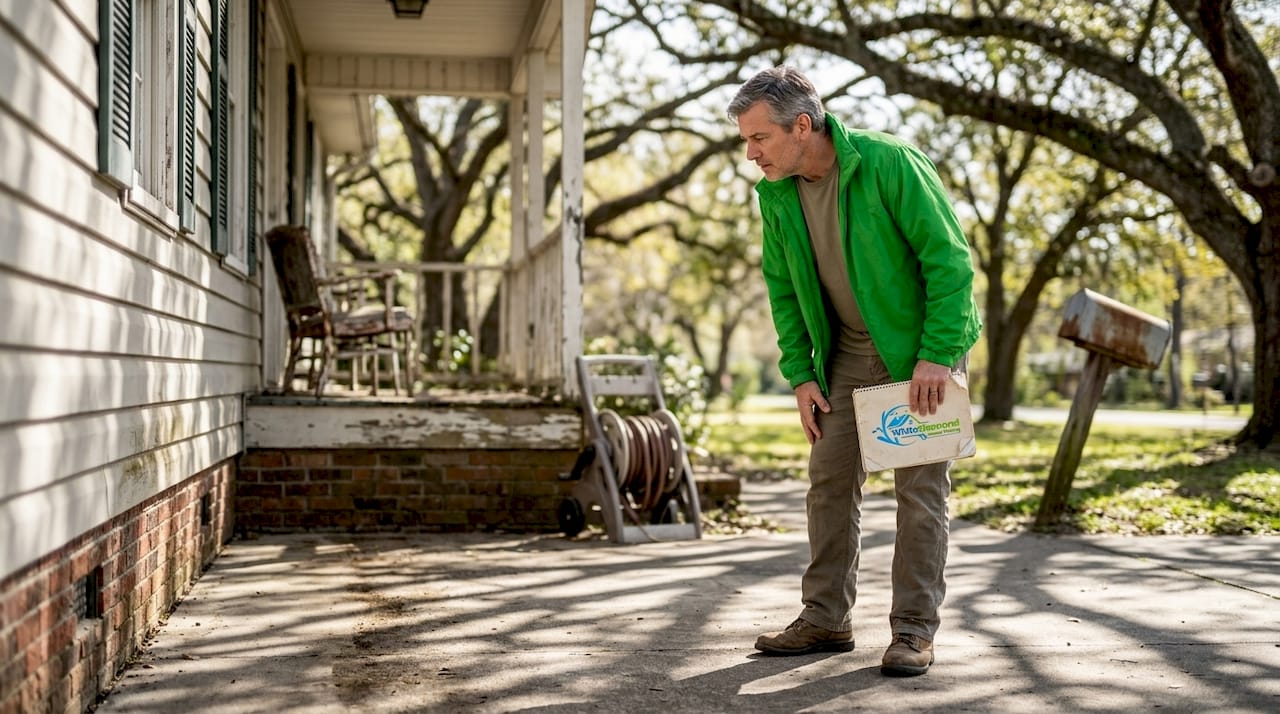
Skipping inspection before pressure washing feels like saving time, but it often costs Citrus County homeowners far more than they bargained for. High-pressure water is powerful enough to strip paint, split wood fibers, and drive moisture into wall cavities, all within seconds. A brief walkaround before you start can reveal the exact spots where that power becomes destructive. Pre-wash inspection identifies cracks, loose siding, peeling paint, rotting wood, and loose mortar before high-pressure water makes each problem dramatically worse.
Table of Contents
- Why inspection matters before you pressure wash
- What to look for: The homeowner’s inspection checklist
- How inspection shapes safe and effective cleaning choices
- Common pitfalls: What can go wrong without inspection
- A pro’s take: Why inspection saves more than it costs
- Ready for safer, smarter pressure washing?
- Frequently asked questions
Key Takeaways
| Point | Details |
|---|---|
| Pre-inspection prevents costly damage | A quick inspection before pressure washing avoids exacerbating hidden issues and saves on repairs. |
| Guides safer cleaning methods | Inspection helps you choose the right pressure and washing technique for every surface. |
| Boosts home value long term | Regular inspection and correct cleaning extend the life and appearance of home exteriors. |
| Expert consensus favors inspection | All professionals agree: skipping inspection is the #1 reason for pressure washing disasters. |
Why inspection matters before you pressure wash
Most homeowners treat pressure washing like a simple chore: point, squeeze, rinse. But that mindset ignores what is actually happening at the surface level. Water traveling at high pressure penetrates every gap it encounters, and a gap you cannot see with the naked eye is still wide enough to let moisture in behind your siding or drywall.
Here is what tends to go wrong when homeowners skip inspection. Loose siding acts like a flap, allowing pressurized water to force its way underneath. Cracked stucco becomes a direct pathway for water to reach the framing beneath. Old mortar between bricks, already crumbling from Florida’s relentless humidity cycles, can wash out completely in a single pass. Each of these issues is fixable before washing. After washing, you may be looking at mold remediation, structural repairs, or full panel replacement.
Preventing surface damage starts with knowing where your home is vulnerable. In Citrus County specifically, the combination of heat, humidity, salt air near the coast, and frequent rain means surfaces age faster than in drier climates. What looks like surface-level grime might be covering significant material deterioration beneath.
Critical features every homeowner should inspect before pressure washing:
- Exterior paint condition (peeling, bubbling, or cracking)
- Wood trim, fascia boards, and deck planks for soft spots or rot
- Mortar between bricks or stone
- Stucco for hairline cracks or hollow sections
- Window and door caulking for gaps or shrinkage
- Roof edges and gutters for loose fasteners
- Deck fasteners and railings for rust or loosening
“Inspection before pressure washing identifies damaged surfaces like cracks, loose siding, peeling paint, rotting wood, and loose mortar to prevent exacerbation by high-pressure water.”
Professional inspectors routinely find issues that homeowners walk past every day without noticing. Hidden home issues like early wood rot or micro-cracks in stucco are invisible to an untrained eye but immediately obvious to someone who knows what they are looking for. The good news is that a basic homeowner walkthrough, done carefully and methodically, catches the majority of high-risk problem areas. Pairing that with preventative exterior cleaning tips means you are addressing the full picture, not just the dirt on the surface.
The exterior cleaning benefits are real, but only when the process starts with a solid inspection. Cleaned surfaces look better, last longer, and hold up to Florida weather more effectively. But none of that holds true if the washing process drives water damage into your walls.
What to look for: The homeowner’s inspection checklist
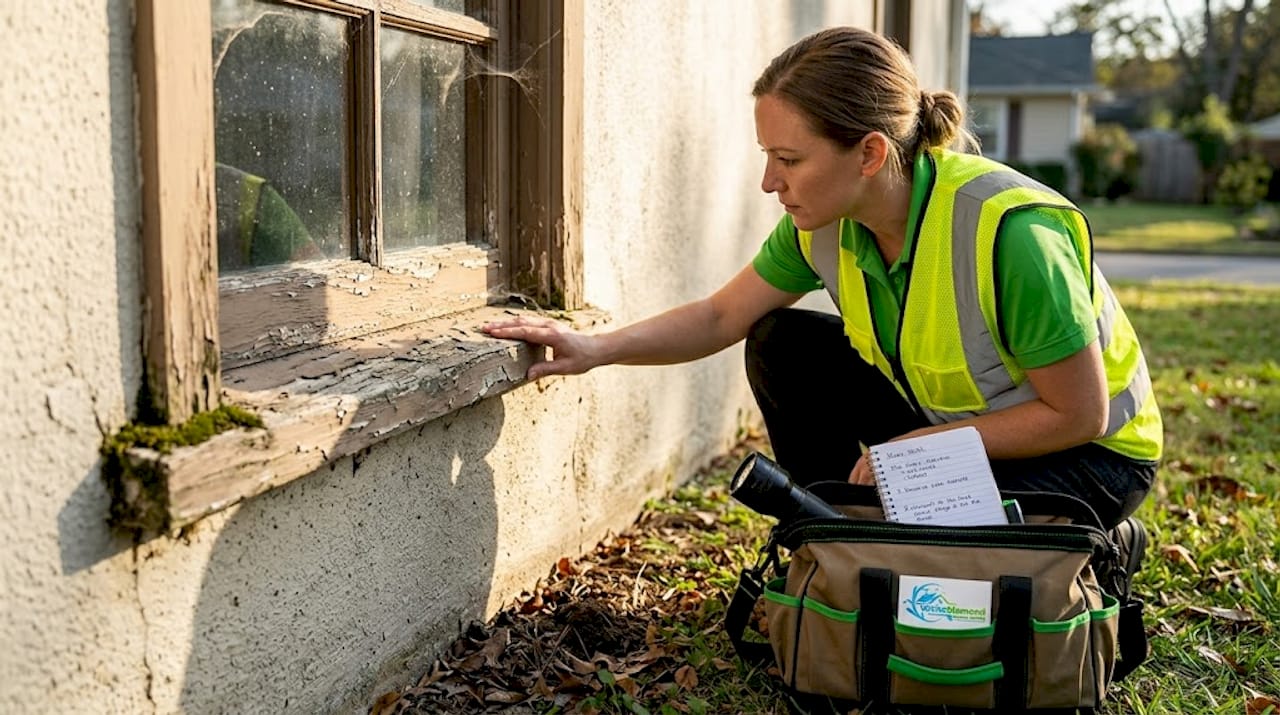
Now that you know why inspection matters, here is exactly what to look for on your property before any pressure washing begins. Walk the perimeter of your home slowly, ideally with a notepad or your phone camera ready to document anything that looks off.
Step-by-step homeowner inspection process:
- Start at the roofline. Look for missing or curling shingles, loose gutters, or gaps at the fascia. Water driven upward by a pressure washer can get under lifted shingles and into your attic.
- Work down the siding. Press gently on sections of siding with your palm. Soft spots, movement, or hollow sounds indicate trapped moisture or rot behind the panel.
- Check all painted surfaces. Peeling or bubbling paint is not just cosmetic. It signals moisture intrusion that pressurized water will aggressively worsen.
- Inspect stucco closely. Run your hand across stucco and tap lightly with a knuckle. A hollow sound means the stucco has separated from the substrate beneath, and pressure washing can break it free entirely.
- Examine mortar joints. If mortar between bricks or stone crumbles when you press it lightly, it is already compromised. High-pressure water will clear it out, leaving open gaps and potential for serious water infiltration.
- Test your deck. Push a screwdriver tip gently into wood decking and railing posts. If it sinks more than a quarter inch with light pressure, rot is present and the wood will not survive a direct pressure wash pass.
- Check caulking around windows and doors. Caulking that is cracked, sunken, or pulling away from the frame lets pressurized water directly into your wall cavity.
- Photograph everything. Take dated photos of any issue you find. This protects you during contractor conversations and helps you track whether issues worsen over time.
Florida’s climate adds a layer of complexity that homeowners in drier states simply do not face. Moisture and mold risks in high-humidity environments like Citrus County mean mold and mildew are not just surface problems. Mold colonies visible on the outside of siding often indicate a larger colony growing behind it. Pressure washing that mold without treating the source first can actually spread spores across a wider surface area and push contaminated water into wall gaps.
Pro Tip: Before you flag an area as “okay to wash,” apply light thumb pressure to any painted wood surface. Healthy wood feels firm and springy. Wood with subsurface rot feels slightly soft or spongy, even if the paint on top looks fine. This simple test takes seconds and can save you from punching a hole in your siding mid-wash.
The pre-treatment advice for any surface you flag during inspection should come before the pressure washer ever turns on. Treating mold patches with appropriate solutions, sealing small cracks with exterior caulk, and securing loose panels all happen in the inspection-to-repair window, before cleaning begins.
How inspection shapes safe and effective cleaning choices
Once you have completed your inspection and flagged problem areas, that information directly shapes how your home gets cleaned. This is where the practical payoff of inspection becomes clearest.
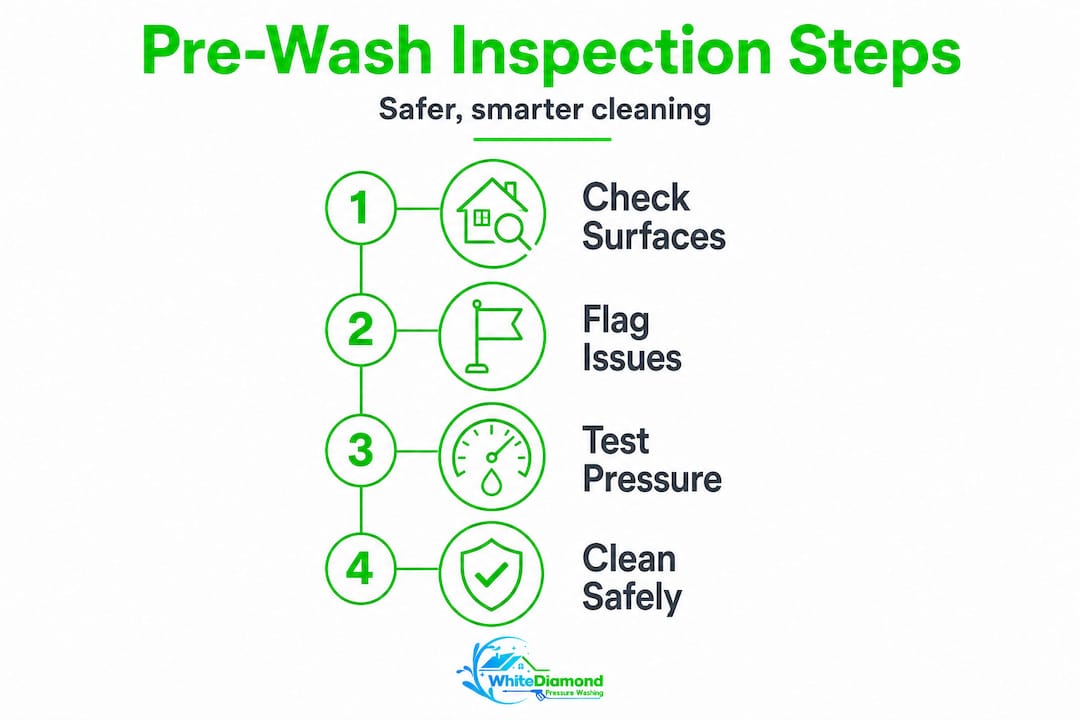
The primary decision every cleaner makes is what pressure level and technique to use on each surface. A blank “pressure wash everything” approach ignores the fact that a brick driveway, a wood deck, a painted stucco wall, and a vinyl-sided garage all have very different tolerances. What cleans a concrete driveway perfectly will shred wood grain or strip paint from delicate surfaces if applied carelessly.
| Surface type | Recommended method | Risk without inspection |
|---|---|---|
| Concrete driveway | High-pressure wash | Low, but pre-check for cracks |
| Vinyl siding | Low-pressure soft wash | Moderate, gaps force water in |
| Wood deck | Low-pressure with wood cleaner | High, rot worsens rapidly |
| Painted stucco | Soft wash only | Very high, paint strips or cracks |
| Brick and mortar | Low-pressure rinse | High, mortar washes out |
| Roof shingles | Soft wash only | Extreme, shingles dislodge |
Contractor studies show 40% less streaking at adjusted lower PSI after inspection and testing, largely because higher water volume (GPM) rather than raw pressure is what actually moves grime from a surface. Inspection allows cleaners to dial in exactly the right balance for each zone of your home, producing a more even, streak-free result.
Pro Tip: Do not equate PSI with cleaning power. GPM (gallons per minute) is often what does the heavy lifting. A lower PSI setting with a higher GPM rate cleans just as effectively as a higher PSI blast, with far less risk to painted or weathered surfaces.
The low-pressure washing benefits extend well beyond just surface appearance. Softer cleaning methods preserve material coatings, extend the time between necessary repaints, and avoid the micro-abrasion that repeated high-pressure washing introduces to surfaces over time. When inspection reveals that a section of your home is already stressed, low-pressure or soft wash becomes the only responsible option.
Understanding pressure washing in maintenance as a planned, informed process rather than a quick fix is what separates homeowners who preserve their property value from those who gradually erode it with well-intentioned but poorly executed cleaning.
Common pitfalls: What can go wrong without inspection
The risks of skipping inspection are not theoretical. They are the kinds of outcomes that generate contractor emergency calls and insurance claims.
Consider a Citrus County homeowner who decides to rent a pressure washer and blast their wood-framed porch over a weekend. The porch looks grimy but structurally sound from a distance. Without close inspection, the homeowner misses that two of the corner posts have soft rot at the base, completely hidden by intact paint on the exterior. The pressure washer strips the paint, drives water into the already-compromised wood, and by the following month the posts begin to lean. What would have been a $300 rot repair before washing becomes a $2,400 porch reconstruction.
All established sources unanimously emphasize pre-inspection to avoid common pitfalls like over-pressurizing delicate surfaces or ignoring local building regulations. There is not a single credible voice in the exterior cleaning industry that recommends skipping this step.
Most common costly mistakes Citrus County homeowners make when skipping inspection:
- Driving water into unsealed cracks, leading to interior wall moisture damage
- Stripping paint from surfaces with adhesion failures, requiring full repainting
- Washing out mortar joints, compromising brick structural integrity
- Cracking or dislodging stucco sections that then require patching or full resurfacing
- Spreading mold spores across wider surface areas by washing without pre-treatment
- Damaging roofing materials by using pressure settings meant for concrete
Plumbing leaks and water damage caused or worsened by exterior washing are among the costliest outcomes homeowners face. Water forced behind siding or through caulk gaps can reach wall cavities, run down interior framing, and pool above ceiling drywall before any visible sign appears inside.
The home exterior value you protect through proper cleaning is substantial. A well-maintained home exterior in Citrus County can add thousands in appraised value, while visible deterioration signals neglect to buyers and inspectors alike. The impact on property value from a single bad pressure washing session can follow a home through its sale process if damage is significant enough to appear on an inspection report.
| Skipped step | Likely outcome | Estimated repair cost |
|---|---|---|
| Checking mortar joints | Mortar washes out completely | $800 to $3,000 |
| Testing wood for rot | Structural rot worsens | $1,500 to $6,000 |
| Checking caulk around windows | Water infiltration behind frames | $500 to $2,500 |
| Identifying peeling paint | Full paint strip required | $1,200 to $4,000 |
| Detecting hollow stucco | Stucco sections dislodge | $900 to $5,000 |
A pro’s take: Why inspection saves more than it costs
Here is the honest truth we have learned from years of cleaning homes across Citrus County. Inspection feels like extra work, especially when a homeowner is eager to see clean siding by the end of the afternoon. The temptation to start the machine and work quickly is real. But skipping inspection is not a shortcut. It is a gamble.
We see the aftermath of uninspected pressure washing jobs regularly. Homeowners who did not know to check for soft wood end up with exposed framing. Walls that looked dirty but were actually holding back deeper mold issues get turned into conduits for contaminated water. The job that was supposed to cost them a Saturday afternoon and a rental fee suddenly costs them weeks of contractor visits.
What surprises most people is that even experienced, careful DIYers make the same mistakes as complete beginners when they skip systematic inspection. Experience helps you operate the machine, but it does not help you know what is behind the paint without looking. Every professional crew we know follows a checklist on every single job, regardless of how familiar they are with the property. Routine is not a sign of inexperience. It is the sign that someone has been burned by skipping it.
The routine washing advantages compound over time when each wash is done properly. Surfaces that are cleaned without damage stay cleaner longer, require fewer repairs, and hold up to Florida’s weather more effectively season after season. The homeowners who treat inspection as part of the process are the same ones whose homes look great at the ten-year mark without major exterior renovation costs.
Cheaper and faster is never safer in this business. The five minutes you spend on a careful inspection will save you hours of repair conversations and potentially thousands in contractor invoices.
Ready for safer, smarter pressure washing?
You now have the full picture of why inspection is not optional but essential for any pressure washing project in Citrus County. Whether you’re planning a DIY weekend project or considering professional help, the knowledge you’ve gained here directly protects your home and your wallet.

At White Diamond Pressure Washing, every job begins with a thorough inspection before a single drop of water hits your home. Our team knows the specific challenges Citrus County properties face and uses that knowledge to choose the right technique for every surface. Before you pick up a pressure washer, check out our guide on common pressure washing mistakes to make sure you know what to avoid. You can also learn exactly how soft washing explained as a method protects your home’s surfaces while still delivering a deep, lasting clean. Ready for a free estimate? Our team is available and happy to walk your property with you.
Frequently asked questions
What types of damage does pre-inspection commonly find?
Pre-inspection finds cracks, loose siding, peeling paint, rotting wood, and loose mortar that could all worsen significantly under high-pressure water.
Can I skip inspection for new homes?
Even new homes can have improperly installed materials or hidden defects, so inspection before pressure washing is always the recommended step regardless of the home’s age.
How does inspection change cleaning methods?
Inspection results directly determine the safest pressure settings and technique, often directing cleaners toward softer methods or repairs first, which reduces streaking by up to 40% compared to uninspected one-size-fits-all approaches.
What’s the biggest risk if I pressure wash without an inspection?
You risk sealing in moisture damage, causing leaks behind siding, or breaking apart fragile surfaces like stucco and mortar, all of which lead to repairs far more expensive than the original cleaning project.
2 thoughts on “Why inspection matters before pressure washing your home”