

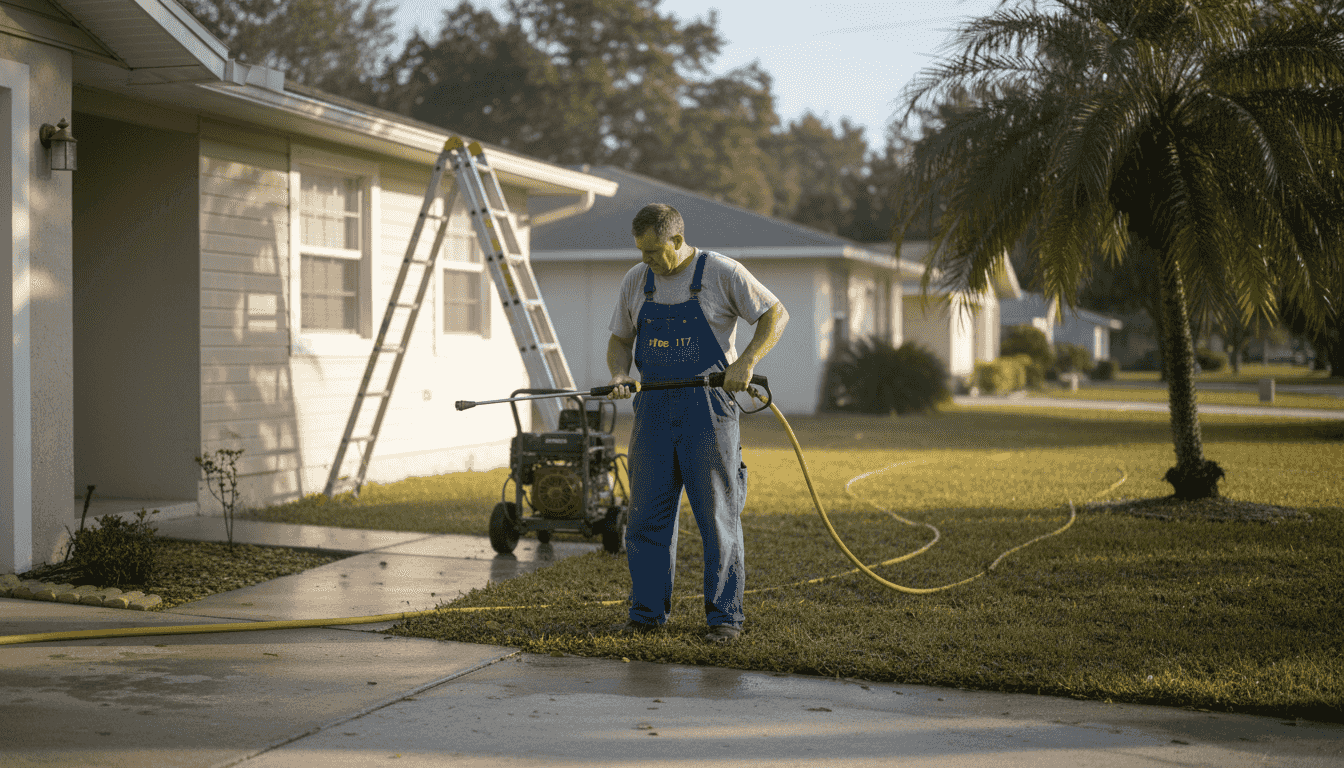
Few homeowners realize how quickly the wrong water pressure can turn a Citrus County cleaning job into expensive repairs. Understanding the balance between mechanical force and chemical action means protecting your roof, siding, and landscaping from damage during pressure washing. This guide explains why choosing the right pressure and cleaning approach is critical for maintaining your Florida property, highlighting what professionals know about safe exterior care.
Table of Contents
- Defining Water Pressure In Exterior Cleaning
- Types Of Cleaning: Soft Wash Vs. High Pressure
- How Water Pressure Impacts Surfaces
- Preventing Damage When Pressure Washing
- Safe Practices For Citrus County Homeowners
Key Takeaways
| Point | Details |
|---|---|
| Understanding Water Pressure | Water pressure in exterior cleaning ranges from 500 to 4,000 PSI, with importance on selecting appropriate settings based on surface type to avoid damage. |
| Soft Washing vs. High Pressure | Soft washing utilizes lower pressure with chemicals for delicate surfaces, while high-pressure cleaning effectively removes heavy buildup but can damage softer materials. |
| Environmental Considerations | Choose biodegradable cleaning products and practices that minimize runoff to protect Citrus County’s unique ecosystem and sensitive waterways. |
| Professional Expertise | Hiring professionals familiar with local conditions ensures proper cleaning techniques and minimizes the risk of damage to your property and environment. |
Defining Water Pressure in Exterior Cleaning
Water pressure is the force that water exerts when it hits a surface during cleaning. Think of it like the difference between a garden hose and a fire hose—more pressure means more force, but that force can also cause damage if not controlled properly.
In exterior cleaning, water pressure is measured in PSI (pounds per square inch). This number tells you how much force the water applies to whatever surface you’re cleaning. For context, a standard garden hose delivers about 50 to 60 PSI, while pressure washing equipment typically ranges from 1,500 to 4,000 PSI for residential use.
How Water Pressure Works in Exterior Cleaning
Water pressure operates through kinetic energy—the moving force of water expelled at high velocity to mechanically dislodge dirt, algae, and other contaminants from surfaces. When water hits your driveway or siding, that force breaks the bond between the grime and the material beneath it.
But here’s where it gets tricky: not all surfaces handle the same pressure level. Your roof shingles, composite decking, and vinyl siding all have different tolerance levels. That’s why understanding water pressure’s mechanical action matters—excessive pressure erodes surfaces, creating damage that costs thousands to repair.
Pressure vs. Chemical Cleaning Power
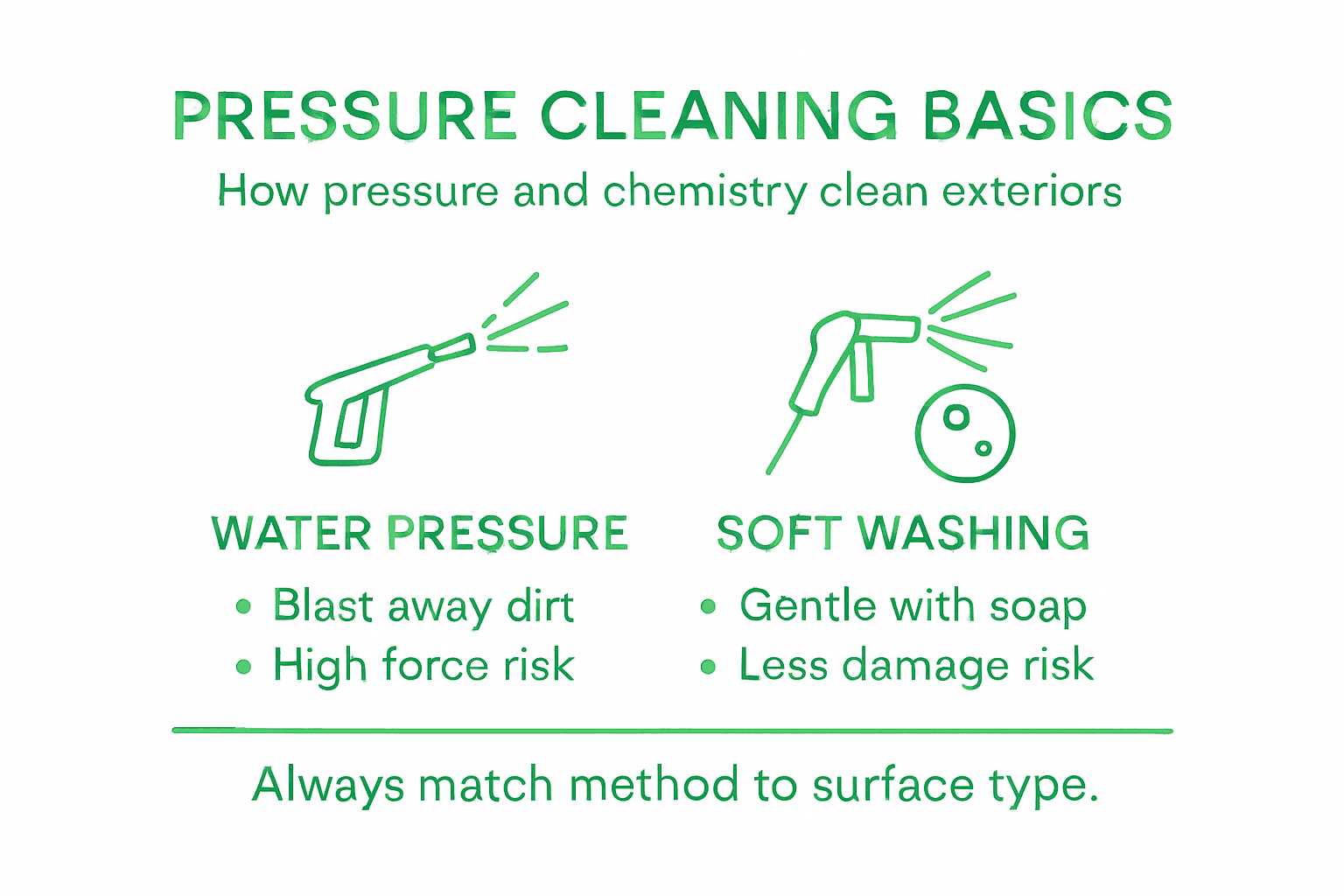
Modern exterior cleaning actually blends two approaches:
- High-pressure water cleaning: Uses force alone to remove tough buildup
- Low-pressure soft washing: Combines gentler water pressure with chemical solutions for cleaning power
Chemical cleaning works differently. Surfactants reduce water surface tension, allowing water to spread and penetrate soil on surfaces more effectively. This means you need less water pressure when you have the right cleaning solution—a critical insight for protecting delicate materials.
In Citrus County, where homes face Florida’s humid climate, algae and salt spray buildup is relentless. Soft-wash systems reduce structural stress while maintaining effectiveness against these specific challenges.
Common Pressure Ranges Explained
Here’s what different pressure levels handle:
- 500-1,500 PSI: Light cleaning—windows, screens, light dust
- 1,500-2,500 PSI: General cleaning—driveways, moderate grime
- 2,500-3,500 PSI: Aggressive cleaning—heavy buildup, concrete
- 3,500+ PSI: Industrial surfaces—requires professional expertise
Understanding your surface’s pressure tolerance prevents costly damage that occurs in seconds but costs months to remedy.
Many homeowners assume “more pressure equals cleaner results.” That’s wrong. The right pressure balances effectiveness with safety. Too much pressure on brick, stucco, or wood siding creates permanent scarring.
Pro tip: When evaluating cleaning services, ask about their standard pressure settings for your specific surfaces—professionals who adjust pressure by material type rather than using maximum force across everything show they understand proper exterior cleaning.
Types of Cleaning: Soft Wash vs. High Pressure
You have two main options for exterior cleaning, and choosing between them depends on your surfaces and the type of buildup you’re facing. Both methods work, but they operate on completely different principles.
High-pressure washing uses force to blast away dirt and grime. Soft washing uses gentler water combined with chemicals to break down organic growth. Understanding the differences helps you protect your property while getting results.
High-Pressure Washing: Power Through Force
High-pressure systems rely on kinetic energy—the sheer force of water moving at high velocity to physically dislodge contaminants from surfaces. When you aim that nozzle at your driveway, the water hits with enough force to break the bond between dirt and the concrete beneath.
High-pressure works best on:
- Concrete driveways and sidewalks
- Heavily soiled hard surfaces
- Thick buildup that won’t respond to chemicals
- Industrial or commercial properties
But here’s the catch: that same force that removes grime can permanently damage softer materials. Wood siding, roof shingles, and brick all suffer from excessive pressure. Even paint can peel off in seconds under the wrong nozzle.
Soft Washing: Chemistry Does the Work
Soft washing combines low-pressure water with biodegradable chemicals to eliminate mildew, algae, bacteria, and organic stains. Rather than relying on force, the cleaning solution chemically disrupts growth at its source.
This method excels at:
- Roof cleaning without shingle damage
- Siding and fascia with delicate paint finishes
- Vinyl and composite decking
- Properties with established landscaping nearby
- Algae and mold removal in humid climates like Citrus County
Soft washing is gentler, but it still requires expertise. Sodium hypochlorite-based solutions can cause pigment damage on certain paint colors if not applied correctly, which is why professional assessment matters.
Quick Comparison
| Feature | High-Pressure | Soft Washing |
|---|---|---|
| Pressure Level | 2,500–4,000 PSI | 500–1,500 PSI |
| Primary Action | Mechanical force | Chemical action |
| Best For | Concrete, heavy buildup | Roofs, siding, delicate surfaces |
| Surface Risk | High on soft materials | Minimal with proper technique |
| Drying Time | Quick | Slower but lasting |
Soft washing prevents damage that occurs in seconds but costs thousands to repair—a trade-off that favors protection over speed.
Your roof, siding, and landscaping are investments. High-pressure cleaning saves time but risks catastrophic damage. Soft washing takes patience but preserves your property’s condition and appearance.
Pro tip: Ask your cleaning service what method they recommend for each surface area—professionals who propose soft washing for roofs and high-pressure only for concrete show they prioritize your property’s long-term health over the fastest cleaning time.
How Water Pressure Impacts Surfaces
Water pressure doesn’t affect all surfaces equally. The same force that cleans your concrete driveway can permanently scar your roof shingles or strip paint from wood siding in seconds.
Understanding how pressure impacts different materials helps you make informed decisions about your property’s exterior cleaning. The wrong choice costs thousands in repairs.
The Damage Potential of High Pressure
Water pressure exerts force directly onto whatever surface it contacts. Higher pressure increases mechanical action to remove grime, but it also increases risk. Pressure strength affects the impact force during cleaning—too much pressure can permanently damage surfaces while too little may leave grime behind.
Damage from excessive pressure includes:
- Erosion and splintering of wood siding
- Granule loss on asphalt roof shingles
- Pitting and spalling of brick and stucco
- Paint peeling and blistering
- Vinyl siding warping or cracking
- Composite deck material degradation
Once these materials are damaged, restoration becomes expensive. A roof that costs $8,000 to replace now might need replacement years earlier due to pressure washing damage.
Material Type Determines Safe Pressure
Not every surface can handle the same PSI. Material condition and surface engineering dictate what’s safe. Older homes with original brick, weathered wood, or delicate finishes need gentler approaches than modern concrete surfaces.
Pressure tolerance varies dramatically:
- Concrete and stone: 3,000-4,000 PSI tolerant
- Brick and stucco: 1,500-2,500 PSI maximum
- Wood siding: 500-1,200 PSI only
- Vinyl siding: 1,200-1,500 PSI maximum
- Roof shingles: 500 PSI or soft wash only
- Composite decking: 1,000-1,500 PSI maximum
Your Citrus County home likely has materials exposed to saltwater spray and intense humidity. These environmental factors weaken surfaces over time, making them even more pressure-sensitive than their standard specifications suggest.
To clarify safe cleaning practices, here’s a summary of surface types and their recommended cleaning approach:
| Surface Type | Recommended Method | Risk of Damage |
|---|---|---|
| Concrete driveway | High pressure | Low when correct pressure used |
| Roof shingles | Soft washing only | High with pressure over 500 PSI |
| Vinyl siding | Soft washing or low pressure | Moderate if PSI exceeds 1,500 |
| Brick/stucco | Low to moderate pressure | High with high PSI/nozzle misuse |
| Composite deck | Soft washing or low pressure | Will degrade above 1,500 PSI |
Flow Rate and Spray Pattern Matter Too
Professionals don’t just adjust pressure—they optimize flow rate, pressure, and spray pattern together. A high-pressure nozzle concentrated at a single point causes more damage than the same PSI spread across a wider area.
This is why DIY pressure washers are so risky. You can hold the nozzle at the wrong angle or distance, concentrating force on a small spot and causing permanent damage before you realize what’s happening.
The difference between safe cleaning and expensive repair often comes down to just a few PSI and a slightly different spray angle.
Professional equipment allows adjustment for specific surfaces. A technician evaluates your materials, condition, and the buildup you’re facing—then selects the right combination of pressure, flow, and technique.
Pro tip: Before hiring a cleaner, ask them to explain why they recommend specific pressure levels for your roof versus your driveway—professionals who adjust settings by material show they understand pressure risks rather than defaulting to maximum force.
Preventing Damage When Pressure Washing
Damage prevention starts before the nozzle ever touches your surfaces. Smart preparation and correct technique separate professionals from homeowners who create expensive problems.
The good news: preventing damage is straightforward once you understand the rules. Most damage happens because people skip these protective steps.
Choose the Right Nozzle and Pressure Settings
Nozzle selection directly determines your risk level. Avoid zero-degree nozzles that concentrate full pressure into a single point—this dramatically increases surface damage risk. A zero-degree nozzle at 2,000 PSI can etch concrete or strip paint instantly.
Instead, use:
- 25-degree or 40-degree nozzles for most applications
- Wider spray patterns that distribute pressure across larger areas
- Pressure settings matched to your surface’s tolerance level
- Lower pressure for delicate materials like vinyl, wood, or asphalt
When in doubt, start lower. You can always increase pressure if the surface handles it. You cannot undo damage once it’s done.
Here’s a quick guide to nozzle selection and their ideal uses:
| Nozzle Angle | Pattern | Typical Use |
|---|---|---|
| 0° | Pinpoint jet | Avoid—high risk for all surfaces |
| 15° | Narrow fan | Tough grime on hard surfaces |
| 25° | Wider fan | General cleaning on most exteriors |
| 40° | Broad fan | Rinsing delicate surfaces |
Prepare Your Property Before Washing
Safe power washing involves proper preparation and environmental protection. Close windows and doors to prevent water entry. Move outdoor furniture, planters, and decorations out of the spray zone.
For delicate areas:
- Shield landscape plants with tarps or plastic sheeting
- Protect air conditioning units and outdoor electrical fixtures
- Cover any exterior outlets or light fixtures
- Tape or block off foundation vents if needed
Your Citrus County property likely has salt-tolerant plants adapted to coastal conditions. Even hardy vegetation can suffer from high-pressure water blasting combined with harsh cleaning chemicals.
Control Water Runoff and Chemicals
Water doesn’t just disappear after cleaning—it runs off carrying debris and chemicals. Selecting appropriate cleaning methods based on surface type prevents environmental and legal risks.
For unpainted, unsealed surfaces, use screens to catch debris. For painted surfaces, manage pH carefully to prevent harm to landscaping and local waterways. Avoid unnecessary chemicals whenever possible, and plan for responsible wastewater disposal.
In Citrus County, runoff flows toward local waterways. Proper containment protects your neighbors and your legal standing.
The difference between safe cleaning and liability exposure often comes down to water management and chemical control.
Professionals use containment booms, absorbent materials, and careful spray direction to keep runoff contained. DIY pressure washing rarely includes these protections.
Let Professionals Handle Complex Jobs
Some surfaces require expertise you won’t find in a rental equipment manual. Roofs, painted finishes, and delicate materials all benefit from professional assessment.
A professional evaluates your specific surfaces, environmental conditions, and buildup before selecting pressure and technique. They carry liability insurance for damage they cause. You carry that burden yourself with rental equipment.
Pro tip: Request that your cleaning service explain their specific pressure settings and nozzle choices for each surface area before work begins—this conversation reveals whether they’re making decisions based on material science or just applying standard force across everything.
Safe Practices for Citrus County Homeowners
Citrus County’s coastal environment, humidity, and unique landscaping demand cleaning approaches tailored to local conditions. Generic pressure washing advice doesn’t account for salt spray, delicate native plants, and sensitive waterways that define your area.
Local awareness transforms exterior cleaning from a risky DIY project into a responsible property maintenance practice.
Understand Citrus County’s Environmental Challenges
Your property faces pressures that inland homes never encounter. Salt spray deposits accumulate on exterior surfaces, requiring gentler cleaning than standard grime removal. High humidity accelerates algae and mold growth, making frequent cleaning necessary—but aggressive methods compound the damage.
Local vegetation also matters. Native plants adapted to Citrus County conditions are sensitive to chemical runoff and high-pressure water blasting. Safe exterior cleaning includes selecting methods that protect trees and soil rather than damage them.
Your landscaping is an asset, not collateral damage during cleaning operations.
Choose Environmentally Responsible Products
Biodegradable, non-toxic cleaning solutions protect your neighbors and local waterways. Citrus County’s proximity to sensitive ecosystems means runoff matters—chemicals wash directly into waterways that support wildlife and recreation.
When selecting a cleaning service, ask about their product choices:
- Are solutions biodegradable and EPA-approved?
- Do they minimize chemical use whenever possible?
- Do they manage runoff to prevent waterway contamination?
- Are their practices aligned with local environmental standards?
Using non-toxic, biodegradable cleaning products reduces chemical runoff during exterior cleaning while maintaining cleaning effectiveness. This approach preserves your property and protects the community.
Protect Local Waterways During Cleaning
Water doesn’t stay on your property. Runoff from your driveway or roof flows into storm drains, local creeks, and eventually regional waterways. Every cleaning decision ripples beyond your yard.
Responsible practices include:
- Directing runoff away from storm drains when possible
- Using containment methods to prevent debris discharge
- Timing cleaning to avoid heavy rain that amplifies runoff
- Choosing soft washing over high-pressure methods when appropriate
Safe cleaning for Citrus County homeowners means protecting your property and your community’s natural resources simultaneously.
Professional cleaners familiar with local conditions understand these nuances. They position equipment strategically, manage water flow deliberately, and select techniques that respect both your home and your environment.
Partner With Locally Aware Service Providers
Not all pressure washing services understand Citrus County’s specific demands. Local professionals recognize that coastal environments require different approaches than inland areas. They know which plants are sensitive, how salt spray affects materials, and which cleaning methods protect waterways.
They carry liability insurance and follow local regulations you might not even know exist. That protection matters when your cleaning decisions affect neighbors’ properties or community resources.
Pro tip: Ask potential cleaning services about their experience with salt spray damage, coastal plant protection, and local waterway regulations—answers reveal whether they understand Citrus County’s unique environmental context or just apply generic techniques.
Protect Your Property with Expert Pressure Control from White Diamond Pressure Washing
Understanding how water pressure impacts your home’s exterior is crucial to avoiding costly damage. If you are concerned about excessive pressure ruining your roof shingles or stripping paint from your siding the professional team at White Diamond Pressure Washing offers soft washing and low-pressure cleaning solutions customized for Citrus County homes. Our experts adjust water pressure precisely to protect delicate materials while delivering a deep clean that restores your property’s curb appeal.
Key benefits include
- Tailored pressure settings for each surface
- Safe removal of algae salt spray and grime
- Environmentally responsible cleaning products

Don’t risk permanent damage from improper pressure washing techniques. Take control of your exterior cleaning today by booking your service with White Diamond Pressure Washing. Visit our website now to learn more and get your free estimate. Find out how soft washing and professional expertise make the difference between clean and damaged. Protect your investment and schedule your cleaning service with trusted local professionals now.
Frequently Asked Questions
What is water pressure, and how is it measured in exterior cleaning?
Water pressure is the force exerted by water when it hits a surface during cleaning, measured in PSI (pounds per square inch). Typical residential pressure washing equipment ranges from 1,500 to 4,000 PSI.
How does high pressure compare to soft washing in exterior cleaning?
High-pressure washing uses force to remove grime, making it suitable for concrete and heavily soiled surfaces. Soft washing, on the other hand, combines low pressure with chemical solutions to effectively clean delicate surfaces without causing damage.
What pressures are safe for different types of surfaces?
Surface pressure tolerance varies: Concrete can handle 3,000-4,000 PSI, while vinyl siding requires 1,200-1,500 PSI, and roof shingles should only be soft washed or cleaned at 500 PSI to prevent damage.
Can using too much water pressure damage my property?
Yes, using excessive water pressure can lead to permanent damage such as erosion of wood, granule loss on roof shingles, and peeling paint, making it crucial to use the appropriate pressure for each surface.
Recommended
- Role of Detergents in Exterior Cleaning Success – white-diamond-pressure
- Role of Pressure Washing in Preventive Maintenance – white-diamond-pressure
- 7 Key Advantages of Low-Pressure Washing for Homeowners – white-diamond-pressure
- Pressure Washing vs. Traditional Cleaning: What to Consider – white-diamond-pressure
12 thoughts on “Role of Water Pressure in Safe Exterior Cleaning”