


TL;DR:
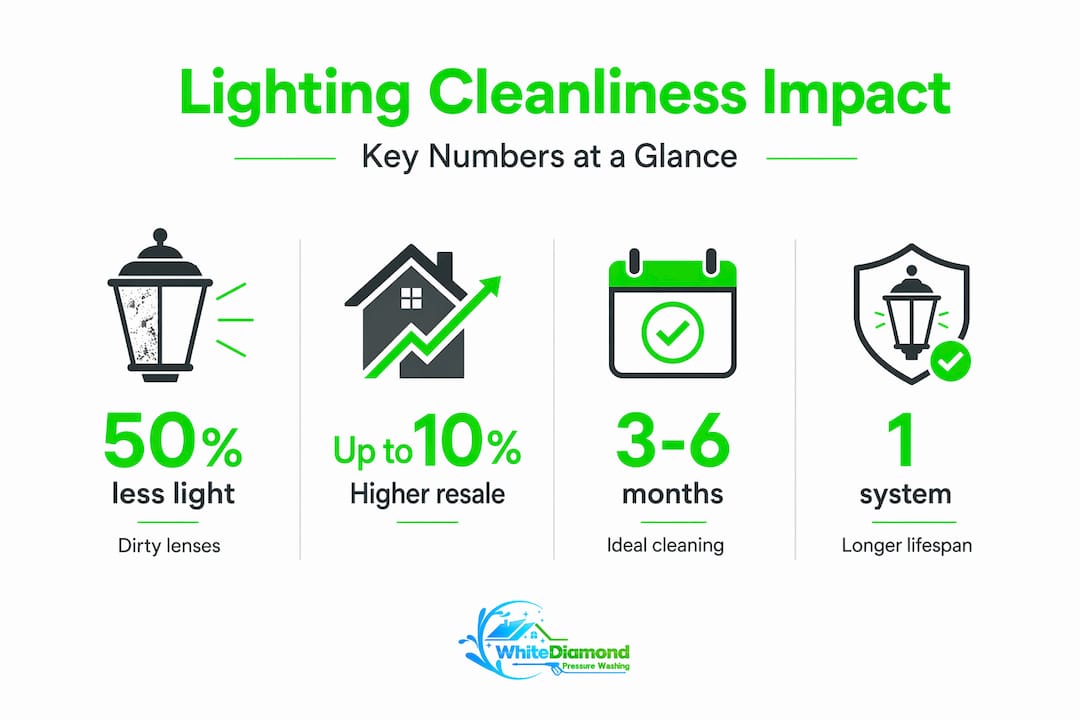
- Many homeowners overlook exterior lighting maintenance, unaware grime reduces brightness by up to 50%.
- Regular cleaning and inspections improve safety, curb appeal, and can increase property value by up to 10%.
Most homeowners think exterior lighting is set-and-forget. You screw in the bulb, mount the fixture, and walk away. But why maintain exterior lighting cleanliness is a question worth asking honestly, because grime, dust, and insect debris quietly rob your lights of up to half their output. That means darker walkways, blind spots in your security coverage, and a property that looks older than it is. This guide breaks down exactly what neglected lighting costs you, and what a simple, consistent maintenance routine actually looks like.
Table of Contents
- Key Takeaways
- Why maintain exterior lighting cleanliness: the real cost of neglect
- How clean lighting improves curb appeal and resale value
- A practical maintenance schedule for outdoor lighting
- Electrical pitfalls that surface cleaning will not fix
- My honest take on why homeowners get this wrong
- Keep your exterior lighting working at full strength
- FAQ
Key Takeaways
| Point | Details |
|---|---|
| Dirt cuts light output dramatically | Debris buildup on lenses and panels can reduce brightness by up to 50%, creating real safety gaps. |
| Clean lighting raises property value | Well-maintained exterior lighting can contribute to a selling price increase of up to 10%. |
| Monthly checks prevent bigger problems | A quick visual inspection each month catches issues before they become expensive repairs. |
| Abrasive cleaners cause lasting damage | Harsh chemicals strip UV coatings and speed up oxidation, shortening fixture life significantly. |
| Electrical issues hide behind surface dirt | Flickering lights are often wiring problems, not bulb failures, and need annual professional inspection. |
Why maintain exterior lighting cleanliness: the real cost of neglect
Let’s start with a number that surprises most people. Dirt and debris buildup on exterior light lenses and solar panels can reduce light output by up to 50%. That is not a minor dip in brightness. That is the difference between a well-lit driveway and a shadowy one that does not serve its purpose.
The loss is gradual, so you rarely notice it happening. Your lights looked fine in spring. By late fall, after pollen season, summer insects, and several rainstorms, those same fixtures are operating at a fraction of their original capacity. The change feels invisible until something goes wrong.
Security is where this gets serious. Dirty or dim fixtures create dark voids around your property that compromise the security function of exterior lighting entirely. Motion sensors depend on clear lenses and unobstructed coverage zones to trigger correctly. A sensor clogged with spider webs and dried insect residue may not detect movement at all. That is a security gap most homeowners would not intentionally create, yet many maintain without realizing it.
Consider what that means for a home with pathway lighting, a motion-activated floodlight over the garage, and accent lighting around the front entrance. Each fixture works together to create a complete picture of safety and visibility. When even one is operating at 40% capacity, the entire system has gaps.
“Clean exterior lighting provides consistent, reliable visibility that deters unwanted activity and supports motion sensor effectiveness.” southernliving.com
The impact of dirt on lighting goes beyond function. Fixtures caked with grime signal to anyone walking past that the property is not actively maintained. That perception matters more than most homeowners realize, especially in neighborhoods where street appeal is tied directly to community pride and property values.
How clean lighting improves curb appeal and resale value

Real estate professionals have long understood what clean exteriors communicate. Properties with well-maintained facades and lighting can see up to a 10% increase in selling price compared to neglected properties. That is not just about fresh paint or a trimmed lawn. Lighting is part of that equation.
Think about the first impression a property makes at dusk. A home with clear, bright pathway lights, clean wall sconces, and properly functioning security floods reads as cared for. The buyer or visitor does not consciously think about the lighting. They feel safe, welcomed, and reassured. That emotional response translates directly into perceived value.
“Lighting is a key presentation strategy: clean, well-maintained lighting signals proactive care to buyers, positively influencing property perception and sale outcomes.” shineyourlightblog.com
Compare that to a property with yellowed lenses, oxidized fixture housings, and lights that flicker or project uneven coverage. Buyers notice these things, even when they cannot name exactly what feels off. Inspectors absolutely notice them.
The benefits of maintaining outdoor lights connect directly to overall exterior maintenance. Clean windows, clean siding, and clean lighting fixtures all contribute to the same cohesive picture. Neglect one, and it pulls down the visual quality of the rest. Maintaining them together multiplies the effect.
Here is what clean, well-directed lighting does for a property on a practical level:
- Highlights architectural features that add character to the home’s exterior
- Makes pathways and entry points clearly visible, reducing liability from trips and falls
- Deters opportunistic intrusions by eliminating shadowy areas around the perimeter
- Adds property safety and value by combining functional illumination with aesthetic appeal
- Creates visual continuity between the landscaping, facade, and hardscape at night
A practical maintenance schedule for outdoor lighting
One of the most common misconceptions homeowners carry is that exterior lighting is maintenance-free. Environmental stressors including UV exposure, rain, insects, pollen, and oxidation affect fixtures constantly. A schedule protects your investment and keeps your system performing as designed.
Experts recommend a three-tier approach:
- Monthly visual inspection. Walk your property at dusk and look at each fixture. Check for discoloration, flickering, obvious debris buildup, or coverage gaps. This takes ten minutes and catches problems early.
- Thorough cleaning every 3 to 6 months. Quarterly deep cleaning is the recommended frequency for most outdoor fixtures. This includes lens cleaning, housing wipe-down, and checking mounting hardware.
- Annual professional inspection. Have a professional review electrical connections, seal integrity, and overall system health once per year. This is where hidden problems get caught before they become expensive.
Cleaning methods that protect your fixtures
The right cleaning approach matters as much as the frequency. Abrasive materials or harsh chemicals strip the protective UV coating from fixture housings, accelerating oxidation and cracking. Mild dish soap, warm water, and a soft microfiber cloth handle most cleaning jobs without causing any damage.
Pro Tip: Always start with a dry wipe-down before applying any moisture. Skipping this step turns loose dust into a muddy paste that smears across lenses and leaves streaks that are harder to remove than the original grime.
After cleaning oxidized metal housings, apply a thin layer of protective sealant. This step is worth the extra five minutes. A protective sealant slows re-oxidation significantly and keeps fixtures looking newer between cleanings.
Seasonal adjustments also make a real difference in maintenance efficiency:
| Season | Primary cleaning focus |
|---|---|
| Spring | Pollen removal from lenses and solar panels; inspect for winter damage |
| Summer | Insect debris, spider webs, and frequent wipe-downs on solar panels |
| Fall | Leaf debris removal; check mounting hardware before storms |
| Winter | Monitor for ice or snow accumulation blocking sensors and lenses |
Pro Tip: For solar landscape lights specifically, regular panel cleaning extends the life of the entire system by maintaining charging efficiency and reducing strain on batteries.
Electrical pitfalls that surface cleaning will not fix
Surface cleaning handles most of the visible issues with exterior lighting. But there is a category of problems that look like maintenance failures and are actually electrical ones. Recognizing the difference saves you time, money, and frustration.
Common electrical issues that hide behind dirty fixtures include:
- Flickering lights. Often blamed on bad bulbs, but loose or corroded connections are the more common cause. Yearly electrical checks prevent these from escalating into full system failures.
- Fixtures that dim progressively. If cleaning the lens does not restore brightness, voltage drop or a failing driver may be the real issue.
- Intermittent outages. Moisture ingress through degraded seals causes short circuits that mimic bulb failure. Cleaning the housing without resealing it only delays the next failure.
- Sensors that do not trigger. If your motion sensor still fails after a thorough cleaning, check the sensitivity and range settings before assuming the sensor is damaged.
Pro Tip: When you clean your fixtures, take a moment to check that mounting screws are tight and that silicone seals around wiring entry points are still intact. A compromised seal lets moisture in, which creates the conditions for both electrical failures and accelerated corrosion.
The cost difference between catching these issues early and reacting after a failure is substantial. A professional inspection that finds one corroded connection costs far less than replacing an entire fixture or rewiring a run of pathway lights. You can read more about how preventative exterior cleaning fits into a broader strategy for protecting your home’s systems and surfaces.
My honest take on why homeowners get this wrong
I have worked with hundreds of homeowners on exterior maintenance over the years, and exterior lighting is almost always the last thing anyone thinks about. People scrub their siding, pressure wash their driveways, and seal their decks. Then they walk right past a light fixture they have not touched in three years and wonder why the front of their house still feels dim at night.
The real issue is not laziness. It is the assumption that lighting is infrastructure. People treat it like plumbing. It is either working or it is not. But exterior lighting exists at the intersection of function, safety, and aesthetics, and each of those areas degrades slowly and silently when maintenance gets skipped.
What I have seen actually work is tying lighting checks to something you already do. If you clean your gutters twice a year, add a fixture walkthrough to that same afternoon. It takes fifteen minutes and it resets your awareness of what is actually happening out there. You will catch a failing seal, a discolored lens, or a motion sensor that has drifted out of range. Small catches that would otherwise become real problems.
The other thing I want to say clearly is this: professional cleaners are not just for major jobs. Bringing in someone who knows exterior surfaces to do a thorough cleaning of your fixtures twice a year pays for itself in fixture longevity alone, before you even factor in the safety and value benefits.
— Bobby
Keep your exterior lighting working at full strength

At Whitediamondpressurewashing, we see the difference clean exterior fixtures make on every property we service in Citrus County. When lighting is part of a regular exterior maintenance plan, it performs better, lasts longer, and does exactly what it was designed to do: keep your home safe, attractive, and well-presented. Our team uses safe, low-pressure cleaning methods that protect fixture coatings and seals while removing years of buildup. Visit Whitediamondpressurewashing to get a free estimate and build a maintenance plan that covers your lighting and the rest of your home’s exterior.
FAQ
How much can dirt reduce outdoor light output?
Debris buildup on exterior light lenses can cut light output by up to 50%, which creates serious safety and security gaps around your property.
How often should you clean outdoor light fixtures?
Experts recommend a monthly visual check, a thorough cleaning every 3 to 6 months, and a professional annual inspection to catch electrical issues and maintain peak performance.
Can dirty exterior lights affect home resale value?
Yes. Properties with clean, well-maintained exterior lighting can see up to a 10% higher selling price compared to homes with neglected exteriors, because buyers associate clean lighting with overall property care.
What cleaning products are safe for outdoor fixtures?
Mild dish soap, warm water, and a soft microfiber cloth are the right tools for most fixtures. Abrasive cleaners strip UV coatings and accelerate oxidation, which shortens the life of the fixture.
Why do outdoor lights flicker after cleaning?
Flickering that persists after cleaning is usually caused by loose or corroded electrical connections, not a bad bulb. A professional inspection can identify and fix the root cause before it leads to a full system failure.