

TL;DR:
- Using soft cleansers for decks enables deep cleaning without damaging wood fibers or composite surfaces. They kill mold at the root with chemistry rather than force, extending the deck’s lifespan. Proper application and dwell time are essential for effective, damage-free results.
If you’ve ever blasted your deck with a pressure washer and watched the wood turn gray and fuzzy within a season, you already know something went wrong. Understanding why use soft cleansers for decks is the key to avoiding that outcome entirely. Mold, mildew, algae, and discoloration are real problems for any deck, wood or composite. But the instinct to grab the most powerful tool available is exactly what shortens deck life and voids warranties. This guide breaks down how gentle cleansers actually outperform harsh methods, and what you can do to keep your deck looking its best for years.
Table of Contents
- Key takeaways
- Why decks require gentle cleaning methods
- How soft cleansers work and why they’re safer for decks
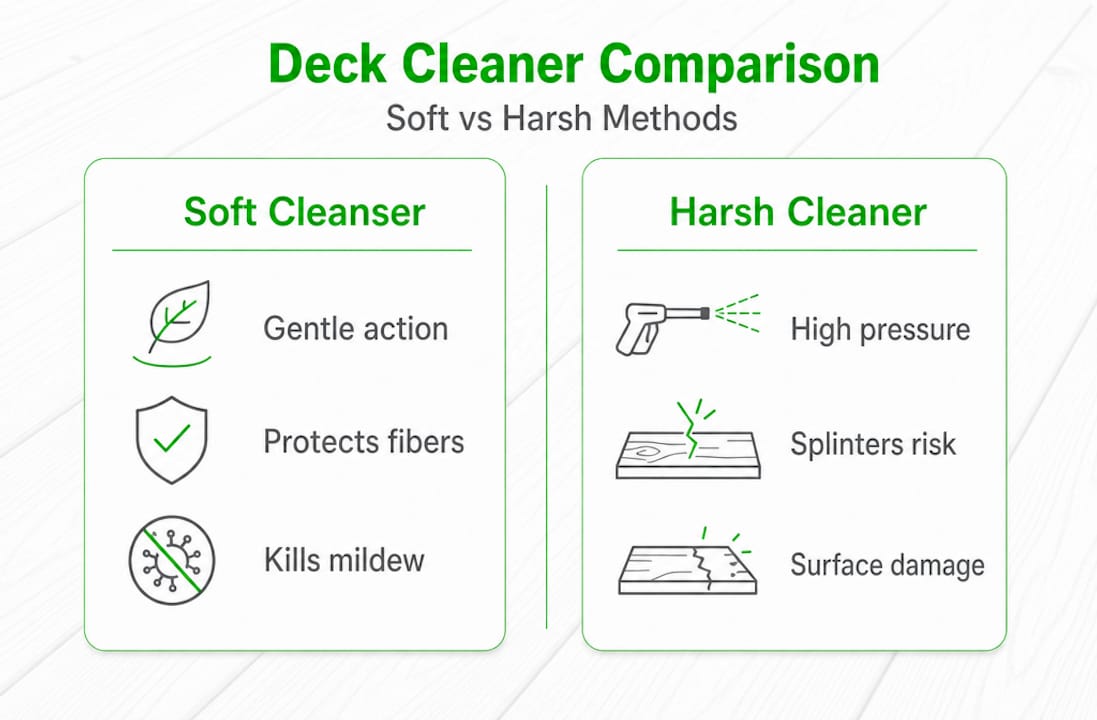
- Comparing soft cleansers and harsh cleaning methods
- Practical steps for using soft cleansers on your deck
- My take on soft cleaners after years of deck care
- Let Whitediamondpressurewashing handle the heavy lifting
- FAQ
Key takeaways
| Point | Details |
|---|---|
| Soft cleansers prevent structural damage | Gentle cleaning protects wood fibers and composite caps that harsh pressure or bleach will permanently damage. |
| Chemical action beats brute force | Soft cleansers penetrate and kill mold at the root instead of just blasting surface stains off temporarily. |
| Composite decks are especially vulnerable | Scratches and bleach damage on composite surfaces are permanent and cannot be sanded out. |
| Annual cleaning extends deck lifespan | Routine soft cleaning at least once per year prevents rot, mold buildup, and surface degradation. |
| Method matters as much as product | Using the right cleaner with the wrong technique, like high pressure on composites, still causes serious damage. |
Why decks require gentle cleaning methods
Your deck takes a beating every single year. Rain drives moisture into the wood grain. Shade creates the perfect conditions for mold and mildew. UV exposure fades finishes. And foot traffic grinds dirt into every surface crack. When it comes time to clean, the damage you cause with the wrong method can actually exceed the damage from the grime itself.
Wood decks are porous by nature. Applying high-pressure water to pine, cedar, or redwood doesn’t just clean the surface. It drives water deep into the grain, loosening fibers and creating raised, fuzzy textures called “wood whiskers.” That physical damage invites faster moisture absorption, which accelerates rot. The deck you were trying to restore ends up worse than before you started.
Composite decks carry a different but equally serious risk. These boards are designed with a protective polymer cap that gives them their color, texture, and resistance to staining. Composite deck warranties are often voided by chlorine bleach and high-pressure washing, both of which discolor and erode that cap permanently. Once it’s gone, it’s gone. No amount of cleaning will bring it back.
Harsh chemical cleaners like bleach and ammonia pose additional problems. They don’t just attack organic growth. They attack the wood and composite materials themselves. Bleach can strip natural oils from wood and fade composite pigments. Ammonia accelerates surface breakdown. Using these products repeatedly turns a maintenance task into a slow demolition project.
- Wood is porous and vulnerable to fiber damage from high-pressure water
- Composite polymer caps are permanently altered by bleach and abrasive cleaning
- Harsh chemicals remove natural wood oils that protect against rot and cracking
- High-pressure blasting on either material creates entry points for moisture
Pro Tip: Before you grab any cleaner, check your composite deck manufacturer’s website for approved cleaning products. Using an unapproved product once can void a 25-year warranty.
Protecting wood structurally requires removing grime and organic growth before it causes rot and surface degradation. Cleaning is not just about appearances. It’s structural maintenance.
How soft cleansers work and why they’re safer for decks
Soft cleansers operate on a completely different principle than pressure washing or bleach treatments. Instead of relying on physical force or aggressive chemicals to strip away grime, they use targeted chemistry to break organic material down at the molecular level. The result is a deeper clean that doesn’t require putting your deck surface under stress.
The science is straightforward. Oxygen-based cleaners break down organic stains while avoiding the harsh chemical damage typical of bleach treatments. When an oxygen-based cleaner contacts mold or mildew, it releases oxygen molecules that oxidize and dissolve the organic material. No scrubbing force required. No bleach residue left behind to continue degrading the wood after you’re done.
Soft washing takes this chemistry and pairs it with low-pressure water delivery. Soft wash systems combine eco-friendly chemicals with gentle application to avoid damage and produce longer-lasting cleanliness. The chemicals do the cleaning work. The water is just there to rinse. That distinction matters enormously for both wood and composite surfaces.
Here’s how soft cleansers compare directly to pressure washing and bleach methods:
| Method | Cleaning depth | Deck material risk | Residue concerns | Longevity of results |
|---|---|---|---|---|
| Soft cleansers | Deep, at root level | Very low | Minimal with proper rinse | Long-lasting |
| Pressure washing | Surface only | High (splintering, etching) | None | Short-term |
| Chlorine bleach | Surface to moderate | High (fading, cap damage) | Yes, ongoing degradation | Moderate |
| Oxygen-based soft wash | Deep, kills spores | Very low | Minimal | Long-lasting |
Soft-bristle and low-agitation methods avoid gouging or splintering wood fibers, making them the go-to for anyone who wants a clean deck that still looks great next season.
Pro Tip: Let your soft cleaner sit for the full dwell time listed on the label before rinsing. Cutting dwell time short means the chemistry hasn’t finished working, and you’ll get a surface-level result instead of a deep clean.
The benefits of soft deck cleaners go beyond protecting your material. Because soft washing kills mold and mildew spores at the root rather than just removing visible growth from the surface, the regrowth cycle is significantly slower. You get more time between cleanings, and your deck looks better for longer.
Comparing soft cleansers and harsh cleaning methods
The damage from pressure washing a wood deck isn’t always visible the same day. You might finish the job and think it looks great. Then three months later, you notice the boards are graying faster, the grain is raising, and a few spots are starting to show soft rot. That’s the delayed consequence of forcing water at high pressure into wood that wasn’t designed to handle it.
Pressure washing risks are specific and well-documented:
- Splintering and raised grain on wood surfaces from high-velocity water impact
- Water intrusion deep into board seams, creating rot conditions that develop over months
- Surface etching on composite decking that permanently removes the protective cap layer
- Warranty voidance on composite products when pressure exceeds manufacturer specifications
Bleach and harsh chemical risks follow a similar pattern. Chlorine bleach is particularly damaging because it keeps working after the cleaning session ends. Residual bleach left in wood grain continues to break down lignin, the structural compound that gives wood its strength and flexibility. Over time, bleach-treated wood becomes brittle and more susceptible to cracking.
The protective cap on composite materials is key to their durability, and all cleaning approaches must preserve it to avoid damage and voided warranties. This isn’t a minor caveat. It’s the defining factor in composite deck maintenance.
Soft cleansers win this comparison on almost every dimension. They clean deeply, protect structural integrity, and leave behind no ongoing chemical damage. The one scenario where alternatives may come into play is a heavy, isolated stain like grease or rust, where a targeted spot treatment may be needed before applying a soft cleaner to the rest of the deck.
You can learn more about cleaning outdoor surfaces safely on the Whitediamondpressurewashing resource library if you want guidance that goes beyond deck care.
Practical steps for using soft cleansers on your deck
Knowing why soft cleaning methods work is only half the picture. Here’s how to actually do it right without making the common mistakes that leave residue, damage surfaces, or waste product.
-
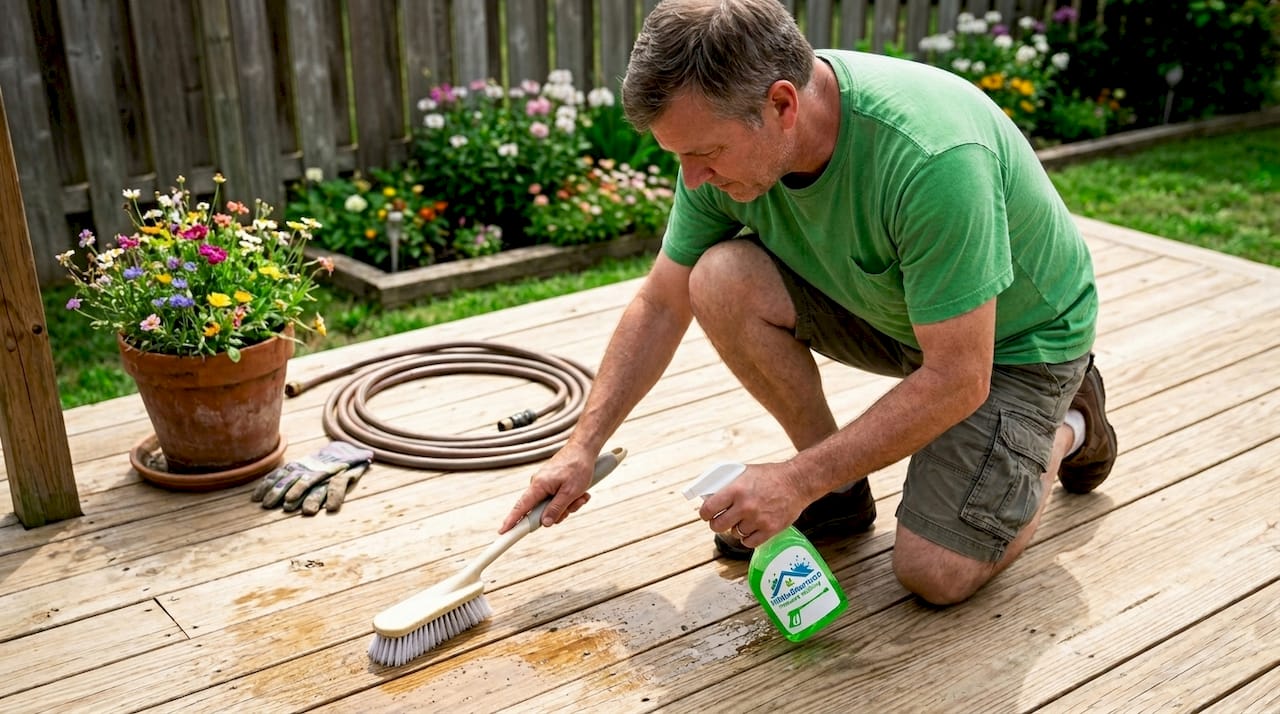
Sweep thoroughly before you start. Remove all loose dirt, leaves, and debris from the entire deck surface. This prevents organic material from diluting your cleaner and reducing its effectiveness. Pay attention to gaps between boards where debris collects.
-
Mix your soft cleaner according to label instructions. Concentration matters. Too diluted and the chemistry won’t work. Too concentrated and you risk leaving residue that interferes with sealing or staining later.
-
Apply section by section, not all at once. Work in manageable areas of about 10 square feet so the cleaner doesn’t dry out before you rinse. Follow the wood grain when applying to help the solution penetrate evenly.
-
Allow the full dwell time. Most soft cleansers need 5 to 15 minutes to complete their chemical action. This dwell time allows the cleaner to address organic growth beneath the surface, not just what’s visible.
-
Scrub gently with a soft-bristle brush. Use straight strokes along the grain. Scratches from stiff brushes on composite surfaces are permanent since sanding cannot remove them. A soft-bristle brush on wood prevents raising the grain unnecessarily.
-
Rinse with low pressure and plenty of water. A standard garden hose with a spray nozzle is ideal. Work the rinse water with the grain and push dirty water off the edges of the deck. Make sure no soapy film remains, especially if you plan to stain or seal after cleaning.
-
Let the deck dry completely before sealing. Give the deck at least 48 hours of drying time in warm weather. Sealing over damp wood traps moisture and defeats the purpose of cleaning.
Pro Tip: Clean your deck annually, ideally in spring before summer use begins. This timing removes the mold and mildew that built up over winter and primes the surface for a fresh coat of sealant or stain.
If your deck hasn’t been cleaned in several years, you may want to look at preventative exterior cleaning strategies before starting. Heavily neglected decks sometimes need a professional assessment before a DIY soft-wash treatment can get the job done fully.
My take on soft cleaners after years of deck care
I’ve watched homeowners destroy decks that had 20 more good years left in them. Not from neglect, but from overcleaning. A pressure washer feels productive. The water sprays hard, the grime flies off immediately, and the deck looks clean the same afternoon. That immediate feedback is seductive. But I’ve seen the results six months later, and they’re not pretty.
What I’ve learned is that the decks that stay beautiful longest are the ones treated with the most restraint. Soft cleansers used consistently, once a year before the heat hits, do more for a deck’s long-term condition than any aggressive treatment ever could. The chemistry does work that pressure and bleach physically cannot. It kills growth at the root. It doesn’t just push surface dirt around.
The biggest pitfall I see is homeowners who use the right cleaner but the wrong method. They buy a quality oxygen-based product and then apply it with a pressure washer at 2,500 PSI because “the chemical will protect it.” It won’t. Improper pressure washing on composite decks damages the protective cap and voids warranties regardless of what cleaner you used beforehand.
My recommendation: treat your deck like it’s worth protecting because it is. Gentle, consistent care with the right soft cleaning solutions will always beat a twice-yearly blast with a pressure washer. The deck you have in ten years will prove the point.
— Bobby
Let Whitediamondpressurewashing handle the heavy lifting
Sometimes a deck is too far gone for a standard DIY soft wash, or the project is simply too large to tackle safely on your own. That’s where professional soft washing makes a real difference.

Whitediamondpressurewashing specializes in soft washing services for residential decks, patios, and exterior surfaces throughout Citrus County and surrounding areas. The team uses industry-approved soft cleaning solutions, controlled application, and proper dwell-time protocols to get deep results without putting your deck at risk. If you want to understand exactly what that process looks like, the soft washing step-by-step guide on the Whitediamondpressurewashing website walks through every stage in detail. For a full overview of available services, visit the exterior cleaning services page to request a free estimate.
FAQ
Why use soft cleansers for decks instead of a pressure washer?
Soft cleansers clean deeply by using chemistry rather than force, which prevents splintering, surface etching, and water intrusion that pressure washing causes. They kill mold and mildew at the root instead of just removing visible surface stains.
Are soft cleansers safe for composite decks?
Yes. Soft cleansers, particularly oxygen-based formulas, are the recommended choice for composite decks because they clean without eroding the protective polymer cap that bleach and high pressure permanently damage.
How often should you clean a deck with soft cleansers?
Cleaning your deck at least once per year, ideally in spring, prevents mold and mildew buildup and protects the surface before staining or sealing season.
Can I use soft cleaning solutions on a patio as well as a wood deck?
Yes. Soft cleaning solutions for patios work on concrete, pavers, and stone in addition to wood and composite. The application method stays the same: apply, dwell, and rinse with low pressure.
What happens if I skip the dwell time when using a soft cleaner?
Skipping dwell time means the cleaner only addresses surface dirt instead of penetrating and breaking down mold or mildew at the root, which leads to faster regrowth and a less thorough clean overall.
Recommended
- Soft Washing Process Explained: A Step-by-Step Guide for Safety – white-diamond-pressure
- Effective Roof Cleaning Techniques for Homeowners – white-diamond-pressure
- Safe and effective non-abrasive washing for homeowners – white-diamond-pressure
- What is deck cleaning? A homeowner’s 2026 guide – white-diamond-pressure
3 thoughts on “Why Use Soft Cleansers for Decks: A Homeowner’s Guide”