

TL;DR:
- Post-wash sealing creates a moisture barrier that extends the life of outdoor surfaces and prevents cracking. It also protects against stains, UV fading, and biological growth, reducing future maintenance needs. Applying the correct sealant after thorough cleaning ensures long-lasting protection and safety for external concrete and paver surfaces.
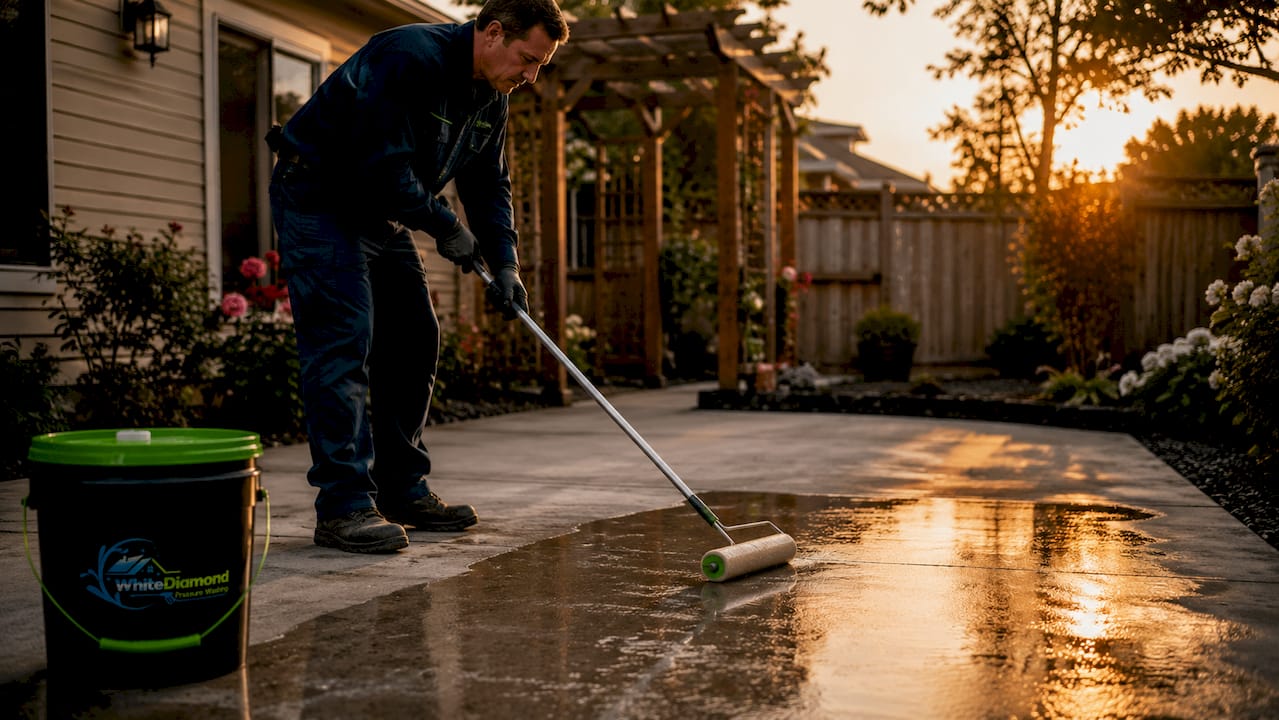
Post-wash sealing is the process of applying a protective sealant directly after pressure washing to lock in the clean surface and shield it from future damage. The industry term for this practice is “post-application sealing,” and it sits at the center of every serious exterior maintenance plan. Sealing creates a moisture barrier that prevents cracking and spalling, extends substrate life, and cuts down on how often you need to clean again. Homeowners and property managers who skip this step are essentially leaving a freshly cleaned surface exposed to the same forces that degraded it in the first place. Understanding why choose post-wash sealing means understanding the difference between a surface that lasts and one that needs replacing.
Why choose post-wash sealing to protect outdoor surfaces?
Post-wash sealing works by closing the pores of your surface before moisture, oils, and biological growth can re-enter. Pressure washing strips away contaminants, but it also opens up the surface texture, making it temporarily more vulnerable. Applying a sealant within the right window captures that clean state and preserves it.
Moisture and freeze-thaw protection
Water is the primary enemy of concrete, pavers, and masonry. When water enters surface pores and freezes, it expands and causes cracking from the inside out. Sealing after pressure washing creates a barrier that stops this cycle before it starts, which is especially critical in climates with cold winters or heavy rainfall.
Stain and biological growth resistance
Sealed surfaces resist oil, grease, and organic stains far better than bare concrete or pavers. Algae and moss need a porous surface to anchor themselves. A properly sealed surface denies them that foothold, which means your driveway or patio stays cleaner for longer between service visits. The post-wash sealant benefits here are direct: fewer stains, less scrubbing, and a surface that looks maintained rather than neglected.
UV fading and weathering defense
Sunlight degrades surface color and texture over time. Sealing protects against UV fading and reduces weathering by reflecting or absorbing UV rays before they break down the surface material. This is particularly visible on colored pavers and stamped concrete, where fading without sealing can be dramatic within a single season.
The key benefits of post-wash sealing at a glance:
- Moisture barrier: Prevents water infiltration that causes cracking and spalling
- Stain resistance: Blocks oil, grease, and biological contaminants from penetrating
- UV protection: Slows color fade and surface degradation from sun exposure
- Extended lifespan: Reduces how often surfaces need repair or replacement
- Cleaner longer: Sealed surfaces resist dirt and organic growth between cleanings
Porous surfaces like driveways should be resealed every 2–3 years depending on traffic volume and local climate. That interval reflects how long a quality sealant holds up against UV exposure and wear before its protective chemistry breaks down.
What are the best sealant types and application practices after washing?
Choosing the wrong sealant for your surface type is one of the most common and costly mistakes homeowners make. The chemistry of the sealer must match the substrate, or the application will fail regardless of how well the surface was cleaned.
Penetrating vs. film-forming sealers
Silane-siloxane penetrating sealers are the right choice for concrete. They absorb into the surface and create an internal water-repellent barrier while remaining vapor-permeable. That breathability matters because trapped moisture beneath a non-permeable sealer causes adhesion failure, whitening (called blushing), and delamination. Film-forming acrylic sealers work well on pavers for aesthetic enhancement, adding gloss and color depth, but they sit on the surface rather than inside it and require more frequent reapplication.
Application steps that prevent failure
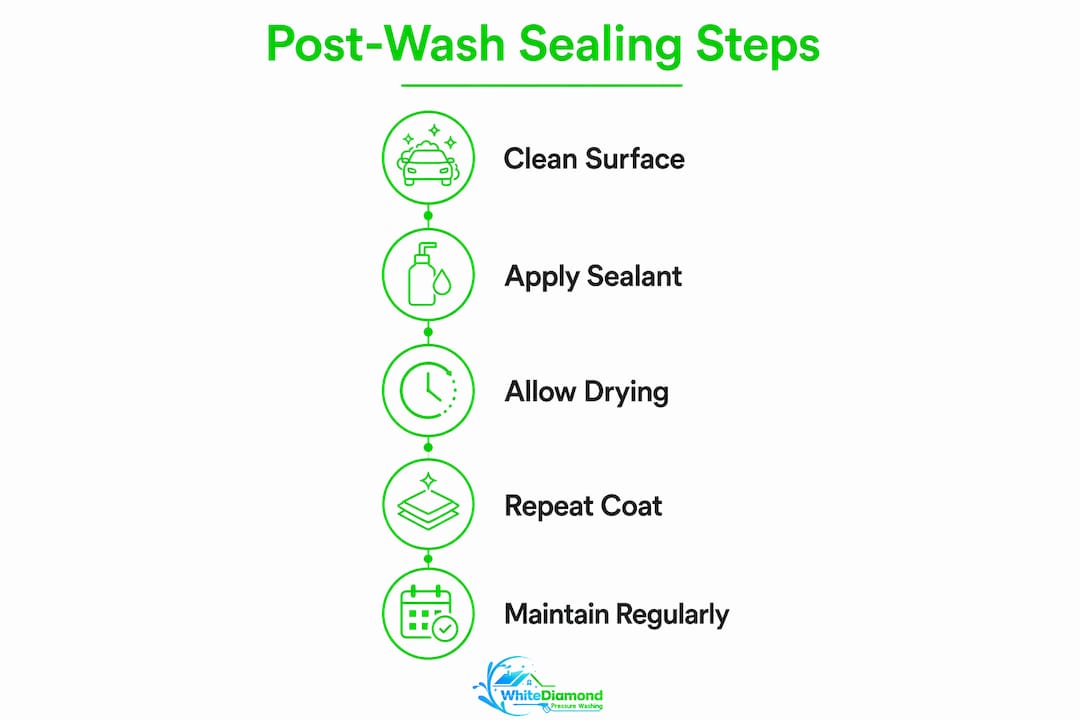
Follow these steps to get a sealing application right:
- Confirm the surface is fully dry. Wait a minimum of 48 hours after pressure washing before applying any sealant. The surface must be dry above 50°F to avoid trapping moisture underneath.
- Inspect for damage and residue. Check for cracks, efflorescence, or remaining dirt. Sealing over damage locks problems in rather than fixing them.
- Choose the correct product for your surface. Match silane-siloxane sealers to concrete and breathable penetrants to natural stone. Use film-forming acrylics only on pavers where aesthetics are the priority.
- Apply at the right coverage rate. Silane-siloxane sealers cover 150–200 square feet per gallon. Applying too thin leaves gaps; applying too thick causes pooling and uneven curing.
- Check the weather forecast. Avoid application if rain is expected within 24 hours or if temperatures will drop below 50°F overnight.
Pro Tip: Apply sealant in two thin coats rather than one heavy coat. The first coat penetrates and bonds; the second coat fills any gaps the first missed. This approach produces more even coverage and better long-term adhesion.
Sealing is not a cure for pre-existing damage. Sealing over improperly cleaned surfaces locks in grime and worsens problems over time. Professional-grade cleaning before sealing is not optional; it is the foundation the entire process depends on.
How does post-wash sealing simplify future maintenance and enhance safety?
Sealing does more than protect surfaces from damage. It actively reduces the amount of work required to keep those surfaces looking good and safe to use.
Organic growth control
Sealing inhibits algae and moss growth by preventing the deep contaminant penetration these organisms need to establish themselves. On an unsealed surface, algae can root into pores and require aggressive chemical treatment to remove. On a sealed surface, organic growth sits on top and washes off with far less effort. This directly reduces how often you need intensive cleaning services.
Joint sand stabilization in pavers
Paver installations rely on joint sand to hold individual units in place. Without sealing, rain and foot traffic wash that sand out over time, causing pavers to shift and weeds to grow in the gaps. Sealing stabilizes joint sand, locks the surface together, and blocks weed seeds from finding purchase. Property managers with large paver areas see significant savings in weed control and paver re-leveling costs when sealing is part of the routine.
Slip resistance improvements
Wet outdoor surfaces are a genuine safety hazard, particularly around pool decks and high-traffic walkways. Certain sealers include anti-slip additives that improve traction on wet surfaces. Sealing pool deck areas reduces slip risk while also protecting the surface from chlorine splash and UV damage simultaneously.
Maintenance and safety benefits at a glance:
| Benefit | Practical impact |
|---|---|
| Organic growth resistance | Less frequent deep cleaning needed |
| Joint sand stabilization | Fewer weeds, less paver shifting |
| Slip resistance | Safer pool decks and walkways |
| Stain repellency | Easier routine cleaning |
What practical steps should homeowners follow post-wash to seal correctly?
Timing and preparation determine whether a sealing job succeeds or fails. Getting the sequence right is straightforward once you know what to watch for.
- Wait for full surface drying. The 48-hour dry window is non-negotiable. Applying sealant to a damp surface causes the adhesion failures described above, including blushing and delamination that require full stripping to fix.
- Check surface temperature. The surface and ambient air must both be above 50°F during application and for at least 24 hours after. Cold temperatures prevent proper curing.
- Inspect the surface carefully. Look for cracks, chips, or areas where the pressure wash revealed underlying damage. Repair these before sealing, not after.
- Select a product suited to your climate. In humid climates like Citrus County, Florida, vapor-permeable sealers are especially important because moisture movement through the surface is constant. A non-breathable sealer in a humid environment traps moisture and fails quickly.
- Plan around the season. Spring and fall offer the most consistent temperatures for sealing. Avoid sealing in the peak of summer when surfaces heat up rapidly and sealant can cure unevenly.
Pro Tip: Run a simple water-bead test before resealing. Pour a small amount of water on the surface. If it beads up, the existing sealer is still working. If it absorbs immediately, the surface is ready for a new coat.
The driveway maintenance checklist from Whitediamondpressurewashing covers coverage rates and protection guidelines that apply to most residential concrete and paver surfaces. Following a structured checklist removes the guesswork from timing and product selection.
Key Takeaways
Post-wash sealing is the single most effective step homeowners can take after pressure washing to extend surface life, reduce maintenance costs, and improve safety.
| Point | Details |
|---|---|
| Sealing creates a moisture barrier | Prevents cracking, spalling, and freeze-thaw damage in concrete and pavers. |
| Wait 48 hours before sealing | Applying sealant to a damp surface causes adhesion failure and costly stripping. |
| Match sealer to substrate | Use silane-siloxane penetrants for concrete; film-forming acrylics for paver aesthetics. |
| Reseal every 2–3 years | Traffic and UV exposure break down sealant chemistry within this window. |
| Sealing reduces maintenance frequency | Sealed surfaces resist organic growth and stains, cutting down on deep cleaning needs. |
What I’ve learned from watching homeowners skip this step
Most homeowners treat pressure washing as the finish line. The surface looks clean, the job feels done, and sealing gets pushed to “maybe next time.” I’ve seen that decision play out badly more times than I can count.
A freshly washed concrete driveway is actually at its most vulnerable right after cleaning. The pores are open, the surface is bare, and the next rain or oil drip goes straight in. Sealing shifts the value from a one-time clean to a long-term protection strategy. That shift is where the real savings live.
The financial case is straightforward. Replacing a concrete driveway or paver patio costs thousands of dollars. Resealing every 2–3 years costs a fraction of that. The homeowners who reseal consistently almost never face premature surface replacement. The ones who skip it often find themselves looking at repair bills within five to seven years.
The mistake I see most often is rushing the dry time. Someone gets impatient after 24 hours, applies the sealer, and ends up with a milky, hazy surface that has to be stripped and redone. That doubles the cost and the effort. Waiting the full 48 hours at the right temperature is not caution. It is the job done correctly.
Sealing also belongs in your seasonal maintenance plan, not as a reaction to visible damage. By the time you can see the surface deteriorating, the protective window has already closed. Schedule it proactively, pair it with your regular exterior cleaning services, and your outdoor surfaces will hold up far longer than those of neighbors who only clean.
— Bobby
Whitediamondpressurewashing can handle your post-wash sealing
Pressure washing and sealing work best when done together by the same experienced team. Whitediamondpressurewashing provides professional exterior cleaning paired with expert sealant application for residential and commercial properties across Citrus County and surrounding areas.
The team at Whitediamondpressurewashing matches the right sealer to your specific surface type and local climate conditions, so you get protection that actually holds. Whether you have a concrete driveway, a paver patio, or a pool deck, the full range of services covers cleaning and sealing as a complete package. Contact Whitediamondpressurewashing for a free estimate and a maintenance plan built around your property’s needs.
FAQ
Is post-wash sealing necessary after every pressure wash?
Sealing is not required after every wash, but surfaces should be resealed every 2–3 years to maintain full protection against moisture, UV damage, and staining.
How long should I wait to seal after pressure washing?
Wait a minimum of 48 hours after pressure washing before applying sealant, and confirm the surface temperature stays above 50°F during and after application.
What happens if I seal a surface that is still damp?
Sealing over trapped moisture causes adhesion failure, blushing, and delamination. Fixing this requires full stripping of the failed sealer, which significantly increases cost and labor.
What is the best sealant for a concrete driveway?
Silane-siloxane penetrating sealers are the best choice for concrete driveways. They absorb into the surface, repel water, and remain vapor-permeable to prevent moisture buildup beneath the coating.
Does sealing improve safety on pool decks?
Sealing pool decks with a product that includes anti-slip additives reduces wet-surface slip risk while also protecting the concrete or pavers from chlorine and UV exposure.
Recommended
- Sealant Application After Washing: A Homeowner’s Guide – white-diamond-pressure
- What Is Exterior Sealing: A Homeowner’s 2026 Guide – white-diamond-pressure
- Surface sealing: protect and enhance your outdoor surfaces – white-diamond-pressure
- Soft Washing vs Power Washing – Choosing the Right Method – white-diamond-pressure