

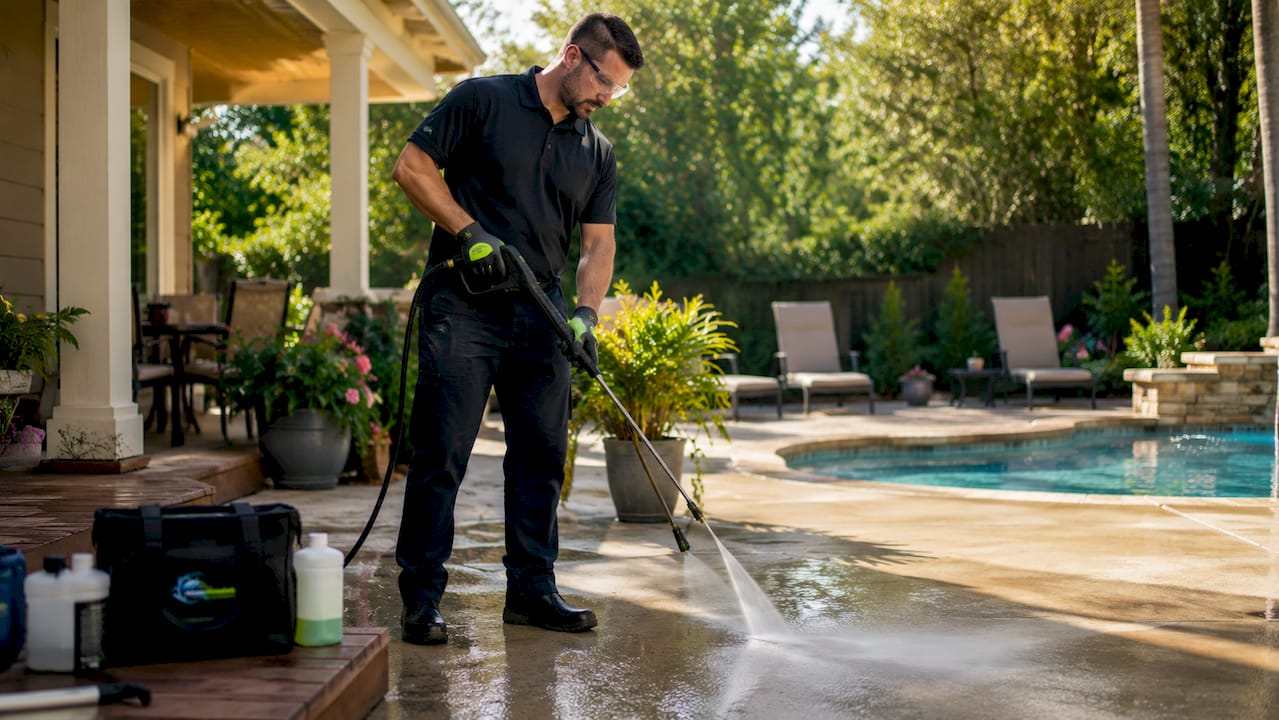
TL;DR:
- Post-wash neutralization is a chemical process that restores a surface’s pH to neutral after exterior cleaning. It stops residual alkaline bleach from causing ongoing chemical damage to surfaces, plants, and equipment, and ensures proper surface preservation. Professionals verify neutralization using pH testing to prevent long-term deterioration and environmental harm.
Post-wash neutralization is the chemical process of restoring a surface’s pH to neutral (around 7.0) immediately after exterior cleaning. Sodium hypochlorite, the bleach used in soft washing and pressure washing, leaves an alkaline residue that water alone cannot fully remove. That residue keeps reacting with your siding, concrete, trim, and landscaping long after the crew packs up. Understanding what is post-wash neutralization is the first step toward protecting your property from invisible, ongoing chemical damage. Whitediamondpressurewashing treats neutralization as a required step, not an optional add-on.
What is post-wash neutralization and why does it matter?
Post-wash neutralization is an acid-base reaction applied to a cleaned surface to stop residual alkaline chemicals from causing further damage. The industry term for this process is “pH correction” or “post-wash pH adjustment,” and it is standard practice among professional exterior cleaning crews. Skipping it leaves your surfaces in a chemically active state that degrades finishes, stains concrete, and kills nearby plants.
Sodium hypochlorite, the primary cleaning agent in soft washing, sits between pH 11 and 13 on the alkalinity scale. Surfaces exposed to that level of alkalinity without correction can suffer mineral encrustation, surface wear, and premature material breakdown. Residual alkalinity between pH 8 and 11 is enough to cause measurable damage to siding and concrete over time.
The importance of post-wash treatment goes beyond aesthetics. Landscaping around your home is especially vulnerable. Bleach runoff that has not been neutralized can burn grass, shrubs, and flower beds. A neutralizing agent applied correctly stops those reactions before they reach your plants.
How does the neutralization process work chemically?
Neutralization follows a straightforward acid-base reaction: acid plus base produces salt and water. In exterior cleaning, a mildly acidic neutralizing agent is applied to the alkaline surface left by bleach, and the two chemicals react to produce a neutral salt solution that rinses away cleanly.
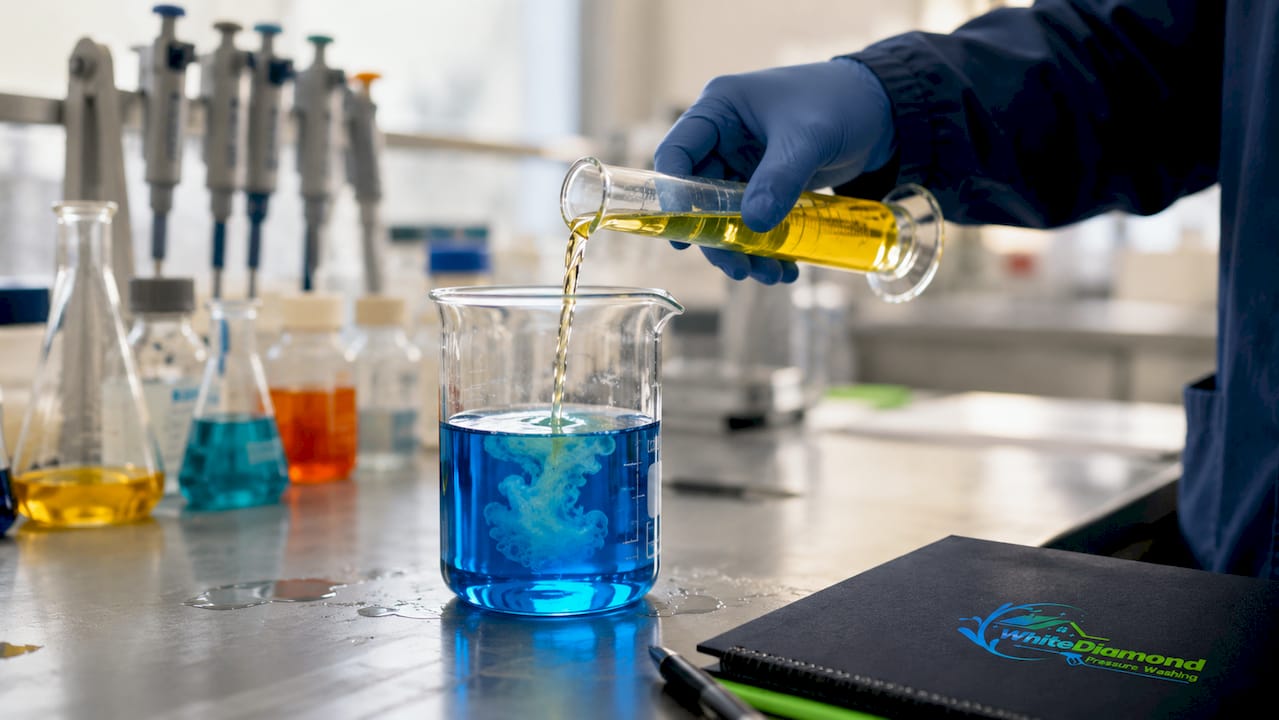
The critical difference between neutralization and plain rinsing is chemical versus physical action. Water dilutes surfactants but cannot chemically stop active bleach’s oxidizing effects on porous materials. Neutralization chemically “shuts off” those reactions. That distinction matters most on wood siding, painted surfaces, and natural stone, where bleach can keep working its way into the material even after the surface looks dry.
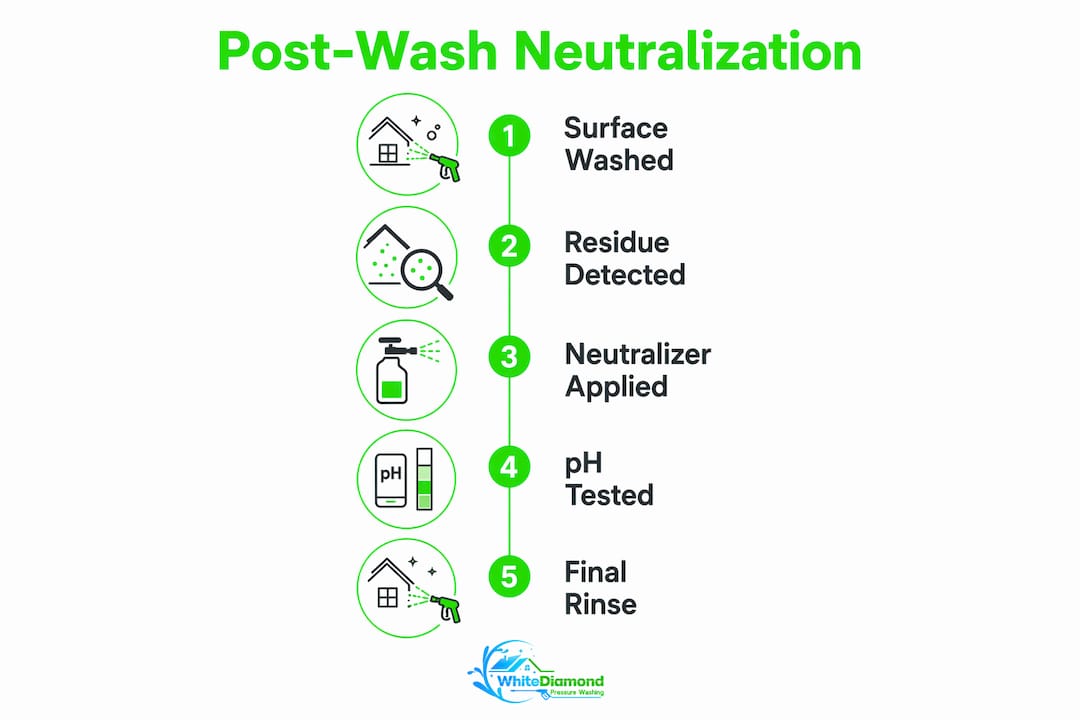
Neutralization achieves pH stability with a fraction of the water volume needed for dilution rinsing alone. That means less water used, less runoff into storm drains, and faster completion of the cleaning job.
How professionals verify surface pH
Verification is not optional. Professionals use pH strips, digital pH meters, or conductivity meters to confirm that a surface has returned to neutral after treatment. A reading near 7.0 confirms the neutralization process is complete. Without testing, there is no way to know whether the chemical reaction finished or whether residual alkalinity remains.
Pro Tip: Ask your cleaning crew to show you a pH strip reading after neutralization. A neutral result near 7.0 is the only reliable confirmation that the process worked.
Key neutralizing agents used in professional exterior cleaning include:
- Specialized buffered neutralizers formulated for exterior surfaces, such as products in the Post Wash category from professional chemical suppliers
- Citric acid solutions applied at controlled concentrations
- Oxalic acid blends used on wood and concrete where iron staining is also a concern
- Sodium thiosulfate in applications where dechlorination of runoff is a regulatory concern
What are the benefits of post-wash neutralization for property maintenance?
Neutralization protects four things at once: your building materials, your landscaping, your cleaning equipment, and your water supply.
Protecting building materials
Concrete, painted wood, vinyl siding, and window trim all react differently to alkaline residues, but none of them benefit from prolonged exposure. Without neutralization, surfaces remain in a chemically active state longer, risking poor finish longevity and progressive deterioration. Neutralization stops that process at the source. Property owners who schedule regular exterior cleaning with a proper neutralization step consistently see longer intervals between repaints and resealings.
Protecting landscaping and soil
Bleach runoff that reaches soil raises its pH, which locks out nutrients that plants need. A neutralized rinse brings the soil pH back toward the range where grass and shrubs can absorb nitrogen and phosphorus normally. This is especially relevant for properties in Citrus County, where sandy soils are already sensitive to chemical imbalance.
Protecting cleaning equipment
Neutralizers prevent rust and damage to seals and pumps in cleaning equipment. Residual bleach left in hoses, pumps, and spray tips corrodes metal components and degrades rubber seals. Running a neutralizing solution through the system after each job extends equipment life significantly. That benefit passes directly to property owners through more reliable service and lower equipment-related delays.
Water conservation
Heavy rinsing to dilute bleach residue uses far more water than a targeted neutralizer application. Neutralization saves water by replacing volume-based dilution with chemistry-based reaction. For commercial property managers overseeing large parking structures or building facades, that difference adds up across multiple cleaning cycles per year.
How is post-wash neutralization applied in professional exterior cleaning?
Professional crews apply neutralizers through three main systems, each suited to different job sizes and surface types.
- Pump sprayers are used for targeted application on smaller surfaces like window trim, decorative stone, or entry walkways. Mixing ratios typically range from 4 to 18 oz per 5 gallons of water, depending on the sodium hypochlorite concentration used in the initial wash.
- Proportioner systems use dial settings (typically 1 through 4) to meter neutralizer into the water stream automatically. These are common on larger commercial jobs where consistency across a wide surface area is critical.
- X-Jet and Down-Streamer systems inject neutralizer downstream of the pump, protecting the pump itself from chemical exposure while delivering an even application across large vertical surfaces like building facades.
Choosing the right system depends on the cleaning intensity and surface type. A lightly washed vinyl fence needs far less neutralizer than a heavily treated concrete driveway that received a high-concentration bleach application. Trained technicians adjust the ratio based on the original sodium hypochlorite strength and the porosity of the surface.
Pro Tip: Never adjust neutralizer ratios by guessing. Verify with a pH meter before and after application. Over-applying an acidic neutralizer can push the surface below pH 6.0, which creates a different set of problems for concrete and metal surfaces.
The importance of calibrated equipment cannot be overstated. Improperly calibrated proportioners deliver inconsistent neutralizer concentrations, which means some areas of the surface get corrected while others remain alkaline. Scheduled equipment checks and water quality testing prevent that outcome.
What misconceptions surround post-wash neutralization?
The most common misconception is that rinsing longer with more water solves the problem. It does not. Water dilutes bleach but cannot stop active oxidation on porous materials. Doubling the rinse time on a concrete driveway still leaves reactive bleach molecules embedded in the surface. Only a chemical neutralizer stops that reaction.
A second misconception is that any household acid works as a neutralizer. White vinegar, for example, is acetic acid at roughly 5% concentration. It is inconsistent, volatile, and not formulated for exterior surface chemistry. Specialized buffered neutralizers are preferable to generic acids because they offer consistent, non-volatile pH adjustment without raising chemical oxygen demand in runoff. Generic acids are harder to control and risk substrate damage if the concentration is even slightly off.
A third misconception is that neutralization is only necessary after heavy bleach applications. Even low-concentration sodium hypochlorite leaves residual alkalinity that affects sensitive materials. Landscaping and painted wood surfaces are particularly vulnerable to low-level residues that accumulate over multiple cleaning cycles.
- Relying on visual inspection instead of pH testing leaves residual alkalinity undetected
- Using generic household acids instead of buffered neutralizers creates inconsistent results
- Skipping neutralization on “light” washes ignores cumulative chemical exposure on sensitive surfaces
- Failing to flush equipment with neutralizer after jobs accelerates pump and seal corrosion
- Assuming more water volume equals better neutralization misunderstands the chemistry entirely
Pro Tip: Request that your cleaning contractor show you their pH testing protocol before booking. A crew that cannot explain their verification method is likely skipping the step entirely.
Why I treat neutralization as the real finish line
Why I treat neutralization as the real finish line
After years of watching exterior surfaces age, I have come to see neutralization as the second half of cleaning, not an afterthought. The wash removes the dirt. The neutralization stops the chemistry. Without both, you have only done half the job.
Property managers often focus on what a surface looks like immediately after cleaning. That is understandable. But the damage from skipped neutralization shows up weeks later, in faded paint, chalky concrete, or dead shrubs along the foundation. By then, the connection to the cleaning job is easy to miss.
I have seen properties where the same concrete driveway was cleaned annually for five years without neutralization. The surface looked fine after each wash. By year four, the concrete had developed a chalky, porous texture that held stains far more readily than before. The bleach had been slowly degrading the surface binder with every cycle.
Working with a professional crew that tests pH before and after neutralization is not a luxury. It is the standard that separates a cleaning service from a surface preservation service. Property owners who learn the soft washing process in full, including the neutralization step, are the ones who get the most out of their investment.
The environmental angle matters too. Neutralized runoff is safer for storm drains, soil, and nearby water features. Demanding neutralization as a standard part of your cleaning contract is one of the simplest ways to reduce your property’s chemical footprint without sacrificing cleaning results.
— Bobby
How Whitediamondpressurewashing protects your surfaces after every wash

Whitediamondpressurewashing builds post-wash pH adjustment into every exterior cleaning service for residential and commercial properties across Citrus County. The team uses calibrated proportioner systems and pH meters to verify neutral surface readings before leaving the job site. That means your siding, concrete, trim, and landscaping are protected from residual chemical damage, not just visually clean.
Property owners who want exterior cleaning done right can request a free estimate directly through the Whitediamondpressurewashing website. The team’s specialty cleaning products and surface-specific neutralization protocols are available for both single-family homes and commercial properties throughout the region.
Key takeaways
Post-wash neutralization is the chemical step that stops residual bleach from damaging exterior surfaces after cleaning, and skipping it leaves your property at risk regardless of how thorough the wash appeared.
| Point | Details |
|---|---|
| Neutralization stops active chemistry | Water rinsing dilutes bleach but cannot stop oxidation on porous surfaces; only a neutralizer chemically ends the reaction. |
| Target pH is around 7.0 | Professionals verify neutralization with pH strips or meters; a reading near 7.0 confirms the process is complete. |
| Buffered neutralizers outperform generic acids | Specialized products deliver consistent, safe pH correction; household acids like vinegar are unreliable and risk substrate damage. |
| Equipment protection is a dual benefit | Running neutralizer through pumps and hoses after each job prevents corrosion and extends equipment life. |
| Water conservation is a real outcome | Neutralization achieves pH stability with far less water than extended rinsing, reducing runoff and resource use. |
FAQ
What is post-wash neutralization in simple terms?
Post-wash neutralization is the step where a mildly acidic solution is applied to a cleaned surface to stop residual bleach from continuing to react with the material. It restores the surface pH to a neutral level near 7.0.
Why can’t I just rinse longer with water instead?
Water dilutes bleach but cannot chemically stop its oxidizing effects, especially on porous surfaces like concrete or wood. A neutralizing agent is the only way to chemically end the reaction.
How do professionals know when neutralization is complete?
Professionals use pH strips or digital pH meters to test the surface after applying a neutralizer. A reading near 7.0 confirms the surface has returned to a safe, neutral state.
Is post-wash neutralization necessary after every cleaning?
Yes, any cleaning that uses sodium hypochlorite leaves alkaline residue that requires neutralization. Even low-concentration applications affect sensitive materials like painted wood and landscaping over time.
What happens to landscaping if neutralization is skipped?
Unneutralized bleach runoff raises soil pH, which blocks plants from absorbing nutrients. Grass, shrubs, and flower beds near the cleaned surface can show burn damage or slow decline within days of the cleaning.