

TL;DR:
- Proper multi-stage filtration, including pre-filters, reverse osmosis, and deionization, produces 0 ppm TDS water critical for streak-free cleaning results. Maintaining and matching filtration stages to local water hardness reduces operating costs, extends equipment life, and ensures quality outcomes. Regular filter replacements, daily TDS monitoring, and system optimization are essential for long-term performance and business profitability.
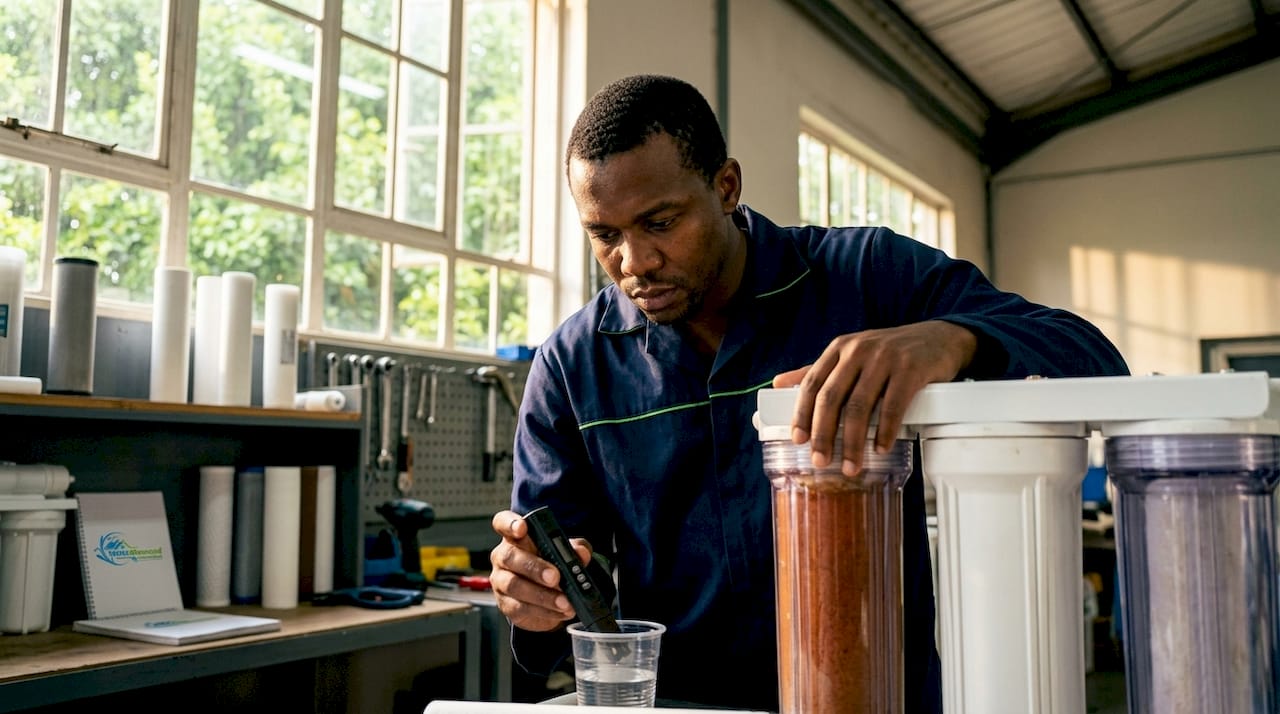
Filtration in water-fed cleaning is defined as the multi-stage process that removes dissolved minerals, chlorine, and sediment from tap water to produce pure water at 0 ppm TDS (total dissolved solids). That purity is what makes spot-free, streak-free results possible without chemical detergents or squeegees. Industry standards require 0 ppm TDS water for professional water-fed cleaning because any residual mineral content leaves visible deposits as water evaporates. The three core filtration stages, pre-filters, reverse osmosis (RO) membranes, and deionization (DI) resin, work in sequence to achieve that standard. Understanding how each stage functions, and how to maintain the system, directly determines your cleaning quality and operating costs.
What filtration stages make up water-fed cleaning systems?
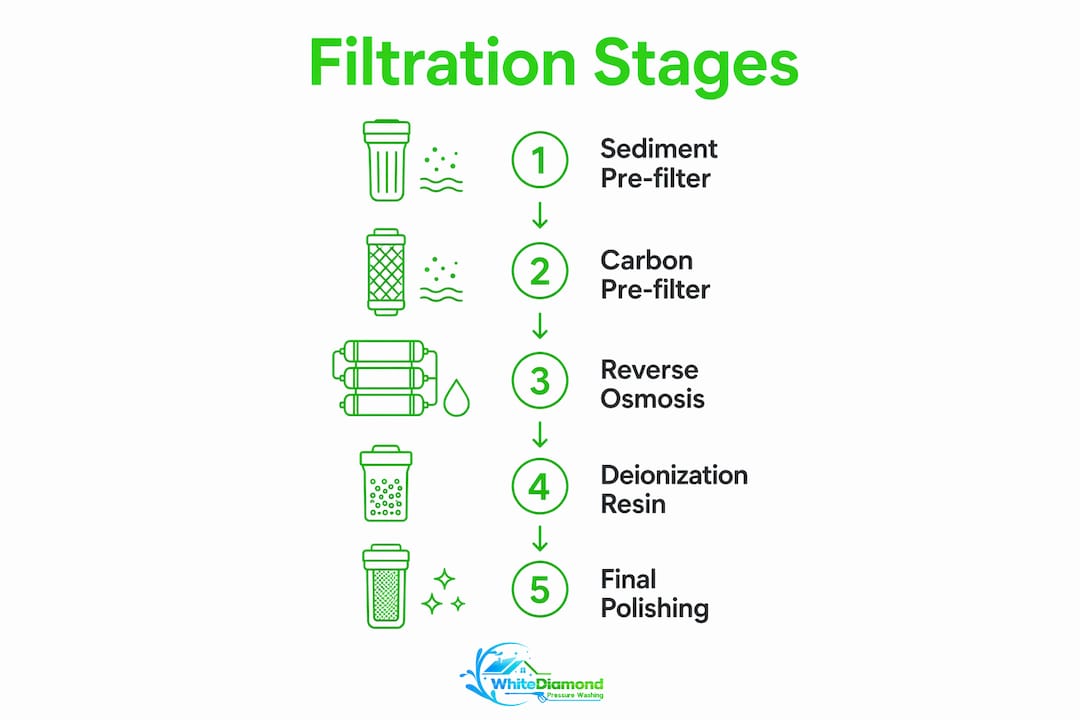
Water-fed cleaning systems rely on a sequential, multi-stage filtration process. Each stage has a specific job, and skipping or neglecting any one of them degrades the entire system.
Stage 1: Sediment and carbon pre-filters
Pre-filters are the first line of defense. A sediment pre-filter removes physical particles like rust, sand, and debris that would otherwise clog the RO membrane. The carbon pre-filter handles chlorine, which is the single biggest threat to membrane longevity. Chlorine degrades RO membranes rapidly, shortening their lifespan from years to months if left unfiltered. Pre-filters are inexpensive to replace and protect the most costly components downstream.
Stage 2: Reverse osmosis membrane
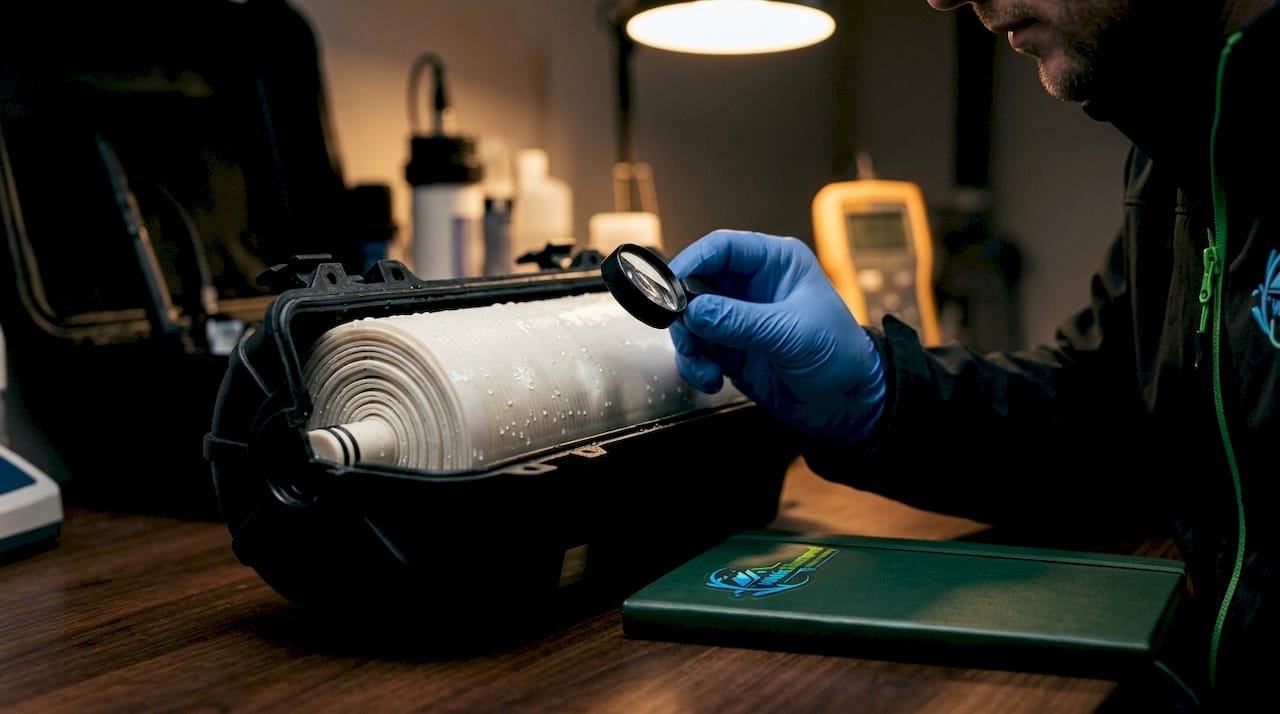
The RO membrane does the heavy lifting. It forces water through a semi-permeable barrier that removes 95–99% of dissolved solids, including calcium, magnesium, and other hardness minerals. That reduction in TDS dramatically reduces the load on the DI resin that follows. Without an RO stage, DI resin exhausts quickly in hard water areas, driving up consumable costs.
Stage 3: Deionization resin
DI resin is the final polishing stage. It captures the remaining ions that passed through the RO membrane, bringing water to a true 0 ppm TDS finish. At that purity level, water evaporates from glass and surfaces without leaving any residue. The resin is exhaustible, meaning it needs replacement once it can no longer hold ions. In a well-designed system, the RO membrane spares the resin from rapid exhaustion.
Pro Tip: Replace sediment and carbon pre-filters on a regular schedule, typically every 3–6 months depending on usage volume. Neglecting them forces the RO membrane to handle contaminants it was never designed to process, which shortens its life and raises your repair costs.
How does effective filtration improve cleaning outcomes and efficiency?
The cleaning performance of any water-fed system traces directly back to filtration quality. This is not a secondary concern. Water-fed cleaning’s effectiveness derives entirely from the purity of the water it delivers.
Here is what proper filtration achieves in practice:
- Spot-free results on glass. Tap water with high TDS leaves mineral deposits as it dries. Water at 0 ppm TDS evaporates clean, eliminating the need for a second pass or squeegee work.
- No chemical detergents required. Pure water has a strong molecular attraction to dirt and organic material. That property alone lifts grime from surfaces without added chemicals, reducing both cost and environmental impact.
- Faster job completion. Cleaning professionals using properly filtered water report fewer callbacks for streaking or spotting. Fewer callbacks mean more billable hours per day.
- Equipment protection. Mineral-laden water deposits scale inside pumps, hoses, and brush heads over time. Pure water prevents that buildup, extending equipment life.
“Filtration is the true engine of a water-fed cleaning system. The pole, the brush, and the pump are just delivery tools. Without pure water at the end of the line, none of them produce professional results.”
Filtration cost is also the hidden core business cost in water-fed cleaning. A system designed without matching the filtration media to local water hardness will burn through DI resin at a rate that erodes profit margins. Matching filtration media to the contaminant profile of your local water supply reduces total system resistance and operating cost. That is a business decision, not just a technical one.
How do you choose the right filtration system for your water supply?
The choice between a DI-only system and a combined RO/DI system depends on your local water hardness and daily water volume. Getting this decision right protects your margins.
| Water hardness (TDS) | Recommended system | Key reason |
|---|---|---|
| Below 150 ppm | DI-only | Low mineral load; resin lasts long enough to be cost-effective |
| 150–300 ppm | RO/DI | RO reduces resin load significantly; lower consumable cost |
| Above 300 ppm | RO/DI (essential) | DI-only causes excessive resin exhaustion and cost |
In hard water zones exceeding 200–300 ppm TDS, DI-only systems cause excessive resin costs. The RO membrane handles bulk mineral removal, sparing the DI resin for final polishing only. That division of labor is what makes RO/DI systems cost-effective at scale. For cleaning professionals working in areas like Citrus County, where water hardness varies by source, knowing your local TDS baseline is not optional.
For homeowners and property managers researching water filtration options, understanding under-sink filtration principles also helps clarify how pre-filtration stages protect downstream equipment, whether in a residential or commercial context.
Pro Tip: Test your tap water TDS before purchasing any system. A basic TDS meter costs under $20 and gives you the data you need to choose the right configuration. Test again after each filtration stage to confirm each component is performing correctly.
What maintenance practices keep filtration systems performing long-term?
Maintenance is where most cleaning professionals lose money. A well-chosen system that is poorly maintained performs worse than a modest system that is properly serviced.
Follow these practices to protect your investment:
- Replace sediment pre-filters every 3–6 months. Pre-filter replacement schedules depend on water volume and local sediment levels. High-volume operations may need more frequent changes.
- Never skip the carbon pre-filter. Carbon pre-filters are non-optional. Chlorine shortens membrane lifespan from years to months when left unfiltered. This is the single most preventable cause of RO membrane failure.
- Monitor TDS at the output daily. A rising TDS reading at the DI output signals resin exhaustion. Catching it early prevents you from delivering substandard results to clients.
- Check system pressure regularly. A drop in output pressure often indicates a clogged pre-filter or a failing membrane. Address pressure changes before they cause downstream damage.
- Log your filter replacement dates. Tracking replacement history helps you predict costs and avoid emergency replacements during peak work periods.
Ignoring filter maintenance leads to premature RO membrane failure, which is the most costly single repair in a water-fed system. Proper sequential filtration design reduces both resin and membrane replacement frequency. The economics are straightforward: a $15 pre-filter change prevents a $200 membrane replacement.
Pro Tip: Set a recurring calendar reminder for pre-filter checks rather than relying on visual inspection. Sediment and carbon filters can appear functional while already failing to protect the membrane.
Key Takeaways
Proper filtration is the single most important factor in water-fed cleaning performance, determining both result quality and long-term operating costs.
| Point | Details |
|---|---|
| 0 ppm TDS is the standard | RO and DI stages combined achieve the purity level required for spot-free results. |
| System choice depends on water hardness | Use RO/DI when local TDS exceeds 150 ppm to protect resin and reduce consumable costs. |
| Pre-filters protect the whole system | Replacing sediment and carbon filters every 3–6 months prevents costly membrane failure. |
| Filtration drives business economics | Mismatched filtration media burns through resin and erodes profit margins over time. |
| TDS monitoring is non-negotiable | Daily output testing catches resin exhaustion and membrane decline before they affect results. |
What I’ve learned about filtration that most guides won’t tell you
After working with water-fed cleaning systems across different water profiles, the pattern I see most often is professionals who invest in good equipment and then underinvest in the filtration side. They buy a quality pole and brush setup, then pair it with a DI-only system in a 300 ppm hard water area. Within weeks, resin costs are eating their margins and they blame the system rather than the design decision.
The uncomfortable truth is that filtration is a system design problem, not a product selection problem. Increasing pump pressure does not compensate for mismatched filter media. Filtration must be optimized as a whole system, with each stage matched to the upstream water conditions. I have seen operations cut their consumable costs significantly just by adding an RO stage in front of an existing DI setup, with no other changes.
The other mistake I see constantly is skipping pre-filtration to save money upfront. Carbon and sediment filters feel like minor accessories until the RO membrane fails six months into a job. At that point, the “savings” from skipping a $15 filter change become a $200 replacement and a week of downtime. The math never works in favor of cutting corners on pre-filtration.
My advice is to treat your filtration system like a piece of diagnostic equipment. Test your water, log your readings, and replace filters on a schedule rather than waiting for performance to drop. The professionals who do this consistently are the ones who keep their equipment running for years and their callbacks close to zero. That is not luck. It is system discipline.
— Bobby
Professional water-fed cleaning services in Citrus County
Whitediamondpressurewashing brings professional-grade water-fed cleaning expertise to residential and commercial properties across Citrus County. The team understands that local water conditions directly affect filtration performance and cleaning results.

Whether you need exterior surfaces cleaned to a spot-free finish or want guidance on safe, non-abrasive washing methods for your property, Whitediamondpressurewashing has the equipment and technical knowledge to deliver consistent results. The full range of exterior cleaning services covers everything from roofs and driveways to windows and walkways. Contact Whitediamondpressurewashing for a free estimate and find out what properly filtered water can do for your property.
FAQ
What is the role of filtration in water-fed cleaning?
Filtration removes dissolved minerals and contaminants from tap water to produce 0 ppm TDS pure water. That purity allows water to evaporate from surfaces without leaving spots, streaks, or residue.
Why is RO/DI better than DI-only in hard water areas?
In areas with TDS above 150 ppm, an RO membrane removes 95–99% of dissolved solids before water reaches the DI resin. This dramatically extends resin life and reduces consumable costs compared to a DI-only setup.
How often should pre-filters be replaced in a water-fed system?
Sediment and carbon pre-filters should be replaced every 3–6 months depending on water volume and local water quality. Carbon filters are especially critical because chlorine destroys RO membranes if left unfiltered.
How do I know when my DI resin is exhausted?
A TDS meter at the system output will show a rising reading as resin exhausts. Any reading above 0 ppm at the final output means the resin needs replacement before it affects cleaning results.
Does filtered water really clean without chemicals?
Pure water at 0 ppm TDS has a strong molecular attraction to dirt and organic material. That property allows it to lift grime from glass and surfaces without chemical detergents, making water-fed cleaning both effective and environmentally safe.
Recommended
- The Role of Surface Porosity in Cleaning Efficiency – white-diamond-pressure
- The Role of Low-Pressure Rinsing in Exterior Cleaning – white-diamond-pressure
- The Role of Surface Coatings After Cleaning Explained – white-diamond-pressure
- Role of Water Pressure in Safe Exterior Cleaning – white-diamond-pressure