

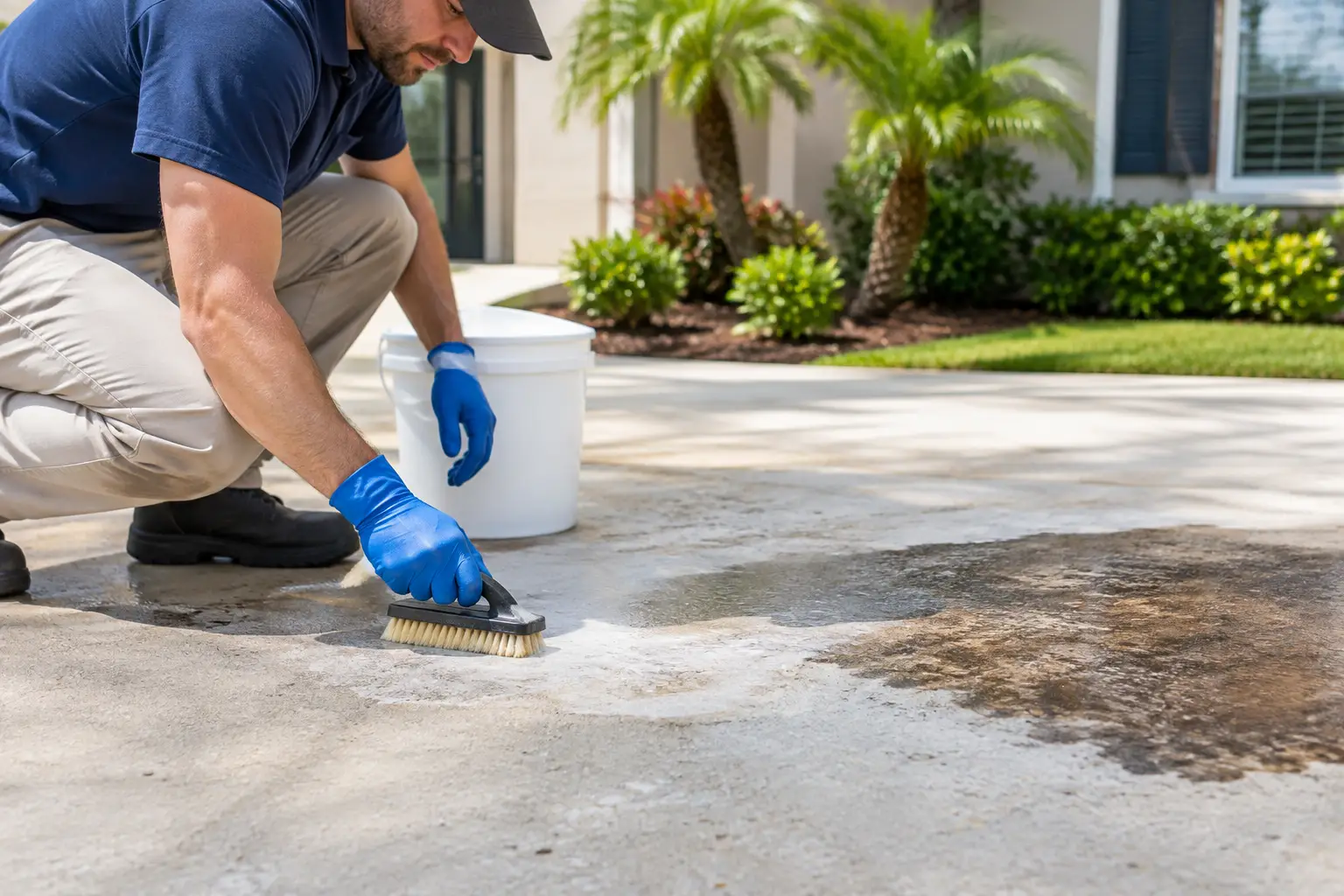
A driveway can look clean one month and appear blotchy, dark, or rust-stained the next. In Citrus County, frequent rain, humidity, irrigation, oak debris, and everyday vehicle use give stains plenty of chances to settle into concrete. Professional concrete stain removal addresses more than surface dirt. It targets the cause of the discoloration while treating your driveway, walkway, patio, or pool deck with the care it deserves.
For homeowners in Homosassa and surrounding Central Florida communities, the goal is not simply blasting a slab until it looks lighter. The right process restores curb appeal, improves footing, and helps preserve the clean, well-kept appearance of your property. Some stains lift quickly. Others require a more patient approach, the right cleaning agent, and surface-appropriate pressure.
What Is Causing the Stain on Your Concrete?
Concrete is tough, but it is also porous. Tiny openings in the surface allow moisture, dirt, oils, and organic matter to work their way in. Once that happens, a garden hose or a quick rinse usually will not make much difference.
In Florida, dark green or black discoloration is often algae, mildew, or moisture-fed organic growth. These stains thrive on shaded walkways, driveways with poor drainage, pool decks, and concrete beneath trees. They can make a surface look neglected, but they can also become slick when wet.
Other stains tell a different story. Orange and brown marks may come from irrigation water with iron, rusting metal furniture, fertilizer, or battery leaks. Dark spots near parked vehicles often point to oil or fluid drips. Leaves, acorns, mulch, and tannins can leave brown or nearly black stains after a wet season. Paint, tire marks, and old sealant failure may require specialized treatment rather than standard exterior cleaning.
The stain matters because the method matters. Cleaning every discoloration with the same pressure setting or chemical can leave the mark behind, etch the concrete, or create a noticeably uneven finish.
Why High Pressure Is Not Always the Answer
It is easy to assume that more pressure means a cleaner driveway. In reality, excessive pressure can cut into concrete, expose aggregate, create striping, and leave a rougher surface that collects dirt faster. The risk is greater on older concrete, decorative finishes, pavers, and areas that have already been weakened by weather and previous cleaning.
A professional starts by evaluating the surface and the stain. That includes checking whether the concrete is sealed, whether there are cracks or worn areas, where runoff will go, and what landscaping or exterior materials are nearby. The cleaning solution and pressure level should work together, not compete.
For organic staining, a properly selected cleaning agent can do much of the hard work before rinsing begins. For petroleum-based stains, the concrete may need a different pretreatment and extra dwell time. Rust stains have their own chemistry and should never be treated as though they are mildew. This measured approach produces a more even result and protects the surface from unnecessary wear.
Concrete Stain Removal That Protects Your Property
The best concrete cleaning jobs begin before equipment is turned on. Nearby plants, doors, walls, pool enclosures, vehicles, and outdoor furniture should be protected or moved as needed. A careful technician also manages water flow so cleaning residue does not sit where it should not.
The process generally begins with removing loose debris and applying an appropriate treatment to the stained areas. Allowing that product time to work is often what separates a lasting clean from a quick cosmetic rinse. The surface is then cleaned with controlled pressure and professional equipment designed to provide broad, consistent coverage. This helps avoid the tiger stripes and patchy appearance commonly left by an inexperienced do-it-yourself attempt.
Stubborn stains may need a second treatment. That is not a sign that the cleaning failed. Oil that has been sitting for years, deep irrigation rust, and old organic staining can penetrate far below the surface. Honest service means setting clear expectations: improvement may be dramatic, but no reputable company should promise that every permanent or deeply absorbed stain will disappear completely.
After cleaning, the difference is usually immediate. Concrete that looked gray, green, or neglected can look brighter and more uniform, helping the whole exterior feel revived. A clean driveway frames the home. A clean walkway gives guests a better first impression. Around a pool or lanai, a refreshed surface makes outdoor time feel more inviting.
When a Stain Calls for More Than Routine Cleaning
Routine driveway and walkway cleaning handles a great deal of Florida grime, but certain marks need closer attention. Oil and grease stains are especially variable. Fresh spills are far easier to treat than stains that have baked into the concrete through several summers. If the source is still leaking, the stain will return unless that issue is fixed as well.
Rust can also be stubborn. A rust ring beneath patio furniture may respond differently than orange irrigation staining across a large section of driveway. Cleaning agents must be selected carefully because the wrong product can discolor the concrete or damage nearby grass and plants.
Paint, adhesive, or construction residue can be even more unpredictable. In some cases, removal is possible with targeted methods. In others, trying to force complete removal could create a more noticeable blemish than the stain itself. This is where an on-site assessment is valuable. It allows the homeowner to understand the likely result before work begins.
Sealing Helps Keep Concrete Looking Cleaner
Once concrete has been cleaned, sealing may be worth considering. A quality concrete sealer does not make a driveway immune to stains, but it can reduce how quickly water, oil, dirt, and organic material soak into the surface. That can make future cleaning easier and help maintain a more consistent appearance.
Sealing is especially helpful for driveways exposed to irrigation, walkways under heavy tree cover, patios used for grilling, and concrete around outdoor living spaces. The surface must be fully cleaned and allowed to dry properly first. Applying sealer over remaining grime or moisture can trap discoloration and lead to an uneven finish.
The right sealer depends on the condition and purpose of the concrete. Some homeowners prefer a natural-looking finish, while others want a slightly richer color or added surface protection. A professional can explain the trade-offs and recommend an option that suits the area rather than applying the same product everywhere.
Simple Habits That Slow Down New Stains
Florida weather will always leave its mark eventually, but a few habits can extend the results of professional cleaning. Sweep leaves and debris off concrete before they stay wet for days. Rinse spills from vehicles, grills, and outdoor projects as soon as possible. Keep sprinkler heads aimed away from driveways and walkways when iron-heavy water is creating orange stains.
Watch shaded areas closely after long stretches of rain. Green growth tends to return first where water lingers and sunlight is limited. Addressing it early is easier on the concrete and safer for everyone walking across it.
A regular maintenance schedule also prevents stains from becoming a major restoration project. For many local homes, annual exterior cleaning keeps driveways, sidewalks, patios, and pool areas looking cared for. Properties with dense shade, heavy irrigation, or frequent use may benefit from more frequent service.
A Cleaner Driveway Changes the Whole First Impression
Concrete often covers more visible space than homeowners realize. When the driveway is dark and stained, even a freshly painted home can appear less cared for. When the concrete is clean, the improvement reaches beyond the slab itself. Landscaping looks sharper, exterior colors stand out, and the entrance to the home feels more welcoming.
White Diamond Pressure Washing approaches each property with that full picture in mind. Careful preparation, appropriate cleaning methods, and respect for landscaping help deliver the kind of before-and-after change homeowners can feel good about.
If your concrete is showing algae, rust, tire marks, or years of built-up grime, do not assume replacement is the only answer. A thoughtful cleaning assessment can show what is possible and help your outdoor spaces shine like a diamond again.