

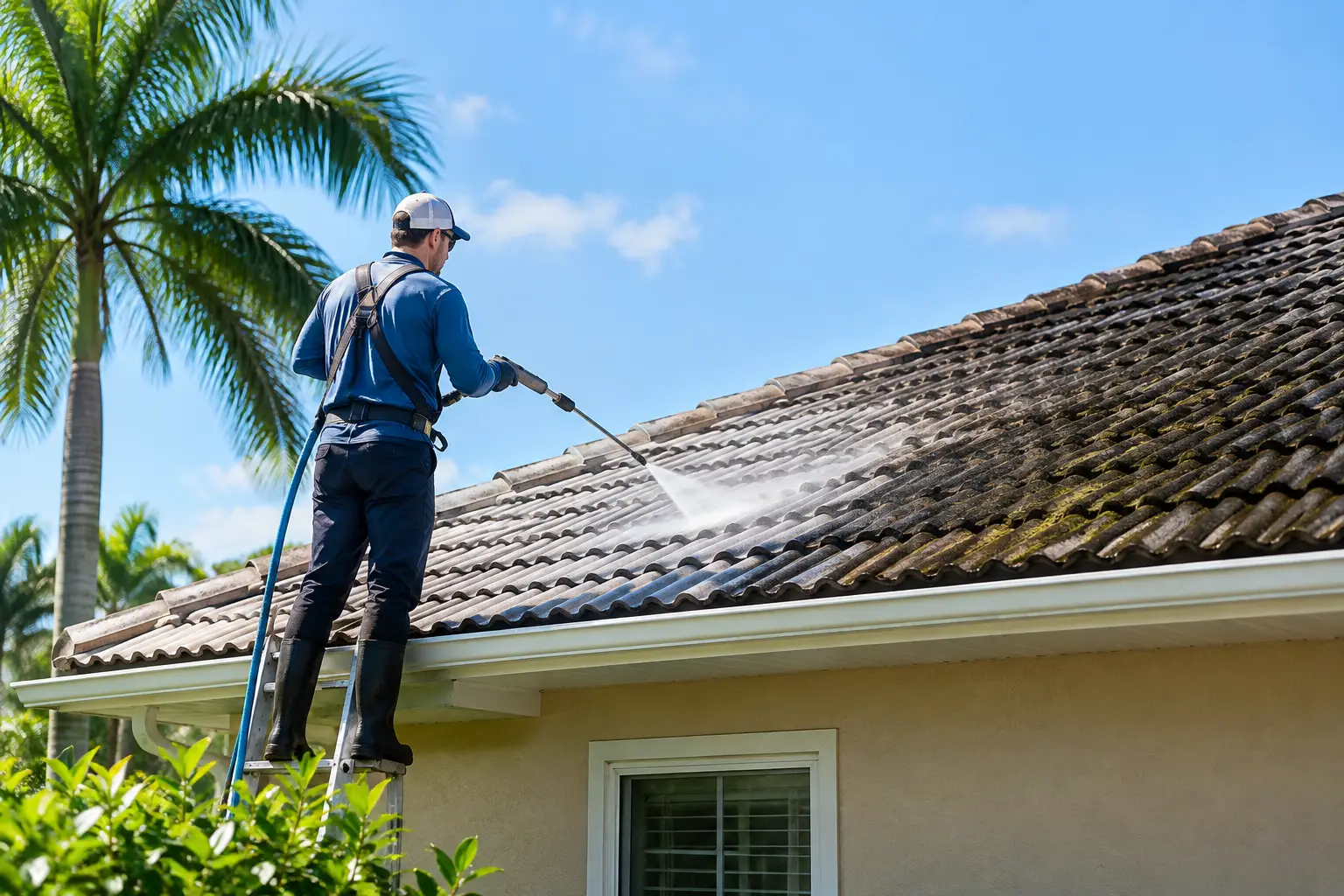
A roof can look worn out long before it is worn out. Across Homosassa, Citrus County, and nearby Florida communities, the dark streaks homeowners notice are often algae feeding on moisture and airborne material, not proof that the roof needs replacing. This Florida roof cleaning guide explains what those stains mean, why the cleaning method matters, and how to protect one of your home’s biggest investments.
Why Florida Roofs Turn Dark So Quickly
Florida gives roof algae nearly ideal conditions: heat, humidity, rain, shade, and long stretches of damp weather. The dark discoloration commonly seen on asphalt shingles is often Gloeocapsa magma, a blue-green algae that leaves black-looking streaks as it spreads. Moss, mildew, lichen, pollen, leaves, and dirt can add to the problem, especially beneath trees or on roof sections that receive less sun.
Beyond appearance, buildup can hold moisture against roofing materials and make small maintenance issues harder to spot. On tile roofs, growth may gather in the texture and joints. On shingles, aggressive growth and repeated wetness can contribute to an aged, neglected appearance. A clean roof does not fix damaged shingles, cracked tiles, or leaks, but it makes the roof easier to inspect and helps preserve the clean, cared-for look homeowners expect.
The timing varies from home to home. A sunny, open roof may stay clean longer than a shaded roof near mature trees. Homes near the coast or surrounded by lush landscaping may also need more frequent attention because of moisture and organic debris.
The Safe Method: Soft Washing, Not High Pressure
The most important decision in roof cleaning is not simply whether to clean. It is how the cleaning is performed.
High-pressure washing can strip protective granules from asphalt shingles, force water beneath roofing materials, damage flashing, and crack or dislodge brittle tile. A roof is not a driveway. It should never be treated like one.
Professional roof cleaning typically relies on a controlled soft-wash process. Low-pressure equipment applies an appropriate cleaning solution that treats algae, mildew, and organic staining at the source. The solution does the work, rather than a harsh blast of water. After proper dwell time, the roof is rinsed or allowed to weather clean according to the roof type, condition, and treatment method.
This approach is gentler on roofing materials and more effective than simply blasting away the visible stain. When algae is treated rather than scraped or pressure-washed, the result is a more even restoration and a better chance of keeping the roof cleaner for longer.
Roof Material Changes the Approach
There is no one setting or one solution that suits every roof. Asphalt shingles, concrete tile, clay tile, metal roofing, and older roof systems each require a careful evaluation.
Asphalt shingles need especially low pressure to avoid granule loss. Concrete and clay tile can be durable, but individual tiles may be cracked, loose, or fragile with age. Metal roofing requires attention around seams, fasteners, painted finishes, and runoff paths. A responsible contractor considers the material, slope, visible condition, manufacturer guidance, and surrounding property before starting.
If a roof has missing shingles, broken tile, active leaks, exposed underlayment, or other signs of damage, cleaning may need to wait until a roofing professional completes repairs. Cleaning should protect a sound roof, not hide a problem that needs attention.
What a Careful Roof Cleaning Visit Should Include
A quality roof cleaning service begins before the first application. The contractor should walk the property, identify the roof material and areas of concern, and explain the method being used. Homeowners deserve a written estimate that makes the work clear, not a vague promise and a surprise bill.
Preparation matters just as much as the wash itself. Nearby plants, lawn areas, painted surfaces, pool enclosures, and outdoor furniture should be considered before treatment begins. Plant protection often includes pre-wetting landscaping, controlling application carefully, rinsing as needed throughout the job, and performing a final rinse. Windows, gutters, and exterior surfaces may also need attention based on the property layout.
During the cleaning, the goal is consistent coverage without unnecessary walking, pressure, or overspray. The contractor should use the right equipment to reach the roof safely and avoid taking shortcuts that put your roof or landscaping at risk.
Afterward, some light staining may continue to fade as treated organic growth breaks down. That is normal on certain roof types and depends on the severity of buildup. A trustworthy professional will set expectations honestly instead of promising an identical result on every roof.
White Diamond Pressure Washing takes this material-first approach seriously, using low-pressure methods and roof-appropriate cleaning agents to revive curb appeal while treating each property with care.
When Should You Clean a Florida Roof?
For many Florida homes, roof cleaning every one to three years is a reasonable starting point. But a fixed schedule is less useful than watching the roof itself. New dark streaks, green growth, buildup in shaded areas, or a noticeably dull appearance are good reasons to request an evaluation.
Spring and fall are popular times to schedule exterior cleaning because homeowners are preparing for seasonal visitors, outdoor time, or storm-season upkeep. Still, roof cleaning can be performed throughout much of the year when weather conditions are suitable. Rain, wind, extreme heat, and nearby landscaping conditions can affect scheduling, so flexibility helps produce better results.
Do not wait until staining covers the entire roof. Treating early growth is usually simpler and can help prevent the dramatic, patchy appearance that develops after years of buildup. Regular cleaning also pairs well with gutter clearing, soffit cleaning, house washing, and driveway cleaning when the rest of the exterior needs attention.
What Homeowners Can Do Between Cleanings
You should not climb onto the roof to scrub stains or use a consumer pressure washer from a ladder. Those methods create avoidable safety risks and can damage the roof quickly. There are, however, a few practical ways to reduce conditions that encourage growth.
Keep gutters flowing so water does not back up along the roof edge. Trim branches that touch the roof or keep large areas in constant shade, while maintaining the health and proper structure of the tree. Remove loose leaves and debris from accessible areas only when it can be done safely from the ground or by a qualified professional.
It also helps to inspect the roof from the ground after major storms. Look for fallen branches, displaced shingles, broken tiles, sagging gutters, or unusual debris. Roof cleaning is a maintenance service, not a substitute for storm repair, but catching visible changes early can prevent a small issue from becoming a larger one.
Choosing a Roof Cleaner You Can Trust
Price matters, but the lowest estimate can become expensive if it involves high pressure, poor runoff control, or damage to roofing and landscaping. Ask how the company cleans your specific roof material, whether it uses low-pressure application, and what steps it takes to protect plants and exterior surfaces. You should also ask what result is realistic for the age and condition of your roof.
Look for a local provider who communicates clearly, arrives prepared, and respects the property from setup through cleanup. Reviews can be useful when they mention details such as punctuality, careful preparation, fair pricing, and how the crew handled landscaping or delicate surfaces. Those details reveal more than a generic five-star rating.
A professional should also be comfortable saying when cleaning is not the right first step. If a roof needs repair, replacement, or a roofer’s inspection, straightforward advice protects the homeowner better than an immediate sale.
A Cleaner Roof Changes the Whole Property
Roof stains pull attention away from everything else you have done to care for your home. Once the roof is clean, paint looks brighter, landscaping stands out, and the driveway and walkways feel more connected to the rest of the property. The before-and-after difference can be striking, particularly on homes where algae has slowly taken over without being noticed.
The best time to arrange an estimate is when the first signs of staining appear, not when the roof looks beyond saving. A careful soft wash can help your home look shining like a diamond again while giving its materials the thoughtful care they deserve.