

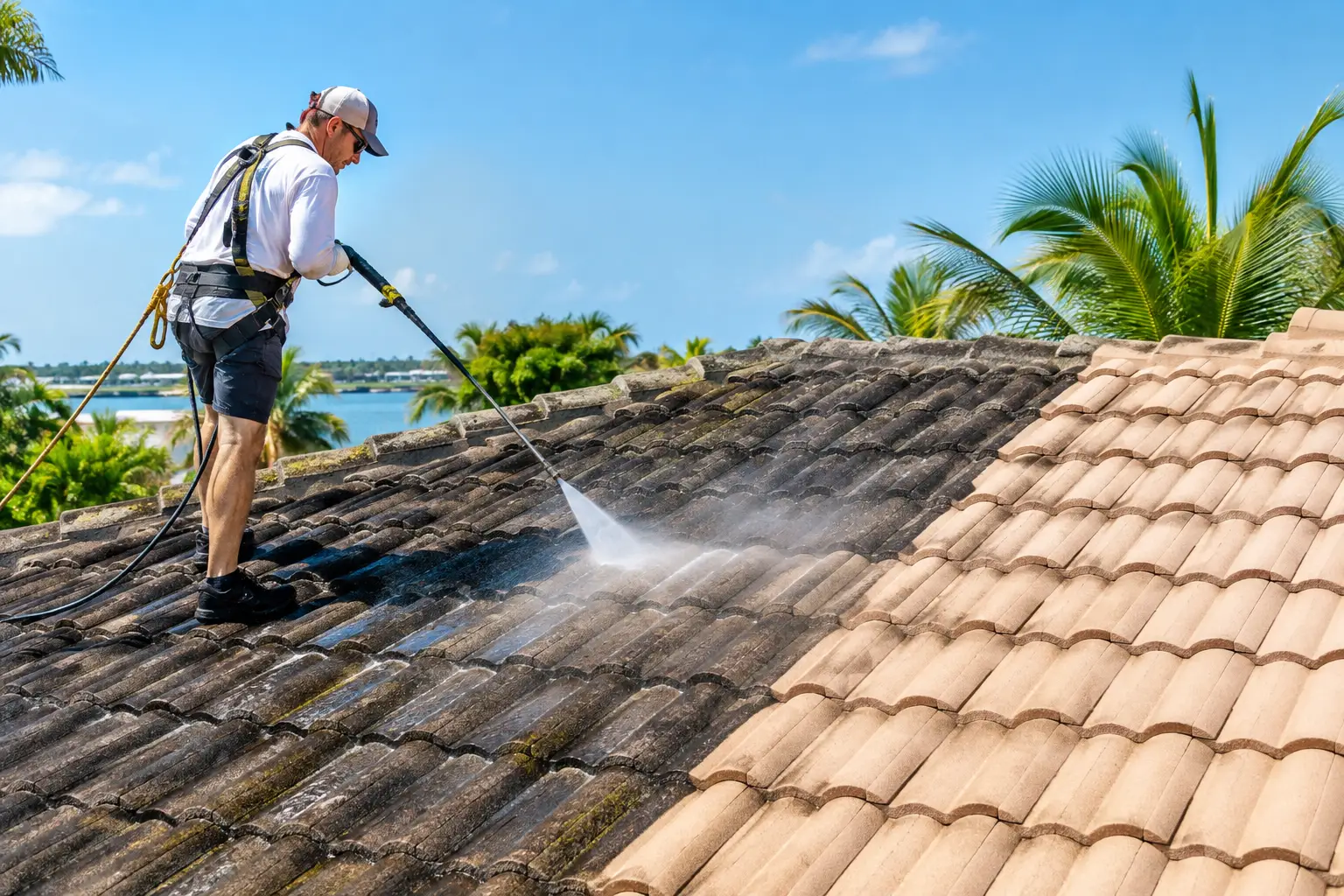
Black roof streaks are more than a curb-appeal problem in Citrus County. In Florida’s warm, humid conditions, algae, mildew, lichen, and windblown debris can take hold quickly, leaving a roof looking older than it is. The best roof cleaning methods remove that growth without trading a cosmetic issue for damaged shingles, cracked tile, dead landscaping, or water where it does not belong.
For most homes, the answer is not more pressure. It is the right cleaning solution, applied at the right strength, with low-pressure equipment and careful preparation. A professionally cleaned roof can make the entire property look revived – from the driveway to the lanai – while helping homeowners stay ahead of the conditions that cause staining in the first place.
Why Florida Roofs Need a Different Approach
Florida roofs face a steady combination of sun, moisture, tropical rain, shade, and airborne organic material. The dark staining commonly seen on shingles and tile is often algae. It can be accompanied by mildew, moss-like growth, or lichen, especially in damp or heavily shaded areas.
Left alone, buildup holds moisture against roofing materials and makes routine inspections harder. It can also make a well-maintained home look neglected from the street. Cleaning does not replace repairs, but it is a practical part of roof maintenance when it is performed with a method appropriate for the material.
The right approach depends on whether the roof has asphalt shingles, concrete or clay tile, metal panels, or another specialty surface. Age, existing wear, roof pitch, nearby plants, gutter condition, and the source of staining all matter. That is why a one-size-fits-all pressure washing approach is rarely the best choice.
The Best Roof Cleaning Methods Start With Soft Washing
Soft washing for shingles and tile
Soft washing is the preferred method for many residential roofs because it relies on specialized cleaning agents and low-pressure application rather than force. The solution treats algae, mildew, and organic staining at the source. After appropriate dwell time, the roof is rinsed gently when needed, or the treated growth is allowed to release naturally over time, depending on the roofing material and manufacturer guidance.
For asphalt shingles, this distinction is especially important. High pressure can dislodge protective granules, lift shingle edges, and shorten the roof’s usable life. A roof may look cleaner immediately after aggressive washing, but the damage can reveal itself later through premature wear and reduced weather protection.
Concrete and clay tile can appear durable, but they also need careful handling. Direct, high-pressure cleaning can crack brittle tiles, disturb mortar, force water under overlapping sections, and remove surface coatings. Soft washing delivers the cleaning power through the solution instead of blasting the roof surface.
This is why White Diamond Pressure Washing uses low-pressure roof cleaning methods and manufacturer-endorsed cleaning agents. The goal is straightforward: remove the stains homeowners see while treating the roof with the care it deserves.
Targeted treatment for stubborn growth
Some roofs need more than one pass in localized areas. Lichen and long-standing organic buildup may cling more tightly than fresh algae, particularly under trees or along north-facing sections. A careful professional will assess the growth rather than increase pressure to force it off.
Targeted treatment may take patience. That is a good thing. Trying to scrape or blast stubborn growth from a roof can create unnecessary damage. A measured treatment plan gives the cleaning agent time to work while preserving the roof material underneath.
Why High-Pressure Roof Washing Is Usually a Bad Bet
Pressure washing has an important place in exterior cleaning. It can restore concrete driveways, walkways, and certain hard surfaces when performed correctly. A roof is different.
High pressure can strip shingle granules, chip tile, loosen flashing, damage sealants, and drive water beneath roofing components. It may also send contaminated runoff forcefully into gutters, landscaping, pool enclosures, and nearby exterior surfaces. Even when no damage is obvious from the ground, a roof can be left more vulnerable than before.
Homeowners sometimes see a neighbor’s roof cleaned with a pressure washer and assume the same method is safe. The visible result does not tell the whole story. Material type, nozzle choice, distance, pressure level, roof age, and operator experience all affect the outcome. In most cases, a low-pressure chemical treatment is the safer and more lasting solution for residential roofs.
A Careful Roof Cleaning Process Protects More Than the Roof
The best roof cleaning methods include preparation before any solution reaches the roof. A dependable service should look at access points, inspect visible roof conditions, identify nearby plants, and protect exterior areas below. Gutters and downspouts should be considered because roof runoff has to go somewhere.
Landscaping protection is a key part of the work. Plants, grass, and garden beds may be pre-watered, covered where appropriate, and rinsed throughout the process. Exterior walls, windows, pool decks, pavers, and outdoor furniture also deserve attention. Good roof cleaning is not simply about what happens on top of the home. It is about leaving the full property cared for.
The technician should use specialized equipment to apply cleaning solution evenly without excessive force. They should work methodically across the roof, watching for runoff and avoiding unnecessary foot traffic. On fragile, steep, or aging roofs, safety and material condition may limit where someone can walk. In those cases, careful application from accessible areas can be the smarter option.
After treatment, the crew should rinse and check the surrounding property. A professional finish includes a clean work area, protected plants, and a homeowner who knows what to expect as any remaining treated discoloration continues to fade.
Choosing the Right Method for Your Roof Material
Asphalt shingles
Soft washing with a roof-safe, manufacturer-aligned cleaning solution is generally the strongest choice for asphalt shingles. The priority is killing algae and removing discoloration without eroding the granule layer. Avoid anyone who proposes aggressive pressure as the primary cleaning method for shingle roofs.
Concrete or clay tile
Tile roofs benefit from low-pressure treatment that accounts for the tile’s condition, age, and coating. Older tile may be more brittle, and walking patterns matter. Cleaning should focus on controlled application and thorough protection of landscaping and lower exterior surfaces.
Metal roofs
Metal roofing can shed debris well, but it still develops algae, mildew, pollen, and grime. Soft washing is often appropriate, though the cleaning solution must be compatible with the metal finish. Abrasive methods and overly harsh chemicals can affect coatings, fasteners, or painted surfaces.
Specialty or aging roofs
If a roof has visible damage, loose material, active leaks, or extensive age-related wear, cleaning should wait until a qualified roofing professional assesses repairs. Cleaning can improve appearance, but it cannot fix a failing roof. An honest exterior-cleaning provider will say so rather than attempt to wash over a problem.
When to Schedule Roof Cleaning in Citrus County
There is no single calendar date that fits every home. Most Florida homeowners notice they need roof cleaning when dark streaks become visible, discoloration returns after a wet season, or the home is being prepared for sale, guests, or seasonal use.
As a practical rule, inspect the roof from the ground a few times each year. Look for new dark patches, green growth near shaded areas, debris in valleys, and staining around gutters. Homes under trees or close to water may need attention sooner than homes with full sun and minimal organic debris.
Routine exterior cleaning can also help keep roof staining from becoming the only thing people notice. When the house wash, driveway, walkways, soffits, gutters, lanai, and pool cage are clean, the entire property has the bright, well-kept appearance homeowners want.
Should You Clean a Roof Yourself?
DIY roof cleaning may seem like a way to save money, but the risks are real. Roof work involves fall hazards, slippery surfaces, chemical handling, and the possibility of damaging materials or landscaping. A consumer-grade pressure washer adds another concern because it can cause damage quickly when used at close range.
If you are considering a do-it-yourself approach, avoid walking on the roof unless you have the proper training and safety equipment. Never use high pressure on shingles, and do not mix cleaning chemicals without clear manufacturer direction. Cleaning agents can harm plants, finishes, and people when used incorrectly.
For most homeowners, professional soft washing offers better value than taking on the risk. It brings the right equipment, surface knowledge, plant protection practices, and careful application to a job that is not forgiving of shortcuts.
A clean roof should make your home look shining like a diamond, not leave you worrying about what was harmed in the process. Choose a method that respects the material, protects the property below, and gives your Florida home the renewed appearance it deserves.