

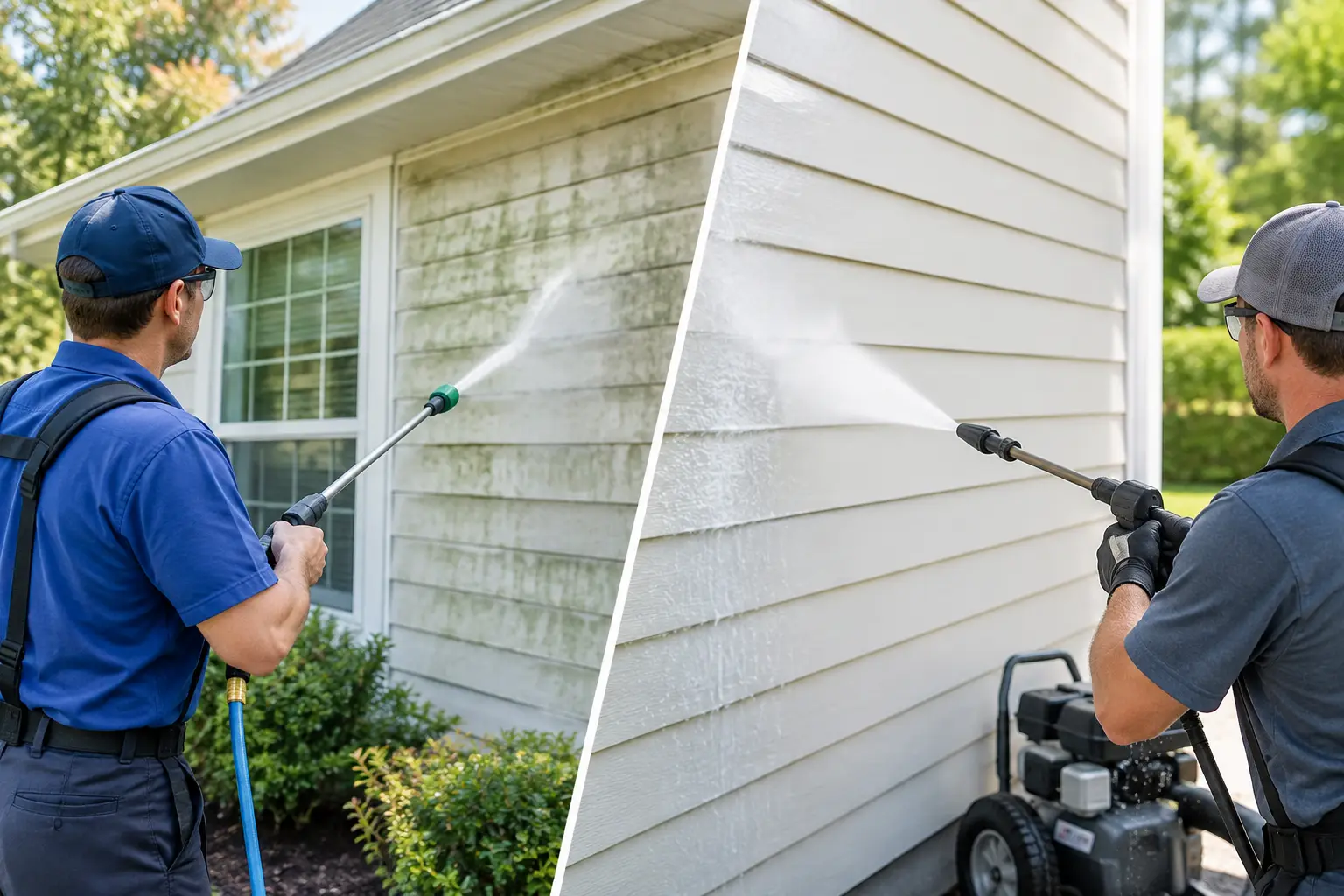
A black-streaked roof, green siding, and slippery driveway can make a well-kept Citrus County home look neglected almost overnight. Florida humidity gives algae, mildew, and grime exactly what they need to spread. The question is not simply whether to clean it. It is whether soft washing versus power washing is the safer, more effective choice for the surface in front of you.
The right method can revive your space and help protect the materials that make up your home. The wrong one can strip paint, loosen shingles, scar concrete, or force water where it does not belong. A professional exterior cleaning plan should match the cleaning method to the material, the type of staining, and the condition of the surface.
Soft Washing Versus Power Washing: The Key Difference
Soft washing uses low-pressure water combined with purpose-made cleaning solutions to treat and remove organic growth such as algae, mildew, moss, and mold. Rather than trying to blast contaminants away, the process addresses the growth at its source. After the solution has time to work, the surface is gently rinsed or allowed to weather clean as appropriate.
Power washing, often used interchangeably with pressure washing, relies on stronger water pressure to remove built-up dirt, loose surface debris, mud, and embedded grime. It is highly effective on durable hard surfaces, particularly concrete driveways, sidewalks, and certain pavers. The force of the water does much of the cleaning work.
Neither method is automatically better. A concrete driveway stained by tire marks and ground-in dirt may benefit from controlled pressure washing. A shingle roof covered with dark algae streaks needs a completely different approach. The goal is always a clean result without creating avoidable damage.
Why Florida Homes Need Surface-Specific Cleaning
In Homosassa and throughout Citrus County, exterior surfaces deal with steady moisture, warm temperatures, shade, salt air in some locations, pollen, storms, and year-round plant growth. Algae can appear on roofs, vinyl siding, stucco, soffits, pool cages, lanais, and walkways. It may start as a faint green film, then become dark, widespread staining that is hard to ignore.
That growth is more than a curb-appeal problem. Algae and mildew can make walkways slick, hold moisture against surfaces, and leave exterior materials looking aged before their time. On a roof, dark streaks can also absorb more heat and distract from an otherwise beautiful property.
Cleaning should remove the visible buildup while respecting the surface underneath. That is why one pressure setting and one chemical mix should never be used across an entire home.
When Soft Washing Is the Right Choice
Roofs need a gentle, approved approach
Asphalt shingles, tile roofs, and many other roofing materials should not be cleaned with high pressure. Powerful water can dislodge shingle granules, compromise seals, break fragile tile, and push water beneath roofing components. Those risks are not worth a quick cosmetic improvement.
Soft washing is the preferred method for most residential roof cleaning because it uses low pressure and manufacturer-endorsed cleaning agents designed to eliminate organic staining. The cleaning solution does the work, not a harsh blast of water. This approach can restore the roof’s natural color, reduce black algae streaks, and help preserve the material’s usable life.
A careful roof-cleaning service also protects what is below. Landscaping should be pre-wet, covered or managed as needed, and rinsed throughout the process. Gutters, downspouts, windows, and surrounding areas deserve the same attention as the roof itself.
House exteriors benefit from controlled pressure
Vinyl siding, painted surfaces, stucco, soffits, trim, and exterior walls can look dramatically brighter after a soft wash. These materials are often coated with organic growth, dust, cobwebs, and streaking that does not require high pressure to remove.
High pressure can chip paint, etch softer finishes, bend siding, and drive water behind exterior panels. Low-pressure house washing offers a safer way to lift away grime while protecting paint and siding. It is especially valuable for older homes, recently painted homes, and surfaces with delicate caulking or trim.
Soft washing is also a smart choice for awnings, screened enclosures, pool cages, and lanais. These areas have frames, screens, seals, and finishes that can be damaged by an aggressive cleaning method. A patient, low-pressure process leaves the outdoor space cleaner and more inviting without turning routine maintenance into a repair project.
When Power Washing Makes Sense
Concrete can handle more cleaning power
Driveways, sidewalks, patios, and many concrete pool decks collect a different kind of mess. Vehicle drips, tire marks, compacted soil, leaf tannins, dirt, and weather staining settle into the pores of the concrete. While cleaning agents may be part of the process, controlled pressure is often necessary to flush out the buildup and create an even finish.
Professional power washing is not about using the maximum possible pressure. It is about using the correct equipment, tips, water flow, and technique for the condition of the concrete. A skilled technician works methodically to avoid striping, wand marks, or uneven patches that can make a driveway look worse than before.
For a driveway with algae, a treatment may be applied first to kill the growth, followed by surface cleaning to remove the remaining residue. The result is a brighter entrance and safer footing for family, guests, and delivery drivers.
Durable hardscape needs judgment, too
Not every hard surface should receive the same amount of pressure. Older concrete, decorative finishes, pavers with loose joint sand, and coated surfaces may need adjusted settings or a combination of cleaning methods. Fresh concrete also has curing requirements and should not be treated as if it were decades-old pavement.
Concrete sealing can be a valuable next step after the surface has been properly cleaned and allowed to dry. A quality sealer can help reduce future staining, support easier maintenance, and keep the restored appearance looking sharper. Whether sealing makes sense depends on the concrete’s age, condition, and how the area is used.
The Risks of Using Too Much Pressure
A pressure washer in untrained hands can create damage quickly. The warning signs are often not obvious until after the cleaning is finished: paint that begins peeling, oxidation streaks on siding, gouged wood, damaged screens, loose mortar, or pale lines cut into concrete.
Roof damage deserves particular attention. High-pressure roof washing may make stains disappear temporarily, but it can remove protective shingle granules or disturb tiles and flashing. A roof is one of the home’s most important protective systems. It should never be treated like a driveway.
There is also the issue of water intrusion. Spraying upward beneath siding, around vents, into soffits, or near aging seals can send water into places it should never reach. A trained exterior cleaner understands spray angles, safe working distances, and the vulnerable areas around a home.
What a Careful Cleaning Visit Looks Like
A quality exterior-cleaning service begins with an inspection, not a one-size-fits-all quote. The technician should identify the surface materials, note algae or mildew growth, assess any fragile areas, and consider nearby plants, furniture, screens, and fixtures.
Before cleaning begins, items may need to be moved or protected. Plants are pre-watered and rinsed, outdoor areas are prepared, and the proper solution is selected for the job. During the work, pressure is adjusted by surface, and runoff is managed with care. The final walk-around matters, too, because a truly thorough job includes checking edges, corners, gutters, soffits, and the areas where grime likes to hide.
This level of preparation is why homeowners often see such a dramatic before-and-after difference. Clean surfaces do more than photograph well. They make the entire property feel maintained, welcoming, and ready for company.
Choosing the Best Method for Your Home
If the surface is a roof, painted exterior, stucco wall, vinyl siding, awning, pool cage, lanai, or screen enclosure, soft washing is usually the sensible starting point. If it is a solid concrete driveway, walkway, patio, or other durable hardscape with ground-in grime, carefully controlled power washing may be the better fit.
Some properties need both methods. A home may need soft washing for the roof and exterior walls, then pressure cleaning for the driveway and walkways. That combined approach gives each area the care it needs instead of forcing one technique onto every surface.
White Diamond Pressure Washing takes this surface-appropriate approach because a bright result should never come at the expense of your roof, paint, landscaping, or outdoor living space. When you are deciding how to tackle Florida’s algae and grime, choose the method that leaves your home shining like a diamond while helping protect what you have worked hard to own.