

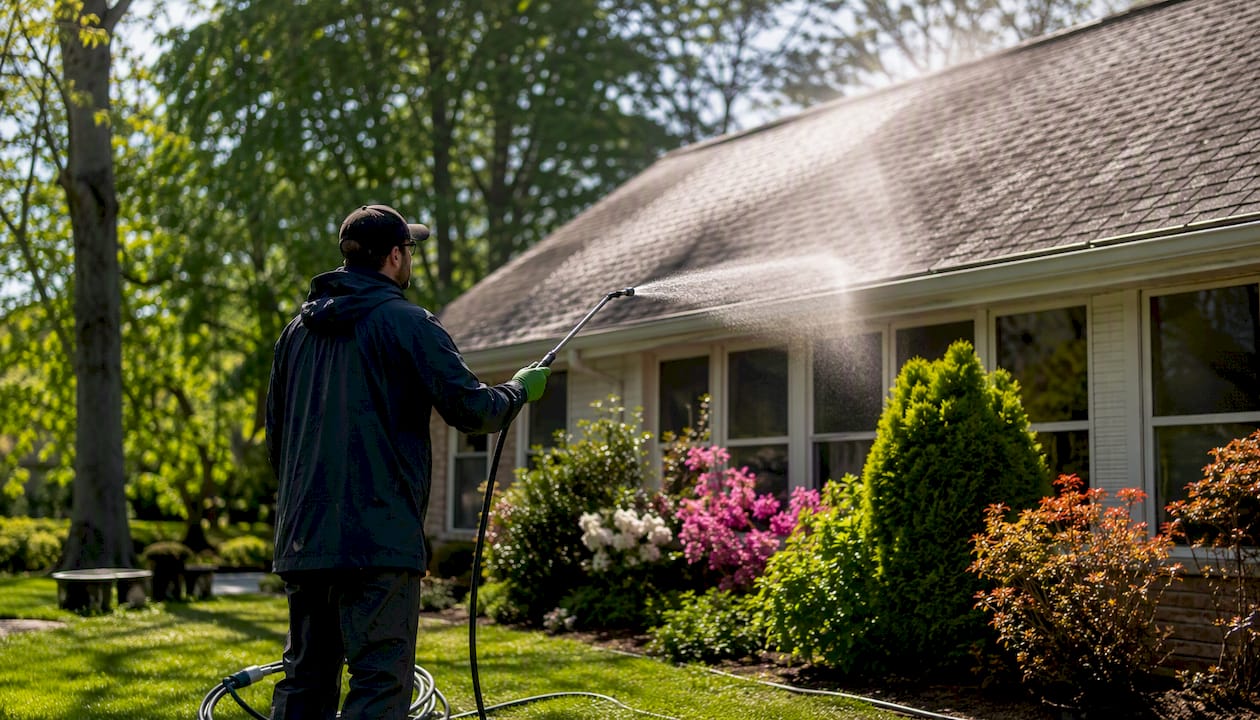
The Asphalt Roofing Manufacturers Association (ARMA) is clear: soft washing with a sodium hypochlorite-based solution is the only approved method for cleaning asphalt shingle roofs. High-pressure washing is explicitly forbidden. Following ARMA roof cleaning guidelines protects your shingles, keeps your warranty intact, and removes biological growth without accelerating roof failure.
Quick-reference do/don’t list:
- Do apply a bleach-and-water solution (commonly a 50:50 mix of laundry-strength bleach and water) at low hydraulic pressure
- Do let the solution dwell for a short period before rinsing
- Do rinse top-to-bottom with a garden hose or low-pressure nozzle
- Do consult your shingle manufacturer’s warranty before applying any cleaner
- Don’t use a power washer or pressure washer on asphalt shingles
- Don’t scrub with brushes, brooms, or wire tools
- Don’t let the solution dry on the surface before rinsing
- Don’t skip landscape protection before you start
If any of those steps feel uncertain, ARMA recommends hiring a trained contractor.
Key Takeaways
ARMA’s roof cleaning standard comes down to one rule: let chemistry do the work at low pressure, never force it with mechanical methods or high-pressure equipment.
| Point | Details |
|---|---|
| Soft wash is the only approved method | ARMA endorses low-pressure bleach solution application; power washing voids this standard and damages shingles. |
| Dwell time is usually limited and controlled | Apply solution, wait the recommended period, then rinse top-to-bottom with a garden hose at low pressure. |
| Check your warranty first | Shingle manufacturers may specify their own approved solutions; always confirm in writing before cleaning. |
| Protect landscaping and manage runoff | Pre-wet plants before applying solution; chemical runoff may be subject to local EPA NPDES stormwater rules. |
| Whitediamondpressurewashing handles it professionally | ARMA-aligned soft-wash service in Citrus County with documented mix plans, insurance, and landscape protection included. |
Table of Contents
- What are those black streaks, and why does it matter?
- What does ARMA actually recommend for cleaning solutions?
- Why is pressure washing forbidden, and what equipment is safe?
- How do you stay safe and protect your yard during cleaning?
- How does cleaning affect your shingles and your warranty?
- When should you hire a professional instead of doing it yourself?
- ARMA-compliant DIY soft-wash checklist
- What field experience adds to the ARMA framework
- The part most guides skip about ARMA guidance
- Whitediamondpressurewashing brings ARMA-aligned soft washing to your roof
- Sources
What are those black streaks, and why does it matter?
Most homeowners assume the dark streaks running down their roof are dirt or mildew. They’re usually neither. ARMA identifies Gloeocapsa magma as the primary cyanobacterium responsible for those characteristic black or dark gray streaks. It’s a photosynthetic organism that travels by airborne spores, which is why you’ll often see it spread from one side of a roof to the whole surface within a season or two, and why neighboring houses in humid climates tend to develop it around the same time.
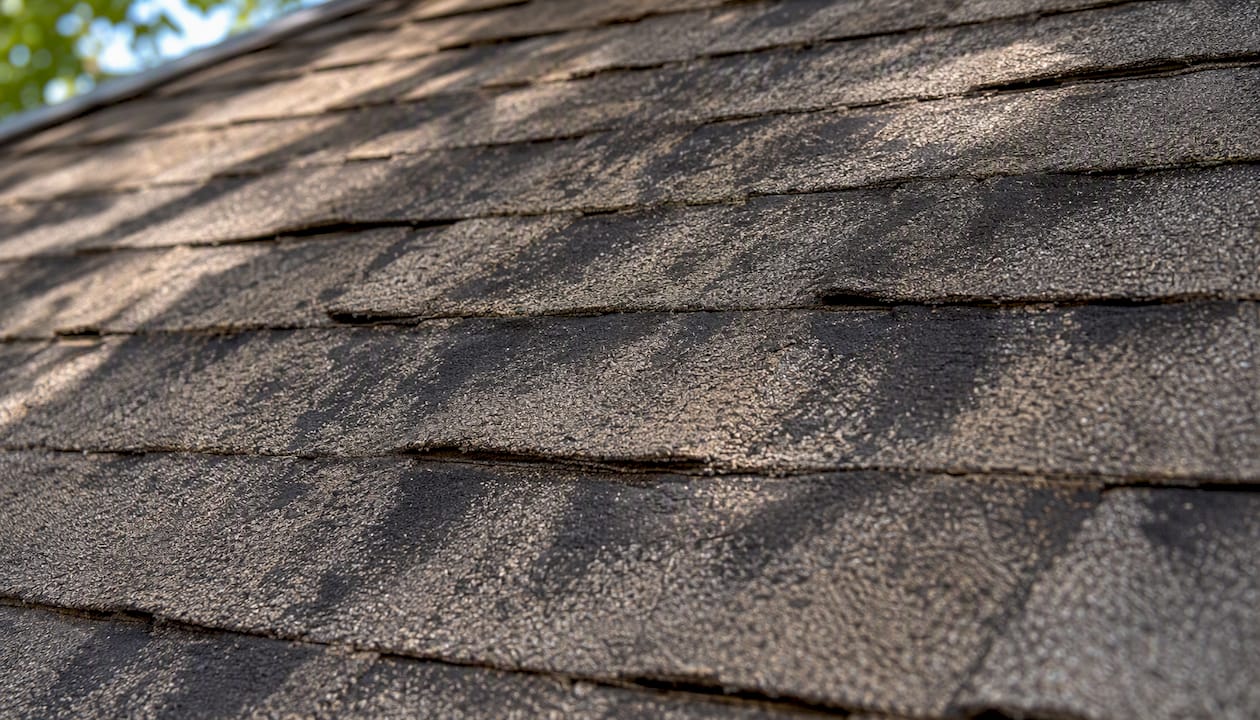
Treating Gloeocapsa magma with a scrub brush is the wrong call. The organism’s dark pigment shields it from UV, and mechanical scrubbing won’t kill it. Worse, it strips granules from the shingle surface, which shortens the roof’s life. The ARMA educational outreach on roof algae specifically notes that many homeowners mistake these streaks for dirt and reach for abrasive methods, which causes more damage than the algae itself.
Moss and lichen are a different story. Moss holds moisture against the shingle surface and can lift shingle edges over time. Lichen is the most aggressive of the three: it attaches with root-like structures called rhizines that penetrate the granule layer. Removing lichen chemically is slower and may require multiple treatments. Trying to scrape it off physically risks tearing granules away with it. Correct identification before you start determines which approach you use and how long you’ll need to wait for results. Understanding why algae removal matters for your home’s long-term value is worth a few minutes before you pick up a sprayer.
What does ARMA actually recommend for cleaning solutions?
ARMA’s preferred approach is a sodium hypochlorite solution applied at low pressure, allowed to dwell, and then rinsed off gently. The commonly cited consumer mix is a 50:50 ratio of laundry-strength bleach to water. That said, the ARMA Technical Bulletin also documents TSP-based recipes used in practice, with concentrations that vary depending on the severity of growth.
| Mix type | Approximate recipe | Best for |
|---|---|---|
| Standard bleach/water | 50% laundry bleach + 50% water | Light to moderate algae streaking |
| TSP + bleach (lighter) | 1 cup TSP + 1 gal bleach + 5 gal water | Moderate algae with some moss |
| TSP + bleach (heavier) | 1 cup TSP + bleach + water | Heavy growth, per manufacturer guidance |
Dwell time is typically about a quarter of an hour in most guidance. Don’t let the solution dry on the surface, especially in direct sun or wind. After dwell, rinse top-to-bottom with a garden hose or low-pressure nozzle. Never rinse bottom-to-top, which forces water under shingle laps.
One practical note: manufacturer recommendations can differ from ARMA’s general guidance. GAF, Owens Corning, and other shingle makers may specify their own approved solutions or concentrations. Always pull your shingle manufacturer’s cleaning guidance before mixing anything. For a closer look at effective roof cleaning techniques that align with these standards, the specifics matter more than most homeowners realize.
Pro Tip: Dwell time does more work than concentration. A second light misting at the 10–15 minute mark is often safer and more effective than increasing bleach strength, which can accelerate asphalt oxidation.
Why is pressure washing forbidden, and what equipment is safe?
ARMA explicitly warns that high-pressure washing systems are likely to damage roofing granules and accelerate shingle failure. Granules are the protective layer embedded in the asphalt mat. Once they’re gone, UV degrades the mat directly, and the roof ages years faster than it should. A pressure washer operating at typical residential PSI levels can strip granules in a single pass, and that damage is permanent.
Safe equipment for an ARMA-compliant soft wash:
- Pump sprayer or soft-wash rig calibrated for low hydraulic pressure application of the bleach solution
- Garden hose with a low-pressure nozzle for the rinse phase (no pressure washer attachments)
- Ladder and roof walkboards to distribute your weight and avoid concentrated foot pressure on shingles
- Chemical-resistant pump sprayer if using a consumer-grade setup for a small area
What to leave in the garage: pressure washers, wire brushes, stiff-bristle brooms, and any abrasive scrubbing tool. Even a soft-bristle brush used with force can dislodge granules on aged shingles. The advantages of low-pressure washing go beyond just following rules; the physics of granule adhesion make gentle application the only approach that doesn’t cost you shingle life.
How do you stay safe and protect your yard during cleaning?
Roof cleaning carries two distinct risk categories: personal injury and environmental damage. Both are manageable with the right preparation.
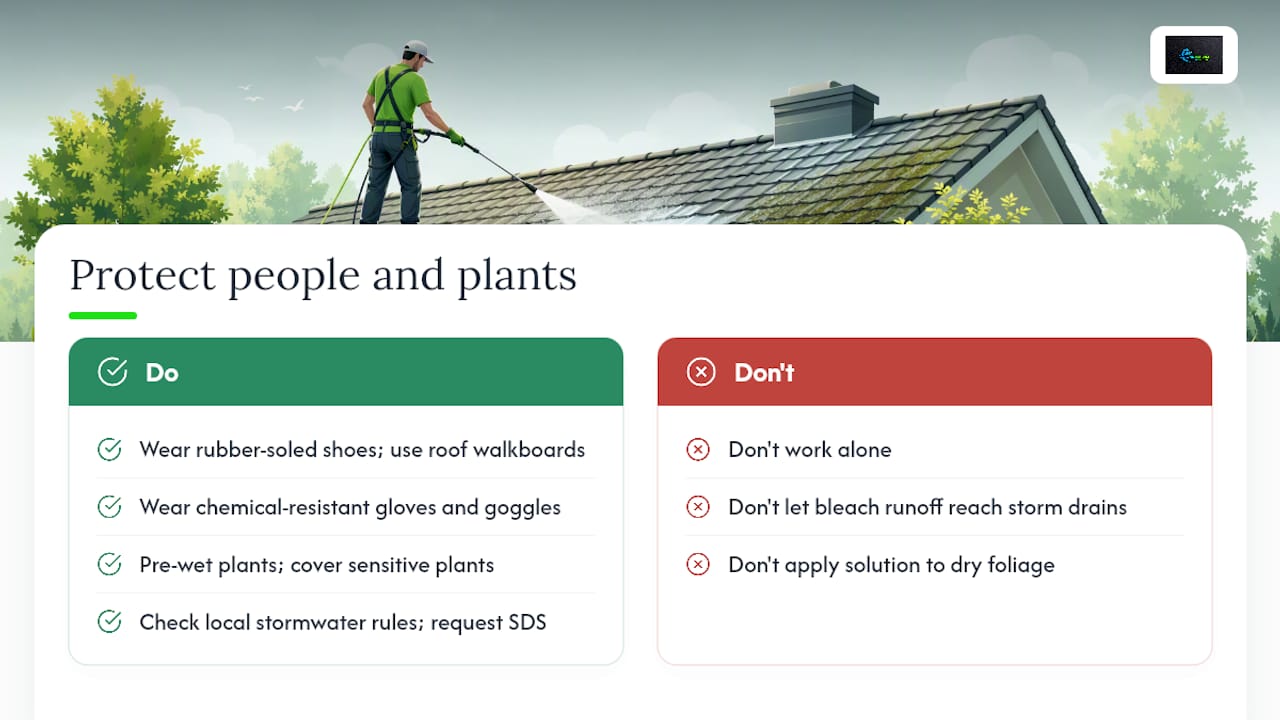
Personal safety starts with recognizing that a wet roof treated with bleach solution is extremely slippery. ARMA recommends professionals for this reason. If you proceed as a homeowner, wear rubber-soled shoes with grip, use a properly secured ladder, and never work alone. Roof walkboards distribute your weight and reduce the chance of a foot punching through a soft spot on an aged shingle.
For PPE: chemical-resistant gloves, eye protection, and old clothing you don’t mind bleaching are the minimum. Bleach vapor at higher concentrations irritates airways, so work with the wind at your back when possible.
Landscape protection is where most DIY jobs go wrong. Pre-wet all plants, shrubs, and grass within the runoff zone before applying solution. Wet foliage absorbs less bleach than dry foliage. Cover sensitive plantings with plastic sheeting if they’re directly below the drip line. After rinsing the roof, flush the surrounding ground with fresh water. ARMA’s guidance on moss and algae prevention specifically calls out pre-wetting and runoff neutralization as routine best practices.
Regulatory considerations are real, not theoretical. Chemical runoff from bleach-based solutions that reaches storm drains may fall under EPA NPDES stormwater discharge rules under 40 CFR Part 122. Check with your local stormwater authority before you start. Professional contractors are also subject to OSHA’s Hazard Communication Standard (29 CFR 1910.1200), which requires Safety Data Sheets, proper labeling, and employee training for bleach-containing stock solutions. If you’re hiring a contractor, ask to see their SDS before work begins.
Pro Tip: Divert downspouts away from garden beds before rinsing. A simple foam plug in the downspout opening redirects runoff and takes about 30 seconds to set up.
How does cleaning affect your shingles and your warranty?
Cleaning is cosmetic and typically temporary. ARMA notes that algae discoloration commonly recurs, particularly in humid or coastal climates where airborne spores are abundant. A clean roof in Florida or the Gulf Coast may show new streaking within two to three years without preventive measures in place.
The granule loss risk is real and directly tied to method. Scrubbing and high-pressure washing remove granules mechanically. Once the granule layer thins, the asphalt mat is exposed to UV, moisture cycling accelerates, and the shingle’s rated lifespan shortens. Soft washing avoids this because the chemistry does the work, not physical force.
Warranty implications require a direct conversation with your shingle manufacturer. ARMA guidance is a consensus baseline that manufacturers frequently reference, but warranty specifics live with the shingle maker. Some manufacturers approve only their own recommended cleaning products. Applying a different solution, even one that follows ARMA chemistry, could affect your warranty if the manufacturer’s written guidance says otherwise. Get written confirmation before cleaning if your roof is still under a manufacturer warranty.
For prevention, two options have a real track record. Algae-resistant shingles embed copper-containing granules that inhibit Gloeocapsa magma growth. Copper or zinc strips installed at the ridge release trace metal ions with each rainfall, which suppresses algae growth on the surface below. Retrofit metal strips work, but installation carries its own risks on an existing roof. For shingle health after cleaning, the method you use matters as much as how often you clean.
When should you hire a professional instead of doing it yourself?
Certain conditions make DIY soft washing genuinely risky, not just inconvenient.
Hire a professional when: the roof pitch is steep (generally above 6:12); the shingles are aged, brittle, or already showing granule loss; there is significant moss or lichen coverage (not just algae streaking); the roof has damaged or missing shingles that need assessment before any chemical is applied; or the manufacturer warranty is still active and you need documented proof of compliant cleaning.
A compliant contractor should arrive with a written mix and dwell plan, pre-wet your landscaping before starting, use soft-wash equipment calibrated for low hydraulic pressure, and provide before-and-after photos. Ask to see their liability insurance certificate and the SDS for every chemical they plan to use. If they show up with a pressure washer as their primary cleaning tool, that’s your cue to send them home.
Cost varies significantly by region, roof size, and growth severity. Residential soft-wash roof cleaning in the U.S. typically runs in the range of a few hundred to over a thousand dollars for an average-sized home, with steep or heavily grown roofs at the higher end. Most jobs take two to four hours on-site. A seasonal maintenance checklist can help you track when cleaning is due and what to inspect before calling a contractor.
ARMA-compliant DIY soft-wash checklist
If you’ve confirmed your shingles are in good condition, your warranty allows it, and you’re comfortable working at height, here’s the sequence to follow:
- Inspect the roof from the ground first. Look for cracked, curling, or missing shingles. If you see structural damage, stop and call a professional before applying any chemical.
- Read your shingle manufacturer’s warranty and cleaning guidance. Confirm the approved solution type and concentration.
- Set up access safely. Secure your ladder, wear rubber-soled shoes, and use roof walkboards. Never work alone.
- Put on PPE. Chemical-resistant gloves, eye protection, and protective clothing before mixing anything.
- Pre-wet all surrounding plants and grass. Saturate the foliage within the runoff zone.
- Mix your solution. Follow ARMA’s 50:50 bleach-to-water ratio or your manufacturer’s specified recipe.
- Apply top-to-bottom using a pump sprayer or soft-wash rig at low pressure. Work in sections.
- Let it dwell for 15–20 minutes. Watch the clock. Don’t let it dry. A second light misting at the 10–15 minute mark can help on heavier growth.
- Rinse top-to-bottom with a garden hose at low pressure. Never rinse bottom-to-top.
- Flush surrounding vegetation with fresh water immediately after rinsing the roof.
- Post-clean inspection. Walk the perimeter and check gutters for granule accumulation. Excessive granules in the gutters after a soft wash may indicate the shingles were already degraded.
- If anything looks wrong, stop. Damaged shingles, unexpected runoff volume, or signs of structural issues mean it’s time to call a pro.
For a full safety breakdown before you start, the roof washing safety tips guide covers PPE and fall hazard specifics in more detail.
What field experience adds to the ARMA framework
ARMA’s guidance sets the chemistry and the mechanical limits. What it doesn’t cover is the judgment calls that come from doing this work on real roofs.
Dwell time versus concentration is the most common tradeoff in the field. A stronger bleach mix doesn’t always produce better results faster. On aged shingles, higher concentrations can accelerate asphalt oxidation, leaving the surface more brittle than before. A second light misting at the 10–15 minute mark, rather than increasing the initial concentration, tends to produce a cleaner result with less risk to the granule layer.
Pre-wetting surrounding vegetation isn’t optional. Experienced contractors route or capture rinse water when possible, especially near ornamental plantings or vegetable gardens. This single step eliminates most plant-browning complaints after an otherwise correct cleaning.
Red flags to watch for when vetting a contractor:
- Unwillingness to share the SDS for their cleaning solution
- Arriving with pressure-only equipment and no soft-wash rig
- No proof of liability insurance
- Vague or verbal-only explanation of their mix and dwell plan
- Pressure to skip the pre-wetting step to save time
What to request in writing before any contractor starts work: the SDS for all chemicals, proof of low-pressure soft-wash equipment, a written mix and dwell plan, before-and-after photo documentation, and a current certificate of liability insurance. A contractor who pushes back on any of those items is telling you something useful. For broader guidance on evaluating exterior cleaning vendors, the same criteria apply across services.
The part most guides skip about ARMA guidance
ARMA’s framework is built around one principle that rarely gets stated plainly: the goal is to preserve the roofing system, not just clean the surface. That distinction matters in practice. The cleaning was cosmetic; the damage was structural.
What I find underestimated is how often homeowners treat roof cleaning as a one-time fix rather than part of a maintenance cycle. Algae recurs. In humid climates, it can recur fast. The smarter approach is pairing a correct soft wash with a preventive measure, whether that’s copper strips at the ridge or a scheduled inspection every year or two, so you’re not reacting to visible streaking every time. A preventive roof maintenance checklist is a practical starting point for building that habit.
The other thing worth saying: ARMA recommends professionals not because the chemistry is complicated, but because the fall risk is real and the margin for error on an aged roof is small. A homeowner who follows every step correctly but loses footing on a wet shingle has made a $500 cleaning job into something far more serious.
Whitediamondpressurewashing brings ARMA-aligned soft washing to your roof
Skipping the guesswork on mix ratios, dwell times, and runoff control is exactly what a trained soft-wash crew handles for you. Whitediamondpressurewashing provides professional soft-wash roof cleaning built around ARMA’s chemical-first, low-pressure framework, serving homeowners and property managers in Citrus County and surrounding areas.

Every job includes pre-wetting of surrounding vegetation, a documented mix and dwell plan, low-pressure rinse, and before-and-after photos. The crew carries liability insurance and SDS documentation for every chemical on-site. No pressure washers on shingle roofs, no shortcuts on dwell time, no vague answers about what’s being applied to your home.
Ready to get your roof cleaned the right way? Request a free estimate and get a written quote for ARMA-compliant soft-wash service.
Sources
- Osha
2 thoughts on “ARMA Roof Cleaning Guidelines: Safe, Warranty-Friendly Methods”