

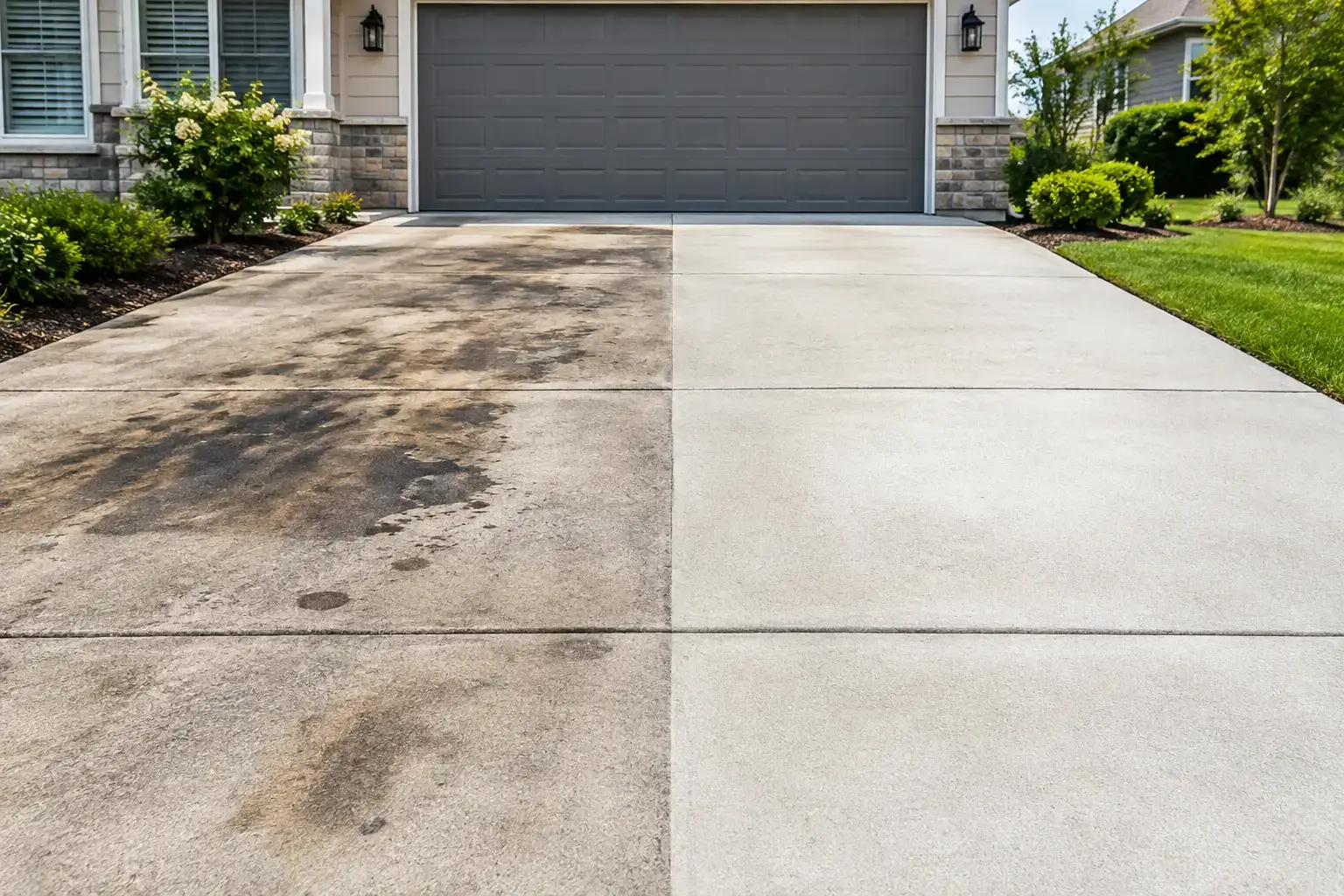
A driveway can look worn out long before the concrete itself has a problem. One dark oil spot near the garage, orange streaks beneath a sprinkler head, or green growth along the shaded edge can pull attention away from an otherwise well-kept home. These driveway stain removal examples show why identifying the stain first matters just as much as choosing the cleaning method.
For homeowners in Homosassa, Citrus County, and nearby Central Florida communities, humidity, irrigation, oak debris, vehicles, and year-round outdoor exposure all leave their mark on concrete. The good news is that many stains respond very well to professional cleaning. The right process can revive the surface, improve walking safety, and make the front of your home look shining like a diamond again.
Driveway Stain Removal Examples Homeowners See Most Often
Oil and automotive fluid stains
Fresh oil stains usually appear as dark, wet-looking patches where a vehicle is parked. Older oil spots often look black or brown and may have collected dust, making them seem larger than they were originally. Transmission fluid, brake fluid, and power steering fluid can create similar discoloration.
Oil is challenging because it absorbs below the surface of porous concrete. A quick rinse may brighten the top layer, but it often will not remove the material that has penetrated the concrete. A professional approach generally starts with a concrete-safe degreasing treatment that is given time to break down the oil before the area is cleaned using controlled pressure and proper rinsing.
Results depend on the age of the spill, how much fluid reached the concrete, and whether the driveway has been sealed. A fresh stain may clean up dramatically. A stain that has baked in under Florida sun for years may lighten substantially without disappearing completely. Honest expectations matter here: improvement is common, but deep oil saturation is not always a one-visit fix.
Rust stains from irrigation, metal, or fertilizer
Orange, red, or brown discoloration is often rust. In Citrus County, irrigation is a frequent cause, particularly when well water contains iron. Rust can also develop beneath patio furniture, trailers, metal planters, or a vehicle with a small leak. Fertilizer spills can leave similar marks when iron-containing granules get wet on concrete.
Rust requires more care than ordinary dirt. Aggressive pressure alone does not chemically remove a rust stain, and harsh products can damage surrounding grass, landscaping, paint, or decorative surfaces if they are not handled correctly. Surface-appropriate rust treatment targets the discoloration, followed by thorough rinsing and attention to nearby plants.
If irrigation is the source, the stain can return even after a successful cleaning. Correcting the water issue, adjusting the sprinkler pattern, or installing appropriate filtration may be necessary to keep the driveway cleaner longer.
Green algae, mildew, and black organic growth
A driveway that turns green near the house, beneath trees, or along the north-facing side is dealing with organic growth. In Florida’s warm, humid conditions, algae and mildew can spread quickly after rain or irrigation. Black spots may be mildew, embedded grime, leaf tannins, or a combination of several contaminants.
This is one of the most satisfying transformations because the contrast can be dramatic. Cleaning removes the slippery film that develops on the surface and reveals the original concrete color underneath. More importantly, it helps make commonly used walking areas safer, especially near entryways, sidewalks, pool paths, and garage doors.
The best method is not simply blasting the surface with maximum pressure. Too much pressure can leave visible lines, roughen concrete, or create an uneven appearance. A careful cleaning process uses the appropriate treatment and controlled equipment to lift organic growth evenly across the driveway.
Tire marks and black rubber transfer
Tire marks are common at the bottom of sloped driveways, near garage entrances, and in areas where drivers turn sharply. Hot tires can transfer rubber onto concrete, leaving curved black streaks that do not rinse away with a garden hose. Golf carts, trailers, and lawn equipment can leave similar marks.
These stains usually sit closer to the surface than old oil stains, but they may need a targeted cleaner to loosen the rubber before washing. The key is using enough cleaning power to remove the transfer without scarring the concrete. Tire marks may also reveal areas where a previous coating or sealer is failing, which is useful information before deciding whether to reseal.
Leaf stains, tannins, and general grime
Leaves, acorns, pine needles, mulch, and wet debris can leave brown shadows on concrete. In a tree-lined Florida neighborhood, these stains often build slowly enough that homeowners do not notice them until the driveway is cleaned. What looked like permanently dingy concrete may actually be a layer of organic residue and embedded dirt.
These stains tend to respond well to a thorough driveway cleaning, especially when the work includes edges, expansion joints, and the area along the garage door. A complete cleaning makes the driveway look consistent instead of creating a bright center with dark borders.
Paint, sealant, and construction spills
Paint drips, overspray, caulk, adhesive, and construction residue require a more cautious plan. The wrong solvent can spread the spill, weaken a previous sealer, or create a noticeably different patch in the concrete. Some small spills can be reduced or removed; others may need careful spot treatment followed by broader cleaning to blend the area.
This is a situation where it helps to avoid experimenting with multiple household chemicals. Mixing products can produce unsafe fumes or set the stain more deeply. If the driveway is decorative, stamped, colored, or previously coated, the cleaning approach should be even more conservative.
What Determines the Result?
No two concrete driveways absorb stains in exactly the same way. Age, porosity, sun exposure, past sealing, and prior cleaning all affect the outcome. A newer, sealed driveway often releases surface staining more easily. Older concrete with tiny cracks and open pores can hold onto oil, rust, and organic residue more stubbornly.
The stain itself is only one part of the picture. A good cleaning professional also considers where rinse water will travel, whether plants need protection, and which nearby surfaces could be affected. Garage doors, painted trim, pavers, landscape beds, and pool decking should not be treated as an afterthought.
That attention is especially valuable when cleaning a driveway connected to walkways, lanais, or a pool cage. The goal is a consistently clean exterior, not a brighter driveway that creates an awkward contrast with everything around it.
When Cleaning Is Enough and When Sealing Helps
A deep cleaning often provides a major improvement on its own. But if your driveway absorbs water quickly, develops stains soon after cleaning, or has a faded, porous appearance, concrete sealing may be worth considering after the surface has fully dried.
A quality sealer can make routine maintenance easier by reducing how quickly oil, dirt, and moisture enter the concrete. It does not make a driveway stain-proof, and it will not hide existing deep stains. Instead, it gives the surface an added layer of protection and can help future spills stay closer to the top, where they are easier to address.
Sealing is not the right choice for every driveway. Concrete must be properly cleaned and prepared first, and the product should suit the surface and the homeowner’s preferred appearance. A careful assessment is better than applying a one-size-fits-all coating.
A Better Way to Care for Florida Concrete
The clearest lesson from these driveway stain removal examples is that concrete responds best to timely, surface-specific care. Address fresh spills when possible, keep irrigation from repeatedly soaking the same areas, and schedule professional cleaning before algae and grime become a slippery, heavy buildup.
For a driveway that needs more than a quick rinse, White Diamond Pressure Washing can evaluate the stain, protect the surrounding property, and use a method suited to the concrete in front of your home. A cleaner driveway is a simple change, but it can make arriving home feel better every day.