

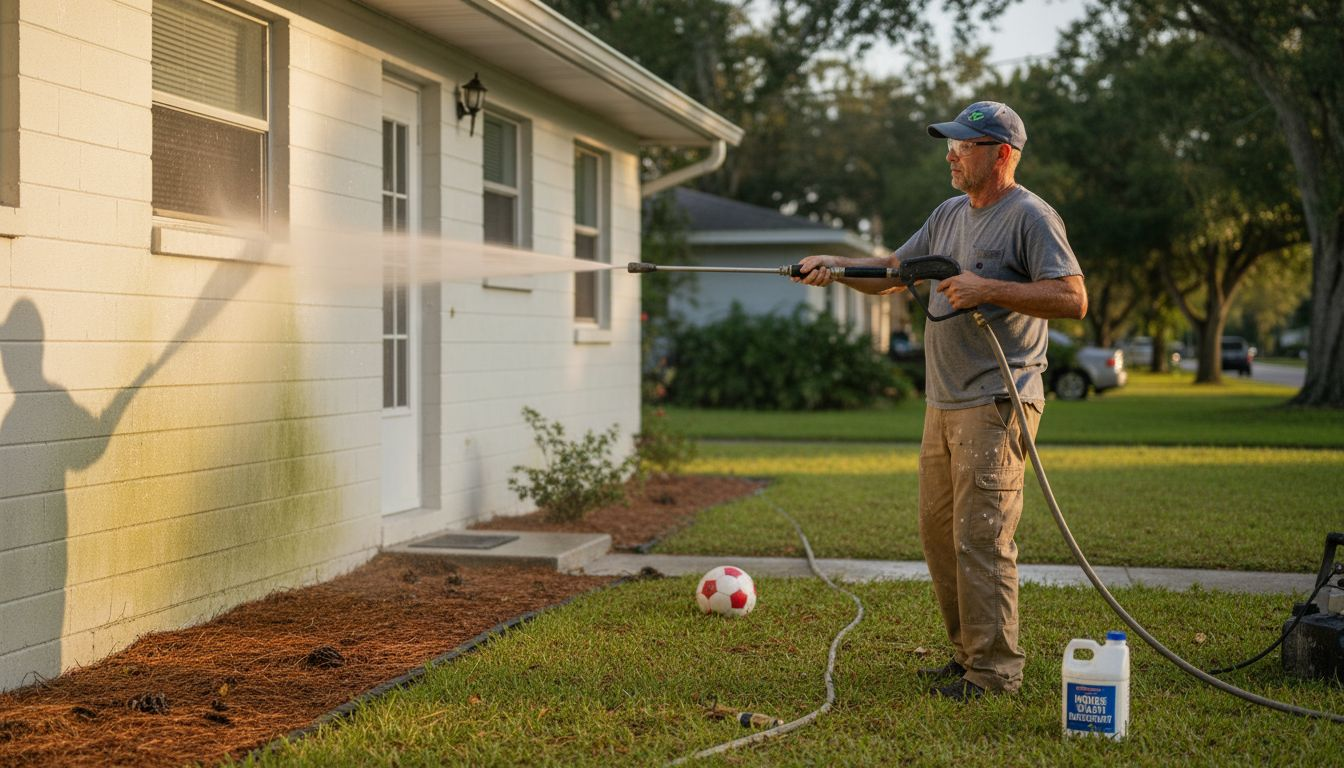
You’ve decided to repaint your home’s exterior to boost curb appeal and protect your investment. But skipping pre-paint washing can reduce paint lifespan by 30% leading to costly early repainting. Proper pre-paint washing removes contaminants that prevent paint adhesion, setting the foundation for a durable, beautiful finish. This guide reveals what pre-paint washing is, why it matters in Citrus County’s humid climate, and how to do it right for maximum paint performance and home value.
Table of Contents
- Understanding Pre-Paint Washing: Definition And Importance
- How Pre-Paint Washing Enhances Paint Adhesion And Durability
- Techniques And Best Practices For Citrus County Homes
- Common Contaminants And Their Effects On Exterior Paint
- Common Misconceptions About Pre-Paint Washing
- Comparing Pre-Paint Washing Methods: Soft Washing Vs. Pressure Washing
- Step-By-Step Professional Pre-Paint Washing Guide
- Choosing Products And Equipment For Safe And Effective Pre-Paint Washing
- Enhance Your Home’s Exterior With Professional Pre-Paint Washing
- Frequently Asked Questions About Pre-Paint Washing
Key Takeaways
| Point | Details |
|---|---|
| Removes adhesion-blocking contaminants | Pre-paint washing eliminates dirt, mildew, and chalking that prevent paint from bonding properly. |
| Extends paint life significantly | Proper pre-paint washing extends paint lifespan by at least 30% compared to unwashed surfaces. |
| Soft washing protects surfaces | Low-pressure techniques preserve delicate materials while removing fungal growth common in Citrus County. |
| Detergents are essential | Water alone removes less than 25% of chalk residue; specialized cleaners are necessary. |
| Prevents common paint failures | Thorough washing eliminates moisture-trapping contaminants that cause peeling and blistering. |
Understanding Pre-Paint Washing: Definition and Importance
Pre-paint washing is a specialized cleaning process performed before painting exterior surfaces to remove contaminants that interfere with paint adhesion. Unlike routine cleaning, this preparation targets specific threats: dirt accumulation, mildew colonies, algae growth, and chalking residue from weathered paint.
These contaminants create invisible barriers between your substrate and new paint. Pre-paint washing removes dirt, mildew, and chalking which impair paint adhesion and longevity. When paint lands on contaminated surfaces, it bonds to the debris rather than the substrate itself. As moisture infiltrates these weak bonds, paint begins peeling within months instead of lasting years.
Citrus County’s humid subtropical climate creates perfect conditions for fungal growth on exterior surfaces. High humidity and warm temperatures accelerate mildew and algae colonization, making pre-paint washing even more critical here than in drier regions.
Key benefits of proper pre-paint washing include:
- Cleaner bonding surface for primer and topcoat application
- Extended paint life reducing repainting frequency and costs
- Enhanced curb appeal through smoother, more uniform finish
- Better moisture protection preventing wood rot and substrate damage
- Increased home value through professional-quality paint jobs
Skipping this step or performing it inadequately guarantees premature paint failure. You’re essentially painting over problems that will resurface within the first year, wasting time and money on a job that won’t last.
How Pre-Paint Washing Enhances Paint Adhesion and Durability
Paint adhesion relies on molecular bonding between coating and substrate. When contaminants occupy the surface, paint molecules attach to loose debris instead of penetrating and gripping the substrate. This creates weak points where moisture easily infiltrates.
Moisture trapped beneath paint causes two primary failure modes. First, water vapor pressure builds between coating and substrate, creating blisters that eventually rupture. Second, freeze-thaw cycles in cooler months expand trapped moisture, separating paint from the surface layer by layer.
Proper pre-paint washing extends paint lifespan by at least 30% compared to painting over dirty surfaces. This translates to three extra years on a typical ten-year paint job. For a $5,000 exterior paint project, that’s $1,500 in deferred costs plus the hassle of another major home improvement project.
Paint Life Extension Through Pre-Wash:
- Without pre-wash: 5-7 years average lifespan
- With water rinse only: 6-8 years average lifespan
- With proper detergent wash: 8-10 years average lifespan
- Professional soft wash: 10-12 years average lifespan
Longer-lasting paint means sustained curb appeal and continuous home value protection. Peeling, faded paint signals neglect to potential buyers and neighbors. Fresh, adhering paint demonstrates maintenance and care, supporting property values in competitive markets.
Investing in thorough pre-paint washing costs a fraction of premature repainting. Most homeowners spend $200-400 on professional washing versus $5,000+ for complete exterior repainting. The math clearly favors proper preparation. Explore exterior cleaning benefits to understand comprehensive surface preparation advantages.
Techniques and Best Practices for Citrus County Homes
Citrus County’s climate demands specific washing approaches that balance cleaning power with surface preservation. Soft washing uses low pressure and specialized detergents to safely remove fungi and dirt without damaging delicate exterior materials.
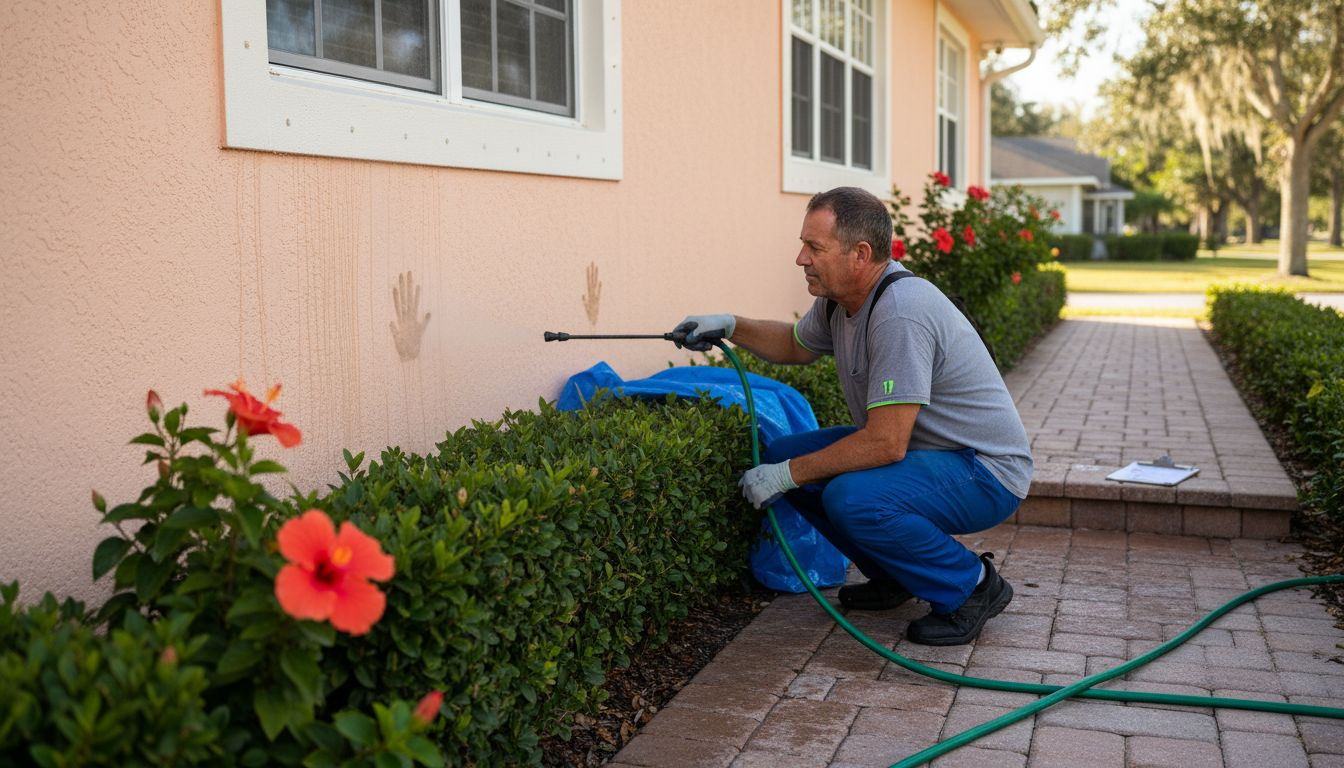
Soft washing operates under 500 PSI, relying on chemical action rather than mechanical force. Biodegradable detergents break down organic growth at the molecular level, allowing gentle rinsing to remove loosened contaminants. This approach protects stucco, wood siding, painted surfaces, and aged masonry that high pressure would damage.
High-pressure washing exceeding 1,500 PSI can etch wood grain, blast away loose paint chips, crack stucco, and force water behind siding. While effective on concrete and brick, it’s inappropriate for most painted surfaces requiring pre-paint preparation.
For Citrus County’s mold-prone environment, detergent formulations must include mildewcides and surfactants. These chemicals penetrate fungal roots embedded in porous surfaces, killing growth that water pressure alone cannot remove. Proper dilution ratios prevent landscaping damage while maintaining cleaning effectiveness.
Best practices for timing and application:
- Schedule washing 24-48 hours before painting to ensure complete drying
- Apply detergents during cooler morning hours to prevent premature evaporation
- Protect plants with pre-wetting and plastic sheeting during chemical application
- Use bottom-to-top application and top-to-bottom rinsing patterns
- Verify surface dryness with moisture meter before primer application
Pro Tip: Always perform a test patch on an inconspicuous area before washing the entire exterior. This reveals how your specific siding material reacts to cleaning solutions and pressure levels, preventing costly damage to visible surfaces.
Understanding soft washing vs power washing differences helps you select appropriate methods for your home’s materials and condition.
Common Contaminants and Their Effects on Exterior Paint
Exterior surfaces accumulate multiple contaminant types, each creating specific bonding problems. Identifying these threats helps you select appropriate cleaning methods and verify thorough removal before painting.
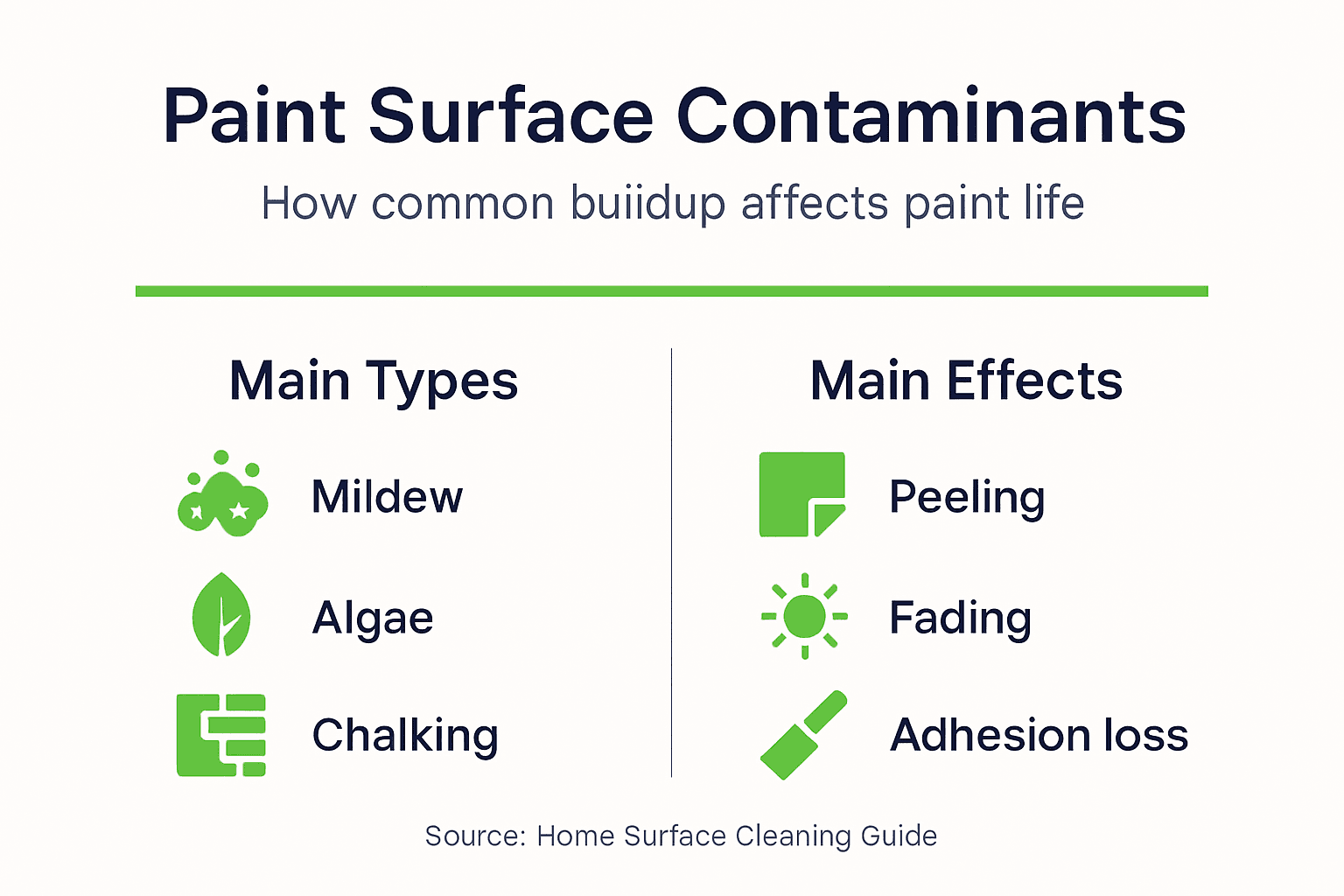
Mildew appears as black or gray spots, particularly on north-facing walls with limited sun exposure. These fungal colonies produce enzymes that digest organic material in paint, creating pitted surfaces with poor adhesion. Mildew roots penetrate deep into porous substrates, requiring chemical treatment beyond surface washing.
Algae presents as green streaks or patches, thriving in moisture-rich environments. While less destructive than mildew, algae creates slippery biofilms that prevent paint penetration. The moisture these organisms retain promotes wood rot and accelerates substrate deterioration.
Chalking occurs as paint ages and UV exposure breaks down binder resins. The resulting powder coating must be completely removed since new paint cannot bond to loose particles. Water rinsing removes less than 25% of chalk residue; detergent washing is essential.
70% of exterior paint failures in humid climates are linked to fungal contamination removable only by proper washing. This statistic highlights why Citrus County homeowners cannot skip pre-paint preparation without risking premature failure.
Additional contaminants affecting paint adhesion:
- Dirt and dust creating physical barriers between paint and substrate
- Pollen and organic debris trapping moisture against surfaces
- Salt deposits from coastal proximity causing chemical interference
- Spider webs and insect residue preventing uniform coverage
- Rust stains from metal fixtures bleeding through new paint
Each contaminant requires specific treatment. Fungicides address mildew and algae. Surfactants lift dirt and organic matter. Chelating agents remove mineral deposits. Professional pre-paint washing uses multi-component formulations targeting all common threats simultaneously.
Common Misconceptions About Pre-Paint Washing
Homeowners frequently make costly assumptions about surface preparation that compromise paint performance. Understanding these misconceptions helps you avoid common mistakes and achieve professional results.
Myth: Water rinsing removes sufficient contaminants for paint adhesion.
Reality: Plain water removes surface dirt but fails to address chalk residue, mildew roots, and organic biofilms. Detergents chemically break down these adhesion barriers, allowing complete removal. Water alone leaves invisible contaminants that cause bonding failure.
Myth: High-pressure washing always cleans better than low-pressure methods.
Reality: Excessive pressure damages wood grain, strips existing paint unevenly, and forces water into wall cavities. Soft washing preserves substrate integrity while chemical action removes contaminants high pressure misses. Pressure creates surface appearance of cleanliness without addressing molecular-level contamination.
Myth: Bleach solutions harm landscaping and should be avoided.
Reality: Properly diluted sodium hypochlorite (bleach) at 1-2% concentration effectively kills mold without damaging plants when applied correctly. Pre-wetting vegetation, using protective barriers, and thorough post-application rinsing prevent harm. Avoiding necessary fungicides leads to incomplete cleaning and paint failure.
Myth: Any cleaning close to painting day works equally well.
Reality: Surfaces must fully dry before paint application. Washing too close to painting traps moisture beneath coatings. Insufficient drying time causes blistering and adhesion failure within weeks. The 24-48 hour drying window is essential, not optional.
Believing these myths leads to inadequate preparation, premature paint failure, and expensive do-overs. You end up paying twice for the same project when shortcuts compromise the foundation of your paint job.
Pro Tip: Request detailed explanations of cleaning methods and chemical formulations from service providers. Reputable professionals eagerly discuss their processes and safety measures. Vague answers or reluctance to explain techniques signal inexperience or corner-cutting that will cost you later.
Comparing Pre-Paint Washing Methods: Soft Washing vs. Pressure Washing
Choosing the right cleaning method protects your surfaces while ensuring thorough contaminant removal. This comparison clarifies when each approach works best for pre-paint preparation.
| Feature | Soft Washing | Pressure Washing |
|---|---|---|
| Operating Pressure | Under 500 PSI | 1,500-4,000 PSI |
| Primary Cleaning Mechanism | Chemical detergents | Mechanical force |
| Surface Impact | Gentle, preserves integrity | Can damage soft materials |
| Contaminant Removal | Kills organic growth at roots | Removes surface debris |
| Best For | Wood, stucco, painted surfaces | Concrete, brick, stone |
| Drying Time | 24-48 hours | 12-24 hours |
| Paint Adhesion Benefit | Optimal surface preparation | May roughen surface excessively |
Soft washing uses low pressure and specialized detergents, preserving surfaces better than high-pressure washing that can damage fragile exteriors. For most residential pre-paint applications, soft washing delivers superior results with lower risk.
Optimal use cases for each method:
- Soft washing excels for: vinyl siding, wood clapboard, stucco, EIFS, aged brick, painted masonry, composite materials, and any surface showing paint deterioration
- Pressure washing works for: poured concrete, new brick, natural stone, metal surfaces, and heavily soiled hard substrates requiring mechanical cleaning before chemical treatment
Citrus County’s typical residential exteriors feature materials best served by soft washing. The combination of mold growth and delicate substrates makes chemical cleaning essential. High pressure risks driving contaminants deeper into porous surfaces rather than removing them.
Moderate pressure (800-1,200 PSI) occasionally supplements soft washing on concrete foundations or pathways. This hybrid approach uses appropriate force for each surface type, maximizing cleaning effectiveness while minimizing damage risk.
Understanding pressure vs power washing distinctions helps you communicate requirements clearly with service providers and evaluate their proposed methods against your home’s needs.
Step-by-Step Professional Pre-Paint Washing Guide
Following a systematic process ensures complete contaminant removal and proper surface preparation. These professional steps create optimal conditions for paint adhesion and longevity.
-
Surface Inspection: Examine all exterior walls identifying contaminant types, substrate condition, and problem areas requiring special attention. Note mildew concentrations, chalking severity, and any damaged siding needing repair before painting.
-
Area Preparation: Protect landscaping with plastic sheeting and pre-wet plants to minimize chemical absorption. Cover electrical fixtures, close windows, and remove decorative items. Move furniture and potted plants away from cleaning zones.
-
Chemical Selection: Choose detergent formulations based on identified contaminants. Mildewcides for fungal growth, degreasers for organic residue, and surfactants for general dirt removal. Proper dilution ratios balance cleaning power with safety.
-
Low-Pressure Application: Apply cleaning solutions from bottom to top using soft wash equipment under 500 PSI. Allow 10-15 minutes dwell time for chemicals to break down contaminants. Avoid application during direct sunlight or high heat.
-
Thorough Rinsing: Rinse from top to bottom using clean water, ensuring complete detergent removal. Multiple passes may be necessary for heavily soiled areas. Verify no chemical residue remains that could interfere with paint adhesion.
-
Drying Period: Allow 24-48 hours for complete moisture evaporation before painting. Check weather forecasts to avoid rain during drying. Use moisture meters on porous surfaces to confirm readiness.
-
Post-Wash Inspection: Examine cleaned surfaces for missed spots, remaining contaminants, or damage requiring repair. Address any issues before proceeding to primer application.
Each step builds on the previous one, creating a clean foundation for paint that will last years beyond inadequately prepared surfaces. Rushing or skipping steps undermines your entire painting investment.
Pro Tip: Document your pre-paint washing process with photos showing before, during, and after conditions. This visual record helps identify problem areas for future maintenance and provides evidence of proper preparation if paint warranty issues arise.
Learn more about professional techniques through our soft washing process guide covering detailed application methods and safety protocols.
Choosing Products and Equipment for Safe and Effective Pre-Paint Washing
Selecting appropriate cleaning products and equipment determines both cleaning effectiveness and surface safety. Selecting the right cleaning chemicals and pressure settings is critical to avoid surface damage and protect landscaping.
Detergent formulations should target your specific contaminants. Sodium hypochlorite solutions (1-2% concentration) effectively kill mildew and algae. Surfactants reduce water surface tension, allowing deeper penetration into porous substrates. Chelating agents remove mineral deposits and rust stains. Multi-component cleaners address multiple contaminant types simultaneously.
Pressure settings must match surface sensitivity. Vinyl siding tolerates up to 1,500 PSI but soft washing under 500 PSI prevents water intrusion behind panels. Wood surfaces require under 300 PSI to avoid grain damage. Stucco and EIFS need gentle treatment under 100 PSI. When uncertain, start low and increase only if necessary.
Essential equipment for proper pre-paint washing:
- Low-pressure pump systems with adjustable output (100-500 PSI range)
- Chemical injection systems for consistent detergent ratios
- Multiple spray tip options for different surfaces and applications
- Downstream injectors preventing chemical damage to pump components
- Safety equipment including eye protection, gloves, and respiratory protection
Landscaping protection requires both chemical selection and application methods. Biodegradable detergents break down naturally without harming plants. Pre-wetting vegetation dilutes any chemical contact. Plastic barriers shield delicate flowers and shrubs. Thorough post-application rinsing removes residual chemicals before they affect plant tissue.
Environmental considerations extend beyond immediate landscaping. Runoff management prevents chemicals from entering storm drains or natural waterways. Many municipalities regulate exterior cleaning discharge. Responsible providers capture and neutralize runoff, protecting local ecosystems.
Explore our guide on choosing detergents for exterior cleaning to understand formulation differences and selection criteria. Review water pressure guidelines specific to Citrus County conditions and common residential materials.
Enhance Your Home’s Exterior with Professional Pre-Paint Washing
You now understand how proper pre-paint washing extends paint life, protects your investment, and enhances curb appeal. White Diamond Pressure Washing brings specialized expertise to Citrus County homes, ensuring your surfaces receive the meticulous preparation they deserve.

Our team uses professional pre-paint washing services tailored to your home’s specific materials and contamination levels. We employ low-pressure soft washing techniques that preserve surface integrity while eliminating mildew, algae, and chalk residue that compromise paint adhesion. Every project uses specialized detergents formulated for Citrus County’s humid climate, targeting the fungal growth that threatens paint longevity.
Protecting your paint investment starts with proper preparation. Our systematic approach removes adhesion-blocking contaminants, creating the clean foundation your new paint needs to last years beyond industry averages. We handle timing, chemical selection, and application methods so you can focus on choosing colors and planning your home’s transformation.
Discover how selecting effective cleaning products and proven techniques maximize your painting project’s success and durability.
Frequently Asked Questions About Pre-Paint Washing
When should I schedule pre-paint washing before painting?
Schedule washing 24-48 hours before primer application to ensure complete surface drying. This window allows moisture evaporation while preventing new contaminant accumulation. Check weather forecasts to avoid rain during the drying period, which would require re-washing.
Is soft washing safe for all exterior surfaces?
Soft washing safely cleans most residential exteriors including vinyl, wood, stucco, and painted masonry when properly executed. Extremely delicate surfaces like historic wood or damaged substrates may require even gentler methods. Professional assessment identifies any special handling requirements before cleaning begins.
Can I use bleach solutions without harming my plants?
Properly diluted bleach (1-2% sodium hypochlorite) won’t harm plants when applied with protective measures. Pre-wet vegetation, use barriers for delicate species, and rinse thoroughly after cleaning. The brief exposure at correct concentrations poses minimal risk compared to the benefits of complete mold removal.
What happens if I skip pre-paint washing?
Skipping pre-paint washing reduces paint lifespan by approximately 30%, causing premature peeling, blistering, and adhesion failure. Contaminants create weak bonding points where moisture infiltrates, leading to costly repainting within 3-5 years instead of the expected 8-10 years. You essentially waste money on paint that cannot perform as designed.
Are detergents really necessary or is water enough?
Water alone removes less than 25% of chalk residue and cannot kill mildew roots or break down organic biofilms. Detergents chemically dissolve these adhesion barriers, allowing complete removal that water pressure cannot achieve. Skipping detergents leaves invisible contaminants that cause rapid paint failure regardless of application quality.
Recommended
- Pressure Washing Trends 2025: Innovations Shaping Citrus County – white-diamond-pressure
- Revitalize Your Home: Benefits of Soft Wash Roof Cleaning – white-diamond-pressure
- 7 Key Commercial Pressure Washing Benefits for Homeowners – white-diamond-pressure
- Role of Pressure Washing in Preventive Maintenance – white-diamond-pressure
3 thoughts on “Pre-Paint Washing: Boost Paint Life 30% in 2026”