


TL;DR:
- Regular exterior maintenance extends roof life and prevents costly water damage.
- County rules limit pressure washing to once annually, requiring strategic timing.
- Consistent inspections and cleaning of gutters, roof, siding, and hardscapes protect property value.
Water damage and weather-related repairs sneak up on homeowners who skip routine exterior upkeep, and in a place like in a place like the damage can be swift and expensive. Water damage claims average $7,000–$12,000, yet consistent maintenance can extend your roof’s life by 5 to 10 years and protect your foundation from costly failure. In an area shaped by Florida’s humidity, tropical storms, and strict county water rules, a random approach to home care simply doesn’t hold up. This checklist walks you through every major exterior area, from roof to driveway, with timing, techniques, and local guidelines built in so you know exactly what to do and when to do it.
Table of Contents
- Set your annual maintenance schedule for citrus county
- inspect and clean roofs, gutters, and downspouts
- siding, windows, and paint: clean and prevent weathering
- decks, patios, walkways, and driveways: keep surfaces safe and attractive
- Final checklist: prioritize, track, and protect your investment
- Our expert take: don’t let citrus county’s unique conditions catch you off guard
Key Takeaways
| Point | Details |
|---|---|
| Follow annual schedule | Build your maintenance plan around Citrus County’s annual cleaning limit and best timing for peak effectiveness. |
| Prioritize water damage prevention | Focus on roofs, gutters, and drainage to stop leaks before they lead to expensive repairs. |
| Surface care protects curb appeal | Regular cleaning and inspection of siding, decks, and walkways prevent deterioration and preserve home value. |
| Check local guidelines | Stay compliant with Citrus County’s water use rules to avoid fines and ensure your cleaning efforts last. |
Set your annual maintenance schedule for citrus county
The first step isn’t picking up a hose. It’s mapping out your year around what the county actually allows. In 2026, pressure washing is restricted to one session per year under Modified Phase III water rules, with the only exception being prep work before painting or sealing. That single session needs to count, so planning matters more here than almost anywhere else in Florida.
Timing your one allowed wash strategically makes a big difference. Late spring, right before peak hurricane season, is the sweet spot for most homeowners. You catch the pollen and mildew that built up over spring, and you set your home up to handle the heavy rains ahead. If a major storm hits and causes damage, cleaning before repair work qualifies as an exception, so keep a record of any storm-related maintenance you perform.
Beyond the annual wash, a coastal maintenance calendar helps you track seasonal tasks without losing sight of the bigger picture. Setting reminders in a home maintenance app or a simple notes file on your phone removes the mental load of remembering it all.
Here’s a sample month-by-month schedule to keep your home on track:
| Month | Task | Notes** ** |
|---|---|---|
| February | Window inspection and caulk check | Pre-spring prep, before any heavy rains |
| March | Clear winter debris from gutters | Before spring storms begin |
| May | Annual pressure wash | Schedule with a licensed pro, one session per rule |
| June | Pre-hurricane deck and siding check | Last call before storm season |
| September | Post-storm exterior assessment | Document any damage for insurance |
| November | Final gutter cleanout | Before cooler months set in |
For more guidance on building your annual washing schedule around local water rules, check White Diamond’s county-specific planning resources.
- Schedule your one annual wash in late spring (May is ideal)
- Time gutter cleanouts before and after major storms
- Use storm damage as a documented trigger for out-of-schedule cleaning
- Consider the environmental impact of detergent runoff when planning wash days
Pro tip: Bundle your gutter cleanout, window inspection, and exterior wash on the same day. You save water, save time, and get a full picture of your home’s condition in one pass.
inspect and clean roofs, gutters, and downspouts
With your schedule set, let’s break down specific checklist items, beginning at the top with your home’s roof and drainage system. These are the areas where small problems turn into massive repair bills faster than anywhere else on your property.
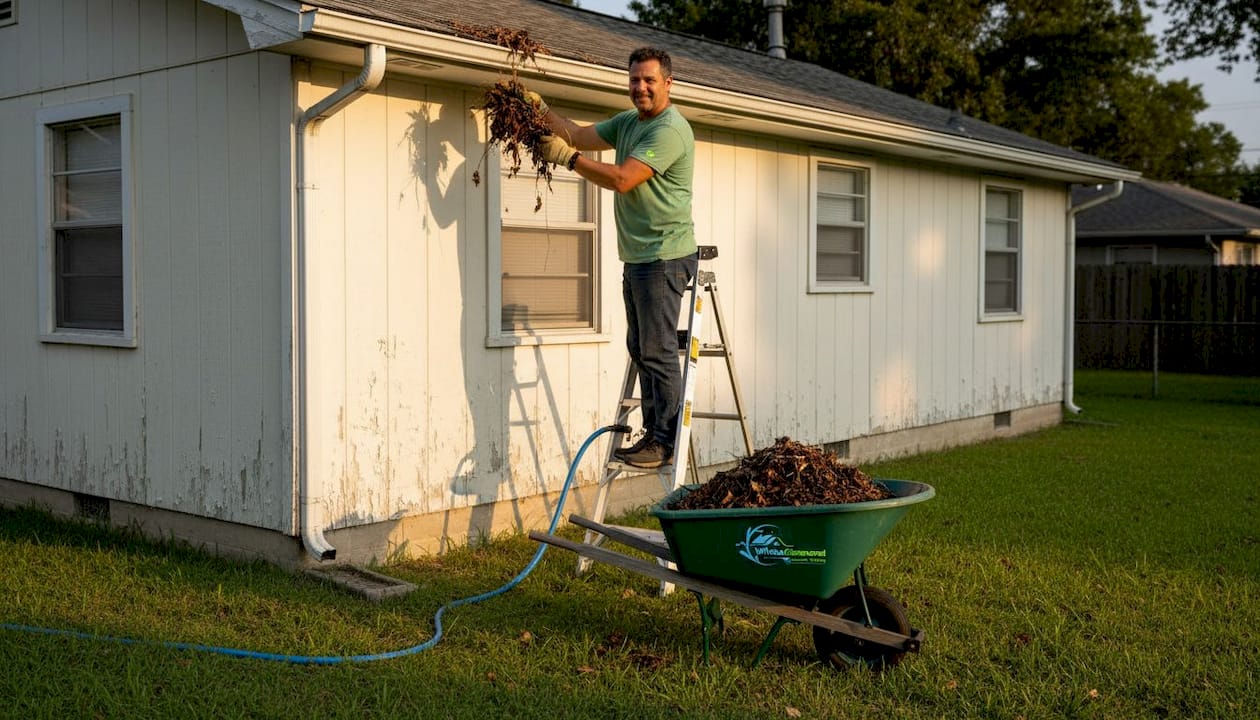
Regular maintenance extends roof life by 5 to 10 years, and in Florida’s climate, that’s not a small thing. Salt air, heat, UV exposure, and seasonal storms all work against roofing materials faster here than in drier climates.
Here’s your step-by-step inspection checklist for the roof and drainage system:
- Walk the perimeter and look up at shingles from the ground. Missing, cracked, or curling shingles are red flags.
- Check the flashing around chimneys, vents, and skylights. Any gaps or rust mean potential water entry points.
- Look at the roof vents for debris or damage. A clogged roof exhaust affects both moisture control and insulation.
- Clean gutters of leaves, seed pods, and buildup. Use gloves and a scoop, then flush with water.
- Check downspout extensions to confirm water is directed at least 4 feet from your foundation.
- Look for water stains on soffits and fascia boards, which often signal overflow or blockage.
- Follow recommended roof inspection steps for a thorough, professional-grade review of what you find.
Even a partial gutter blockage can redirect water back under the roofline during a heavy rain. From there, it enters the attic, damages insulation, feeds mold, and eventually soaks into ceilings and walls. A $30 gutter cleaning becomes a $10,000 restoration if ignored long enough.
A clogged gutter during a single heavy Florida rainstorm can dump hundreds of gallons of water directly against your foundation. Clean gutters aren’t cosmetic, they’re structural.
You can clean gutters yourself if you’re comfortable on a ladder. For roof and gutter cleaning that also covers soft washing for the roof surface itself, professional services are the safer and more thorough choice.
Pro tip: Consider mesh gutter guards after your next cleanout. They dramatically cut how often debris builds up and reduce the risk of blockage between seasonal cleanings.
siding, windows, and paint: clean and prevent weathering
Once the top of your home is protected, turn to the exterior walls and windows where dirt and weather take a steady toll. In Florida’s humid environment, mold and mildew don’t need long to establish themselves on any porous surface.
Different siding materials need different approaches. Here’s a quick comparison to guide your cleaning choices:
| Surface type | Best cleaning method | How often | Signs of trouble |
|---|---|---|---|
| vinyl siding | soft wash | Once a year | Green or black streaks, bubbling |
| stucco | low-pressure soft wash | Once a year | cracks, dark staining, soft spots |
| brick | gentle rinse, efflorescence treatment | Every 2 years | White mineral deposits, mortar gaps |
| wood siding | soft wash, reseal | Annual inspection | Paint peeling, soft areas, mold growth |
Because pressure washing can only be done once a year in the county, getting the method right matters as much as the timing. High-pressure water on stucco or older vinyl can cause far more damage than the dirt it removes. This is where soft washing shines. It uses lower pressure with specialized cleaning agents to kill mold and algae at the root rather than just blasting the surface.
For windows, the inspection is just as important as the cleaning. Check every frame for:
- Failed caulking along the edges, which is the most common entry point for moisture
- Paint peeling around window sills, which often signals trapped moisture underneath
- Hard water staining or mineral deposits, common in homes on well water
- Screen damage, which compromises your ventilation options during mild weather
Your spring cleaning checklist should include a window-by-window walk, not just a quick look from the driveway. You’ll catch problems earlier and spend far less fixing them. For more on Gulf Coast maintenance in humid climates, Trinity’s guide offers solid regional context.
decks, patios, walkways, and driveways: keep surfaces safe and attractive
Beyond your home’s walls and windows, turn your attention to the paths, patios, and gathering spaces that get daily use. These surfaces take constant punishment and are also highly visible, so neglect shows up fast in both safety and curb appeal.
A solid annual inspection for your deck and patio maintenance routine should include the following:
- Test wood decks for soft spots by pressing firmly on each board. Any give signals rot below the surface.
- Look for loose or popped nails and screws, which are trip hazards and allow moisture to penetrate faster.
- Check concrete and pavers for cracks, especially at expansion joints where Florida’s heat causes the most movement.
- Look for uneven areas in walkways that could trap water or cause tripping.
- Clean and reseal all wood surfaces after washing to protect against UV and moisture damage.
Here’s a frequency guide for outdoor surface care:
| Surface | Clean frequency | reseal or treat | Professional help needed? |
|---|---|---|---|
| Wood deck | annually | Every 1 to 2 years | For major rot or structural issues |
| concrete driveway | annually | Every 3 to 5 years | For deep cracks or heaving |
| brick or paver patio | annually | Every 2 to 3 years | For significant shifting or settling |
| pool deck/walkway | twice yearly | Every 2 years | For slip-resistant coating work |
Under county water rules, remember that hardscape cleaning still counts toward your annual wash. A follow the deck inspection guide process ensures you identify structural issues before cleaning, so you don’t accidentally force water into a compromised deck joint.
Test for soft spots, clean, and reseal all deck and patio surfaces as part of your annual routine. This single habit prevents the most common and expensive structural failures on outdoor living spaces.
Final checklist: prioritize, track, and protect your investment
With all the tasks broken out, here’s your master checklist and how to make it a lasting habit, not just a one-time project.
Use this numbered list to build out your tracking system, whether that’s a printed sheet on the fridge or a recurring reminder in your phone:
- Annual exterior wash (May, before storm season) — Required once per year under county rules
- Spring gutter cleanout (March) — Clear all debris before spring rains
- Post-storm inspection (After any major storm) — Document roof, siding, and deck for insurance and repair priority
- Window caulk inspection (February) — Check all seals, replace cracked caulk before moisture season
- Pre-painting or resealing cleaning (As needed) — County rules allow additional wash for this purpose
- Fall gutter cleanout (November) — Final clear before cooler months
- Full deck and hardscape inspection (June) — Last check before heavy summer use and storms
Prioritize tasks by cost of failure. A missed gutter cleaning costs tens of dollars to fix later, or thousands if it leads to foundation damage. Water damage claims average $7,000–$12,000, so the tasks most likely to cause water intrusion deserve your earliest attention every year.
Consistent maintenance directly impacts your home’s resale value and can strengthen your position in insurance claims if damage does occur. Property value gains from well-maintained exteriors are measurable, and documented upkeep records are useful proof during appraisals.
Pro tip: Use a free app like HomeZada or a shared Google Sheet to log every task you complete, with the date and any photos. This record is worth its weight in gold when it comes to insurance negotiations or selling your home.
Our expert take: don’t let citrus county’s unique conditions catch you off guard
Generic maintenance checklists treat all homes in all climates the same. That’s a mistake that costs Florida homeowners real money. The combination of subtropical heat, high humidity, seasonal flooding, and county-level water restrictions makes exterior maintenance here a different game entirely. What works in Georgia or Tennessee won’t always work here.
We see the same patterns repeatedly in the homes we service. Someone skips a gutter cleanout because it
Recommended
- 10 home exterior maintenance tips to protect value in 2026 – white-diamond-pressure
- 7 Essential Tips for Your Spring Cleaning Exterior Checklist – white-diamond-pressure
- Benefits of Exterior Cleaning for Homeowners – white-diamond-pressure
- Boost your property value in 2026 with exterior cleaning – white-diamond-pressure
- Essential Home Exterior Maintenance for Gulf Coast Owners