

TL;DR:
- Walkway restoration fixes structural issues like settling, cracking, and poor drainage, unlike surface cleaning.
- Proper restoration involves diagnosing damage, rebuilding the base, resetting pavers, and sealing to prevent future problems.
- In Florida’s climate, regular maintenance and professional restoration are essential to preserve safety, curb appeal, and home value.
Your walkway takes a beating every single day. Foot traffic, Florida’s intense humidity, shifting soil, and relentless summer rains all work against it. Many homeowners assume a quick pressure wash is all it takes to fix a tired, uneven path. But hosing off the surface does nothing for a sunken paver, a cracked base, or poor drainage underneath. Walkway restoration is a different process entirely, and understanding the difference can save you money, prevent injuries, and protect your home’s value for years to come. This article breaks down exactly what restoration means, why it matters in Citrus County’s climate, and when you should call a professional.
Table of Contents
- What is walkway restoration?
- Key steps in walkway restoration: A Citrus County approach
- Common causes of walkway problems (and how restoration fixes them)
- DIY vs. professional walkway restoration: What Citrus County homeowners should know
- Our perspective: Why lasting walkway restoration is about more than looks
- Get expert walkway restoration and cleaning in Citrus County
- Frequently asked questions
Key Takeaways
| Point | Details |
|---|---|
| Restoration vs. cleaning | Walkway restoration fixes underlying issues, not just the surface. |
| Florida-specific care | Humidity and rainfall make regular restoration and drainage fixes crucial in Citrus County. |
| DIY cautions | Small repairs are feasible for DIY, but pros ensure durability and safety for major work. |
| Prevention | Proper restoration and sealing can prevent costly walkway replacements later. |
What is walkway restoration?
Restoration gets confused with cleaning all the time, and it’s easy to see why. Both involve working on your walkway, and both improve how it looks. But the similarity ends there. Cleaning removes surface dirt, algae, mold, and stains. Restoration, on the other hand, fixes the structural integrity of the path itself. Think of it like the difference between washing a car and rebuilding its engine.
Walkway restoration is the process of returning a damaged, settled, or deteriorating path to a safe, functional, and visually sound condition. It goes beyond surface work because it targets the root problems underneath, including a failing base, sunken sections, cracked or shifting pavers, and compromised joint material.
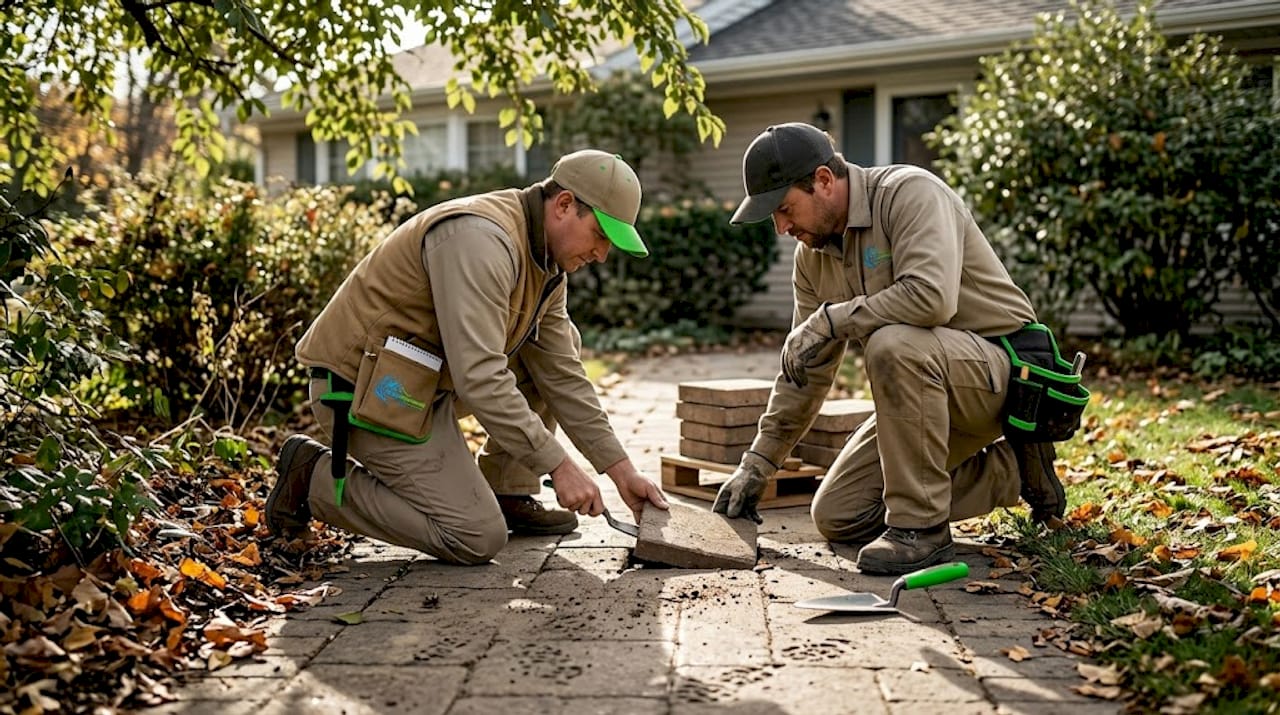
According to a step-by-step restoration guide, a proper paver or stone walkway restoration involves inspecting and removing loose pavers, rebuilding the base with gravel and sand, resetting the pavers level, filling joints with polymeric sand, cleaning the surface, and then sealing it. That’s a multi-stage process. Cleaning alone skips the first four steps entirely.
Why this matters even more in Citrus County
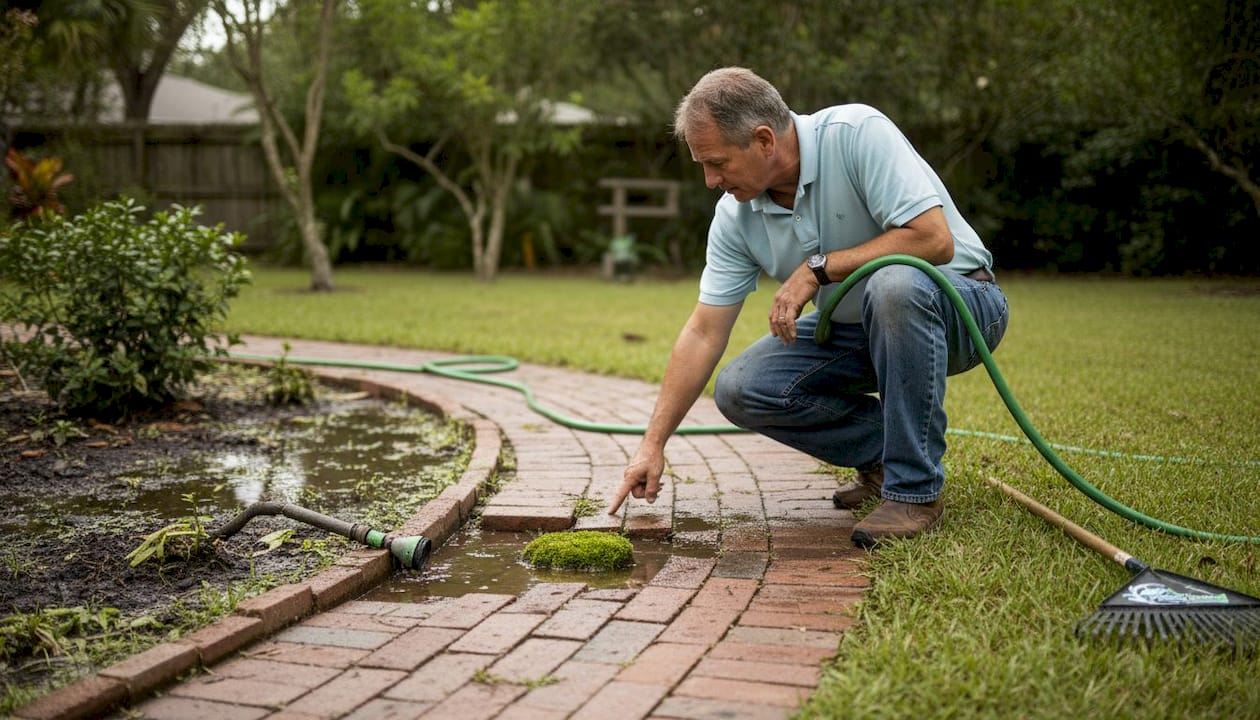
Citrus County’s humid, subtropical climate creates conditions that accelerate walkway wear. Heavy seasonal rain saturates the soil, which causes it to shift and compact unevenly. That movement translates directly into sinking pavers and cracked surfaces. Algae and mold thrive in our heat and moisture, which makes the surface slippery and speeds up material breakdown. Ignoring restoration means those problems compound every single year.
In climates like Florida’s, experts recommend resealing every 2 to 3 years as part of routine maintenance. Most Citrus County homeowners go far longer without any seal work, which means water penetrates deeper, erosion worsens, and eventually the cost of repairs climbs dramatically.
Restoration also has a direct impact on curb appeal and home value. A cracked, uneven walkway sends a negative signal to visitors and potential buyers. A restored, clean, well-sealed path does the opposite. It makes the entire front of your home look intentional and well cared for.
Here is a quick look at what each approach actually covers:
- Surface cleaning: Removes dirt, stains, algae, and mold from the top layer only
- Spot repair: Replaces or fixes one or two damaged pavers without addressing the base
- Full restoration: Diagnoses and repairs the base, resets all affected pavers, refills joints, cleans, and seals the entire area
Understanding walkway cleaning methods is useful, but restoration is the option that prevents the same problems from returning season after season.
Key steps in walkway restoration: A Citrus County approach
With a definition in hand, let’s break down the actual steps of walkway restoration so you know exactly what’s involved.
A professional restoration follows a logical sequence. Each step builds on the last, and skipping any one of them leads to problems down the road. Here’s how the process works from start to finish:
- Diagnose the damage. Walk the entire surface and identify every sunken, cracked, or shifted paver. Check for pooling water after rain and look for signs of root intrusion. A proper diagnosis tells you how much of the base needs work.
- Remove affected pavers. Loose or sunken pavers come up so the base underneath can be properly evaluated and corrected. This step requires care to avoid cracking pavers that are still in good shape.
- Rebuild or regrade the base. Gravel and compactable sand go back in to create a solid, level foundation. This is where surface restoration explained in professional practice differs the most from DIY work. Achieving the right compaction and slope requires tools most homeowners simply don’t own.
- Reset the pavers. Each paver goes back into position level with its neighbors. Proper spacing is maintained to allow for the joint material that holds everything together.
- Fill joints with polymeric sand. Polymeric sand is a specially treated sand that hardens when it gets wet, locking the pavers in place and resisting erosion, weeds, and insect damage.
- Clean the surface. Once the structural work is done, the walkway gets a thorough cleaning to remove any sand residue, staining, and biological growth.
- Apply a quality sealer. Sealing closes off the surface from moisture penetration and UV damage, which matters enormously in Florida’s climate. It also brings out the natural color and texture of the material.
Pro Tip: Always check the slope of your walkway during the reset stage. Water should drain away from your home and off the sides of the path. Even a perfectly restored walkway will sink again quickly if water pools in the same spots as before.
DIY vs. professional tools: A direct comparison
| Factor | DIY approach | Professional approach |
|---|---|---|
| Base compaction | Manual tamper, inconsistent | Plate compactor, precise depth |
| Joint material | Standard sand (washes out) | Polymeric sand (locks in place) |
| Cleaning equipment | Consumer pressure washer | Commercial-grade, adjustable PSI |
| Sealer quality | Hardware store products | Professional-grade, UV resistant |
| Leveling accuracy | Eye-level estimation | Laser level or string line |
| Time required | Full weekend or more | Half day to full day |
Knowing what sidewalk cleaning explained covers versus what restoration requires makes it much easier to choose the right service for your situation.
Common causes of walkway problems (and how restoration fixes them)
Knowing the process is only part of the picture. Understanding what causes walkway issues helps you prevent future problems and ask smarter questions when talking to a professional.
Florida’s climate is the biggest factor. Heavy, frequent rain saturates the soil beneath your walkway constantly. As that soil absorbs water and then dries out repeatedly through the seasons, it shifts, compresses, and erodes. Pavers settle unevenly. Joints crack open. The surface starts to look like it was laid by someone who gave up halfway through.
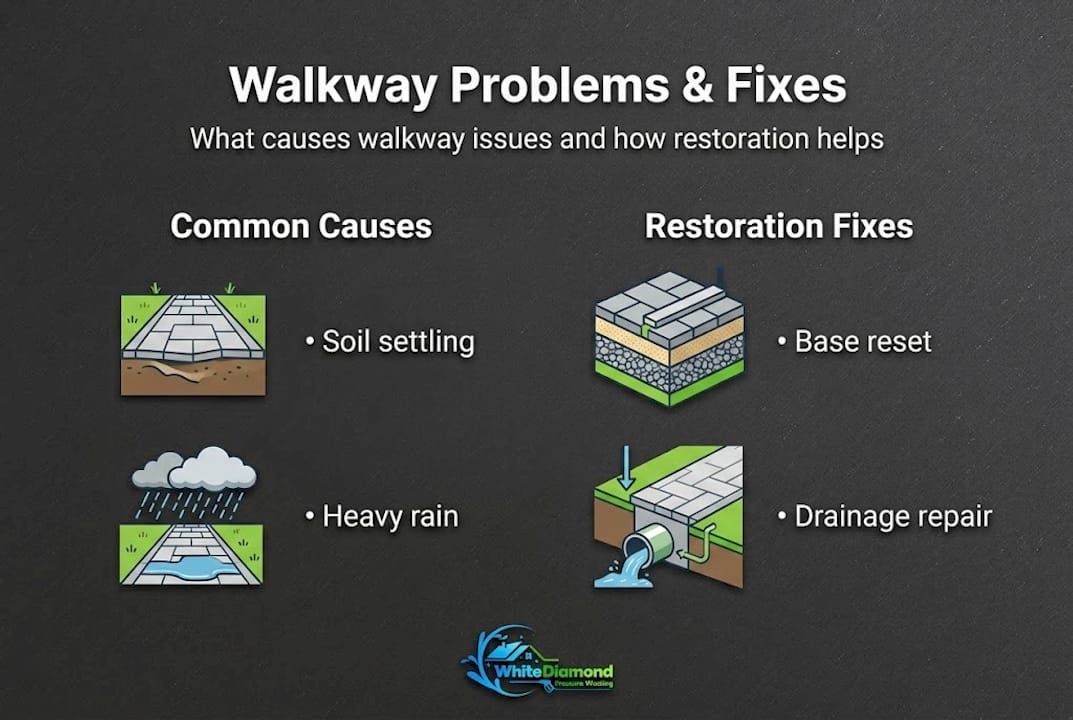
Tree roots and poor base preparation are also leading causes of sunken and misaligned walkways. Roots grow under pavers and force them upward or sideways. A base that wasn’t compacted properly at installation fails much faster than one that was built correctly from the start. Neither of these problems gets fixed with a pressure washer.
Poor drainage is perhaps the most overlooked issue. When water has nowhere to go, it sits on or under the walkway surface. That standing water softens the base, encourages biological growth on top, and accelerates wear on the material. Fixing the structural issue without correcting the drainage means you’ll be doing the same repair again in a year or two.
“Drainage fixes are essential to prevent recurrence. Without addressing where water goes after a storm, even a freshly restored walkway will begin settling again within one to two seasons.” This is the kind of problem that protecting your home exterior starts with identifying early.
Here are the visible signs that your walkway needs restoration, not just a cleaning:
- One or more pavers that rock or shift when you step on them
- Noticeable height differences between adjacent pavers
- Wide or eroded joints where sand or material has washed away
- Pooling water in the same spots after every rain
- Sections of the path that have visibly sunk below the surrounding grade
- Deep cracks running across the surface, not just the joints
- Persistent dark staining that returns quickly after cleaning
Pairing proper restoration with the right ongoing maintenance keeps these problems from coming back. Looking at a driveway maintenance tips approach can give you a solid framework for walkway upkeep as well, since many of the same principles apply.
DIY vs. professional walkway restoration: What Citrus County homeowners should know
Before you decide whether to tackle the project yourself or call in a pro, let’s look at the real trade-offs Citrus County homeowners face.
Not every walkway issue requires a professional. If you have a single shifted paver in a low-traffic area and the base underneath feels solid, resetting it yourself is a reasonable weekend task. But that’s a narrow scenario. Most homeowners who start a DIY restoration encounter complications they didn’t anticipate, and the cost of fixing a poorly done restoration often exceeds what a professional would have charged in the first place.
Here’s the key distinction to understand: DIY is viable for small areas but carries real risks of poor bonding and settling when done without proper compaction tools. Professionals use plate compactors and laser levels that ensure the base is firm, level, and draining correctly. That equipment isn’t cheap to rent, and using it correctly takes practice.
| Category | DIY | Professional |
|---|---|---|
| Upfront cost | Lower | Higher |
| Long-term cost | Potentially higher (repeat repairs) | Lower (done right the first time) |
| Time investment | High (learning curve adds hours) | Low (efficient, practiced process) |
| Risk of damage | Moderate to high | Low |
| Result quality | Inconsistent | Reliable and durable |
| Drainage addressed | Rarely | Standard part of the process |
Pro Tip: Compaction is the single most critical step in any restoration. A base that isn’t compacted properly will settle again within one Florida rainy season. If you don’t have access to a plate compactor and know how to use it correctly, this is the moment to call a professional.
The professional cleaning advantages go well beyond just having better equipment. A trained eye can spot drainage issues, hidden root intrusion, and base failures that aren’t visible from the surface. That diagnostic skill alone is worth the investment for most homeowners.
There are also DIY pressure washing risks worth understanding when it comes to the cleaning phase of restoration. Using too much pressure on pavers that have weakened joints or micro-cracks can force water directly into the base, undoing work that was just done.
For any project involving widespread settling, drainage correction, or significant base failure, safe exterior restoration handled by a professional is consistently the smarter financial decision.
Our perspective: Why lasting walkway restoration is about more than looks
After weighing your options, here’s our experienced take on why quality walkway restoration pays for itself in Citrus County.
We’ve seen the same pattern repeat more times than we can count. A homeowner notices a sunken path or some dark staining and decides a thorough cleaning will take care of it. The walkway looks better for a few weeks, maybe even a few months. Then the same spots sink again. The algae comes back faster than before. And eventually, a trip hazard develops that becomes a real safety concern.
The shortcut of cleaning without addressing the base or drainage is not a solution. It’s a delay. In Citrus County’s climate, that delay is a short one.
Real restoration protects your home’s value by eliminating structural problems before they cascade into bigger ones. It reduces the safety risks that come with uneven surfaces, and it lowers the long-term cost of maintenance by doing the job properly once rather than partially every season. Following a solid driveway maintenance checklist alongside your walkway restoration keeps all your hardscaping in better shape longer.
Restoration isn’t a luxury. In Florida’s conditions, it’s the responsible choice.
Get expert walkway restoration and cleaning in Citrus County
If you’re ready to restore or protect your walkway, here’s how our Citrus County team can help.
At White Diamond Pressure Washing, we handle every stage of the exterior restoration process, from surface cleaning to thorough inspection and prep work that protects your walkway long after the job is done. We use professional-grade equipment and industry-approved methods to get results that hold up through Florida’s wet seasons.

Whether your walkway needs a deep clean or a full structural restoration, we can assess the situation and give you honest recommendations. Explore our exterior cleaning and restoration services to see the full range of what we offer. And before any work begins, learn how avoiding pressure washing mistakes can save your surfaces from unnecessary damage. Book your free estimate today.
Frequently asked questions
How often should I restore my walkway in Florida?
You should reseal and inspect every 2 to 3 years in Florida’s humid climate to keep your walkway structurally sound and visually clean. Skipping this schedule allows moisture to penetrate deeper and accelerates material breakdown.
What are signs that my walkway needs restoration instead of cleaning?
Visible shifting, deep cracks, or pooling water after rain are clear signals that your walkway needs structural restoration rather than surface cleaning. If pavers rock underfoot or joints have eroded away, cleaning alone won’t fix the problem.
Can I do walkway restoration myself or do I need a pro?
Small, isolated repairs can be done DIY, but full restoration risks poor settling without proper compaction tools and drainage correction. Any project involving widespread sinking, root damage, or base failure is best left to professionals.
Why is drainage important for walkway restoration?
Drainage prevents future sinking by directing water away from the base material beneath your pavers. Without correcting drainage, even a freshly restored walkway will begin to settle again within a season or two.
Recommended
- Walkway cleaning: boost curb appeal and home value 15% – white-diamond-pressure
- Walkway Cleaning: Methods, Benefits & Pro Tips for Citrus County – white-diamond-pressure
- Exterior Restoration: Boost Your Curb Appeal Safely – white-diamond-pressure
- Surface Restoration Explained: Enhance Your Home’s Curb Appeal – white-diamond-pressure