

TL;DR:
- Exterior surface etching permanently damages materials like stone, concrete, and glass by dissolving or roughening their surfaces. It often occurs accidentally from irrigation runoff, acidic cleaners, or environmental pollution, and cannot be reversed by cleaning. Proper restoration requires professional mechanical treatment, and prevention depends on controlling water contact and using pH-neutral cleaners.
Exterior surface etching is defined as a chemical or mechanical process that dissolves or roughens the outermost layer of a material, permanently altering its texture and microstructure. Unlike surface staining, etching changes the physical makeup of the material itself. It occurs on stone, glass, and concrete, and it affects both residential and commercial properties. Knowing what is exterior surface etching, and whether it happened by accident or by design, determines every decision you make about repair, prevention, and maintenance.
What is exterior surface etching and what causes it?
Etching is a chemical erosion process where acidic substances react with calcium carbonate in stone, dissolving microscopic surface layers and leaving a permanent dull mark. That reaction cannot be reversed by cleaning. The acid physically removes material, which is why etching falls into a completely different category from a stain.
The most commonly affected materials in exterior settings include:
- Marble, limestone, and travertine: All three contain calcium carbonate, which reacts immediately with any acid source.
- Concrete: Susceptible to both acid attack and mechanical abrasion, especially on driveways and walkways.
- Exterior glass: Hard water etching on glass occurs when mineral-heavy water evaporates, bonding silica compounds to the surface and creating irreversible haze and microscopic pitting.
- Terrazzo and polished aggregate surfaces: Common in commercial lobbies and entryways, these share the calcium carbonate vulnerability of natural stone.
Acid sources vary widely. Vinegar, citrus juice, and acidic cleaning products are common indoor culprits, but exterior surfaces face different threats. Mineral runoff from irrigation systems, acid rain, fertilizer overspray, and even bird droppings all carry enough acidity to etch stone or concrete over time. Alkaline runoff accelerates the etching process on exterior glass surfaces, which surprises many property managers who assume only acids cause damage.
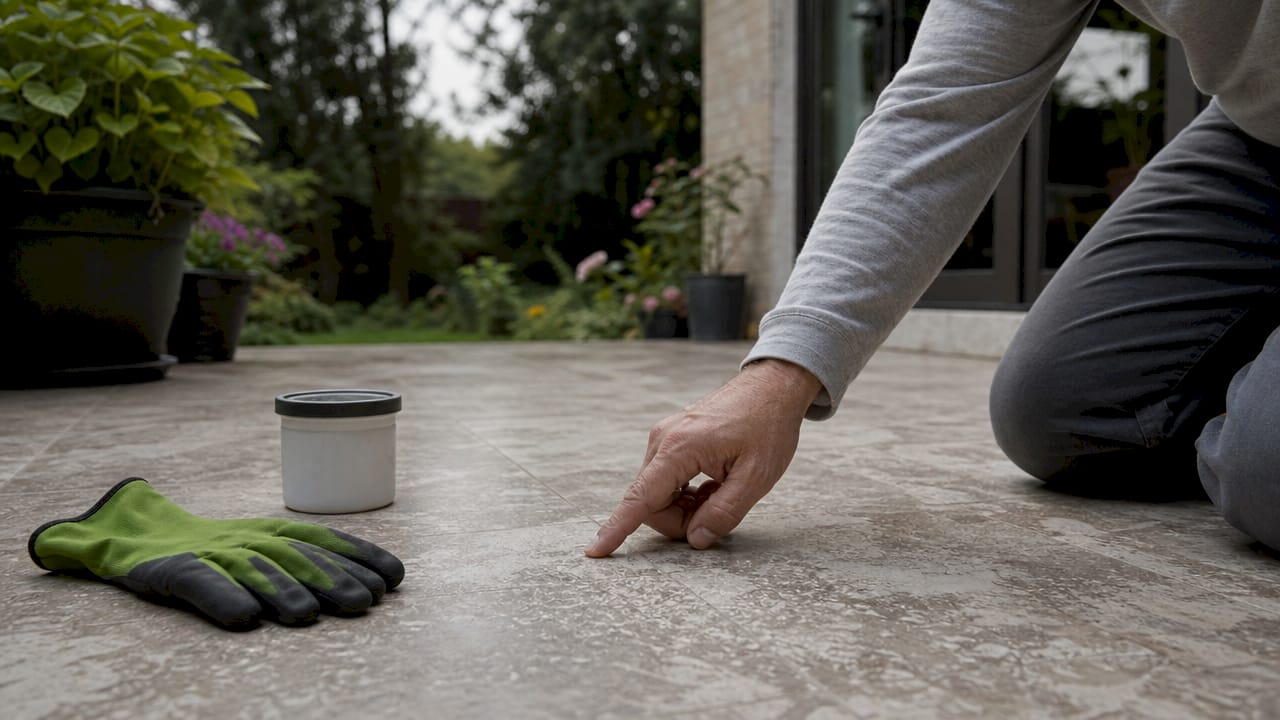
Pro Tip: Run your finger across a suspicious dull spot. If the surface feels rough or matte compared to the surrounding area, you are likely dealing with etching, not a stain. A stain leaves the texture unchanged.
How does accidental etching happen on exterior surfaces?
Accidental etching is far more common than most homeowners realize. The damage builds gradually, often going unnoticed until it becomes severe enough to affect curb appeal.
The most frequent sources of unintended exterior etching include:
- Irrigation system runoff: Sprinkler systems that hit stone facades, concrete walkways, or glass windows deposit mineral-rich water repeatedly. Over weeks and months, alkaline water exposure from irrigation is one of the leading preventable causes of exterior glass etching.
- Acidic cleaning products: Homeowners sometimes use vinegar-based or citrus-based cleaners on stone surfaces, not knowing these dissolve the surface.
- Environmental acid rain: Pollution-driven acid rain affects concrete and stone in urban and suburban areas alike.
- Fertilizer and lawn chemical overspray: These chemicals carry acids and salts that react with calcium carbonate in stone borders and concrete edging.
The signs of accidental etching differ by material. On marble and limestone, you see dull, matte patches where the surface once had a polished sheen. On concrete, the texture becomes rougher and uneven. On glass, a white or gray haze develops that no window cleaner removes.
Etching is often mistaken for surface stains, and that misidentification leads to the most common mistake: scrubbing harder. Scrubbing does nothing because the damage is structural, not superficial. The surface material is gone. That distinction matters enormously for property managers budgeting for repairs, because cleaning costs and restoration costs are not in the same range.
Etching affects curb appeal and property value in ways that accumulate quietly. A driveway with etched concrete, a stone entryway with dull patches, or a glass storefront with mineral haze all signal neglect to buyers and tenants, even when the property is otherwise well maintained.
Pro Tip: Property managers should recalibrate irrigation systems so sprinkler heads do not contact stone facades or exterior glass. That single adjustment prevents the most common and most expensive form of accidental exterior etching.
What are the techniques and purposes of intentional exterior etching?
Not all etching is damage. Intentional exterior surface etching is a controlled process used in construction, surface preparation, and architectural design. Understanding the difference between deliberate and accidental etching clarifies why the same word describes both a problem and a solution.
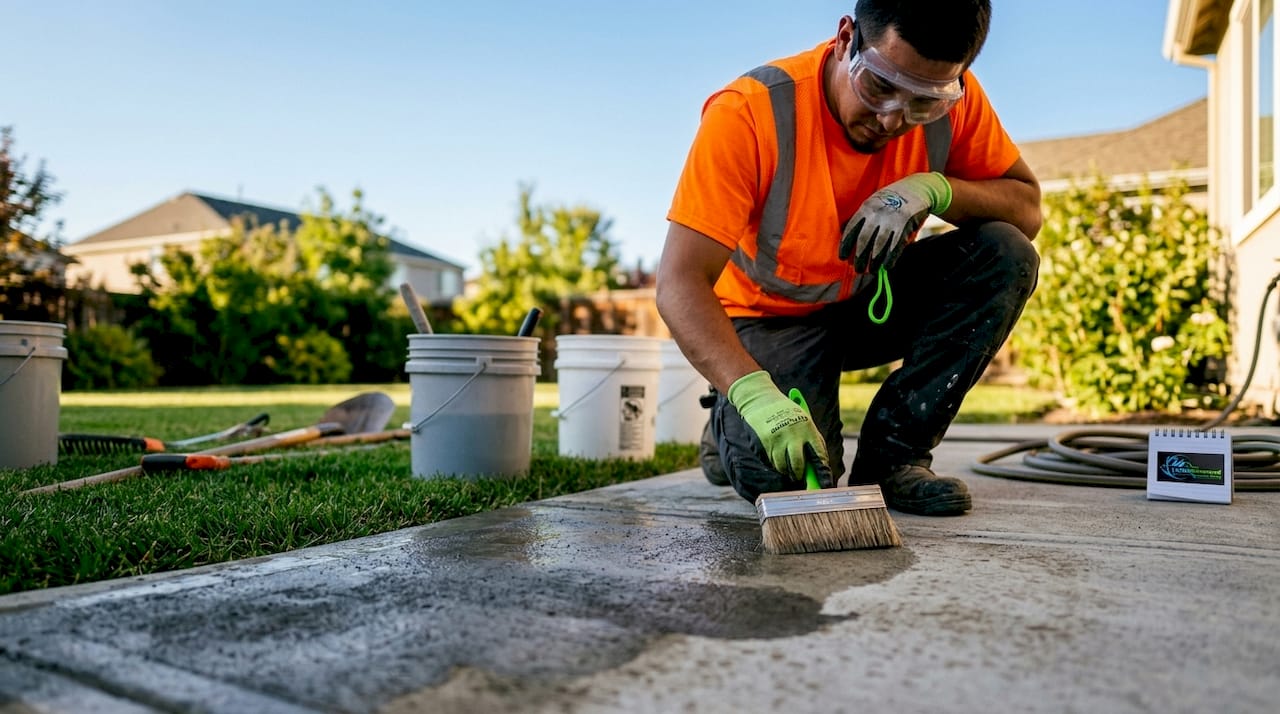
Acid etching for concrete preparation
Professional concrete surface preparation uses intentional acid etching to remove weak surface layers and improve coating adhesion by up to 50%, following ASTM D4260 standards. That improvement is significant. A coating applied to an unetched concrete surface bonds poorly and peels faster, costing far more in the long run. The process uses a diluted acid solution, typically muriatic or phosphoric acid, applied to the concrete, allowed to react, then neutralized completely before any coating goes down.
Decorative etching on glass and stone
Acid etching on glass creates frosted or patterned finishes used in architectural features, privacy panels, and decorative facades. Sand blasting achieves similar results mechanically, using abrasive particles to roughen glass or stone surfaces into specific patterns. Both methods are exterior etching techniques applied with precision and intent, producing a controlled texture rather than random damage.
Chemical vs. mechanical etching compared
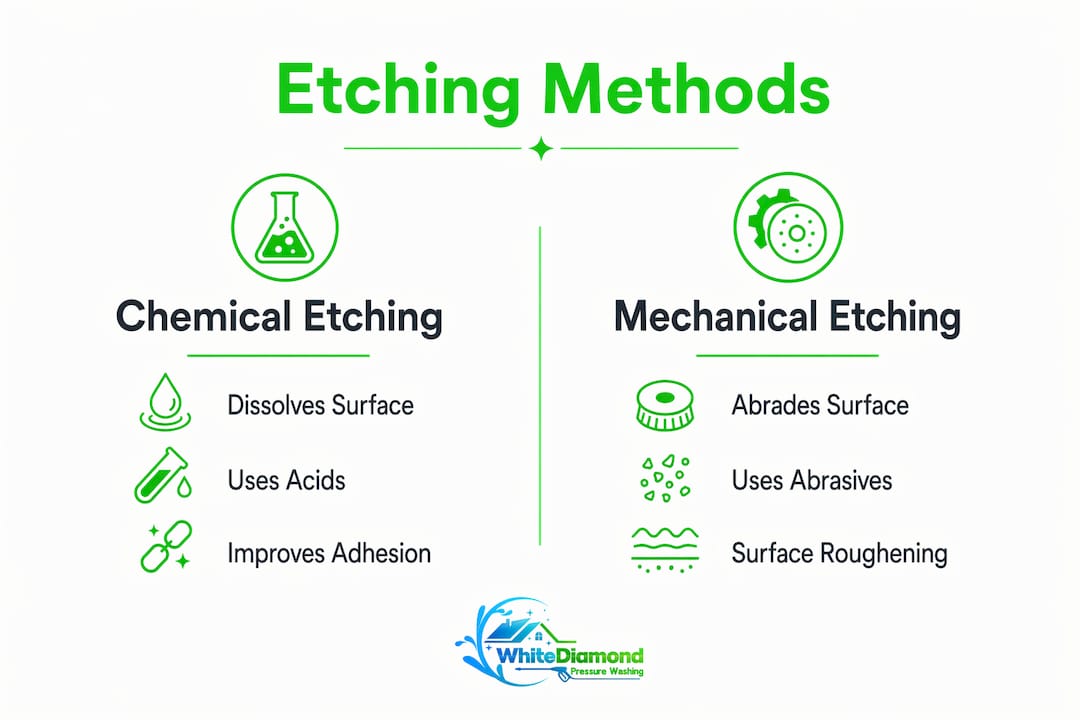
| Method | How it works | Best for | Key limitation |
|---|---|---|---|
| Chemical (acid) etching | Acid dissolves surface layer | Concrete prep, stone decoration | Requires neutralization; hazardous chemicals |
| Mechanical etching | Abrasive tools roughen surface | Glass, stone decorative finishes | Equipment-intensive; risk of uneven texture |
| Shot blasting | Steel shot impacts surface | Large concrete areas | Not suitable for delicate stone or glass |
The benefits of surface etching in construction are real and measurable. Improved adhesion, controlled texture, and longer coating life all result from properly executed acid etching on concrete. The key word is “controlled.” Intentional etching follows a process. Accidental etching follows no plan and leaves no benefit.
How can etched exterior surfaces be restored or maintained?
Restoration options depend entirely on the material and the severity of the damage. The first rule is this: professional restoration is necessary because etching involves loss of surface material, not just discoloration. No household product replaces what the acid removed.
Stone restoration
Mechanical honing and polishing restore etched marble, limestone, and travertine. A professional uses diamond-abrasive pads at progressively finer grits to level the surface and rebuild the polish. The process removes a thin layer of undamaged stone surrounding the etch, bringing the entire surface to a uniform finish. For light etching on travertine or honed marble, a polishing powder applied by hand can reduce the appearance of damage, though deep etches always need professional equipment.
Glass restoration
Restoring etched glass requires specialized polishing compounds and variable-speed rotary machines to smooth microscopic pits and restore clarity. No household cleaner restores etched glass clarity once physical pitting occurs. That is not a limitation of the cleaner. It is a physical reality. The glass surface has been structurally altered, and only mechanical resurfacing corrects it.
What sealers can and cannot do
Many homeowners apply sealers after noticing dull spots, expecting the sealer to fix the problem. Sealers do not prevent acid-based etching on calcium carbonate stone surfaces because etching is a surface chemical reaction, not a staining issue. A sealer slows liquid absorption and resists staining. It does not stop an acid from reacting with the stone surface it contacts. Applying a sealer to an already-etched surface preserves the current state but does not restore the lost material.
Maintenance steps that genuinely reduce further etching risk include:
- Using pH-neutral cleaners on all stone and concrete exterior surfaces.
- Rinsing stone and concrete after rain events in areas with high pollution.
- Redirecting irrigation away from stone facades and glass windows.
- Inspecting exterior surfaces regularly for early signs of dullness or texture change.
- Consulting a professional before applying any acid-based cleaner to exterior stone.
Pro Tip: For safe exterior cleaning on materials prone to etching, always test any cleaning solution on a hidden area first. A 12-inch test patch tells you more than any product label.
Key Takeaways
Exterior surface etching is permanent structural damage caused by acid reacting with surface material, and it requires mechanical restoration, not cleaning, to correct.
| Point | Details |
|---|---|
| Etching is structural, not superficial | Acid dissolves surface material permanently; no cleaner reverses the damage. |
| Most vulnerable materials | Marble, limestone, travertine, concrete, and exterior glass are the highest-risk surfaces. |
| Accidental causes are preventable | Irrigation runoff, acidic cleaners, and fertilizer overspray are the leading preventable triggers. |
| Intentional etching has real benefits | ASTM D4260 acid etching improves concrete coating adhesion by up to 50% in construction settings. |
| Sealers do not stop etching | Sealers resist staining only; they cannot prevent acid from reacting with calcium carbonate surfaces. |
What I’ve learned about etching that most homeowners miss
The single biggest mistake I see is homeowners treating etching like a cleaning problem. They scrub harder, try a stronger product, and end up with a larger damaged area. Etching is not dirt. It is the absence of surface material. Once you understand that, every decision about restoration and prevention becomes clearer.
The second thing I’ve noticed is how often people confuse etching with staining on natural stone. A stain sits on the surface. You can feel that the texture is unchanged. An etch changes the texture. Run your hand across the surface and you will know the difference before you spend money on the wrong fix.
What actually works in prevention is simple: control water contact. Most exterior etching on residential properties traces back to irrigation systems hitting the wrong surfaces, or cleaning products used without checking pH. Property managers who audit their irrigation patterns and switch to pH-neutral exterior cleaners eliminate the two most common causes in one afternoon.
Professional assessment matters most when you are unsure of the material or the severity. A stone care professional or an experienced exterior cleaning service can tell you within minutes whether you are looking at a stain, light etching, or deep structural damage. That assessment determines whether you need a $50 polishing powder or a $500 honing service. Getting that answer right the first time saves money and prevents further damage from misguided DIY attempts.
— Bobby
How Whitediamondpressurewashing protects your exterior surfaces
Exterior surfaces affected by etching or at risk of etching need cleaning methods that do not add to the damage. Whitediamondpressurewashing specializes in soft washing and low-pressure techniques designed specifically to clean stone, concrete, glass, and other vulnerable surfaces without introducing new chemical or mechanical stress.

The team at Whitediamondpressurewashing uses pH-appropriate cleaning solutions matched to each surface type, protecting calcium carbonate materials and exterior glass from the kind of acid exposure that causes etching. Serving Citrus County and surrounding regions, Whitediamondpressurewashing offers free estimates and flexible scheduling. Visit Whitediamondpressurewashing to book a service or get a free estimate for your property.
FAQ
What is the exterior surface etching definition?
Exterior surface etching is a chemical or mechanical process that permanently dissolves or roughens the outermost layer of a material such as stone, concrete, or glass. It alters the surface texture and microstructure, not just the appearance.
Is surface etching permanent?
Yes, etching is permanent structural damage. Because acid removes surface material rather than depositing a substance on top, cleaning cannot restore the original surface. Mechanical restoration by a professional is the only correction.
What materials can be etched on a home exterior?
Marble, limestone, travertine, concrete, and exterior glass are the most commonly etched materials. All calcium carbonate-based stones react with acids, while glass etches from mineral-heavy water and alkaline runoff.
How do I tell etching apart from a stain?
Run your finger across the affected area. A stain leaves the surface texture unchanged. An etched area feels rough, matte, or pitted compared to the surrounding surface. That texture difference confirms structural damage rather than surface contamination.
Can I prevent etching with a sealer?
Sealers protect against absorption-based staining but do not prevent acid etching on calcium carbonate surfaces. The acid reacts at the surface level regardless of a sealer’s presence, so prevention requires controlling acid exposure rather than relying on a coating.
Recommended
- Surface Restoration Explained: Enhance Your Home’s Curb Appeal – white-diamond-pressure
- What Is Exterior Sealing: A Homeowner’s 2026 Guide – white-diamond-pressure
- Benefits of Exterior Cleaning for Homeowners – white-diamond-pressure
- What Is Exterior Paint Prep and Why It Matters – white-diamond-pressure