

TL;DR:
- Exterior surface oxidation results from chemical breakdown caused by UV, moisture, and oxygen, leading to a chalky or faded appearance. It affects materials like vinyl, aluminum, and painted surfaces, and cannot be fixed with pressure washing alone, which may cause damage. Early identification with the white cloth test and professional chemical cleaning help prevent costly repainting and extend surface durability.
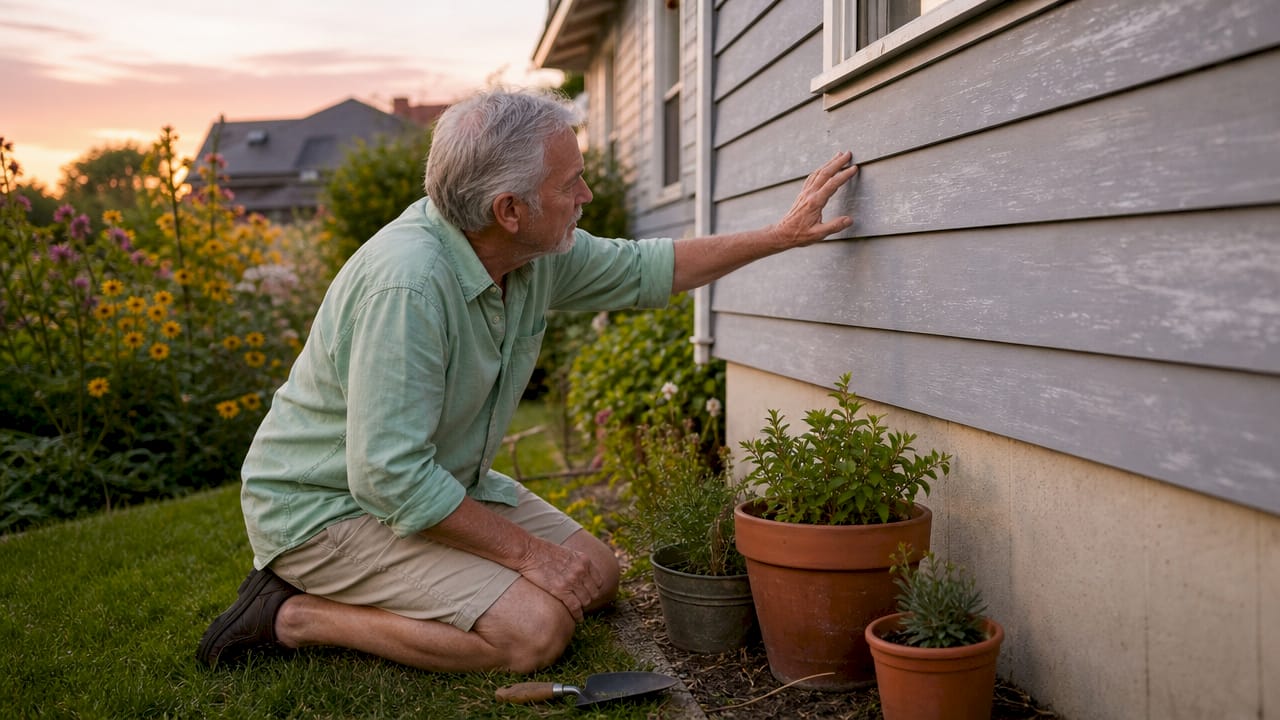
Exterior oxidation is the chemical breakdown of vinyl, aluminum, and painted metal surfaces caused by exposure to UV radiation, moisture, and oxygen. The industry term for this process is “surface oxidation,” and it shows up on your home as a chalky white residue, faded color, or a powdery texture you can rub off with your finger. Unlike dirt or mildew, which sit on top of a surface, oxidation is a change inside the material itself. Recognizing what is exterior oxidation early is the difference between a cleaning job and a full repaint, and understanding it protects both your property and your budget.
What causes exterior oxidation on home surfaces?
Exterior oxidation is driven by three forces working together: UV sunlight, moisture, and oxygen. Each one alone causes minor wear. Together, they accelerate surface degradation significantly.
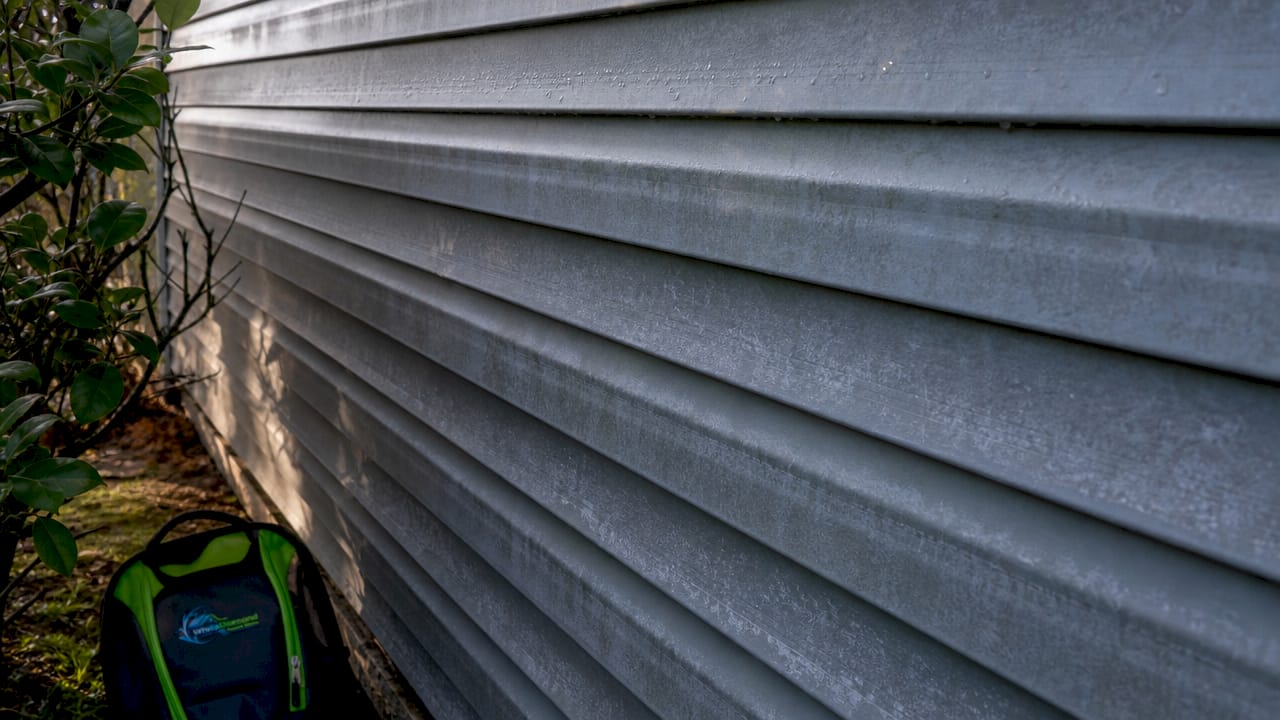
UV radiation is the primary trigger. Sunlight breaks down the chemical binders that hold pigment and protective coatings in place. Once those binders degrade, the surface loses its ability to resist moisture and oxygen. This is why south-facing and west-facing walls fade faster than walls on the shaded side of a house. They receive the most direct sunlight throughout the day.
Moisture accelerates the reaction. Rain, humidity, and condensation all push water into microscopic surface pores. That water carries oxygen deeper into the material and speeds up the chemical reaction that breaks down the coating. Homes in humid climates like Citrus County, Florida, face this problem year-round.
Environmental contaminants add another layer of damage. Airborne pollutants, salt spray near coastal areas, and acid rain all deposit chemicals on your siding. Those deposits react with the surface and speed up oxidation beyond what UV and moisture alone would cause.
The materials most vulnerable to exterior surface oxidation include:
- Vinyl siding, which loses its UV-stabilizing additives over time
- Aluminum siding, which forms a white oxide layer on its surface
- Painted wood and fiber cement, where the paint film degrades and chalks
- Metal trim and gutters, which rust when the protective coating fails
Pro Tip: Walk around your home on a sunny afternoon and look at the south and west walls first. Those are the walls that show oxidation earliest, and they tell you the most about your home’s overall coating health.
How can you identify oxidation versus dirt or mildew?
Accurate identification is the most important step before any cleaning or treatment. Treating oxidation like dirt leads to wasted effort. Treating mildew like oxidation leads to the wrong chemicals and potential surface damage.
The signs of oxidation are specific:
- Chalky white or gray residue that transfers to your hand when you touch the surface
- Faded or washed-out color that looks bleached rather than dirty
- Powdery texture across large, flat sections of siding rather than isolated spots
- No visible growth such as black streaks, green patches, or fuzzy texture
The most reliable diagnostic method is the white cloth chalk test. Rub a dry white cloth firmly against the siding. If color transfers to the cloth, oxidation is present. The more color that transfers, the more advanced the degradation.
Mold and dirt behave differently. Mold and dirt sit above the surface and respond to soft washing with appropriate detergents. Oxidation affects the substrate itself and requires a different treatment approach entirely. Black streaks are almost always algae or mold. Green patches are typically algae or lichen. Neither of those is oxidation.
Pressure washing can actually help you identify oxidation, but it cannot fix it. Washing away surface dirt reveals the chalky layer underneath. If the chalky residue remains after cleaning, you are looking at oxidation, not grime.
Pro Tip: Do the white cloth test in two or three spots on the same wall. Oxidation is rarely uniform. Knowing where it is heavy versus light helps you decide whether cleaning or repainting is the right call.
Why standard cleaning methods often fail with oxidized surfaces
Most homeowners reach for a pressure washer when they see faded or chalky siding. That instinct makes sense, but it is the wrong tool for oxidation.
Pressure washing is ineffective at removing oxidation and can cause permanent damage. High-pressure water strips protective coatings, leaves wand marks on brittle oxidized surfaces, and creates uneven color patterns that are worse than the original fading. The surface looks clean in some spots and stripped in others.
The core problem is that oxidation is not a surface deposit. It is a structural change in the material itself. Pressure washing reveals pre-existing damage by removing the dirt layer on top, but it cannot reverse the chemical breakdown underneath. Blasting water at a chalky surface removes the chalk temporarily. The degradation remains.
“Oxidation is material degradation, not surface dirt. Treating it like dirt with high-pressure water does not restore the surface. It exposes how far the damage has already progressed and risks making the visual result worse.”
DIY chemical treatments carry similar risks. Using the wrong cleaner on aluminum siding can cause staining. Using an abrasive scrub pad on vinyl removes the gloss layer permanently. The benefits of exterior cleaning are real, but only when the method matches the material and the problem.
Professional oxidation removal requires three things that standard washing does not provide:
- Specialized chemical agents formulated to lift oxidized material without stripping the substrate
- Soft-bristle agitation to work the cleaner into the surface without abrasion
- Controlled low-pressure rinsing to remove residue without wand marks or streaking
Each of those steps matters. Skipping any one of them produces an uneven result or causes new damage.
Best practices for removing and preventing exterior oxidation
Effective treatment depends on how far the oxidation has progressed. Light oxidation responds to cleaning. Heavy oxidation requires repainting.
| Oxidation Level | Visible Signs | Recommended Treatment |
|---|---|---|
| Light | Slight chalking, minor fading | Specialized chemical wash, low-pressure rinse |
| Moderate | Clear chalking, noticeable color loss | Chemical treatment plus soft agitation, assess for primer |
| Heavy | Severe fading, surface feels rough | Dechalking, bonding primer, UV-stable topcoat |
Chemical treatments and low-pressure rinsing
For light to moderate oxidation, professional removal uses controlled low-pressure washing combined with specialized cleaners and brush work. The cleaner breaks down the oxidized layer chemically. The brush works it into the surface. Low-pressure rinsing removes the residue without damaging what is left of the coating.
When repainting becomes necessary
Oxidation-related paint fading signals coating failure, not just surface wear. Standard latex paint lasts 3–5 years in direct sun. UV-stable acrylic coatings last 7–10 years or more depending on exposure. When the coating has failed, cleaning restores appearance temporarily but does not stop the degradation.
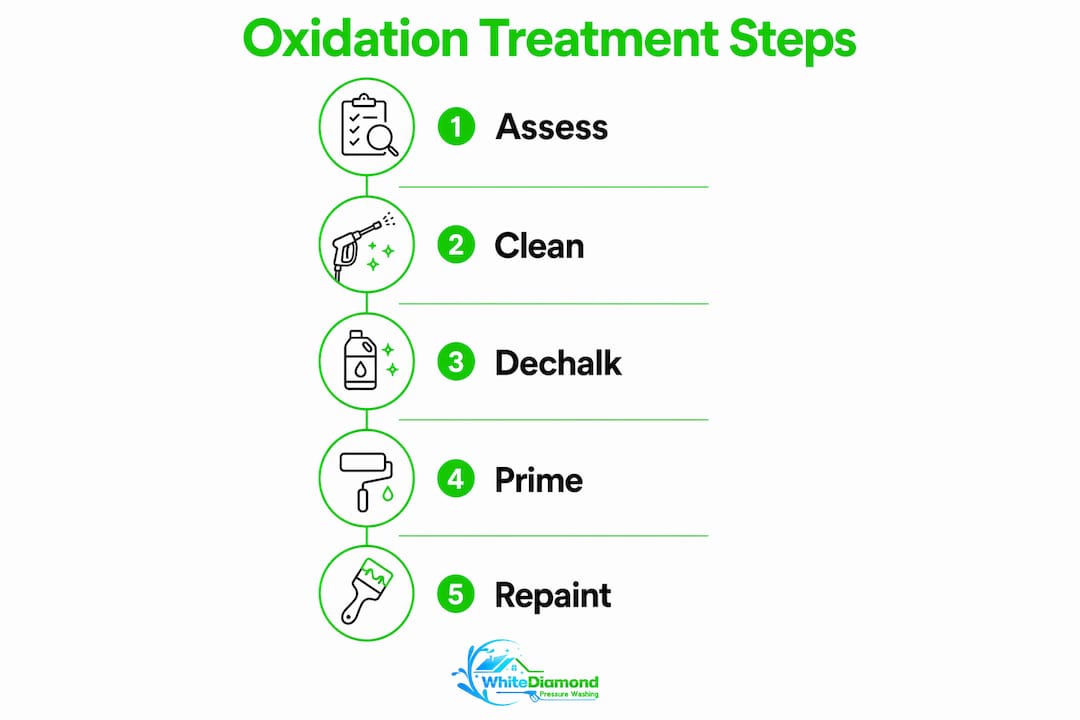
Repainting requires a specific sequence. First, dechalk the surface thoroughly. Second, apply a bonding primer designed for chalky or oxidized surfaces. Oil-based primers fail on oxidized aluminum because they react chemically with the oxide layer. Bonding primers provide a mechanical anchor for the new paint. Third, apply a UV-stable acrylic topcoat rated for your climate.
Preventive strategies that slow oxidation
Preventive exterior cleaning on a regular schedule removes contaminants before they accelerate oxidation. Annual or biannual soft washing keeps the surface free of pollutants, salt, and biological growth that speed up the process.
UV-stable coatings applied at the time of painting extend the life of the surface significantly. Moisture control matters too. Fixing caulk gaps, maintaining gutters, and ensuring proper drainage reduces the amount of water that contacts your siding.
Pro Tip: Schedule a soft wash before any exterior paint job. A clean, dechalk surface takes primer better and produces a finish that lasts years longer than paint applied over a chalky base.
Key Takeaways
Exterior oxidation is a chemical process that degrades surface materials from within, and cleaning alone cannot reverse heavy oxidation once the coating has failed.
| Point | Details |
|---|---|
| Oxidation is structural, not surface dirt | UV, moisture, and oxygen break down the material itself, not just the top layer. |
| South and west walls degrade fastest | Direct sun exposure accelerates binder breakdown on sun-facing walls first. |
| The white cloth test diagnoses severity | Color transfer to a dry white cloth confirms oxidation and indicates how advanced it is. |
| High-pressure washing causes damage | Standard pressure washing strips coatings and leaves wand marks on brittle oxidized surfaces. |
| Heavy oxidation requires repainting | Bonding primers and UV-stable acrylic topcoats are required once the coating has failed. |
What I have learned about oxidation after years on the job
The most common mistake I see homeowners make is treating oxidation like a cleaning problem. They rent a pressure washer, blast the siding, and call it done. Two weeks later, the chalky residue is back and the surface looks worse than before. That is because oxidation is not something sitting on your home. It is something happening to your home.
The second mistake is waiting. Oxidation is progressive. Light chalking that costs a few hundred dollars to treat professionally becomes a full repaint job if you ignore it for two or three seasons. I have seen aluminum siding that looked fine from the street but crumbled when touched because the oxide layer had eaten through the coating entirely.
The decision between cleaning and repainting is not always obvious. My rule is simple: if the white cloth test pulls heavy color and the surface feels rough to the touch, cleaning will not give you a lasting result. You need primer and paint. If the chalking is light and the color is still mostly intact, a professional chemical wash can buy you several more years.
Choosing the right service matters as much as choosing the right treatment. Ask any cleaning company whether they use low-pressure or soft-wash methods for oxidized surfaces. If they default to high-pressure washing for everything, walk away. Brittle oxidized surfaces and high-pressure water are a bad combination, and the damage is permanent.
Oxidation is inevitable on any exterior surface exposed to sun and weather. The goal is not to stop it entirely. The goal is to slow it down, catch it early, and respond with the right treatment at the right time.
— Bobby
Professional exterior cleaning that protects your home’s surfaces
Oxidation caught early is far less expensive to address than oxidation left to progress. Whitediamondpressurewashing specializes in low-pressure soft washing for oxidized vinyl, aluminum, and painted surfaces across Citrus County and surrounding areas.
The team at Whitediamondpressurewashing uses industry-standard chemical treatments and controlled rinsing techniques that restore surface appearance without stripping coatings or leaving wand marks. Every job starts with a surface assessment to determine whether cleaning or a referral for repainting is the right call. Visit Whitediamondpressurewashing to request a free estimate and get an honest evaluation of your home’s exterior condition.
FAQ
What is exterior oxidation in simple terms?
Exterior oxidation is the chemical breakdown of your home’s siding or paint caused by UV sunlight, moisture, and oxygen. It shows up as a chalky residue, faded color, or a powdery texture on the surface.
How do I know if my siding has oxidation or just dirt?
Rub a dry white cloth firmly against the surface. If color transfers to the cloth, that is oxidation. Dirt washes off with water; oxidation does not.
Can pressure washing remove exterior oxidation?
Pressure washing cannot remove oxidation and can cause permanent damage to brittle oxidized surfaces. Professional removal requires specialized chemical cleaners, soft agitation, and low-pressure rinsing.
When does oxidized siding need to be repainted instead of cleaned?
Heavy chalking, rough texture, and significant color loss indicate coating failure. At that stage, the surface needs dechalking, a bonding primer, and a UV-stable topcoat rather than cleaning alone.
How can I slow down oxidation on my home’s exterior?
Annual or biannual soft washing removes contaminants that accelerate oxidation. UV-stable coatings applied during repainting extend surface life significantly, and keeping caulk and gutters in good condition reduces moisture contact with siding.
Recommended
- What Is House Siding Oxidation and How to Stop It – white-diamond-pressure
- Benefits of Exterior Cleaning for Homeowners – white-diamond-pressure
- Preventative Exterior Cleaning: Protect Your Home – white-diamond-pressure
- Summertime Exterior Cleaning: Boost Your Home’s Curb Appeal – white-diamond-pressure
One thought on “What Is Exterior Oxidation: A Homeowner’s Guide”