

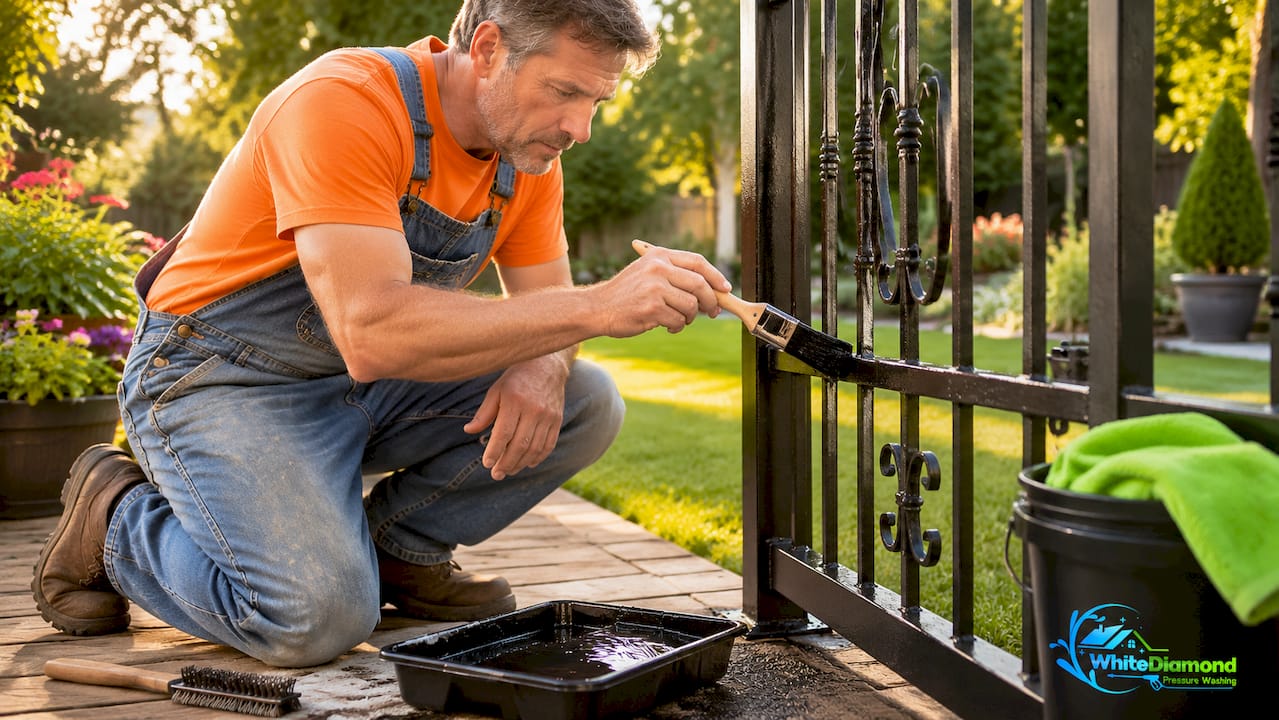
TL;DR:
- Proper rust prevention for exteriors involves applying layered coatings, maintaining regular cleaning, and repairing damage promptly to prevent structural deterioration. Zinc-rich primers are essential for protecting steel and galvanized surfaces, while consistent upkeep extends coating lifespan up to 12 years. Neglecting surface preparation, climate conditions, and timely repairs increases the risk of rust spread and costly replacements.
Rust prevention for exteriors is the process of protecting outdoor metal surfaces from corrosion by applying specialized primers, coatings, and maintenance routines that block moisture and oxygen from reaching bare metal. Without these barriers, steel railings, fences, gates, and structural fixtures begin to corrode within months of exposure. The consequences reach beyond appearance. Rust weakens metal structurally, spreads under intact paint through a process called undercutting, and drives up repair costs fast. This guide covers the science behind rust formation, the most effective exterior rust protection methods, and the maintenance habits that keep metal surfaces sound for years.
What is rust prevention for exteriors, and why does it matter?
Rust prevention for exteriors is the industry term for corrosion control on outdoor metal surfaces. Professionals also call it anti-corrosion protection or coating systems management. Both terms describe the same goal: stopping iron oxide from forming on metal exposed to weather.
Rust forms through an electrochemical reaction. Moisture and oxygen combine on a metal surface, stripping electrons from iron atoms and producing iron oxide. That orange, flaky layer is structurally weak and keeps growing inward. Left unchecked, it compromises the load-bearing capacity of railings, gates, and structural brackets.
The financial case for prevention is clear. Properly treated metal railings last 8–12 years, while improperly prepared surfaces fail within 18–24 months. That gap represents thousands of dollars in replacement costs for a single property. For property managers overseeing multiple units, the math multiplies quickly.
Understanding exterior oxidation is the first step toward doing something about it. Prevention is always cheaper than replacement.
How does rust form on exterior metals?
Rust does not form equally on all metals. Steel and cast iron are the most vulnerable because they contain high concentrations of iron. Aluminum forms a thin oxide layer that actually seals the surface and stops further corrosion. Galvanized steel sits in between. Its zinc coating sacrifices itself to protect the steel underneath, but once that zinc layer wears through, the steel beneath corrodes rapidly.
Several factors accelerate rust formation on exterior surfaces:
- Salt exposure: Coastal and road-salt environments dramatically speed up the electrochemical reaction. Salt acts as an electrolyte, making moisture far more conductive.
- Humidity and standing water: Moisture trapped in joints, crevices, and horizontal surfaces creates persistent corrosion zones.
- Mechanical damage: Scratches, chips, and abrasion break the protective coating and expose bare metal directly to air and water.
- Pollution and organic debris: Leaves, dirt, and industrial fallout hold moisture against metal surfaces and introduce acids that attack coatings.
- Neglected maintenance: Skipping cleaning cycles allows debris and salt to accumulate, shortening coating life significantly.
The most dangerous aspect of rust is how it travels. Corrosion spreads by undercutting, meaning it creeps laterally beneath an intact coating. A 50 mm rust spot can expand to 300 mm in a single season if left unaddressed. That means a small blemish you ignore in spring becomes a major repair by fall.
What are the best rust prevention techniques for exterior surfaces?
Effective rust prevention relies on a layered system. No single product does the job alone. Surface preparation, primer selection, topcoat choice, and maintenance all work together.
-
Clean and degrease the surface. Remove all oil, grease, and loose debris before any coating goes on. Oily residues prevent primers from bonding and cause early failure. Use a degreaser appropriate for the metal type, then rinse thoroughly.
-
Remove existing rust mechanically. Wire brushing, grinding, and sanding are the most reliable methods. Mechanical rust removal outperforms chemical converters in most situations. Reserve rust converters for pitted metal where mechanical tools cannot reach.
-
Apply a zinc-rich primer. Zinc-rich primers provide sacrificial galvanic protection. The zinc corrodes before the steel does, acting as a shield at scratches and exposed edges. This is the gold standard for outdoor steel.
-
Use the right primer for galvanized metal. Fresh galvanized steel has a slick, reactive zinc surface. Standard primers fail on it within a year. Use a zinc-tolerant etch primer specifically formulated for galvanized surfaces to get proper adhesion.
-
Select the appropriate topcoat. For residential railings and fences, 100% acrylic topcoats provide UV resistance and flexibility. For cast iron and hot-rolled steel in tougher conditions, oil-based industrial enamels offer superior hardness. Modern acrylic topcoats maintain integrity for 8–12 years when applied over a proper primer system.
-
Build a multi-barrier system. Primer alone is not enough. A full system of primer plus intermediate coat plus topcoat creates multiple layers of defense. Each layer compensates for any weakness in the others.
Pro Tip: Keep a small, labeled touch-up bottle filled with your topcoat color on hand at all times. Immediate spot repairs on scratches and chips prevent rust from establishing a foothold before your next scheduled maintenance.
How should you maintain exterior metal to prevent rust?
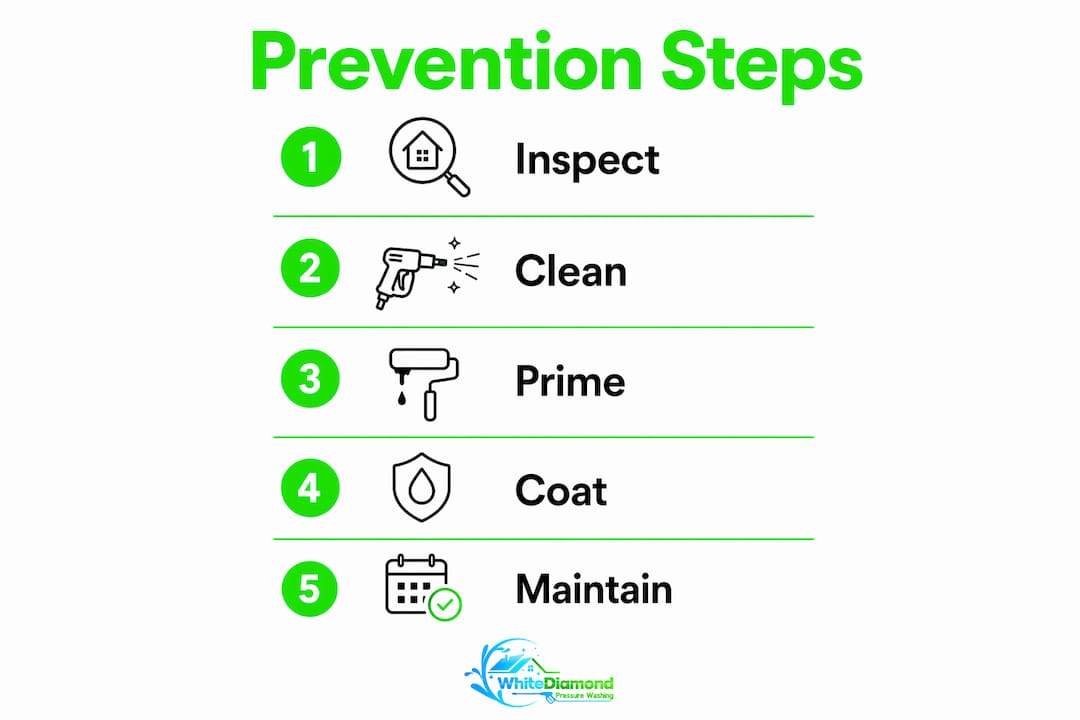
Maintenance is where most homeowners lose ground. Applying a good coating system and then ignoring it for years defeats the purpose. Coatings degrade, get scratched, and develop weak points. Regular inspection and cleaning extend their life dramatically.
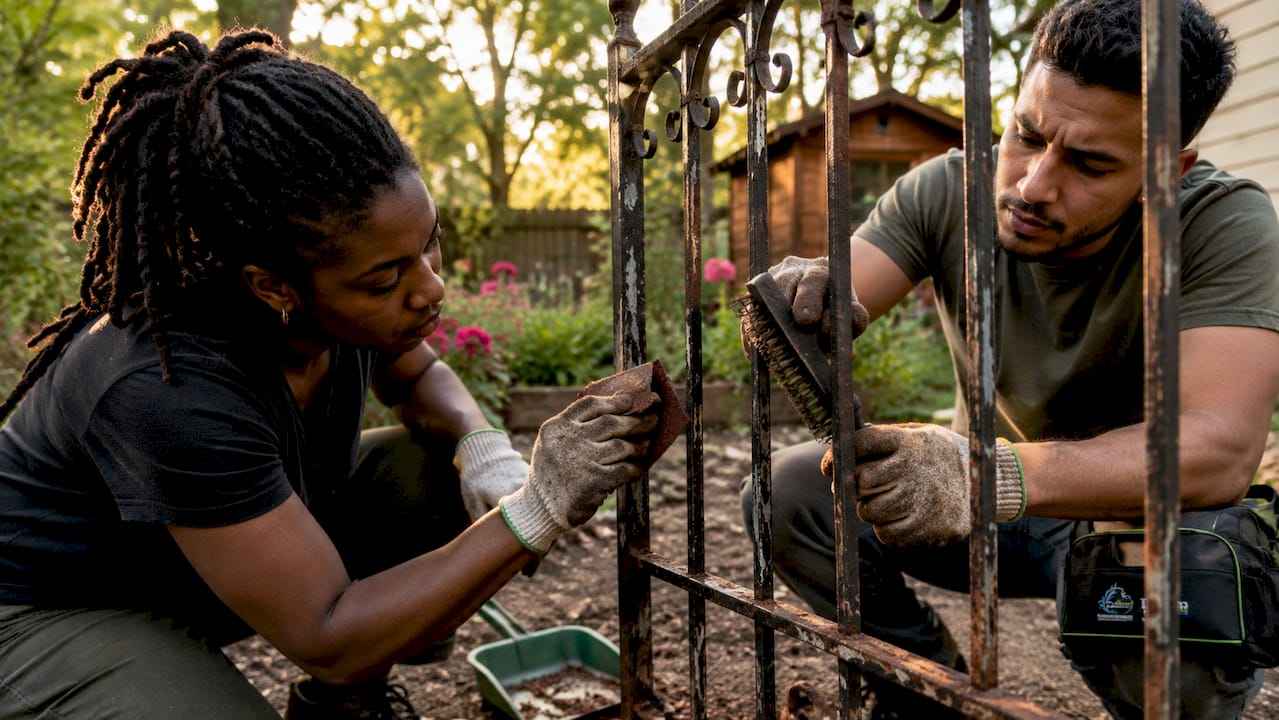
Experts recommend a minimum six-month cleaning cycle for exterior metal surfaces. Cleaning removes salt, organic debris, and pollutants that hold moisture against the coating and accelerate breakdown. In coastal or high-traffic areas, quarterly cleaning delivers better results.
Inspection should happen at the same time as cleaning. Look for:
- Chips and scratches that expose bare metal, especially on edges and corners where coating adhesion is thinnest.
- Bubbling or blistering paint, which signals moisture has already gotten under the coating.
- Early rust staining around fasteners, welds, and joints where water collects.
- Cracking or chalking on the topcoat surface, indicating UV degradation.
Spot repairs require proper preparation. Clean the damaged area, feather the edges of the existing coating with sandpaper so the new material blends in, apply primer, and finish with a matching topcoat. Skipping the feathering step leaves a hard edge where water can infiltrate and undercut the repair.
Seasonal timing matters too. Apply coatings and touch-ups in dry weather above 50°F. Cold and humidity prevent proper curing and adhesion. In Florida’s climate, the window between rain events is your best opportunity. For high-corrosion environments, ISO-aligned maintenance standards recommend annual inspections and power tool cleaning to bare metal using SSPC-SP 11 procedures for any spot repairs.
Consistent maintenance also keeps costs low. Regular inspection and layered coatings prevent the need for full recoating, which costs far more than routine upkeep.
What mistakes undermine exterior rust prevention?
The most common mistake is painting over loose rust or an oily surface. Coatings applied over contamination fail within months. The rust continues to grow underneath, and the paint peels away in sheets. No primer or topcoat can compensate for poor surface preparation.
Misusing rust converters is the second most frequent error. Rust converters work only on tight, surface-level iron oxide. They fail on thick or flaking rust and cause adhesion problems on aluminum and galvanized metals. Rust converters are also ineffective when oil-based cleaner residues remain on the surface, because the residue blocks the chemical reaction.
Pro Tip: Always test a rust converter on a small, hidden area first. If the surface is aluminum, galvanized, or has visible flaking rust, skip the converter entirely and go straight to mechanical removal.
Ignoring local climate is another overlooked factor. Properties near the Gulf Coast in Citrus County face salt-laden air year-round. That environment demands more frequent cleaning, zinc-rich primers, and topcoats rated for high-corrosion conditions. A coating system designed for a dry inland climate will underperform in a coastal setting. Just as DIY pest control often fails when homeowners underestimate local conditions, rust prevention fails when property owners ignore their specific environment.
Delaying repairs is the costliest mistake of all. A small paint chip left unrepaired can become a full square foot of peeling paint within two winters. The longer you wait, the more metal is exposed, and the more expensive the fix becomes.
How do you choose a rust prevention service or product?
Choosing the right service provider or product requires asking specific questions. Generic “rust-proof paint” claims on a product label mean little without knowing the primer system underneath.
When evaluating a service provider, look for:
- Surface preparation expertise. Ask whether they use mechanical cleaning methods and what primer system they apply. A provider who skips prep is not protecting your metal.
- Product specification. The provider should name the primer type and topcoat they use, not just say “quality paint.”
- Warranty terms. A credible provider offers a written warranty that covers both labor and materials for a defined period.
- Climate knowledge. In Citrus County, the right provider understands coastal corrosion rates and selects coatings accordingly.
- Maintenance advice. A good provider tells you what to do between service visits, not just what they did during the job.
For DIY buyers, read product labels carefully. Look for zinc-rich primers labeled for outdoor steel, and match your topcoat to the metal type and exposure level. Cost matters, but a cheap primer that fails in 18 months costs more than a quality system that lasts a decade. The property maintenance checklist for 2026 is a useful reference for building a full exterior care plan.
Key Takeaways
Rust prevention for exteriors requires layered coatings, proper surface preparation, and consistent maintenance to protect metal surfaces from corrosion and structural failure.
| Point | Details |
|---|---|
| Surface prep is non-negotiable | Clean, degrease, and mechanically remove rust before any primer or topcoat goes on. |
| Zinc-rich primers are the standard | They provide sacrificial protection at scratches, corroding before the steel does. |
| Clean metal every six months | Regular cleaning removes salt and debris that accelerate coating breakdown. |
| Spot repair immediately | A small chip left unrepaired can grow to a full square foot of damage within two winters. |
| Match products to your climate | Coastal environments require coatings rated for high-corrosion conditions, not standard residential paint. |
What I’ve learned after years of watching rust win
Most homeowners treat rust prevention as a one-time project. They paint the fence, feel good about it, and forget it for five years. That is exactly how rust wins.
The detail that surprises people most is feathering. When you do a spot repair, the edges of the existing coating need to be sanded down to a smooth taper before you apply new material. Skip that step and you leave a hard ridge where water pools and works its way under the coating. I have seen perfectly good touch-up work fail in a single rainy season because the edges were not feathered.
Zinc-rich primers are another area where homeowners cut corners. They look at the price and choose a cheaper option. Then they wonder why the coating is bubbling at the scratches two years later. The zinc is not a luxury. It is the mechanism that keeps the steel protected even after the topcoat gets damaged.
The bigger picture is this: consistent, modest effort beats expensive reactive repairs every time. A six-month cleaning cycle, an annual inspection, and a touch-up bottle in the garage will extend a quality coating system by years. The homeowners who spend the least on rust repairs are the ones who never let rust get a foothold in the first place.
— Bobby
How Whitediamondpressurewashing supports your rust prevention plan
Professional exterior cleaning is a direct part of rust prevention. Salt, organic debris, and pollutants that sit on metal surfaces break down coatings and create the moisture pockets where rust starts.

Whitediamondpressurewashing uses safe, low-pressure washing methods that remove contaminants without damaging existing coatings or primers on metal surfaces. Serving Citrus County and surrounding areas, the team applies industry-approved techniques matched to each surface type. Regular professional cleaning keeps your coating system performing at full strength between repaints. Visit Whitediamondpressurewashing to get a free estimate and build cleaning into your rust prevention routine.
FAQ
What is rust prevention for exteriors?
Rust prevention for exteriors is the use of surface preparation, primers, protective coatings, and regular maintenance to stop corrosion on outdoor metal surfaces. It creates physical and chemical barriers between metal and the moisture and oxygen that cause rust.
How often should exterior metal surfaces be cleaned to prevent rust?
Experts recommend a minimum six-month cleaning cycle for exterior metal. In coastal or high-salt environments, quarterly cleaning delivers better protection by removing corrosive deposits before they damage the coating.
Are rust converters safe to use on all exterior metals?
Rust converters work only on tight, surface-level iron oxide on ferrous metals like steel. They are ineffective on thick or flaking rust and cause adhesion problems on aluminum and galvanized metal surfaces.
How long does a properly applied rust prevention coating last?
A full system of zinc-rich primer and quality acrylic or enamel topcoat lasts 8–12 years on properly prepared exterior metal. Improperly prepared surfaces can fail within 18–24 months regardless of the coating quality.
When is the best time to apply rust prevention coatings outdoors?
Apply coatings in dry weather above 50°F for proper curing and adhesion. Cold temperatures and high humidity prevent coatings from bonding correctly, leading to early failure.
Recommended
- What Is Exterior Sealing: A Homeowner’s 2026 Guide – white-diamond-pressure
- What Is Exterior Oxidation: A Homeowner’s Guide – white-diamond-pressure
- Ensure safe exterior cleaning: a guide to materials compatibility – white-diamond-pressure
- Property Maintenance Checklist: Homeowner’s 2026 Guide – white-diamond-pressure
One thought on “Rust Prevention for Exteriors: A Homeowner’s 2026 Guide”