

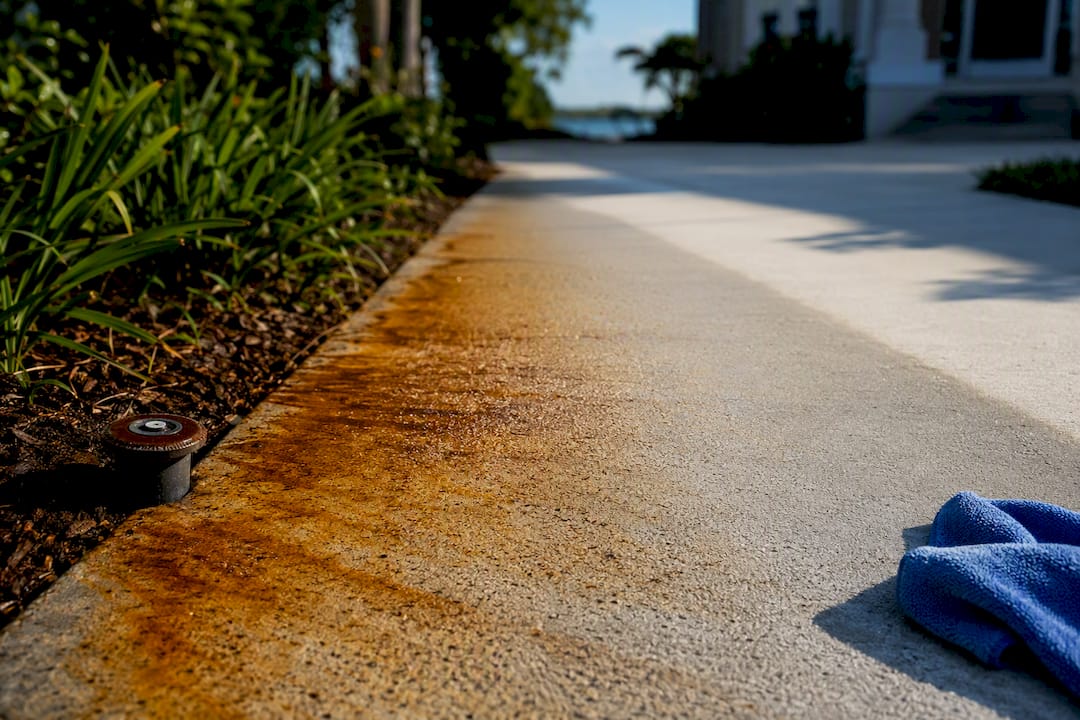
A trained exterior-cleaning contractor using targeted organic-acid chemistry, usually oxalic acid, paired with a controlled low-pressure rinse can remove most sprinkler rust stains without etching concrete or stripping paint. High-pressure blasting alone rarely works because it can’t break the chemical bond between iron oxide and the surface it’s stained. Deep, long-standing stains sometimes need a second treatment, but the failure mode is almost always “wrong chemistry,” not an “impossible stain.”
TL;DR:
- Rust stains penetrate porous surfaces, making pressure alone ineffective because it cannot break the chemical bond between iron oxide and the substrate.
- Proper removal requires a chemistry-based approach using organic acids like oxalic acid, applied carefully with a test spot, monitored dwell time, and a low-pressure rinse.
- Surfaces respond differently: concrete and pavers generally tolerate treatment well, while natural stone and stucco need extra caution to avoid damage.
- Cost varies based on surface area, substrate type, stain age, and accessibility, with detailed estimates including treatment scope and potential follow-up.
- Always verify a contractor’s process by asking about test spots, chemical specifics, pressure settings, protection measures, and insured guarantees to avoid ineffective or damaging work.
Table of Contents
- Why Pressure Alone Often Fails Against Rust
- How Professionals Remove Sprinkler Rust Stains, Step by Step
- Which Surfaces Respond Best to Rust Stain Treatment?
- What Does Rust Stain Removal Typically Cost?
- How to Choose a Contractor Without Getting Burned
- Preventing Rust Stains After Treatment
- An Editorial Take on DIY Versus Professional Rust Removal
- Get a Free Rust Stain Estimate From White Diamond Pressure Washing
- Sources
Why Pressure Alone Often Fails Against Rust
Rust isn’t sitting on top of your driveway like dirt. It’s iron oxide that has worked its way into the pores of concrete, stucco, or grout lines, and mechanical force alone rarely dislodges chemically bonded iron. You can blast a stain with a wand at 3,000 PSI and watch the surface texture change before the rust does. That’s the trap most DIYers fall into: more pressure feels like more progress, but it’s often just erosion.
The fix isn’t force. It’s chemistry. Oxalic acid and similar organic acids convert iron oxide into water-soluble compounds that rinse cleanly away, a reaction that dissolves the stain from the inside rather than sanding it off the outside. This is why a professional job often looks slower than a homeowner with a rented pressure washer, but finishes with a surface that isn’t pitted, faded, or scarred.
A competent protocol includes a few non-negotiable steps:
- A test spot in an inconspicuous area before committing to the whole surface
- Careful dilution control based on substrate type and stain age
- A measured dwell time that lets the acid react without sitting long enough to damage the material
- A pH-neutralizing rinse afterward to protect nearby plants and finishes
Pro Tip: If a contractor skips the test spot and goes straight to full-surface treatment, that’s your first sign they’re guessing instead of following a process.
How Professionals Remove Sprinkler Rust Stains, Step by Step
Knowing the workflow helps you evaluate a bid instead of just trusting a sales pitch. A legitimate job generally follows this sequence:
- Inspection and test spot. The contractor examines the stain pattern, checks substrate type (broom-finished concrete behaves differently than sealed pavers), and applies a small test treatment to gauge how deep the rust has penetrated.
- Controlled acid application. An organic-acid solution, often oxalic, gets applied at a concentration matched to the stain and material. Industry practitioners frequently warm the solution slightly to speed the reaction kinetics on stubborn stains.
- Monitored dwell time. The acid needs contact time to convert the iron oxide, but too long risks surface effects, so timing is tracked rather than eyeballed.
- Light agitation where safe. Soft brushes, never wire brushes or aggressive scrubbing pads, help work the solution into textured surfaces.
- Low-pressure rinse. Rinsing typically happens under roughly 800 PSI, well below the pressure that damages concrete or siding, sometimes using warmed water to help emulsify residual mineral deposits.
- Repeat or seal if needed. Older or deeply set stains may get a second pass; some contractors recommend a protective sealant afterward.
Pro Tip: Ask whether the rinse step uses hot water. A warm rinse helps lift the leftover mineral film that cold water often leaves behind, especially on porous pavers.
For a closer look at how the low-pressure side of this works, White Diamond Pressure Washing breaks down the mechanics in its soft-washing process guide.
Which Surfaces Respond Best to Rust Stain Treatment?
Not every material reacts the same way to acid-based rust removal, and setting the right expectations up front saves frustration later.
- Concrete and pavers generally respond well, though older, more porous concrete can hold onto faint ghosting even after a full treatment.
- Natural stone needs extra caution. Some stone types are acid-sensitive, so a contractor should confirm the material before treating it the same way as concrete.
- Stucco can lift stains effectively but is vulnerable to over-scrubbing, since aggressive agitation chips the texture.
- Vinyl siding and painted surfaces usually clean up well at low pressure, but wrong dilution or excessive dwell time can dull paint sheen or cause discoloration.
The risks that show up with amateur attempts, mortar erosion, paint stripping, surface etching, almost always trace back to skipping the test-spot step or using straight high pressure instead of chemistry. A driveway-specific breakdown covers how pressure settings alone can cause lasting concrete damage.
What Does Rust Stain Removal Typically Cost?
Pricing swings on a handful of practical factors, not a flat per-square-foot rate you can plug into a calculator.
- Surface area. A single stained walkway costs far less than a full driveway or a whole building’s siding.
- Substrate type. Natural stone and stucco often require slower, more careful work than plain concrete.
- Stain depth and age. A fresh stain from a leaky sprinkler head lifts faster than rust that’s been baking in for years.
- Access and containment. Jobs near pools, gardens, or storm drains need runoff management, which adds labor time.
Timelines follow the same logic. A single walkway or patio section is often a same-day fix, while multi-surface jobs, driveway plus siding plus a stucco wall, may need a scheduled follow-up visit to confirm the treatment held. A written estimate should spell out the treatment area, the general chemical approach, expected pressure range, and whether a second visit is included if the stain resists the first pass. Vague, one-line quotes are where most homeowners get burned on rust jobs specifically, since containment and neutralizing steps add real labor that a lowball bid usually skips.
How to Choose a Contractor Without Getting Burned
A few direct questions separate a contractor who knows rust chemistry from one who’s just renting a pressure washer for the weekend.
- Will you do a test spot before treating the whole surface? If the answer is no, move on.
- What chemical are you using, and at what concentration? You want to hear “oxalic acid” or another organic-acid formulation, not a vague “our special solution.”
- What pressure setting will you rinse at? Anything close to standard driveway-blasting PSI on a stained surface is a red flag.
- How do you protect my plants and drainage? A real answer involves containment and a neutralizing rinse, not a shrug.
- Can I see before/after photos and a written scope? Documented proof points and references are standard for contractors who actually do this work regularly.
- Are you insured, and is there a guarantee if the stain returns? No insurance or no answer means walk away.
Promises of instant, one-pass removal without ever seeing your surface are the biggest tell that a bid is more sales pitch than plan.
Preventing Rust Stains After Treatment
The work isn’t finished the moment the rinse water runs clear. Hold off on running your irrigation system for 24 to 48 hours after treatment so the chemical reaction and rinse can fully settle without a fresh spray reintroducing minerals.
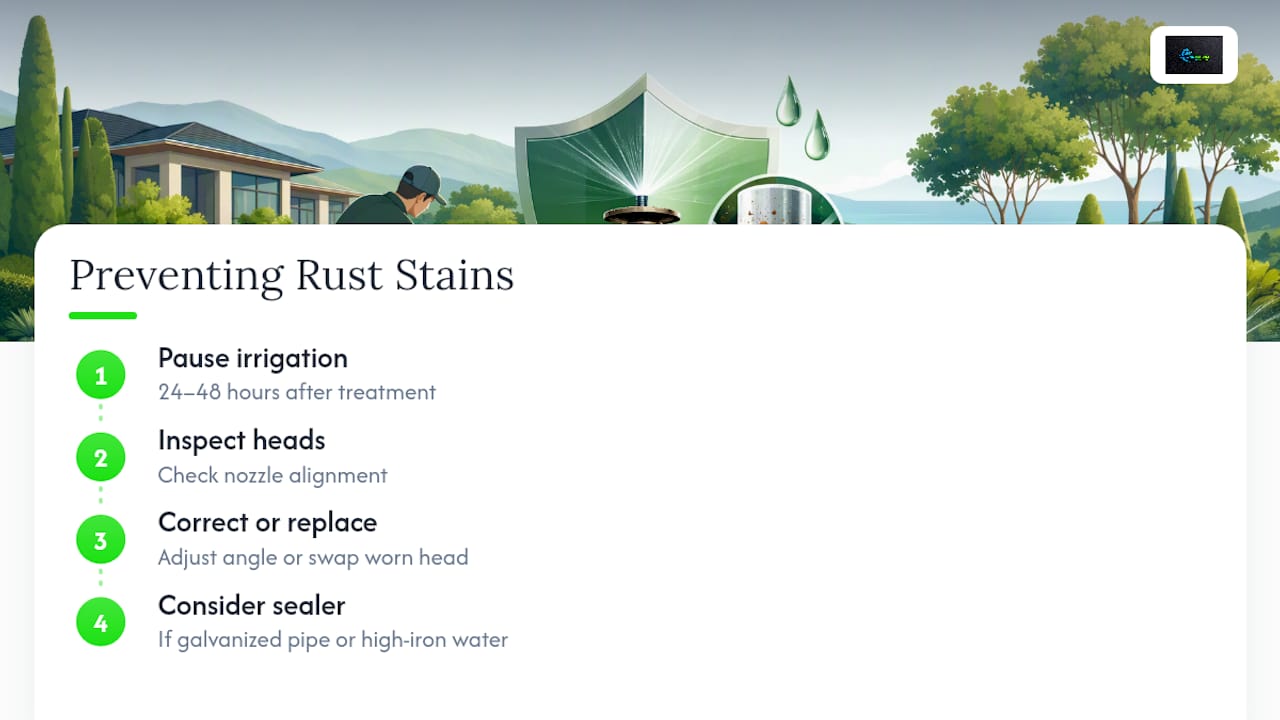
Once that window passes, check your sprinkler heads. Misaligned nozzles that spray directly onto concrete, siding, or pavers are the root cause of most repeat staining, so adjusting the angle or swapping a worn head often prevents the problem from coming back. A rust-migration breakdown walks through why certain driveway sections attract rust faster than others.
Pro Tip: If your property has old galvanized pipe or well water with high iron content, ask your contractor about a hydrophobic sealer. It won’t stop the iron, but it slows how fast new stains bond to the surface.
An Editorial Take on DIY Versus Professional Rust Removal
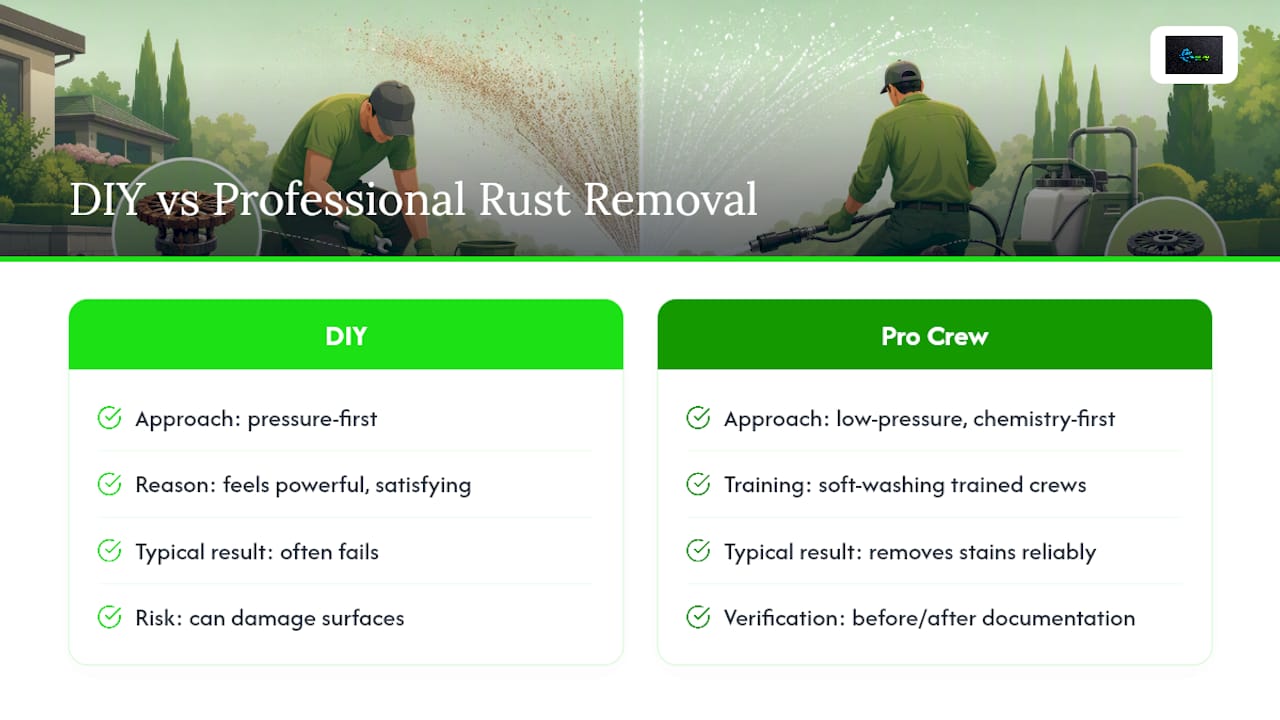
Most DIY rust removal fails for a boring reason: people reach for pressure before chemistry. It’s an understandable instinct. A pressure washer feels powerful, and watching grime disappear is satisfying. But rust isn’t grime.
A trained crew using low-pressure, chemistry-first methods can reliably remove stains without damaging surfaces. This approach highlights the importance of proper soft-washing training and maintaining before/after documentation to verify results before hiring a contractor.
— Bobby
Get a Free Rust Stain Estimate From White Diamond Pressure Washing
Professional exterior cleaning treats sprinkler rust using organic-acid chemistry matched to the surface, a controlled low-pressure rinse, and avoids high-pressure blasting that risks damaging concrete or siding.

Free estimates typically start with an on-site test spot to evaluate how the treatment reacts to the specific surface before proceeding. Afterwards, a written scope with treatment details, timeline, and price range is provided to ensure clarity and avoid vague promises. If your driveway, patio, or siding has stubborn sprinkler staining, request a free estimate through the services page or start with the main booking page to check availability in your area.
Sources
- Stain removal: iron/rust — UGA Cooperative Extension
- Acid washing explained: uses, safety, and when to hire a pro — Classic Marcite
- Technical irrigation rust removal near me | NatureClean Cleaning Services