

TL;DR:
- Vinyl siding chalking results from oxidation caused by UV radiation, heat, oxygen, and moisture, leading to a powdery surface damage. Early detection through simple tests and proper soft washing with specialized detergents can restore the siding, while improper cleaning risks permanent etching and costly replacement. Regular gentle maintenance and the application of UV inhibitors can prevent or slow down chalking, extending the siding’s lifespan.
Vinyl siding chalking is defined as oxidation, a chemical process where UV radiation, heat, oxygen, and moisture break down the surface polymer layers of PVC siding, leaving behind a fine, white, powdery residue. This is not surface dirt you can wipe away with a wet rag. The chalky film is actual siding material degrading at a molecular level, which means it signals real damage to your home’s exterior. Homeowners and property managers who catch it early can restore their siding with the right approach. Those who ignore it, or clean it the wrong way, risk permanent scarring and costly replacement.
What is vinyl siding chalking and what causes it?
Vinyl siding chalking is the industry term for oxidative degradation of the siding’s outer polymer layer. The technical name is surface oxidation, and the visible result is a dull, powdery coating that rubs off on your fingers. It is one of the most common vinyl siding issues homeowners face, particularly in sun-heavy climates.
The root cause is UV radiation. Sunlight breaks the chemical bonds in vinyl’s polymer chains, releasing pigment and stabilizer particles as a loose, chalky residue. Heat accelerates this reaction significantly. Surface temperatures exceeding 130°F push the oxidation process into overdrive, especially in high-UV regions. That means Florida, the Southwest, and other warm-weather states see chalking develop faster than homes in cooler climates.
Oxygen and moisture add fuel to the reaction. Oxygen bonds with the degraded polymer fragments, and moisture cycles from rain and humidity cause the siding to expand and contract repeatedly. South and west-facing walls oxidize faster than north or east-facing sides because they absorb the most direct sun and experience the most dramatic temperature swings. Temperature swings of 50°F or more accelerate polymer chain breakdown, increasing chalking risk on those exposed sides.
The key factors that drive siding chalking are:
- UV radiation: Direct sunlight is the primary trigger, breaking polymer bonds on the surface.
- Heat: Temperatures above 130°F dramatically speed up oxidation.
- Oxygen: Bonds with degraded vinyl particles, creating the powdery residue.
- Moisture: Repeated wet and dry cycles stress the siding surface.
- Wall orientation: South and west-facing panels degrade faster due to heat cycling.
How can you identify chalking on your vinyl siding?
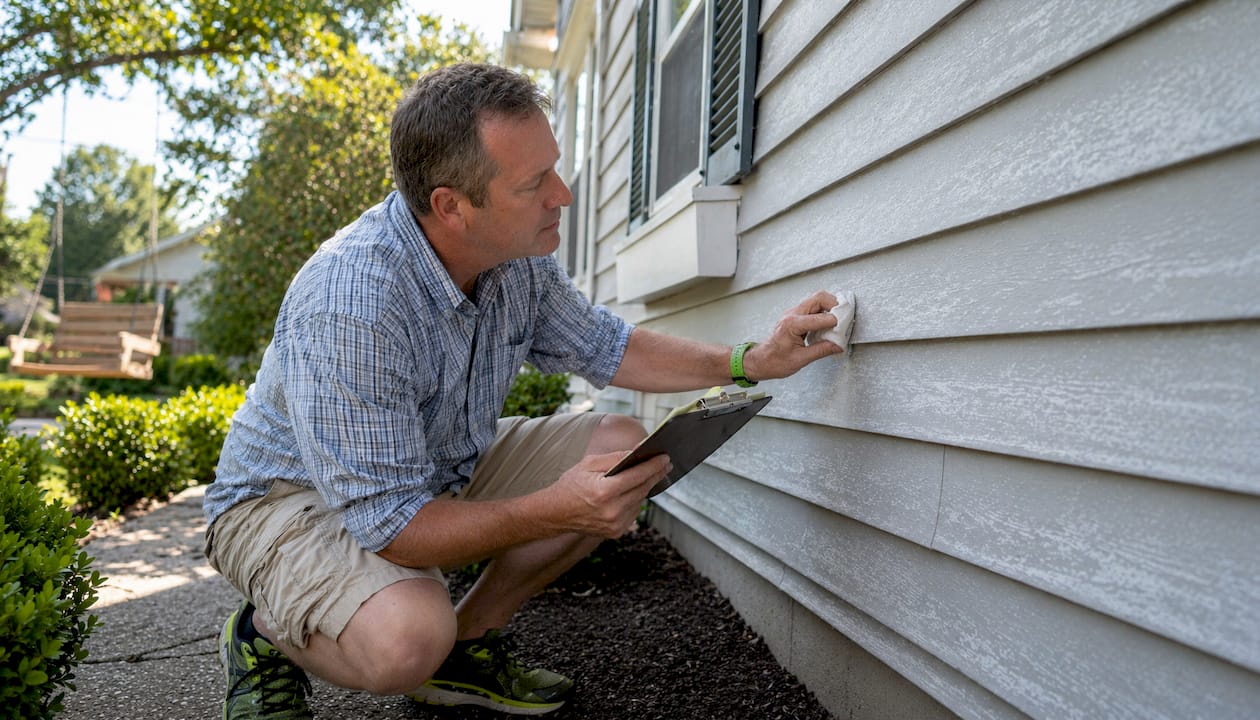
The simplest test for siding chalking takes about three seconds. Run a dry finger firmly across the siding surface. If a white or gray powdery residue transfers to your fingertip, oxidation is present. This “finger test” is the fastest way to confirm chalking versus ordinary dirt or biological growth.
Visible symptoms include more than just the powder itself. Look for these signs of siding deterioration:
- Faded, dull color: Siding that once looked bright now appears washed out and flat.
- White streaks below gutters or windows: Chalky residue washes down with rain and leaves visible trails.
- Powdery texture on touch: The surface feels gritty or dusty rather than smooth.
- Uneven sheen: Some panels look matte while others retain slight gloss, indicating uneven oxidation.
- Color variation between sun-exposed and shaded panels: A clear sign that UV exposure is the driver.
Chalking is frequently mistaken for dirt, mold, or algae. The key difference is that dirt washes off with water, and mold or algae appear as green, black, or brown biological growth. Chalking is white or gray, powdery, and does not rinse away with plain water. Mold or algae cleaners are ineffective on oxidation because the problem is damage to the siding itself, not a surface contaminant.
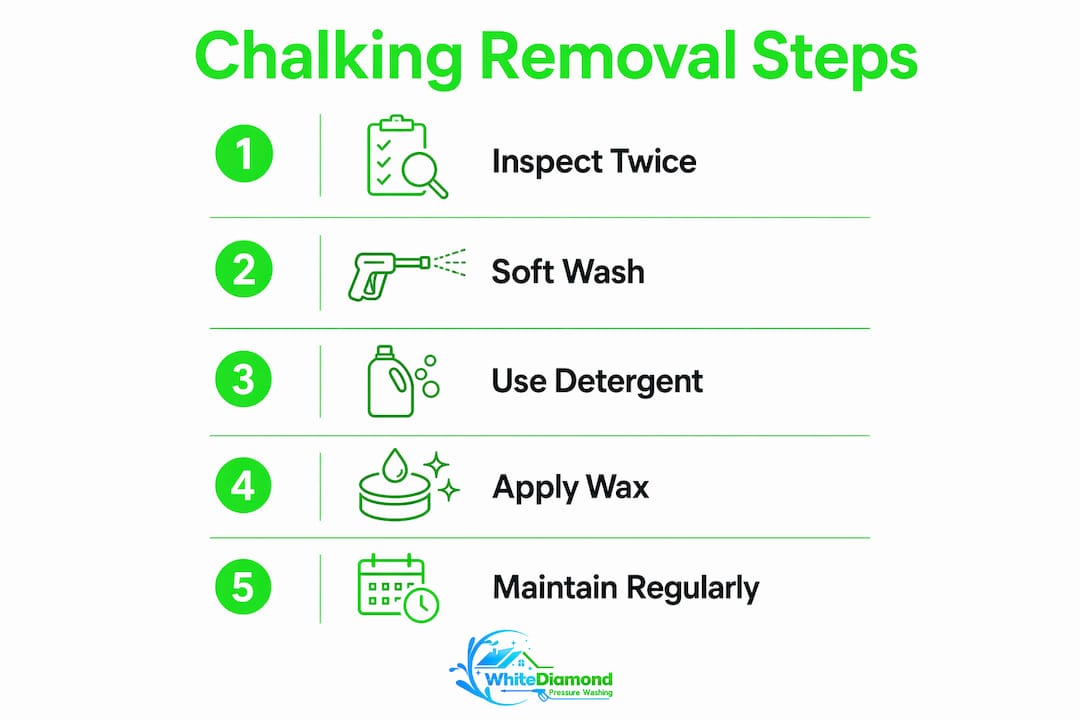
Pro Tip: Inspect your siding twice a year, once in spring and once in fall. Focus on south and west-facing walls first. Catching light oxidation early gives you the best chance of full restoration without professional intervention.
What are the safest methods to remove chalking from vinyl siding?
Removing chalking from vinyl siding requires a chemical restoration process, not brute-force cleaning. The biggest mistake homeowners make is reaching for a pressure washer. Pressure washers above 3,000 PSI damage oxidized siding by stripping the chalky layer unevenly, leaving permanent “tiger stripe” etching across the panels. That damage cannot be undone.
The professional standard is soft washing: low-pressure water delivery combined with specialized restoration detergents. Products like Cleansol BC and Ox-Knox are formulated to dissolve oxidized vinyl layers safely. These are not general-purpose cleaners. They target the specific chemistry of oxidized PVC, breaking down the chalky residue without abrading the underlying surface. Understanding why high-pressure washing harms siding helps you make the right call before you start.
“Patience beats pressure every time. The goal is chemical dissolution of the oxidized layer, not mechanical removal. Rushing with high PSI creates permanent scarring that no amount of cleaning can fix.”
The step-by-step approach for safe chalking removal:
- Test a hidden patch first. Apply your chosen restoration detergent to a small, inconspicuous area. Test patches prevent widespread damage from incompatible products and confirm the detergent works on your specific siding.
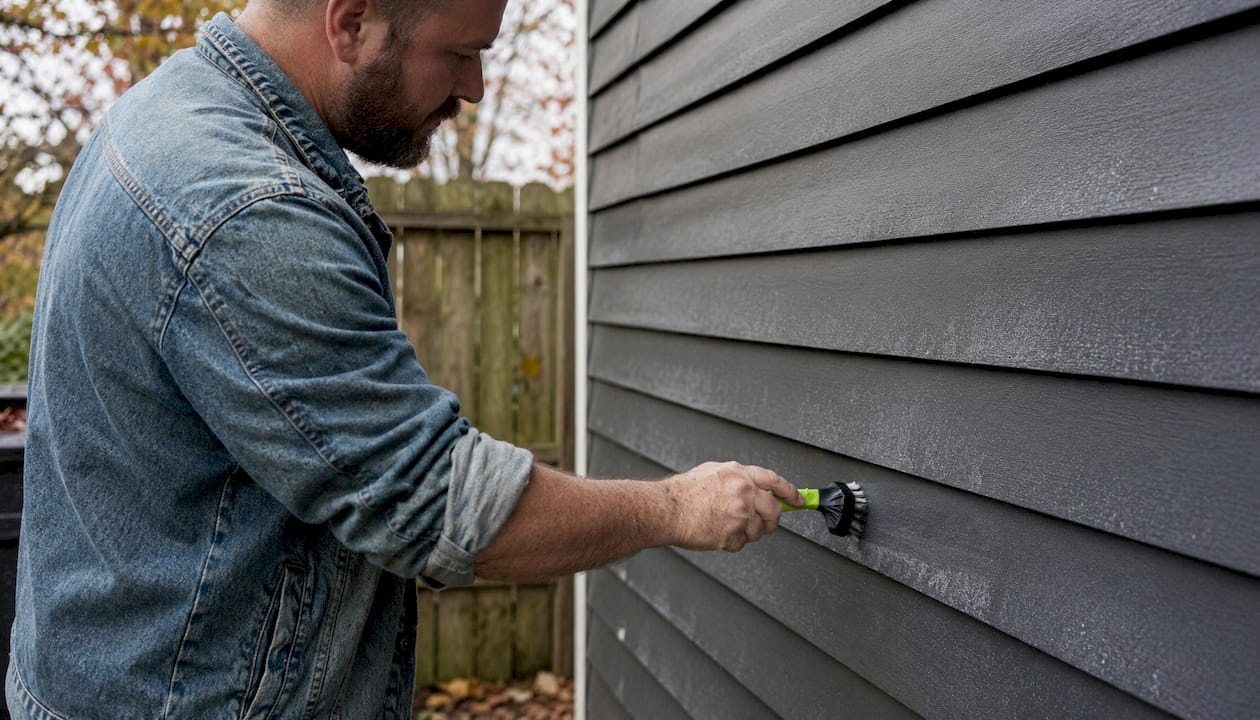
- Apply the restoration detergent. Work in sections, applying the chemical solution with a soft brush or low-pressure sprayer. Let it dwell for the time specified on the product label.
- Agitate gently. Use a soft-bristle brush to work the detergent into the oxidized layer. Do not scrub hard. The chemistry does the work.
- Rinse thoroughly with low pressure. A garden hose or soft wash system at low PSI removes the dissolved residue without damaging the surface.
- Assess and repeat if needed. Heavy oxidation may require a second application. Do not increase pressure to compensate.
- Apply a UV-inhibiting restorer. After cleaning, a restoration wax or vinyl restorer replenishes UV inhibitors and improves color depth, acting like automotive wax for your siding.
Pro Tip: Experts recommend treating oxidation within 30 days of first noticing it. Chalk that bonds to the surface for months becomes significantly harder to remove and may require professional-grade equipment to address fully.
For DIY homeowners, light to moderate oxidation is manageable with the right products and patience. Heavy, decades-old oxidation is a different story. At that stage, professional soft washing is the safer and more cost-effective path.
What happens if you ignore chalking or clean it the wrong way?
Ignoring chalking is not a neutral choice. Prolonged oxidation depletes the siding’s protective finish, making the surface porous and vulnerable to deeper staining and material breakdown. Once the outer protective layer is gone, moisture penetrates the siding more easily, accelerating deterioration from the inside out.
The financial consequences are real. Left untreated, oxidation can make siding so porous and fragile that full panel replacement becomes the only option, costing thousands of dollars. The risks of neglect and improper treatment include:
- Permanent color loss: Severe oxidation dulls siding to a point where no cleaning product restores the original color.
- Tiger stripe scarring: High-pressure washing on oxidized siding creates uneven etching that is irreversible.
- Porous, fragile panels: Oxidized siding absorbs moisture, leading to warping and cracking over time.
- Premature replacement costs: Full siding replacement runs into thousands of dollars, far exceeding the cost of early treatment.
- Staining from secondary contaminants: Porous siding picks up dirt, algae, and mold far more aggressively than intact siding.
DIY mistakes with pressure washers are the leading cause of preventable siding damage. The instinct to blast away the chalky residue with high PSI is understandable but destructive. The damage shows up immediately as streaking and etching, and it is permanent.
How to maintain vinyl siding and prevent or slow down chalking
Prevention is simpler and cheaper than restoration. Annual or semi-annual gentle washing removes environmental buildup before it accelerates oxidation and keeps the siding surface in better condition year-round. A consistent maintenance schedule is the single most effective thing you can do to extend siding life.
Practical vinyl siding maintenance tips to slow chalking:
- Wash annually with a soft wash system. Low-pressure washing with a mild detergent removes dirt, pollen, and early oxidation before it compounds.
- Apply a vinyl siding restorer with UV inhibitors. These products slow the UV degradation process and restore some color depth after cleaning.
- Avoid power washing on oxidized panels. The advantages of low-pressure washing over power washing are significant for siding preservation.
- Trim back vegetation near siding. Shade from trees and shrubs reduces direct UV exposure on vulnerable panels.
- Use only vinyl-safe cleaning products. Harsh solvents or abrasive cleaners strip the surface and accelerate oxidation.
- Inspect south and west-facing walls more frequently. These sides degrade faster and benefit from more attention in your maintenance routine.
Applying a restoration wax-type product after each annual cleaning acts like automotive wax for your siding. It replenishes the UV inhibitors that degrade over time and creates a mild barrier against moisture and oxygen. This step is often skipped but makes a measurable difference in how long the siding holds its color.
Key Takeaways
Vinyl siding chalking is oxidation damage to the siding’s polymer surface, and early treatment with soft washing and restoration detergents is the most cost-effective way to prevent permanent damage and costly replacement.
| Point | Details |
|---|---|
| Chalking is oxidation, not dirt | UV radiation, heat, and moisture chemically degrade vinyl’s surface layer, creating powdery residue. |
| Use the finger test to confirm | Rubbing a dry finger on siding reveals chalky dust if oxidation is present, distinguishing it from dirt or mold. |
| Soft washing is the safe method | Low-pressure washing with specialized restoration detergents removes chalking without scarring the surface. |
| High-pressure washing causes permanent damage | Pressure washers above 3,000 PSI create irreversible tiger stripe etching on oxidized siding. |
| Annual maintenance slows chalking | Gentle washing and UV-inhibiting restorers extend siding life and reduce oxidation buildup over time. |
What I’ve learned about chalking that most guides get wrong
After seeing hundreds of siding jobs, the pattern is clear: homeowners almost always underestimate how gentle the cleaning process needs to be. The chalky residue looks like something you should be able to scrub off, so the instinct is to apply more pressure. That instinct is wrong every time.
The other misconception I see constantly is treating chalking like a cosmetic nuisance rather than structural damage. When the protective outer layer of vinyl is gone, the siding is genuinely compromised. It absorbs moisture differently, stains more easily, and ages faster. Catching it at the light-to-moderate stage means you can restore it. Waiting until it is severe often means you are shopping for new panels.
The realistic outcome of proper soft washing treatment is a significant improvement in color and surface uniformity, but not a return to brand-new condition. Siding that has been oxidizing for a decade will look better after treatment, not perfect. Setting that expectation upfront saves a lot of frustration. The goal is restoration and protection, not a time machine.
My honest recommendation: if you have never treated your siding and it has been more than five years since installation, do a finger test on your south-facing wall today. What you find will tell you exactly where you stand.
— Bobby
How Whitediamondpressurewashing handles vinyl siding oxidation
Vinyl siding chalking responds best to the right chemistry applied at the right pressure. That is exactly what Whitediamondpressurewashing delivers for homeowners and property managers across Citrus County and surrounding areas.

Whitediamondpressurewashing uses professional soft washing techniques with restoration-grade detergents designed specifically for oxidized vinyl surfaces. Every job starts with a surface assessment to determine oxidation severity before any chemical is applied. The team avoids high-pressure methods that cause permanent tiger stripe damage, focusing instead on safe, non-abrasive washing that restores appearance without risking the siding. Visit Whitediamondpressurewashing to get a free estimate and find out what your siding actually needs.
FAQ
What is vinyl siding chalking?
Vinyl siding chalking is oxidation, a chemical process where UV radiation, heat, and moisture break down the siding’s surface polymer layer, leaving a fine white or gray powdery residue on the exterior.
How do I know if my siding has chalking or just dirt?
Run a dry finger across the siding surface. If a white powdery residue transfers to your finger, oxidation is present. Dirt rinses off with water; chalking does not.
Can I remove chalking with a pressure washer?
Pressure washers above 3,000 PSI cause permanent tiger stripe etching on oxidized siding. Soft washing with specialized restoration detergents is the correct and safe method.
How long does it take for chalking to become irreversible?
Light to moderate oxidation is treatable with professional soft washing. Heavy oxidation that has been left untreated for years or decades may be irreversible, requiring siding replacement.
How do I prevent vinyl siding from chalking?
Annual gentle washing with a soft wash system, combined with a UV-inhibiting vinyl restorer applied after cleaning, slows oxidation buildup and extends siding life significantly.