

TL;DR:
- House siding oxidation is a gradual chemical breakdown caused by exposure to sunlight, oxygen, and moisture, leading to chalky residue and faded color. Proper identification with the finger wipe test helps differentiate it from dirt or mold, which require different cleaning methods. Gentle soft washing with oxidation-specific solutions is necessary, as pressure washing can worsen the damage, making prevention through regular maintenance and protective coatings essential.
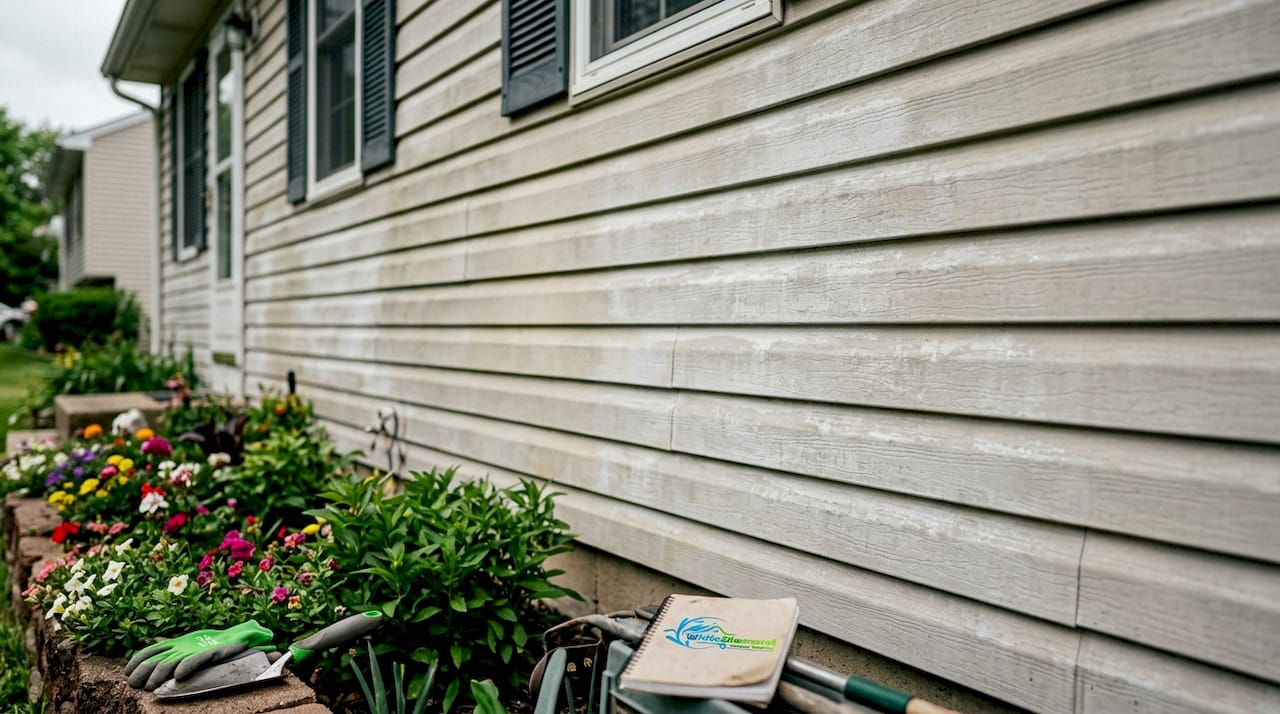
House siding oxidation is the gradual chemical breakdown of your siding’s surface caused by exposure to oxygen, UV sunlight, and moisture, leaving behind a chalky white residue and a faded, dull appearance. The industry term for this process is photooxidative degradation, though most contractors simply call it oxidation. If you’ve ever rubbed your hand along your siding and walked away with a white powder on your fingers, you’ve already seen it firsthand. Vinyl siding is the most commonly affected material, but painted wood and aluminum siding deteriorate the same way. Understanding what causes this damage is the first step toward protecting your home’s exterior before the problem gets expensive.
What is house siding oxidation and why does it happen?
Oxidation appears as chalky residue and uneven discoloration, and it develops gradually through three overlapping environmental forces: UV radiation, oxygen, and moisture.
UV radiation is the primary driver. Sunlight breaks down the protective compounds built into siding materials, particularly the titanium dioxide stabilizers in vinyl PVC. Once those stabilizers degrade, the surface becomes chemically unstable and begins to break apart at a molecular level.
Oxygen accelerates that breakdown. The exposed surface reacts with oxygen in the air, forming new chemical compounds that are weaker and lighter in color than the original material. This is the same basic chemistry that rusts iron or turns a cut apple brown.
Moisture compounds the damage further. Rain, humidity, and condensation work into the weakened surface layer and speed up the chemical reaction. Homes in humid climates or those with poor drainage around the foundation face faster siding deterioration than homes in dry regions.
The combined effect of these three forces looks different depending on the siding material:
- Vinyl siding: UV-driven PVC degradation produces a white chalky film and significant color fading, often turning dark colors gray or washed out.
- Painted wood siding: Oxidation attacks the paint film first, causing it to chalk, peel, and eventually expose bare wood to moisture damage.
- Aluminum siding: The metal surface oxidizes into aluminum oxide, which appears as a dull gray or white powder similar to vinyl chalking.
Natural aging ties all of this together. A siding panel installed 10 or 15 years ago has absorbed years of sun cycles, rain seasons, and temperature swings. No material is immune. The rate of degradation depends on sun exposure, local climate, and whether the siding has been maintained with protective coatings.
How to identify oxidation versus dirt or mold on your siding
Correctly reading your siding’s condition determines whether you need a simple wash or a more involved restoration. Oxidation, dirt, and mold look similar from a distance but behave very differently up close.
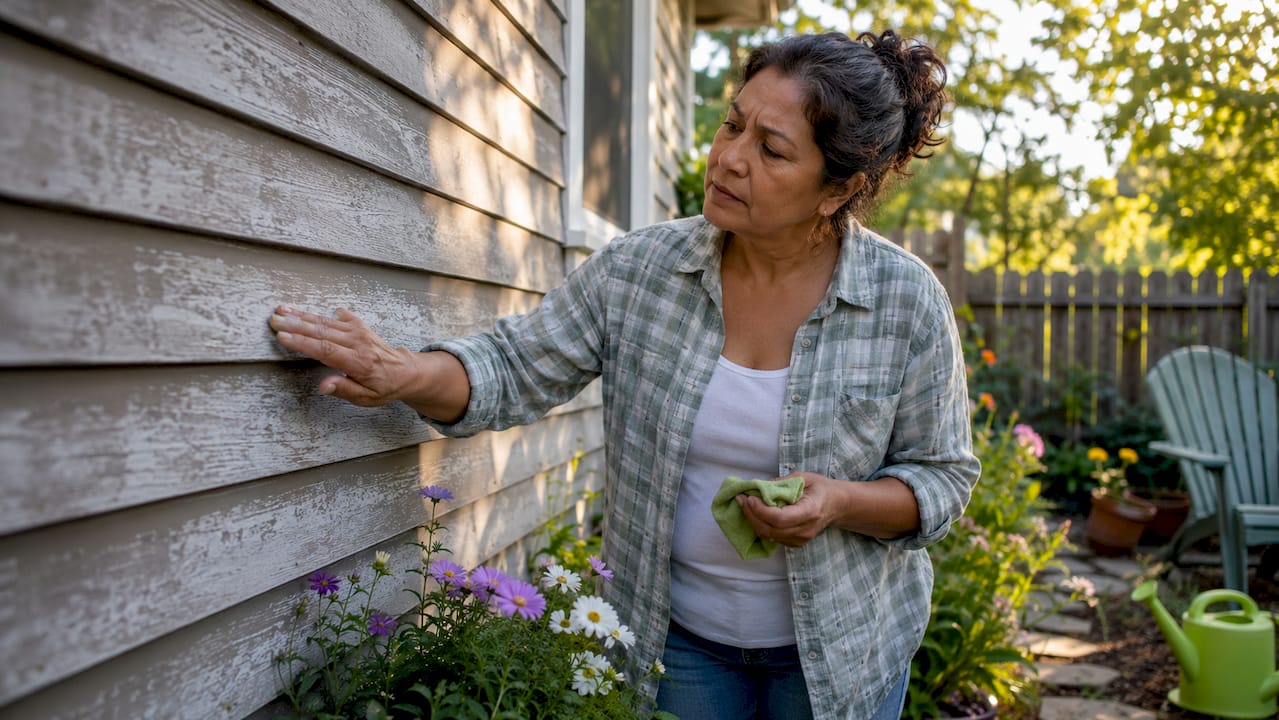
The most reliable test is the finger wipe test. Chalky powder transferring to dry fingers when you rub dry siding is a definitive sign of oxidation. Dirt and algae do not produce that chalky transfer. If your fingers come away with a white or gray powder, you are dealing with oxidation, not surface grime.
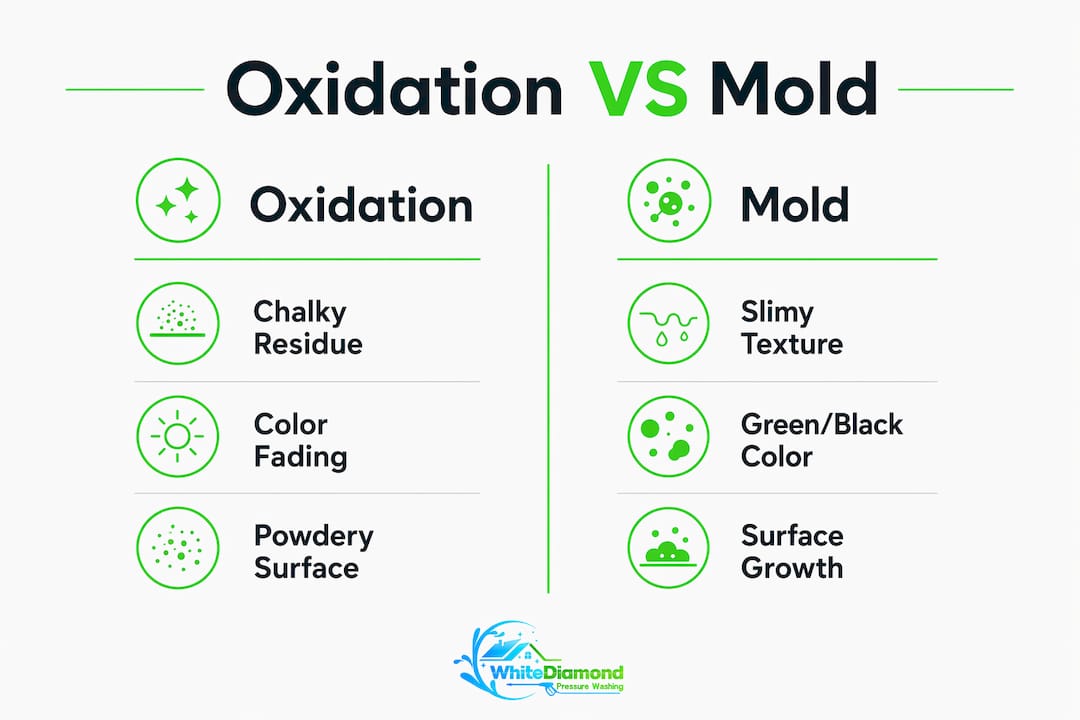
| Symptom | Oxidation | Dirt or Mold |
|---|---|---|
| Chalky residue on dry wipe | Yes | No |
| Color fading or dullness | Yes | Rarely |
| Slimy or wet texture | No | Often (mold/algae) |
| Blotchy patches after cleaning | Yes | No |
| Responds fully to washing | No | Yes |
Mold and algae typically feel slimy or damp and often appear green, black, or dark brown. They sit on top of the siding surface and wash off with the right cleaning solution. Oxidation, by contrast, is baked into the surface itself. Washing removes the grime that sits on top of oxidation, but the chalky, faded layer underneath stays put.
One detail that surprises many homeowners: oxidation often appears worse after cleaning than before. That is not a cleaning defect. Dirt and algae had been masking the oxidation for years. Once the grime is gone, the full extent of the surface degradation becomes visible. Knowing this ahead of time prevents unnecessary alarm or the mistaken belief that cleaning caused the problem.
Pro Tip: Run the finger wipe test on a dry day before you schedule any cleaning service. The result tells you exactly what you are dealing with and helps you have a more informed conversation with your contractor.
Why standard pressure washing isn’t enough for oxidized siding
Oxidation is structural damage to the siding’s surface. Washing removes grime, but cleaning cannot restore degraded material or return faded color to its original state. This distinction matters because many homeowners assume a good pressure wash will fix the chalky, dull look. It won’t.
Worse, the wrong cleaning method actively makes things worse. High-pressure washing strips oxidized siding unevenly, creating streaks and permanent blotchy patches across the surface. The force removes the weakened outer layer in irregular patterns, leaving the siding looking worse than before. Understanding the risks of high-pressure washing on vulnerable surfaces is critical before you pick up a pressure washer or hire anyone who uses one.
Safe methods for oxidized siding follow a different approach:
- Soft washing: Low-pressure water delivery combined with specialized cleaning solutions lifts surface grime without stripping the weakened siding finish. The soft washing process uses chemical action rather than water force to do the cleaning work.
- Oxidation-specific cleaners: Products formulated for oxidized surfaces contain compounds that break down the chalky layer and condition what remains. These are not the same as general-purpose house wash detergents.
- Controlled rinse technique: Low-pressure rinsing after chemical application removes residue without abrading the surface further.
Pro Tip: Ask any contractor you hire whether they adjust their cleaning approach specifically for oxidized siding. A contractor who uses the same pressure and solution for every job is not accounting for the difference between dirt and oxidation.
When professional restoration or siding replacement becomes necessary depends on the severity. Mild to moderate oxidation responds well to soft washing and oxidation-specific treatment, improving appearance significantly. Severe oxidation, where the surface has degraded deeply and unevenly, often requires repainting or full siding replacement. Full restoration to the original molecular state is rarely possible. The goal of treatment is appearance improvement and surface protection, not reversal of the chemistry.
How to prevent siding oxidation and extend your exterior’s life
Prevention costs far less than restoration. A consistent maintenance routine keeps oxidation from advancing faster than it naturally would.
-
Clean your siding on a regular schedule. Dirt, algae, and organic buildup trap moisture against the surface and speed up degradation. A gentle annual or biannual wash removes that buildup before it causes compounding damage. Preventative exterior cleaning is the single most cost-effective step you can take.
-
Use low-pressure or soft wash methods every time. Aggressive pressure washing removes the protective surface layer faster than natural weathering does. The advantages of low-pressure washing go beyond safety. Gentle cleaning preserves the finish that slows oxidation in the first place.
-
Apply protective coatings or paint to shield against UV and moisture. Exterior-grade sealers and UV-resistant paints add a sacrificial layer that absorbs the sun’s punishment before the siding material does. Reapply according to the manufacturer’s schedule, typically every 5–7 years depending on sun exposure.
-
Manage moisture and drainage around your home’s exterior. Gutters that overflow, downspouts that drain against the foundation, and landscaping that holds water against the siding all accelerate oxidation. Redirect water away from the house and trim vegetation that traps humidity against exterior walls.
-
Inspect your siding each season. A quick visual check in spring and fall catches early signs of siding damage before they spread. Look for color changes, chalky patches, or areas where the surface feels rough or powdery. Protective finishes degrade faster with untreated moisture and sunlight exposure, so catching problems early extends the life of your siding significantly.
Key Takeaways
House siding oxidation is a chemical surface breakdown that no amount of washing can fully reverse, making prevention and gentle maintenance the most effective long-term strategy.
| Point | Details |
|---|---|
| Oxidation defined | UV, oxygen, and moisture chemically degrade siding surfaces, producing chalky residue and faded color. |
| Finger wipe test | Chalky powder on dry fingers confirms oxidation; dirt and mold do not produce this transfer. |
| Washing limits | Cleaning removes grime but cannot restore degraded siding material or original color. |
| Pressure washing risk | High-pressure washing on oxidized siding creates streaks and permanent blotchy patches. |
| Prevention wins | Regular gentle cleaning, protective coatings, and moisture management slow oxidation significantly. |
What I’ve learned after years of seeing oxidized siding up close
Most homeowners discover their siding is oxidized at the worst possible moment: right after they’ve paid for a cleaning and the results look uneven. The siding looks worse in patches, and the first instinct is to blame the cleaning crew. I’ve seen this play out many times. The cleaning didn’t cause the problem. It revealed it.
The uncomfortable truth about oxidation is that it has usually been building for years under a layer of dirt and algae. That grime was actually hiding how far the degradation had progressed. Once it’s gone, you see the real condition of the surface. That’s not a failure. That’s information.
What I tell homeowners is this: treat oxidation with patience and realistic expectations. Soft washing and oxidation-specific treatments can dramatically improve the appearance of mildly to moderately affected siding. But if you go in expecting your 15-year-old vinyl to look brand new after one treatment, you will be disappointed. The chemistry doesn’t work that way.
The other mistake I see constantly is aggressive DIY pressure washing. A homeowner rents a 3,000 PSI machine, blasts the siding, and strips the weakened surface unevenly. Now they have a streaked, patchy exterior that looks worse than the chalky version they started with. At that point, repainting or replacement becomes the only real option.
My honest advice: get a professional assessment before you do anything. A trained eye can tell you whether your siding needs a gentle soft wash, an oxidation treatment, or a conversation about replacement. That assessment costs nothing compared to the damage a wrong approach can cause. Curb appeal and home value both take a real hit from oxidized siding. Catching it early and treating it correctly is always the better path.
— Bobby
Whitediamondpressurewashing can help restore your siding safely
Oxidized siding needs a cleaning approach built around the damage, not a one-size-fits-all pressure wash. Whitediamondpressurewashing specializes in soft washing and low-pressure techniques designed specifically for homes in Citrus County and surrounding areas, using oxidation-specific cleaning solutions that lift grime without stripping what’s left of your siding’s finish.

The team at Whitediamondpressurewashing applies controlled chemical treatments and gentle rinse methods that improve your home’s appearance while protecting the siding from further damage. Whether your siding shows early chalking or years of accumulated oxidation, the right method makes a measurable difference in the result. Visit Whitediamondpressurewashing to get a free estimate and find out which approach fits your home’s condition.
FAQ
What does house siding oxidation look like?
Oxidation appears as a chalky white or gray powder on the siding surface, combined with faded or dull color. Running a dry finger across dry siding and seeing powder transfer is the clearest sign.
Can you remove oxidation from siding by pressure washing?
Pressure washing removes the dirt and grime covering oxidation but cannot restore degraded material. High-pressure washing on oxidized siding can actually worsen the appearance by creating streaks and uneven patches.
How much does professional oxidation removal cost?
Professional oxidation removal typically ranges from $0.10 to $0.55 per square foot using soft washing or pressure washing services. The final cost depends on siding condition, square footage, and the cleaning method required.
Is oxidation the same as mold on siding?
Oxidation and mold are different problems. Mold feels slimy, often appears green or black, and washes off with the right cleaner. Oxidation is a dry, chalky surface degradation that does not wash away.
How do you prevent siding oxidation from getting worse?
Preventing oxidation requires regular gentle cleaning, UV-protective coatings, and proper moisture management around your home’s exterior. Annual soft washing and seasonal inspections catch early signs before they advance.
Recommended
- Preventative Exterior Cleaning: Protect Your Home – white-diamond-pressure
- Why Prevent Lichen on Roofs: Protect Your Home – white-diamond-pressure
- Why protecting home exteriors matters in Citrus County – white-diamond-pressure
- 7 signs your house needs washing in Citrus County – white-diamond-pressure
3 thoughts on “What Is House Siding Oxidation and How to Stop It”