


TL;DR:
- Regular cleaning prevents mold, seal failure, and energy loss by removing debris from window frames. Proper maintenance extends window lifespan from 15–25 years to 30–50 years and reduces repair costs significantly. Routine cleaning and inspections are essential for both residential and commercial buildings to ensure durability and energy efficiency.
Window frame cleaning is the process of removing dirt, debris, mold, and moisture-trapping buildup from window frames, tracks, and sills to protect structural integrity, prevent seal failure, and improve energy efficiency. Neglected frames cause 2–7% light transmission loss and contribute to moisture damage that shortens window lifespan significantly. Frame cleaning is not a cosmetic task. It is a maintenance discipline that directly affects how well your windows perform, how long they last, and how much you spend on repairs over time. Homeowners and property managers who treat frame care as routine maintenance avoid the expensive consequences of buildup, rot, and failed seals.
What is window frame cleaning and why does it matter?
Window frame cleaning is the systematic removal of grime, mold spores, mineral deposits, and organic debris from all frame surfaces, including tracks, sills, and drainage channels. The industry term for this practice is “frame and sill maintenance,” and it covers both interior and exterior surfaces. Frame cleaning protects structural integrity by removing the first layer of debris accumulation that leads to deeper damage if left unchecked.
Dirty frames trap moisture against the frame material. That moisture feeds mold, corrodes hardware, and degrades weatherstripping. Over time, the seal between the frame and the glass unit fails, which drives up heating and cooling costs. Well-maintained windows reduce household heat loss by up to 30%, which is a measurable return on a simple cleaning routine.
For commercial properties, the stakes extend beyond energy bills. Consistent cleaning schedules protect brand reputation by keeping buildings looking professional and inviting. A storefront or office building with grimy, stained frames signals neglect to clients and tenants before they ever walk through the door.
What materials are window frames made of and how does cleaning differ?
The four most common frame materials are vinyl, aluminum, wood, and fiberglass. Each one reacts differently to water, cleaning agents, and scrubbing pressure. Using the wrong method on any of them causes scratches, corrosion, warping, or finish damage that cannot be reversed without professional restoration.

Vinyl frames are the most forgiving. A soft cloth with mild dish soap and warm water removes most dirt without risk. Avoid abrasive scrubbers, which leave micro-scratches that collect grime faster over time.
Aluminum frames require more caution. Avoid harsh acidic or alkaline cleaners on aluminum frames because they strip the anodized coating and accelerate oxidation. After cleaning, apply a thin layer of non-abrasive wax to create a barrier against environmental pollutants.
Wood frames are the most sensitive. Use minimal water and dry the surface immediately after cleaning. Standing moisture causes wood to swell, crack, and rot. A damp microfiber cloth with a small amount of mild soap is the correct tool. Never soak wood frames or use a hose directly on them.
Fiberglass frames tolerate mild all-purpose cleaners well. They resist moisture better than wood but can fade if exposed to harsh chemical solvents. Stick to pH-neutral products and soft brushes.
- Use soft cloths or microfiber towels on all frame types
- Choose mild dish soap or pH-neutral cleaners as your default solution
- Never use steel wool, abrasive pads, or bleach-based sprays on painted or coated surfaces
- Dry wood frames immediately after any contact with water
- Apply non-abrasive wax to aluminum and vinyl after deep cleaning
Pro Tip: After cleaning aluminum frames, apply a thin coat of car wax with a soft cloth. It repels water and oxidation for months and takes less than five minutes per window.
How often should window frames be cleaned?
Cleaning frequency depends on your environment, your property type, and how much exposure your frames get to weather and pollution. Light cleaning every 1–2 weeks is recommended in high-pollution areas, while properties in cleaner environments can extend that to every 2–3 weeks. Deep cleaning and full inspection should happen every 1–2 months regardless of location.
The payoff for sticking to that schedule is significant. Properly maintained windows last 30–50 years compared to 15–25 years for neglected ones. That gap represents tens of thousands of dollars in avoided replacement costs for a typical home or commercial building.
Residential and commercial properties have different priorities. Homeowners focus on preventing moisture damage, mold, and energy loss. Property managers add a layer of concern around tenant satisfaction and building code compliance. For commercial buildings with large glass facades, a monthly professional cleaning cycle is the standard.
- Weekly or biweekly: Wipe down interior sills and tracks with a dry microfiber cloth to remove dust and debris before it compacts.
- Monthly: Wash all frame surfaces with mild soap and water, inside and out. Check tracks for buildup.
- Every 1–2 months: Deep clean tracks, clear weep holes, inspect gaskets and caulking, and lubricate hinges.
- Seasonally: Inspect for cracked caulking, perished weatherstripping, and any signs of water intrusion around the frame perimeter.
Regular inspections should include checks for perished gaskets, cracked caulking, and stiff hinges. Early repairs cost far less than full window replacement caused by years of neglect.
What are the best techniques for cleaning window frames effectively?
Effective frame cleaning follows a specific sequence. Skipping steps or rushing through them is the most common reason homeowners end up with streaked frames, damaged tracks, or missed mold growth. The best practices for cleaning frames apply equally to interior and exterior surfaces, with adjustments for material type.
Step 1: Dry debris removal. Use a soft brush or vacuum attachment to remove loose dirt, dead insects, and grit from tracks and sills before introducing any liquid. Wet grit acts like sandpaper and scratches frame surfaces.
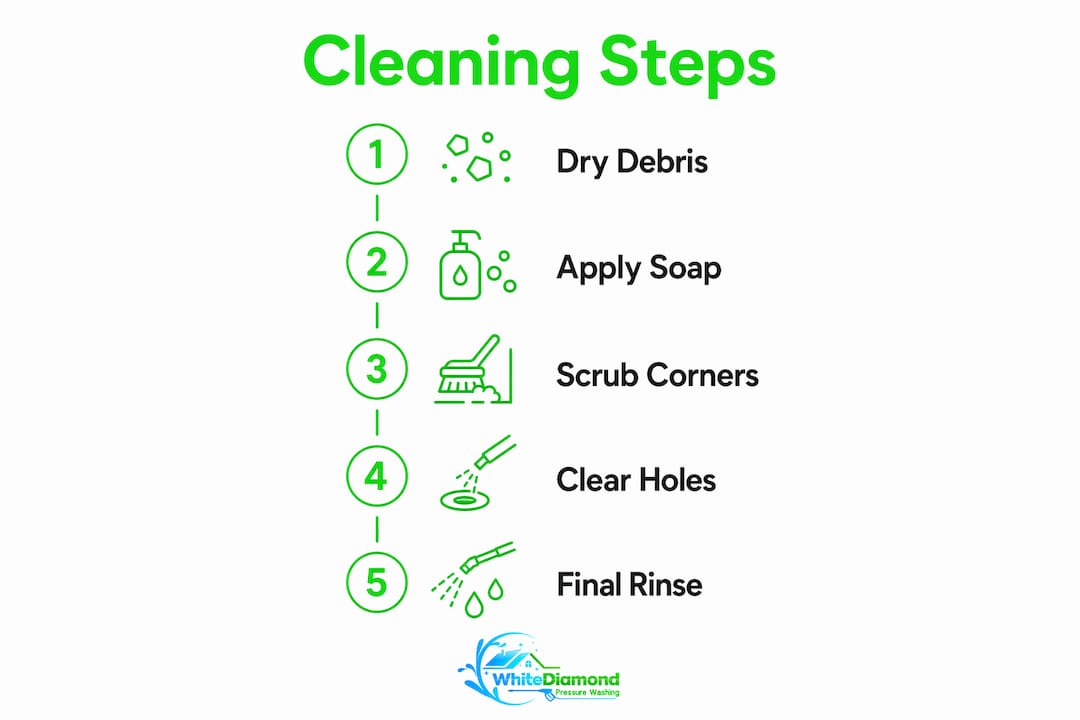
Step 2: Apply cleaning solution. Mix mild dish soap with warm water. For stubborn mineral deposits or mildew, a diluted white vinegar solution (one part vinegar to three parts water) works without damaging most frame materials. Apply with a soft cloth or sponge.
Step 3: Scrub tracks and corners. Use a small soft-bristle brush or an old toothbrush to work the solution into track grooves and corners. These areas collect the most debris and are the most likely spots for mold to take hold.
Step 4: Clear weep holes. Clearing weep holes twice yearly prevents water backflow that causes leaks and rot inside frames. Use a thin wire or toothpick to open any blocked drainage holes at the base of the frame.
Step 5: Rinse and dry. Wipe all surfaces with a clean damp cloth to remove soap residue, then dry immediately with a dry microfiber towel. Leaving moisture on wood or painted frames accelerates damage.
Step 6: Hardware care. Wipe hinges and locks with a dry cloth. Apply a small amount of silicone-based lubricant to hinges and sliding tracks to keep them operating smoothly.
- Do use microfiber cloths, soft brushes, and vacuum attachments for tracks
- Do use mild soap, diluted white vinegar, or pH-neutral cleaners
- Do dry all surfaces immediately, especially wood frames
- Do not use pressure washers directly on frames. Pressure washing window frames at high settings forces water behind seals and into the wall cavity
- Do not use bleach, ammonia-based sprays, or abrasive scrubbers on any frame type
Pro Tip: A vacuum with a narrow brush attachment is the single most useful tool for track cleaning. It pulls out compacted debris in seconds without spreading it across the frame surface.
What are the benefits of regular window frame cleaning?
Regular frame maintenance delivers returns that go well beyond clean-looking windows. Mold-lined frames reduce indoor air quality and pose health risks, particularly for households with children, elderly residents, or pets. Removing mold before it spreads into the wall cavity is far cheaper than remediation after the fact.
Energy performance is the most measurable benefit. Clean, well-sealed frames hold weatherstripping in place and keep drainage channels clear, which preserves the thermal barrier between inside and outside. The up to 30% reduction in heat loss from properly maintained windows translates directly to lower utility bills every month.
“Frame cleaning is not merely cosmetic. It protects the structural integrity of the window system by removing the first line of debris accumulation that causes long-term damage.”
Curb appeal and property value are real financial considerations. Clean frames make windows look newer and the property look cared for. For homeowners preparing to sell, and for property managers maintaining tenant retention, the visual impact of clean exterior frames is immediate. Pair frame cleaning with exterior mold prevention to protect both appearance and structural health at the same time.
DIY frame cleaning costs near zero in materials. Hinge or gasket replacement, by contrast, runs $20–$60 per window. Full window replacement costs hundreds to thousands per unit. The math strongly favors a consistent cleaning routine over reactive repairs.
Key Takeaways
Window frame cleaning is a maintenance discipline that prevents mold, seal failure, and energy loss, and it costs almost nothing compared to the repairs it avoids.
| Point | Details |
|---|---|
| Frame cleaning prevents costly damage | Neglected frames develop mold, seal failure, and rot that cost far more to fix than routine cleaning. |
| Material type determines method | Vinyl, aluminum, wood, and fiberglass each require specific tools and cleaners to avoid permanent damage. |
| Clean every 1–2 months at minimum | Deep cleaning and inspection every 1–2 months keeps frames in good condition and catches problems early. |
| Clear weep holes twice a year | Blocked drainage holes cause water backflow and internal rot, a step most homeowners skip entirely. |
| Maintained windows last decades longer | Properly maintained windows last 30–50 years; neglected ones fail in 15–25 years. |
Why frame cleaning is the maintenance task most homeowners underestimate
I have seen the same pattern repeat itself across hundreds of properties. Homeowners clean their glass religiously and ignore the frames entirely. By the time the damage shows up, it is not a dirty frame anymore. It is a failed seal, a rotted sill, or a mold colony that has worked its way into the wall.
The misconception is that frames are just cosmetic. They are not. The frame holds the seal, the weatherstripping, and the drainage system that keeps water out of your wall cavity. When you skip frame cleaning, you are not just letting things look dirty. You are letting the protective system around your glass degrade quietly.
The fix is simpler than most people expect. Build frame cleaning into the same rhythm as your other monthly tasks. Pair it with gutter checks in the fall and spring. Add a weep hole inspection to your seasonal walkthrough. These tasks take 20–30 minutes for an average home and prevent repairs that take days and cost thousands.
For property managers, the calculus is even clearer. A building that looks clean retains tenants and attracts new ones. A building with stained, grimy frames signals that maintenance is reactive, not proactive. That perception affects lease renewals and vacancy rates in ways that are hard to reverse once the reputation sets in.
The properties I have seen hold their value best over time are the ones where frame cleaning is scheduled, not remembered. Set a calendar reminder. Make it a habit. The windows will last longer, the energy bills will stay lower, and you will never face a repair bill that could have been avoided with a microfiber cloth and dish soap.
— Bobby
Professional window frame care from Whitediamondpressurewashing
Whitediamondpressurewashing specializes in exterior cleaning for residential and commercial properties across Citrus County, using low-pressure washing techniques that clean frames thoroughly without forcing water behind seals or damaging delicate materials. The team uses environment-safe detergents matched to each frame material, so vinyl, aluminum, and painted wood surfaces all receive the right treatment.

If your frames have years of buildup, staining, or visible mold growth, a professional cleaning restores them without the risk of DIY damage. Whitediamondpressurewashing offers free estimates and flexible scheduling for both one-time deep cleans and ongoing maintenance programs. Visit Whitediamondpressurewashing to book your assessment and get your frames back to full working condition.
FAQ
What is window frame cleaning exactly?
Window frame cleaning is the removal of dirt, mold, mineral deposits, and debris from window frames, tracks, sills, and drainage channels. It protects frame materials, preserves seals, and maintains energy efficiency.
How often should I clean my window frames?
Light cleaning every 2–3 weeks and a full deep clean every 1–2 months is the standard recommendation. High-pollution or coastal environments require more frequent attention.
Can I use a pressure washer on window frames?
Pressure washing at high settings forces water behind seals and into wall cavities, causing hidden damage. Use low-pressure methods or hand cleaning with mild soap and soft cloths instead.
What happens if I never clean my window frames?
Neglected frames accumulate debris that feeds mold, traps moisture, and degrades weatherstripping. This leads to seal failure, energy loss, and structural rot that requires expensive repairs or full window replacement.
How do I clean window tracks without damaging them?
Vacuum loose debris first with a narrow brush attachment, then scrub with a soft-bristle brush and diluted mild soap. Rinse with a damp cloth and dry immediately to prevent moisture damage.
Recommended
- Why Clean Exterior Windows Matters for Homeowners – white-diamond-pressure
- Benefits of Exterior Cleaning for Homeowners – white-diamond-pressure
- Effective Roof Cleaning Techniques for Homeowners – white-diamond-pressure
- 7 Essential Types of Exterior Cleaning Every Homeowner Should Know – white-diamond-pressure