

TL;DR:
- Exterior mold can harm health and decrease property value if neglected.
- Citrus County’s humid climate accelerates mold growth on surfaces like siding and roofs.
- Regular soft washing combined with moisture control prevents costly mold damage and health risks.
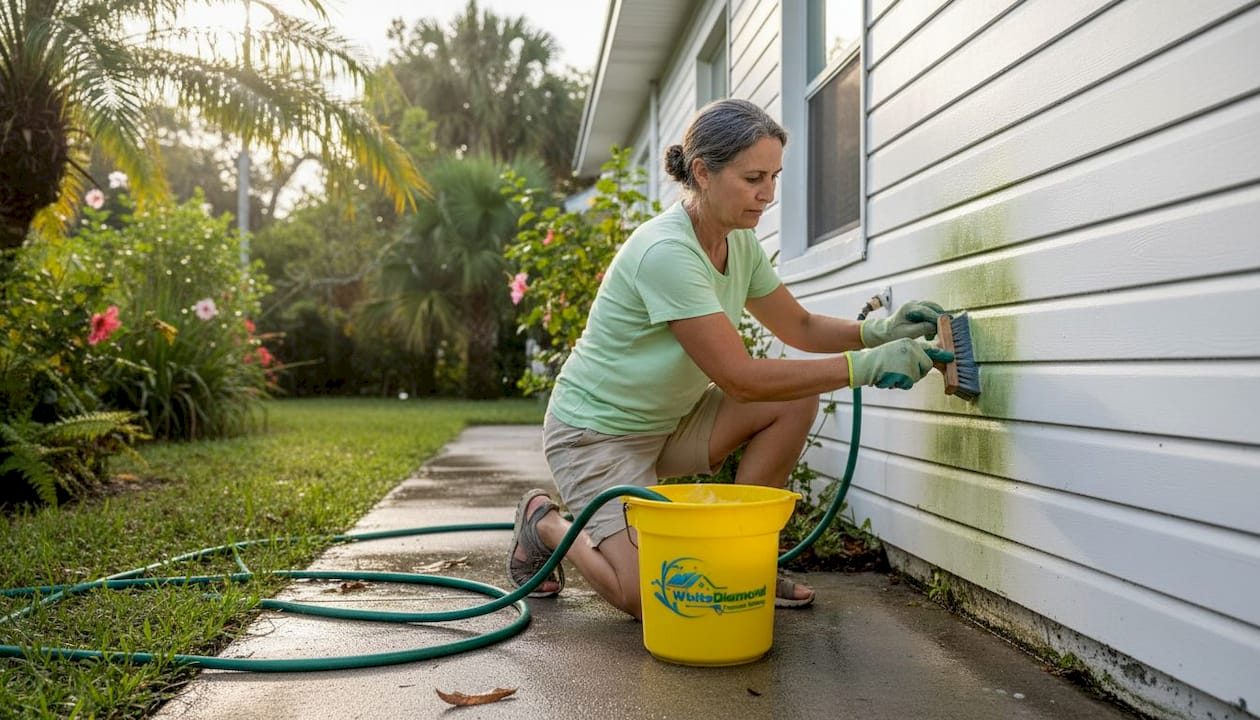
Exterior mold on your home is not just an eyesore. It’s a slow-moving threat to your family’s health and your property’s value, and in Citrus County’s warm, humid climate, it spreads faster than most homeowners expect. Mold spores travel indoors through windows, vents, and air gaps, triggering allergies, asthma, and respiratory problems long before you notice visible damage inside. This guide breaks down why exterior mold is a serious concern for local homeowners, what makes Citrus County especially vulnerable, and the practical steps you can take right now to protect your home and the people who live in it.
Table of Contents
- The hidden dangers of exterior mold
- Why exterior mold thrives in Citrus County
- Health and financial impacts of exterior mold
- Prevention strategies that work: Moisture control and cleaning methods
- A local perspective: What most homeowners overlook about exterior mold
- Protect your Citrus County home: Expert cleaning solutions
- Frequently asked questions
Key Takeaways
| Point | Details |
|---|---|
| Health protection | Preventing exterior mold helps protect your family from asthma and allergies linked to mold spores. |
| Boost curb appeal | Clean and mold-free exteriors make your home more attractive and can add value during resale. |
| Save on repairs | Stopping mold early is far less expensive than paying for costly remediation or restoration later. |
| Moisture control matters | Addressing yard drainage, cleaning gutters, and trimming vegetation are key to long-term mold prevention. |
The hidden dangers of exterior mold
Most people assume that mold on the outside of a house is a cosmetic problem. Scrub it off, and you’re done. The reality is more complicated, and more urgent.
Mold spores are microscopic. They float through the air and find their way inside your home through gaps in windows, door frames, and ventilation systems. Once inside, they can settle on surfaces, multiply, and worsen air quality. For households with children, elderly members, or anyone with a compromised immune system, this is a genuine health risk. Infants in moldy homes are three times more likely to develop asthma, and mold consistently worsens symptoms for sensitive groups.
Here’s what makes exterior mold especially tricky:
- It starts invisibly. By the time you see dark staining on your siding or roof, mold colonies have already been growing for weeks or months.
- No mold is truly safe. Even non-toxic varieties cause surface degradation and signal neglect to anyone who looks at your home.
- It spreads fast in heat and humidity. Citrus County’s climate gives mold everything it needs to thrive year-round.
- It affects more than surfaces. Mold eats into wood, weakens caulking, and accelerates the breakdown of roofing materials.
“Mold is not just a surface issue. It signals moisture problems that, left unchecked, lead to structural and health consequences that are far more expensive to fix than the original cleaning.”
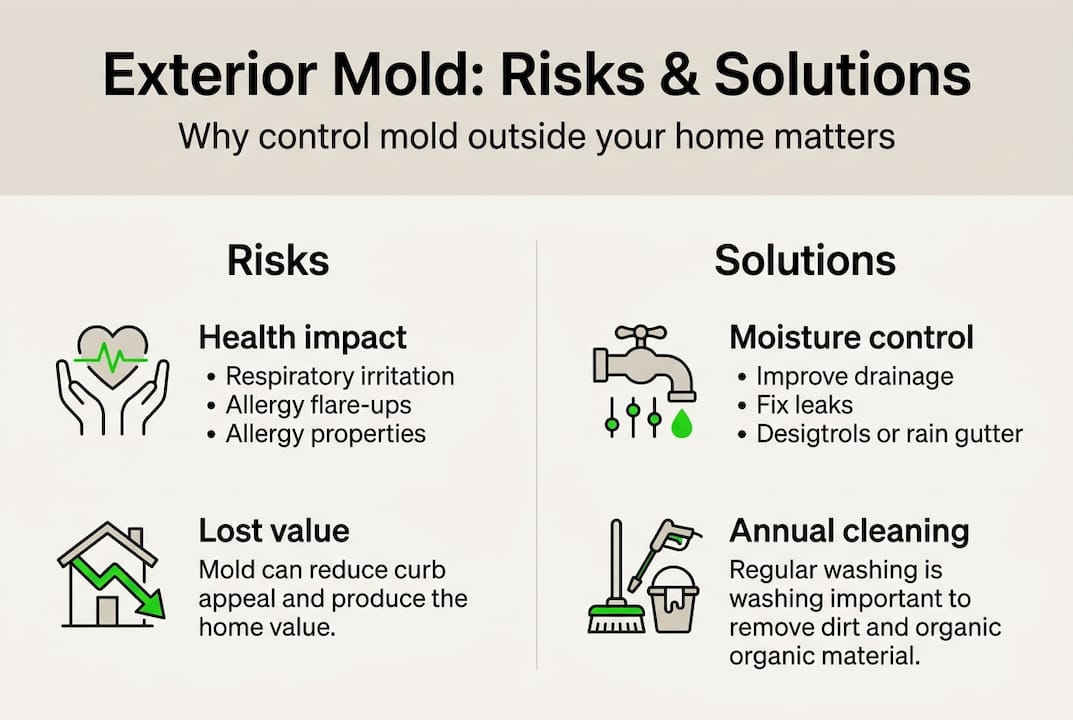
From a financial standpoint, visible mold is one of the fastest ways to lose buyer interest. Mold reduces curb appeal and can decrease home value significantly, especially when inspectors flag it during a sale. Buyers see staining and immediately wonder what else has been neglected. That perception costs you money, even if the mold itself hasn’t caused structural damage yet. Protecting your home value and curb appeal starts with treating exterior mold as the serious issue it is.
Now that you’re aware of the risks, let’s look at why Citrus County homes are especially vulnerable.
Why exterior mold thrives in Citrus County
Citrus County sits in a climate zone that mold absolutely loves. High humidity, frequent rainfall, and proximity to the Gulf Coast create conditions that accelerate mold growth on virtually every exterior surface, from siding and roofs to driveways and fences.
Citrus County’s humidity, rain, and salt air speed up mold on siding, roofs, and driveways at a rate that surprises even longtime residents. Salt particles from coastal air land on surfaces and retain moisture, giving mold spores a foothold they wouldn’t find in drier inland regions.
High-risk spots on your property:
- North-facing walls that receive little direct sunlight
- Shaded areas under trees or near fences
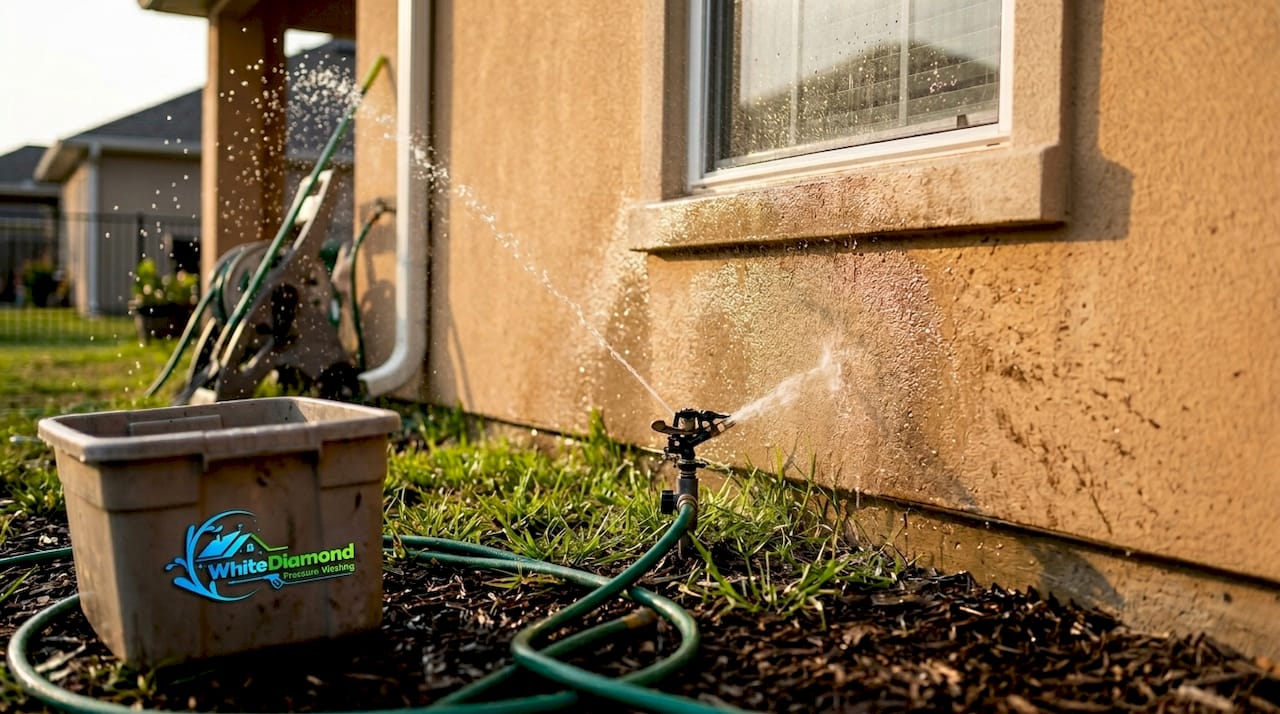
- Spots where sprinkler water regularly hits the siding
- Low-lying areas where water pools after rain
- Surfaces near mulch beds or dense landscaping
| Surface | Risk level | Why it’s vulnerable |
|---|---|---|
| Roof shingles | Very high | Traps moisture, organic debris |
| North-facing siding | High | Minimal sun exposure |
| Driveway and walkways | Medium-high | Porous, stays damp after rain |
| Fences and decks | High | Wood absorbs moisture readily |
| Window frames and sills | Medium | Condensation and caulk gaps |
One thing many homeowners overlook is how their own yard setup contributes to the problem. Sprinkler heads aimed at the house, dense shrubs pressed against siding, and clutter stacked along exterior walls all trap moisture and block airflow. These are easy fixes that make a real difference.
For Citrus County homes, annual cleaning is a minimum. Many properties in shaded or low-lying areas benefit from biannual service. Knowing the signs you need exterior washing helps you act before mold becomes a visible, costly problem.
Understanding local risks leads to the next question: How does exterior mold actually harm your investment and daily life?
Health and financial impacts of exterior mold
Let’s get specific about what’s actually at stake when exterior mold goes unaddressed.
On the health side, mold triggers a range of respiratory symptoms including coughing, sneezing, itchy eyes, and worsened asthma. Children, the elderly, and anyone with a weakened immune system face the greatest risk. These groups can experience serious reactions even from low levels of spore exposure.
On the financial side, the numbers are sobering:
- Home value drops. Visible mold decreases home value and can lead to thousands in remediation costs when buyers or inspectors flag it.
- Sale delays. Mold discovered during inspection can stall or kill a real estate deal entirely.
- Remediation costs soar. Professional mold remediation for serious cases can run anywhere from $1,500 to over $10,000 depending on the extent of the damage.
- Material replacement. Mold that penetrates wood siding, decking, or roofing requires replacement, not just cleaning.
- Insurance complications. Some policies exclude mold damage if it’s deemed the result of neglect.
Prevention is far cheaper than remediation, and there is no safe level of mold growth outdoors. Every visible patch requires attention.
The good news is that removing exterior mildew and maintaining a regular cleaning schedule is far less expensive than dealing with the aftermath of neglect. The benefits of regular exterior cleaning go well beyond appearance. You’re protecting your family and your investment at the same time.
| Approach | Typical cost | Long-term outcome |
|---|---|---|
| Annual soft washing | $200 to $500 | Prevents growth, preserves surfaces |
| Mold remediation | $1,500 to $10,000+ | Reactive, expensive, disruptive |
| Ignoring the problem | $0 upfront | Structural damage, health risks, value loss |
Realizing what’s at stake, homeowners need an actionable plan for prevention, not just cleanup.
Prevention strategies that work: Moisture control and cleaning methods
The most effective mold prevention strategy combines two things: controlling moisture at the source and cleaning surfaces regularly before mold has a chance to establish itself.
Start with moisture control:
- Slope soil away from your foundation so rainwater drains outward, not toward the house
- Clean gutters and downspouts at least twice a year to prevent overflow and pooling
- Redirect sprinkler heads so they don’t spray siding or foundation walls
- Trim shrubs and trees so air can circulate freely around exterior surfaces
- Remove clutter, firewood, or debris stacked against the house
Keep relative humidity below 60% (ideally between 30 and 50%), and dry any wet areas within 24 to 48 hours to stop mold from taking hold.
For cleaning, follow this sequence:
- Inspect all exterior surfaces for early signs of mold, algae, or discoloration
- Address any drainage or moisture issues before cleaning begins
- Apply a professional-grade soft wash solution that kills mold at the root
- Rinse with low pressure to remove residue without driving spores deeper into surfaces
- Schedule the next cleaning before mold has a chance to return
Soft washing is safer than power washing because high pressure can force spores into cracks and damage surfaces like stucco, wood siding, and roof shingles. Safer low-pressure washing uses cleaning solutions to do the heavy lifting, not brute force.
Pro Tip: Cleaning without fixing the underlying moisture issue is like mopping the floor with the faucet still running. Fix the source first, then clean. Otherwise, mold returns within weeks.
For a full breakdown of how professionals approach this, the soft washing process guide walks through each step in detail. You can also explore prevention cleaning strategies and learn which exterior surfaces to clean on a regular schedule.
Now equipped with prevention tactics, let’s explore a real-world perspective on why going beyond surface-level cleaning makes all the difference.
A local perspective: What most homeowners overlook about exterior mold
After working with Citrus County homeowners for years, one pattern stands out: most people wait too long. They wait for dark, obvious staining before they act. By then, mold has already been working against them for months.
The bigger mistake is treating cleaning as the whole solution. Cleaning matters, but if the moisture problem underneath hasn’t been addressed, mold comes back faster than before. We’ve seen homes cleaned in spring that are visibly stained again by fall, simply because a drainage issue or dense landscaping was never corrected.
Another thing worth saying plainly: any visible mold growth requires prompt removal and correction of the moisture source, regardless of the type. There’s no such thing as harmless outdoor mold when it’s growing on your home.
We also strongly favor soft washing vs power washing for most exterior surfaces. High-pressure washing feels satisfying, but it can push mold spores deeper into porous materials and strip protective coatings. Soft washing removes the problem without creating new ones. Proactive homeowners who schedule regular cleanings and fix moisture issues early spend far less over time and keep their homes in genuinely better condition.
Protect your Citrus County home: Expert cleaning solutions
If you’ve made it this far, you already know that exterior mold is not something to put off. Citrus County’s climate makes regular cleaning a necessity, not a luxury.

White Diamond Pressure Washing offers professional exterior cleaning services designed specifically for homes in this region. Our team uses proven preventative cleaning strategies and our soft washing process to remove mold at the root without damaging your surfaces. Whether you need a one-time clean or want to set up a recurring schedule, we make it easy to stay ahead of the problem. Request a free estimate today and take the first step toward a cleaner, healthier home.
Frequently asked questions
How often should I clean the exterior of my home in Citrus County to prevent mold?
In Citrus County’s humid climate, cleaning every 6 to 12 months is recommended. Homes with heavy shade or drainage issues may need cleaning more frequently.
Can exterior mold actually affect my family’s health if it stays outside?
Yes. Mold spores travel indoors through air, windows, and vents, worsening allergies and asthma, especially for children, the elderly, and those with respiratory conditions.
Is it safer to use soft washing instead of pressure washing on moldy exteriors?
Absolutely. Soft washing is preferred because it cleans thoroughly using low pressure and specialized solutions, without driving spores deeper into surfaces or causing damage.
What are the most important steps to prevent exterior mold in Florida?
Focus on moisture control first. Maintain gutters, improve grading, trim vegetation for airflow, and schedule regular soft washing to remove organic buildup before it becomes a mold problem.
Does exterior mold really reduce my home’s value?
Yes. Visible mold and staining make homes less attractive to buyers and can lower your property value. Clean exteriors add up to 7% to home value, making regular maintenance one of the smartest investments you can make.