


TL;DR:
- Using filtered water eliminates minerals that hinder cleaning and reduce appliance efficiency. It results in cleaner surfaces, longer-lasting appliances, and reduced chemical and detergent use. Only reverse osmosis or deionization systems fully remove dissolved minerals for spot-free cleaning.
Filtered water is water that has been purified to remove dissolved minerals and contaminants that interfere with cleaning performance and cause residue buildup on surfaces. Hard water, which affects the majority of American households, carries calcium and magnesium ions that actively work against your cleaning products. These minerals bind to soap molecules, form chalky films, and leave behind the white spots and streaks you keep scrubbing off your windows and fixtures. Understanding why use filtered water for cleaning starts with understanding what those minerals are doing to your results right now.
How does water hardness affect cleaning effectiveness and detergent use?
Hard water is the single biggest reason your cleaning products underperform. Calcium and magnesium ions bind soap molecules on contact, forming insoluble precipitates that reduce cleaning power and create the chalky residue known as soap scum. The soap never gets to do its job because the minerals consume it first.
The numbers behind this problem are significant. Hard water above 300 mg/L CaCO3 can require 40–70% more detergent to achieve the same cleaning performance as soft water. Cleaning efficiency measures at approximately 97.5% at 50 mg/L CaCO3 and drops sharply as mineral content rises. That means you are paying for detergent that is neutralized before it touches a single dirty surface.
The waste compounds quickly. Soft water households can under-dose detergent by 25–40% without losing efficacy, while hard water households use up to twice the detergent and still end up with residues. That is not a minor inefficiency. That is a structural problem with your water supply that no amount of scrubbing fixes.
Hard water also attacks your appliances. Hard water impacts over 85% of households and reduces appliance heat-transfer efficiency by 15–40%. Scale deposits inside dishwashers, washing machines, and water heaters force those appliances to work harder and fail sooner.
- Soap scum forms when calcium or magnesium bonds with fatty acids in soap, creating a dull, chalky film
- Reduced lather means less mechanical cleaning action on soiled surfaces
- Scale deposits inside appliances cut energy efficiency and shorten equipment life
- Increased detergent use raises both household costs and chemical waste
Pro Tip: If your dishes come out of the dishwasher with a white film, your water hardness is the cause, not your detergent brand. Test your tap water with an inexpensive hardness test strip before buying a new product.
What are the benefits of using filtered water for home cleaning and appliance care?
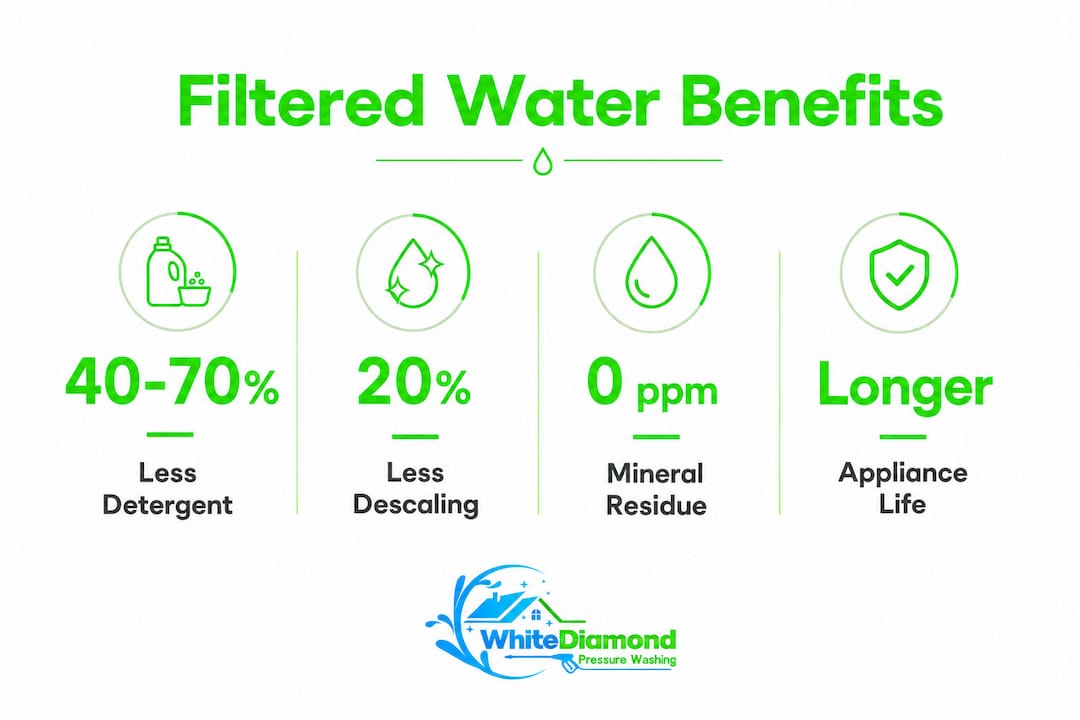
Filtered water solves the mineral problem at the source. Pure water leaves no mineral residues, which means no streaks on glass, no white spots on fixtures, and no chalky film on tile. The surface stays cleaner longer because there is no mineral film for dirt to cling to.
The benefits extend well beyond visible surfaces. Using dedicated water filters can reduce descaling frequency by approximately 20%. That reduction translates directly into less maintenance time, fewer descaling chemicals, and a longer service life for your dishwasher, washing machine, and coffee maker.
“Pure water cleaning systems remove chemical residue from previous cleanings, resulting in surfaces that stay cleaner longer without film buildup. Using filtered water in cleaning also reduces the need for harsh chemicals, contributing to safer, more sustainable home maintenance routines.”
The environmental case for filtered water is equally strong. When your detergent works at full strength, you use less of it. Less detergent going down the drain means fewer surfactants and phosphates entering the water system. Homeowners who switch to filtered water for routine cleaning consistently report cutting their detergent purchases, which reduces plastic packaging waste as well.
Here is a practical breakdown of the advantages:
- No mineral deposits on surfaces. Filtered water dries clean on glass, stainless steel, and tile without leaving white spots.
- Reduced appliance descaling. Fewer mineral deposits mean less frequent maintenance and longer appliance lifespan.
- Better detergent efficiency. Soap works at full strength, so you use less product per cleaning session.
- Streak-free results on windows and mirrors. Pure water is the standard method used by professional window cleaners for exactly this reason.
- Lower chemical load on the environment. Less detergent use means fewer synthetic chemicals entering wastewater systems.
The commercial cleaning advantages of filtered water apply just as directly at home. Cleaner results with less product is not a trade-off. It is what happens when your water stops fighting your cleaning products.
Which filtration methods are most effective for cleaning purposes?
Not all filtration systems remove the minerals that cause cleaning problems. The method you choose determines whether your water is genuinely clean or just tastes better.
| Filtration method | Removes dissolved minerals | Best use case | Key trade-off |
|---|---|---|---|
| Carbon filter | No | Taste and odor improvement | Does not address hardness or TDS |
| Water softener | Partially (ion exchange) | Appliance protection, laundry | Adds sodium; not ideal for all surfaces |
| Reverse osmosis (RO) | Yes, achieves 0 ppm TDS | Spot-free cleaning, appliances | Slower output; some water waste |
| Deionization (DI) | Yes, achieves 0 ppm TDS | Window cleaning, pressure washing | Resin requires periodic replacement |
Reverse osmosis and deionization filters remove dissolved mineral solids completely, achieving the 0 ppm TDS level required for spot-free cleaning. Carbon filters, despite their popularity, do not remove dissolved minerals and will not solve a hard water cleaning problem. That distinction matters before you spend money on a filtration system.
Water softeners use ion exchange to replace calcium and magnesium with sodium. They protect appliances and improve lather, but the sodium they add can leave its own residue on some surfaces. For window cleaning or pressure washing, RO or DI systems produce genuinely pure water with no substituted ions.
The role of filtration in water-fed cleaning systems is well established in professional exterior cleaning. The same principle applies at home. Match your filtration method to your specific cleaning goal, not just to your budget.
Pro Tip: If you want spot-free results on windows or vehicle surfaces, only RO or DI water will deliver 0 ppm TDS. A carbon filter or basic softener will not get you there, regardless of the marketing claims on the packaging.
How to integrate filtered water into your home cleaning routine
Using filtered water effectively requires more than just connecting a filter. The way you combine it with detergents, equipment, and cleaning schedules determines how much benefit you actually get.
- Reduce your detergent dose immediately. When you switch to filtered water, cut your detergent quantity by at least 25%. Filtered water allows soap to work at full strength, and the amount you used with hard water will leave a soapy residue.
- Expect a break-in period on windows and glass. First-time pure water cleaning may show streaks because old chemical films from previous cleanings are still present. Run two or three pure water cleaning cycles before judging the results.
- Use filtered water in your pressure washer. Filtered water in pressure washing prevents scale buildup inside the pump and nozzles, extending equipment life and maintaining consistent spray pressure.
- Flush appliances periodically. Run a cycle of filtered water through your dishwasher or washing machine monthly to clear any residual mineral deposits from before you switched.
- Maintain your filtration system on schedule. RO membranes and DI resin cartridges have finite lifespans. A neglected filter can pass minerals through and undermine your results without any obvious warning sign.
The interaction between low-pressure detergents and softened water is particularly important for exterior surfaces. Filtered water lets detergents rinse completely clean, which prevents the soapy film that attracts new dirt faster than a bare surface would.
Pro Tip: Store a small amount of filtered water in a spray bottle for daily fixture wipe-downs. A quick spray and wipe with a microfiber cloth on faucets and shower doors takes 30 seconds and eliminates the mineral buildup that requires heavy scrubbing later.
Key Takeaways
Filtered water improves cleaning results, reduces detergent waste, and extends appliance life by removing the dissolved minerals that hard water deposits on every surface it touches.
| Point | Details |
|---|---|
| Hard water costs you more | Hard water above 300 mg/L CaCO3 requires 40–70% more detergent to match soft water cleaning performance. |
| RO and DI are the best methods | Only reverse osmosis and deionization achieve 0 ppm TDS, the standard for spot-free, residue-free cleaning. |
| Appliances last longer | Filtered water reduces descaling frequency by approximately 20%, cutting maintenance costs and extending equipment life. |
| Reduce detergent when you switch | Soft water households can cut detergent use by 25–40% without losing cleaning effectiveness. |
| Break-in period is normal | First-time pure water cleaning may show streaks from old chemical films; repeat cycles clear the residue. |
What I’ve learned from years of watching hard water ruin good cleaning work
Bobby here. The most common mistake I see homeowners make is blaming their cleaning products when the real problem is their water. They buy premium detergents, try new scrubbing techniques, and still end up with spotted glass and chalky tile grout. The detergent is fine. The water is the problem.
What surprises most people is how quickly the savings add up once they switch. Less detergent, fewer descaling treatments, and appliances that do not need replacing ahead of schedule add up to real money over a few years. The upfront cost of an RO or DI system pays for itself faster than most homeowners expect.
The environmental angle matters too. Cutting detergent use by 25–40% is not a small reduction. Over a year, that is a meaningful drop in the synthetic chemicals your household sends into the water system. Cleaner cleaning is better for your home and better for the water supply your neighbors depend on.
My honest advice: test your water hardness first. If you are above 150 mg/L CaCO3, filtered water will produce a visible difference in your results within the first week. If you are in a very hard water area above 300 mg/L, the improvement will be dramatic.
— Bobby
Professional exterior cleaning that puts water quality first
Whitediamondpressurewashing applies the same water quality principles to every exterior cleaning job in Citrus County. Filtered water is not a bonus feature. It is a core part of how the team protects your surfaces, extends the life of your siding and driveways, and delivers results that stay cleaner longer.

If you want to see what a professional clean with the right water and the right technique looks like, Whitediamondpressurewashing offers free estimates for residential and commercial properties. The team specializes in soft washing and low-pressure methods that protect delicate surfaces while removing algae, mold, and grime without damage. Visit Whitediamondpressurewashing to book your free estimate and see the difference that proper water quality makes on your property.
FAQ
Why does filtered water clean better than tap water?
Filtered water removes the calcium and magnesium ions that bind to soap molecules and form insoluble residues. Without those minerals, detergents work at full strength and surfaces dry without spots or streaks.
Is filtered water best for cleaning windows and glass?
Yes. Pure water produced by reverse osmosis or deionization achieves 0 ppm TDS, which means it dries completely clean with no mineral film. Professional window cleaners use pure water systems for exactly this reason.
Does filtered water really extend appliance life?
Filtered water reduces descaling frequency by approximately 20% and prevents the calcium carbonate deposits that reduce appliance heat-transfer efficiency by 15–40%. Both effects directly extend appliance service life.
Can I use a carbon filter for cleaning purposes?
Carbon filters improve taste and remove chlorine but do not remove dissolved minerals. For spot-free cleaning results, you need a reverse osmosis or deionization system that achieves 0 ppm TDS.
How much less detergent do I need with filtered water?
Households using soft or filtered water can reduce detergent use by 25–40% without losing cleaning effectiveness. Hard water households using up to twice the detergent and still getting residues is the direct comparison point.
Recommended
- The Role of Filtration in Water-Fed Cleaning Systems – white-diamond-pressure
- Why use eco-friendly cleaners? Healthier homes, safer Citrus County – white-diamond-pressure
- Why safe cleaning methods matter for your Citrus County home – white-diamond-pressure
- Safe and effective non-abrasive washing for homeowners – white-diamond-pressure