

TL;DR:
- Florida’s humid climate and salt air cause rapid biological growth and surface decay, requiring semi-annual cleaning. Soft washing with low pressure and specialized solutions effectively removes algae and mold without damaging surfaces, especially on roofs and stucco. Scheduling cleaning during dry months of April and October maximizes results and protects properties from climate-induced damage.
Florida exterior cleaning challenges are defined by a combination of high humidity, relentless rainfall, intense UV exposure, and salt air that accelerates biological growth and surface decay far faster than in most other states. The industry standard for professional exterior cleaning in Florida is every 12–18 months, with shaded or wooded properties often needing annual service. Homeowners and property managers who ignore these intervals face algae, mold, and mildew that don’t just look bad. They cause structural damage. Understanding the specific forces at work in Florida’s climate is the first step toward protecting your property effectively.
1. Why Florida’s climate accelerates surface decay
Florida’s humid subtropical climate creates year-round conditions that biological growth thrives in. Humidity levels of 75–90% combined with more than 50 inches of annual rainfall cause algae, mold, and mildew to grow 3–4 times faster than in dry climates. That rate means a surface that might stay clean for three years in Arizona needs attention every 12–18 months in Florida.
The state also lacks freezing temperatures. In cold climates, winter kills off biological growth and gives surfaces a natural reset. Florida gets no such break. Growth compounds month after month, embedding deeper into porous materials like stucco, wood, and concrete.
UV radiation adds another layer of damage. Intense sun bleaches and breaks down surface coatings, making materials more porous and more vulnerable to biological infiltration. Coastal properties face the additional burden of salt air, which deposits minerals on glass and stone and accelerates corrosion on metal fixtures.
| Climate Factor | Florida | Typical Dry Climate |
|---|---|---|
| Average humidity | 75–90% | 20–40% |
| Annual rainfall | 50+ inches | 10–15 inches |
| Biological growth rate | 3–4x faster | Baseline |
| Freezing temperatures | None | Seasonal |
| Salt air exposure | Coastal and inland | Rare |
Pro Tip: If your home sits under tree canopy or near a body of water, schedule cleaning every 12 months rather than waiting 18. Shade and moisture together create the fastest biological growth conditions in Florida.
2. Roof and siding cleaning: methods that protect delicate surfaces
The black streaks you see on Florida roofs are not dirt. They are Gloeocapsa magma, a living blue-green algae that feeds on the limestone filler in asphalt shingles. Left untreated, it eats through shingles and accelerates roof deterioration significantly.
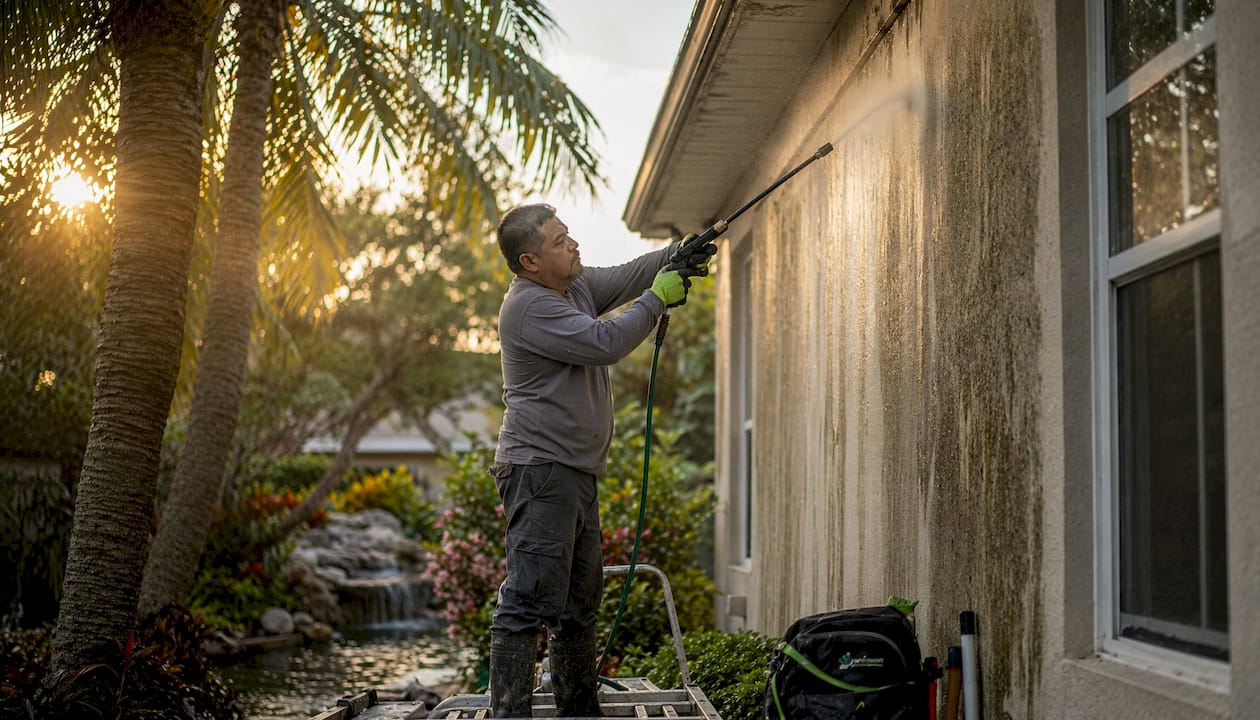
High-pressure washing damages roofs, stucco, and siding by causing etching, splintering, and water intrusion behind surface materials. The only safe and effective method for these surfaces is soft washing, which uses pressure under 500 PSI combined with specialized surfactants that kill biological roots at the source.
Soft washing does not just clean the surface. It kills the organism causing the staining, which means results last significantly longer than pressure washing alone. For stucco, which is especially porous and common in Florida construction, this method prevents chemical and mechanical damage that would otherwise require costly repairs.
| Surface | Recommended Method | Pressure | Cleaning Interval |
|---|---|---|---|
| Asphalt shingles | Soft washing | Under 500 PSI | Every 2–3 years |
| Stucco | Soft washing | Under 500 PSI | Every 12–18 months |
| Vinyl siding | Soft washing | Under 500 PSI | Every 12–18 months |
| Wood siding | Soft washing | Under 500 PSI | Every 12 months |
| Concrete | High-pressure rotary | 2,500–3,000 PSI | Every 12–18 months |
Pro Tip: After soft washing a roof, ask your provider about applying an algae-inhibiting treatment. It extends the time before Gloeocapsa magma returns, especially on north-facing or shaded roof sections.
3. How seasonal weather patterns affect cleaning timing
Florida’s wet season runs from june through september. During this period, daily afternoon thunderstorms and near-constant humidity limit how effective exterior cleaning can be. Afternoon storms can wash away cleaning chemicals before they complete their full treatment cycle, wasting both product and labor.
The dry season, from october through april, offers the best conditions for exterior cleaning. Lower humidity allows chemical treatments to dwell longer on surfaces, killing biological growth more thoroughly. Surfaces also dry faster after cleaning, which reduces the chance of immediate recontamination.
The optimal cleaning windows are april and october. An april cleaning removes the biological buildup from the previous wet season and prepares surfaces before the next one begins. An october cleaning clears the damage from summer and protects surfaces through the dry months.
Wet season do’s and don’ts:
- Do schedule morning appointments when afternoon storms are predictable.
- Do use a professional who monitors weather windows before applying chemical treatments.
- Don’t schedule roof or siding treatments on days with afternoon rain in the forecast.
- Don’t assume a surface looks clean after a rain. Rain moves biological growth but does not kill it.
Dry season scheduling tips:
- Target march through april for pre-wet season preparation.
- Book october appointments to clear wet season growth before it embeds further.
- Use the dry season for concrete sealing, which requires extended dry time after cleaning.
- Check your seasonal cleaning checklist to stay on schedule year-round.
4. Concrete, driveways, and pool decks: the porous surface problem
Concrete is highly porous, and Florida’s heat and moisture drive oil, pollen, algae, and dirt deep into the surface quickly. Pool decks face the added challenge of constant water exposure, which keeps the surface perpetually damp and creates ideal conditions for algae and slip hazards.
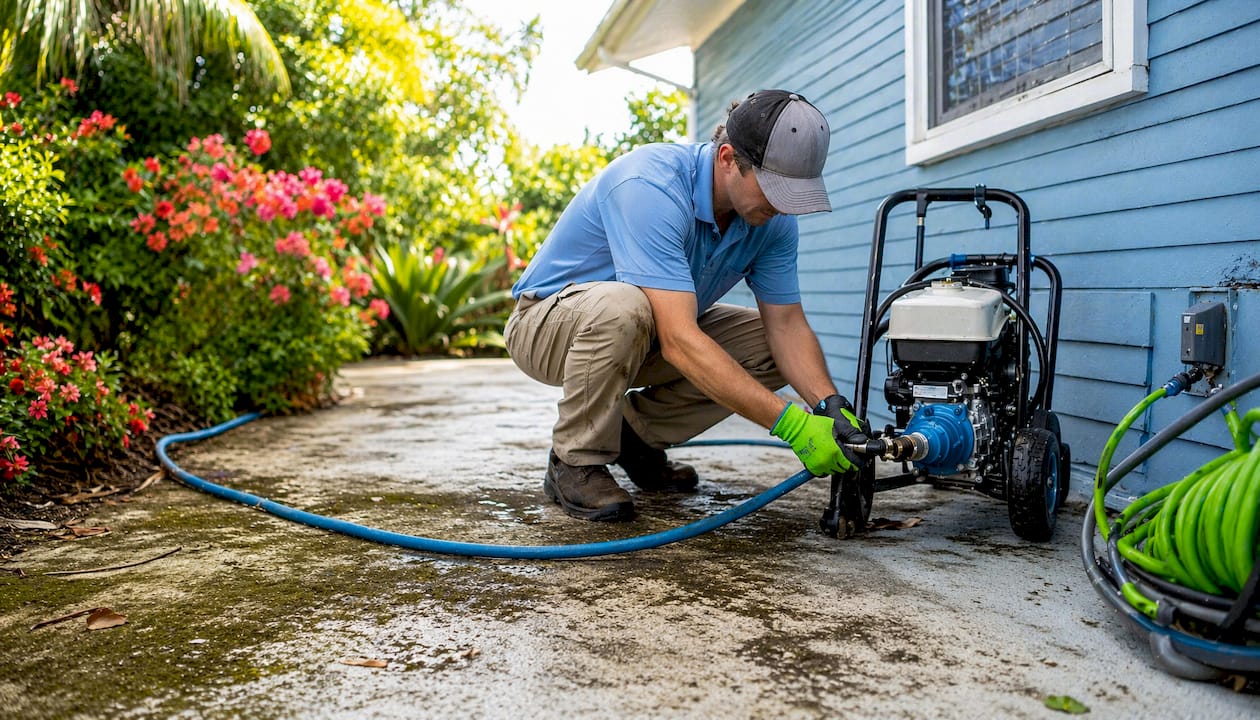
Concrete requires high-pressure rotary surface cleaning at 2,500–3,000 PSI to pull embedded stains out without damaging the surface. A standard pressure wand at the same PSI leaves streaks and misses embedded contamination. A rotary surface cleaner distributes pressure evenly and lifts stains uniformly across the slab.
Sealing clean, dry concrete after cleaning significantly slows staining and algae regrowth. The sealer fills surface pores, giving biological growth and oils fewer places to penetrate. This extends the time between cleanings and reduces long-term maintenance costs.
Concrete maintenance priorities for Florida homeowners:
- Clean driveways and pool decks every 12–18 months, or more frequently in shaded or high-traffic areas.
- Apply sealer only after the surface is fully clean and completely dry, which means scheduling during the dry season.
- Inspect pool deck grout lines and expansion joints for embedded algae, which a surface cleaner alone may not fully address.
- Address oil stains with a degreaser pre-treatment before pressure washing for better results.
Pro Tip: Choose a penetrating concrete sealer rather than a topical coating for Florida conditions. Topical coatings peel under UV exposure and humidity. Penetrating sealers bond with the concrete and hold up far better in the Florida climate.
5. Environmental and safety factors that complicate exterior cleaning
Salt spray near Florida’s coasts accelerates corrosion on metal fixtures and deposits mineral films on glass, stone, and painted surfaces. Coastal homeowners often need more frequent cleaning than the standard 12–18 month interval because salt deposits compound between visits. Rinsing metal fixtures and windows after cleaning is not optional in these environments. It is part of the service.
Physical safety is a real concern during exterior cleaning in Florida. Humid conditions make surfaces slippery, and elevated work on ladders or roofs carries significant risk. Wind drift is another hazard. Chemical applications for soft washing can travel onto plants, vehicles, and neighboring surfaces if wind conditions are not monitored carefully.
Homeowner preparation checklist before professional cleaning:
- Move vehicles out of the driveway and away from the work area.
- Close all windows and doors, including garage doors.
- Cover or move potted plants and outdoor furniture.
- Notify neighbors if chemical applications will be used near shared fences or landscaping.
- Point out any known fragile fixtures, such as older window screens or decorative trim.
- Confirm the scheduled start time allows work to finish before afternoon storms.
Pro Tip: Ask your cleaning provider whether they pre-wet surrounding plants before applying soft wash chemicals. Pre-wetting dilutes any chemical contact and protects landscaping without requiring you to move every plant on the property.
Key takeaways
Florida exterior cleaning is a preservation discipline, not a cosmetic one. Skipping scheduled maintenance allows biological growth to embed into surfaces and cause structural damage that costs far more to repair than routine cleaning.
| Point | Details |
|---|---|
| Clean every 12–18 months | Florida’s humidity and rainfall demand shorter cleaning intervals than most other states. |
| Use soft washing on roofs and siding | Pressure above 500 PSI damages shingles, stucco, and siding; soft washing kills growth at the root. |
| Schedule in april or october | These windows maximize chemical effectiveness and protect surfaces before and after the wet season. |
| Seal concrete after cleaning | Sealing fills pores and slows algae regrowth, reducing long-term maintenance frequency and cost. |
| Coastal homes need extra attention | Salt spray deposits minerals and accelerates corrosion, requiring more frequent service and thorough rinsing. |
What I’ve learned after years of Florida exterior cleaning
The biggest mistake Florida homeowners make is treating exterior cleaning as a one-time fix rather than a recurring maintenance schedule. I’ve seen roofs where Gloeocapsa magma had been feeding on shingles for four or five years. By the time the homeowner called, the damage wasn’t just cosmetic. Shingles were brittle, granule loss was severe, and the roof needed replacement years ahead of schedule. A cleaning every two to three years would have prevented all of it.
The second mistake is DIY pressure washing on the wrong surfaces. A homeowner with a rented pressure washer and no experience with soft washing can strip granules off shingles, crack stucco, and force water behind siding in a single afternoon. The repair bill from one bad session often exceeds what professional service would have cost for a decade. The benefits of low-pressure washing are not just about gentleness. They are about killing the biological root so growth does not return in six weeks.
Timing matters more than most homeowners realize. I always recommend scheduling the primary annual cleaning in march or april. You get ahead of the wet season, surfaces are dry enough for chemical treatments to work properly, and you have time to address any issues before summer humidity locks everything in. If you can only do one cleaning per year, that spring window is the one to protect.
The homeowners who maintain the best-looking properties in Florida are not the ones who clean most aggressively. They are the ones who clean consistently, use the right method for each surface, and schedule around the weather rather than against it. That discipline is what extends the lifespan of your home and keeps repair costs manageable over time.
— Bobby
Whitediamondpressurewashing: professional cleaning built for Florida conditions
Florida’s exterior cleaning demands are not generic, and neither is the approach Whitediamondpressurewashing brings to every job in Citrus County and surrounding areas. The team specializes in soft washing for roofs, siding, and stucco, and uses high-pressure rotary cleaning for concrete surfaces, matching the method to the material every time.

Scheduling is built around Florida’s weather patterns, with morning appointments during summer and priority booking in the april and october windows for maximum effectiveness. Whether you need a free estimate for your home or want to review the full range of exterior cleaning services, Whitediamondpressurewashing makes it straightforward to get your property on a maintenance schedule that actually holds up in Florida’s climate.
FAQ
How often should Florida homes be pressure washed?
Florida homes need professional exterior cleaning every 12–18 months. Homes under heavy shade or near wooded areas often need annual service due to accelerated biological growth.
What causes black streaks on Florida roofs?
Black streaks are caused by Gloeocapsa magma, a blue-green algae that feeds on limestone fillers in asphalt shingles. Chemical soft washing kills the algae at the root and prevents rapid recurrence.
Is pressure washing safe for stucco and siding?
High-pressure washing is not safe for stucco or siding. Soft washing under 500 PSI with specialized surfactants is the correct method, as it cleans effectively without causing etching, cracking, or water intrusion.
What is the best time of year to clean exterior surfaces in Florida?
April and october are the optimal cleaning windows in Florida. These months fall outside the wet season and offer lower humidity, better chemical dwell times, and faster surface drying.
Does sealing concrete actually help in Florida’s climate?
Sealing concrete after cleaning fills surface pores and significantly slows algae regrowth and staining. Apply sealer only during the dry season when the surface can cure fully without rain interruption.
Recommended
- Summertime Exterior Cleaning: Boost Your Home’s Curb Appeal – white-diamond-pressure
- Exterior Cleaning Vendor Evaluation Tips for Homeowners – white-diamond-pressure
- Ensure safe exterior cleaning: a guide to materials compatibility – white-diamond-pressure
- Seasonal exterior cleaning checklist for Citrus County homes – white-diamond-pressure
One thought on “Florida Exterior Cleaning Challenges: A Homeowner’s Guide”