

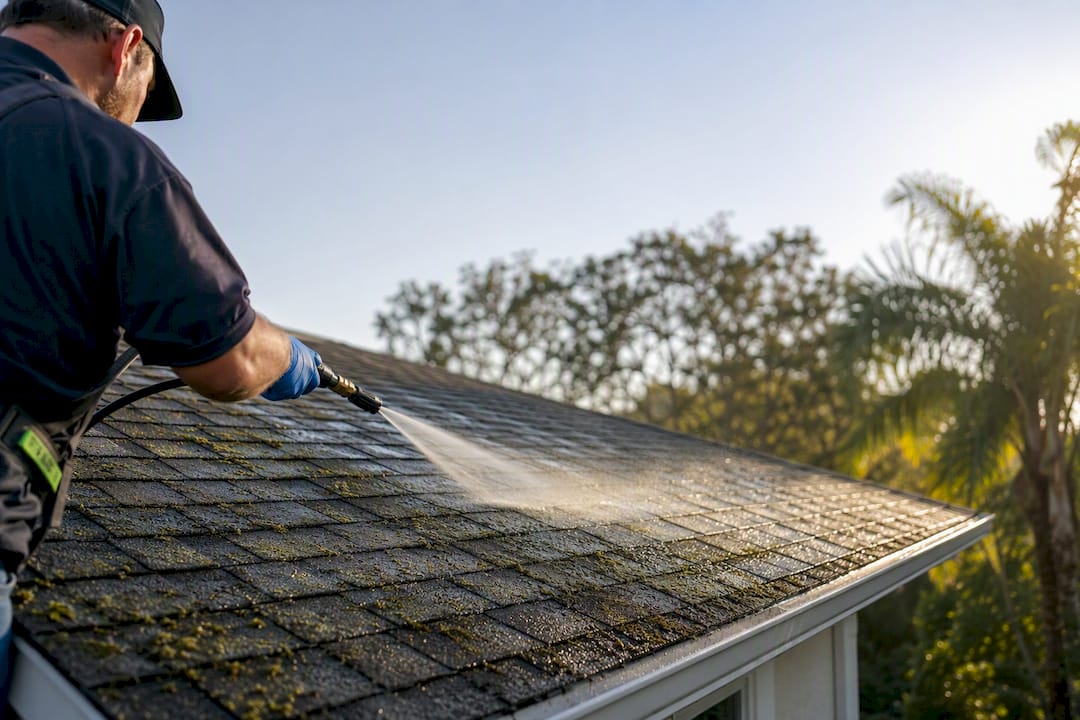
High-pressure washing damages most residential roofs, and asphalt shingles take the worst of it. The blast strips protective granules, drives water under the roofing layer, and can void your manufacturer’s warranty outright. Soft washing, which uses low pressure and the right chemistry instead of force, is the method roofing manufacturers actually recommend. If a crew already ran a pressure washer over your shingles, stop scheduling repeat cleanings that way and get the roof inspected before small damage turns into a leak.
TL;DR:
- Pressure washing at 2,000 to 3,000 PSI can strip roof granules and cause unseen damage that shortens an asphalt shingle roof’s lifespan by up to 10 years.
- Visible signs of damage include granule loss in gutters and bald patches or lifted shingles, which should be checked with photos and inspected promptly by professionals.
- Soft washing, using low pressure and chemicals, is the industry-recommended method that protects warranties and avoids the risks associated with pressure washing.
- Most roof materials, especially asphalt shingles, require soft washing; high-pressure techniques can void warranties and induce leaks or structural damage.
- Prioritize a thorough roof inspection and documentation before any cleaning to prevent hidden damage from becoming costly repairs later.
Table of Contents
- Does Pressure Washing Cause Roof Damage? The Mechanics Behind It
- How to Check for Roof Damage After a Pressure Wash
- Soft Washing: The Roof Cleaning Method That Doesn’t Cause Damage
- When to Call a Roofing Professional
- How a professional pressure washing company approaches roof cleaning
- Why the “Just Pressure Wash It” Advice Persists Anyway
- Sources
Does Pressure Washing Cause Roof Damage? The Mechanics Behind It
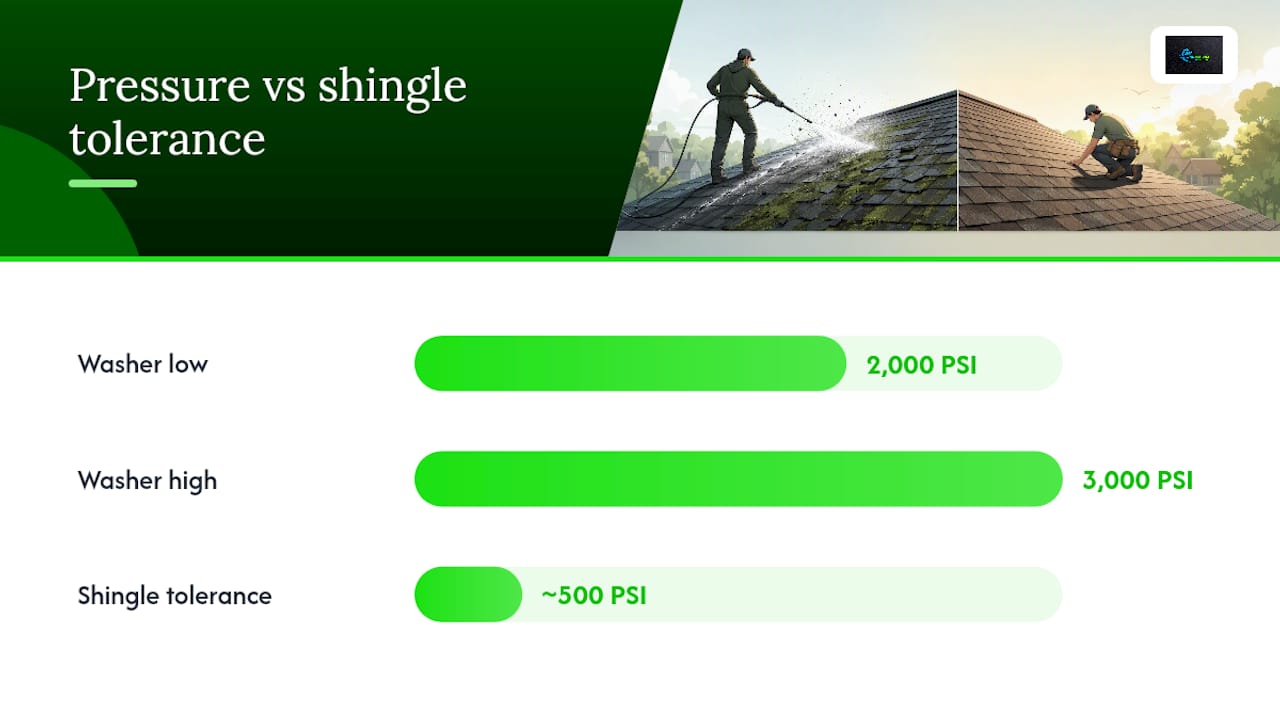
Water alone doesn’t hurt a roof. Pressure does, and the number that matters is PSI, pounds per square inch. Standard pressure washers run 2,000 to 3,000 PSI, roughly four to six times higher than what shingles were ever designed to withstand.
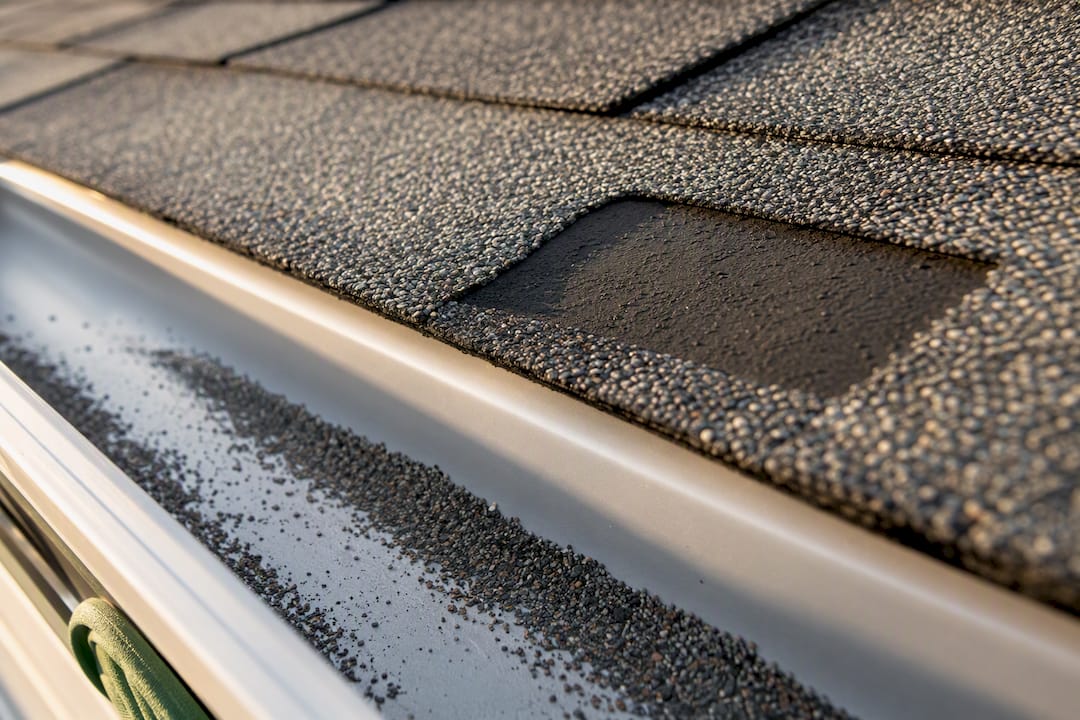
The most visible damage is granule loss. Asphalt shingles are coated with a layer of mineral granules that block UV rays and shield the asphalt underneath from the sun. A high-pressure stream knocks those granules loose on contact, and once they’re gone, they don’t grow back. Roofing contractors and industry sources trace granule stripping directly to power washing, and the exposed asphalt underneath ages faster from that point forward.
Pressure causes damage you can’t see just as often as damage you can. Water forced at high velocity finds every gap in a roofing system, tabs, seams, flashing edges, and pushes underneath the shingles or tiles. From there it can soak the underlayment, the moisture barrier between your roof and the deck. Waterlogged underlayment doesn’t dry out cleanly. It rots, and that hidden damage often surfaces as a leak months after the cleaning crew has left.
The physical force itself causes a third category of damage:
- Shingle tabs lift or tear loose from the force of the spray, especially on aging roofs where the adhesive has already weakened.
- Tile roofs crack or dislodge under direct pressure, particularly at the edges where tiles overlap.
- Metal roofing loses its protective finish, exposing bare metal to corrosion.
- Flashing around chimneys, vents, and skylights separates from its seal, opening a path for water intrusion.
Granule loss and the damage it triggers can shorten a shingle roof’s usable life by 5 to 10 years. On a 25-year roof, that’s nearly half its expected lifespan gone because of one afternoon with the wrong equipment.
How to Check for Roof Damage After a Pressure Wash
You don’t need to climb onto the roof to find out if it’s been damaged. Most of the evidence collects at ground level, and a phone camera is all you need to document it.
- Check your gutters and downspouts first. Loose granules collect there after a high-pressure clean, and a gutter full of gritty black or gray sediment is the clearest early sign something went wrong.
- Scan the roof from the ground with binoculars. Look for bald, darker patches on shingles where granules have worn away, and check for tabs that appear lifted or curled at the edges.
- Look closely at flashing points, chimneys, vents, skylights, for gaps or shingles that have shifted out of alignment nearby.
- Check ceilings and attic spaces for water stains over the following weeks. Leaks caused by driven water often don’t show up immediately.
- Call a professional the moment you spot any of the above. Climbing onto a compromised roof to inspect it yourself adds a fall risk on top of a repair problem.
Pro Tip: Photograph every angle of the roof and every gutter section before you call anyone. Timestamped photos are the strongest evidence you have if you end up filing an insurance claim or disputing a contractor’s work.
Soft Washing: The Roof Cleaning Method That Doesn’t Cause Damage
Soft washing swaps force for chemistry. A biodegradable cleaning solution, typically a diluted sodium hypochlorite mix with a surfactant, breaks down algae, moss, and lichen at the root, then a low-pressure rinse clears the residue away. Nothing gets blasted off. The organisms are killed, not scraped.
That distinction matters because most shingle manufacturers explicitly warn against high-pressure cleaning, and using it can void your roof’s warranty entirely. ARMA (the Asphalt Roofing Manufacturers Association) and companies like GAF, Owens Corning, and CertainTeed all point contractors toward soft washing as the accepted standard, not an optional upgrade.
Pressure isn’t universally off-limits, but the safe range is narrow. Industry guidance keeps working pressure well under roughly 500 PSI on asphalt shingles, far below the 2,000 to 3,000 PSI a standard washer produces. Different materials tolerate different treatment:
| Roof material | Recommended method |
|---|---|
| Asphalt shingles | Soft wash only, chemistry does the work |
| Clay tile or slate | Soft wash preferred; low pressure only with extreme care around edges |
| Metal roofing | Soft wash to protect finish; moderate pressure sometimes acceptable on bare metal |
| Concrete tile | Soft wash for algae; light rinse pressure generally tolerated |
A proper soft-wash job follows a set sequence: inspect the roof first, protect landscaping and gutters below, apply the cleaning solution, let it dwell long enough to kill the growth, rinse at low pressure, then inspect again. Skipping the dwell time is the most common shortcut that undercuts results, and it’s also why soft-washed roofs stay clean for years rather than months, since pressure washing only strips surface stain and lets regrowth start again almost immediately.
When to Call a Roofing Professional
Some situations don’t leave room for a wait-and-see approach. Call a professional immediately if you notice a ceiling stain that’s growing, shingles that are visibly curling or missing, or any soft, spongy feeling underfoot near roof access points. Waterlogged decking is a structural issue, not a cosmetic one.
When you’re vetting a cleaning contractor, ask direct questions and expect direct answers:
- What PSI range do you use on this roof type, and can you explain why?
- What cleaning chemical do you apply, and what’s the dwell time?
- Are you insured, and can you provide proof?
- Do you know this roof’s manufacturer warranty terms?
- Can you provide before/after photos from recent, comparable jobs?
Pro Tip: A contractor who can’t give you an actual PSI number, only “low pressure, don’t worry about it,” hasn’t been trained on the method. That vagueness is the biggest red flag in the entire hiring process.
Get two or three written quotes before you commit. A legitimate scope of work should clarify the cleaning method, the chemical used, and what’s excluded, not just a flat price.
How a professional pressure washing company approaches roof cleaning
Roof cleaning at White Diamond Pressure Washing starts with the same premise this article makes: shingles and tiles need chemistry, not force. Jobs run through a pre-inspection to flag soft spots or already-lifted shingles, protective covering for landscaping and gutters, a low-pressure application of a biodegradable cleaning solution, and a documented post-inspection once the rinse is done.
That sequence exists because written procedures and before/after photos protect both the homeowner and the warranty on the roof. If you want the step-by-step breakdown of how the process runs, or you’re ready to book an inspection, request a free estimate and get a written scope before any equipment touches your roof.
Why the “Just Pressure Wash It” Advice Persists Anyway
The advice to pressure wash a roof survives because it sounds efficient. One pass, visibly cleaner, done. What that framing skips is that the damage from that one pass doesn’t show up on the invoice. It shows up as a warranty denial two years later or a ceiling stain nobody connects back to the cleaning crew.
The overrated fix here is speed. The underrated one is the fifteen minutes it takes to check gutters for granules and photograph the roof before deciding anything. Most homeowners treat roof cleaning as a cosmetic errand. It’s closer to a structural decision, since the underlayment and decking underneath don’t forgive mistakes the way a driveway does.
If you take one thing from this, prioritize the inspection over the cleaning. A dirty roof with intact granules and sealed flashing is in better shape than a “clean” roof that’s quietly lost five years of life to a pressure washer. Ask contractors for their PSI number before you ask about price.
— Bobby
Sources
- How to Power Wash Your Shingle Roof on Long Island | County Roofing Long Island
- Soft Wash vs Pressure Wash: Which Does Your Roof Need? | Peppers Pressure Washing
- Does Pressure Washing Damage Your Roof? A Florida Guide
- How to Soft Wash a Roof: Full Process From a 25-Year Veteran
One thought on “Pressure Washing Cuts Roof Life 5–10 Years: How Homeowners Inspect”