

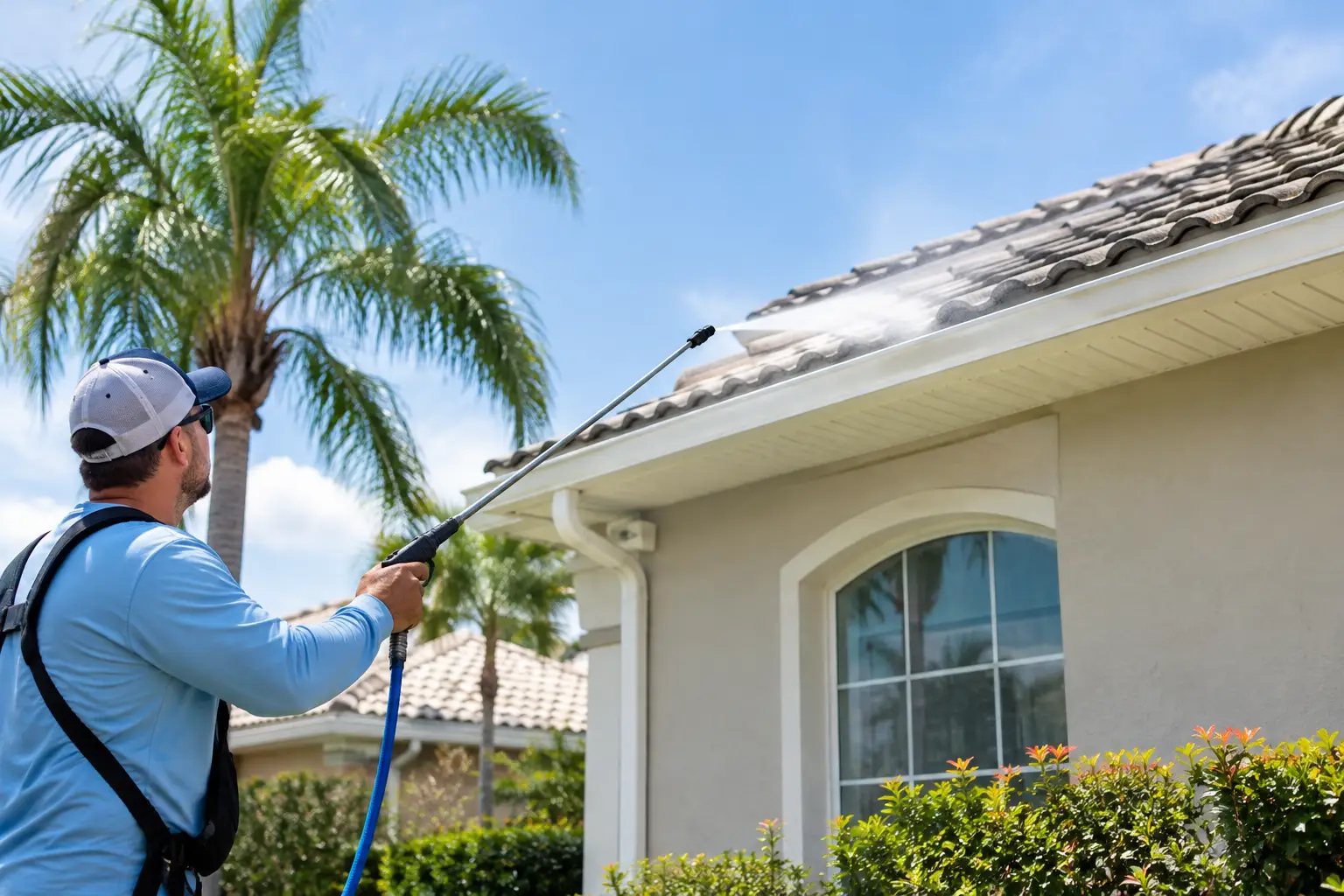
A dark-streaked roof or green film on siding can make a well-kept Citrus County home look tired fast. Soft wash safety is what turns that cleanup from a risky chore into a careful restoration process – one that removes algae, mildew, and grime without putting roofing, paint, landscaping, or people at unnecessary risk.
Florida’s heat, humidity, rain, and shade create ideal conditions for organic growth. Left alone, that growth can spread across shingles, stucco, soffits, pool cages, pavers, and walkways. The right cleaning approach restores the bright, cared-for look homeowners want while respecting the materials that protect their home.
Why Soft Wash Safety Matters
Soft washing is not simply pressure washing turned down. It is a surface-appropriate cleaning method that uses specialized equipment, low-pressure application, and cleaning agents selected to break down organic staining. The cleaning solution does the work that excessive pressure should never be asked to do.
That distinction matters most on roofs. High pressure can dislodge granules from asphalt shingles, lift or crack tiles, force water beneath roofing materials, and shorten the life of surfaces that are expensive to replace. It can also damage delicate painted finishes, window seals, screens, wood trim, and older siding.
A safe soft wash process is designed around the surface being cleaned. A concrete driveway can handle a different approach than a shingle roof. A screened lanai requires different preparation than a pool deck surrounded by flower beds. Careful professionals assess those differences before equipment is started, rather than applying one aggressive method everywhere.
Soft Wash Safety Starts Before Cleaning
The best protection happens before the first cleaning solution is applied. A thorough walkthrough helps identify roof material, drainage paths, sensitive landscaping, nearby outdoor furniture, electrical fixtures, pool equipment, open windows, and areas where runoff may collect.
Plants deserve particular attention. Mature palms, shrubs, flowers, vegetable gardens, and freshly planted landscaping all respond differently to moisture and cleaning products. A responsible crew pre-wets vegetation, shields it when appropriate, monitors it throughout the work, and rinses it again after cleaning. This extra preparation takes time, but it is part of treating a property with care.
Homeowners can help by clearing vehicles from the driveway, bringing in cushions and personal items, closing windows, and keeping pets indoors during service. If a home has a rainwater collection system, delicate garden area, damaged screen enclosure, or exterior electrical concern, mention it before the appointment. Small details shared early can prevent avoidable problems later.
Roof Soft Wash Safety Requires a Lighter Touch
A roof should never be cleaned as though it were a driveway. Most roof manufacturers recommend low-pressure cleaning methods for removing algae and discoloration, especially on asphalt shingle roofs. The goal is to treat the growth without blasting the roof surface.
A professional roof wash begins with choosing a compatible cleaning solution and applying it at controlled pressure. The solution works over time to loosen and neutralize algae, mildew, and dark staining. Depending on the roof type and condition, some discoloration may continue to fade after the service rather than disappearing the second the technician steps down from the ladder.
Safe roof work also involves more than the cleaning method. Proper ladder placement, careful movement around fragile tiles, attention to skylights and vents, and avoiding unnecessary foot traffic all matter. A roof can look clean from the ground while having hidden damage from an improper cleaning attempt.
For homeowners, the trade-off is straightforward: a rushed, high-pressure result may look dramatic for a moment, but it can create repair costs that outweigh any short-term savings. A low-pressure process is more deliberate because preserving the roof is the priority.
Protecting People, Pets, and Outdoor Spaces
Cleaning agents are effective because they are formulated to remove organic growth. That also means they must be handled with knowledge and respect. Professionals use appropriate protective equipment, measure and apply products carefully, and avoid treating exterior cleaning chemicals like ordinary household spray cleaners.
During service, children and pets should remain indoors or well away from the work area. Pool water features, outdoor kitchens, grills, patio furniture, and decorative items may need to be covered, moved, or rinsed depending on where cleaning takes place. Gates should remain accessible so the crew can manage hoses safely without creating trip hazards.
Runoff is another part of soft wash safety. Water naturally travels toward gutters, landscaping, drains, and low areas of the yard. A careful technician watches those paths throughout the job, controls the application rate, and uses rinsing practices that protect surrounding surfaces. Heavy rain or high winds can change the plan, which is why weather conditions should never be ignored just to keep a schedule.
The Right Method Changes by Surface
Low pressure is especially valuable for roofs, painted exteriors, stucco, vinyl, soffits, awnings, screen enclosures, and many types of siding. These surfaces often collect mildew and algae but can be damaged by forceful water streams. A gentle, controlled wash can revive their color without stripping paint, tearing screens, or driving water where it does not belong.
Concrete, pavers, and walkways are more durable, but they still benefit from the right process. Surface cleaning equipment can provide a more even result than a wand alone, helping avoid streaks and tiger-striping. If a homeowner plans to seal concrete after cleaning, the surface must be thoroughly cleaned and allowed to dry properly. Sealing over remaining grime or moisture can reduce the value of the work.
Pool cages and lanais call for extra patience. Screens, fasteners, painted aluminum, deck coatings, and nearby pool water all need consideration. The cleanest result is not worth much if screens are torn or landscaping is neglected in the process.
When DIY Cleaning Is Not the Safer Choice
A homeowner may be able to rinse a small patio or remove light dirt from accessible outdoor furniture. However, roof cleaning, second-story washing, and chemical application around landscaping introduce risks that go beyond appearance. Falls, ladder instability, damaged shingles, chemical exposure, and overspray are common concerns.
DIY pressure washers can be especially misleading. A machine that seems manageable on a driveway can quickly scar wood, etch concrete, shred window screens, or strip paint when used too close to a surface. The correct distance, pressure, nozzle, solution, and dwell time depend on the material and the condition of the property.
Professional service is not about making a simple job sound complicated. It is about recognizing when careful preparation and surface knowledge protect a homeowner’s investment. For a roof with missing shingles, loose tiles, active leaks, or structural concerns, cleaning may need to wait until repairs are addressed.
A Safer Way to Revive Your Exterior
The safest exterior cleaning work feels orderly from start to finish. The crew arrives prepared, explains what will be cleaned, protects the areas around the work zone, and does not rush past details such as plants, screens, gutters, and painted trim. Afterward, the property should look refreshed, not merely wet.
White Diamond Pressure Washing takes that careful approach for homeowners throughout Homosassa and Citrus County, using low-pressure methods and approved cleaning agents where they belong. The aim is simple: remove the grime that has taken over your exterior while helping your home keep its shine and its protection.
A clean roof, brighter siding, and safer walkways can make a home feel cared for again. Choose a cleaning method that gives those results without asking your roof, landscaping, or family to pay the price.