

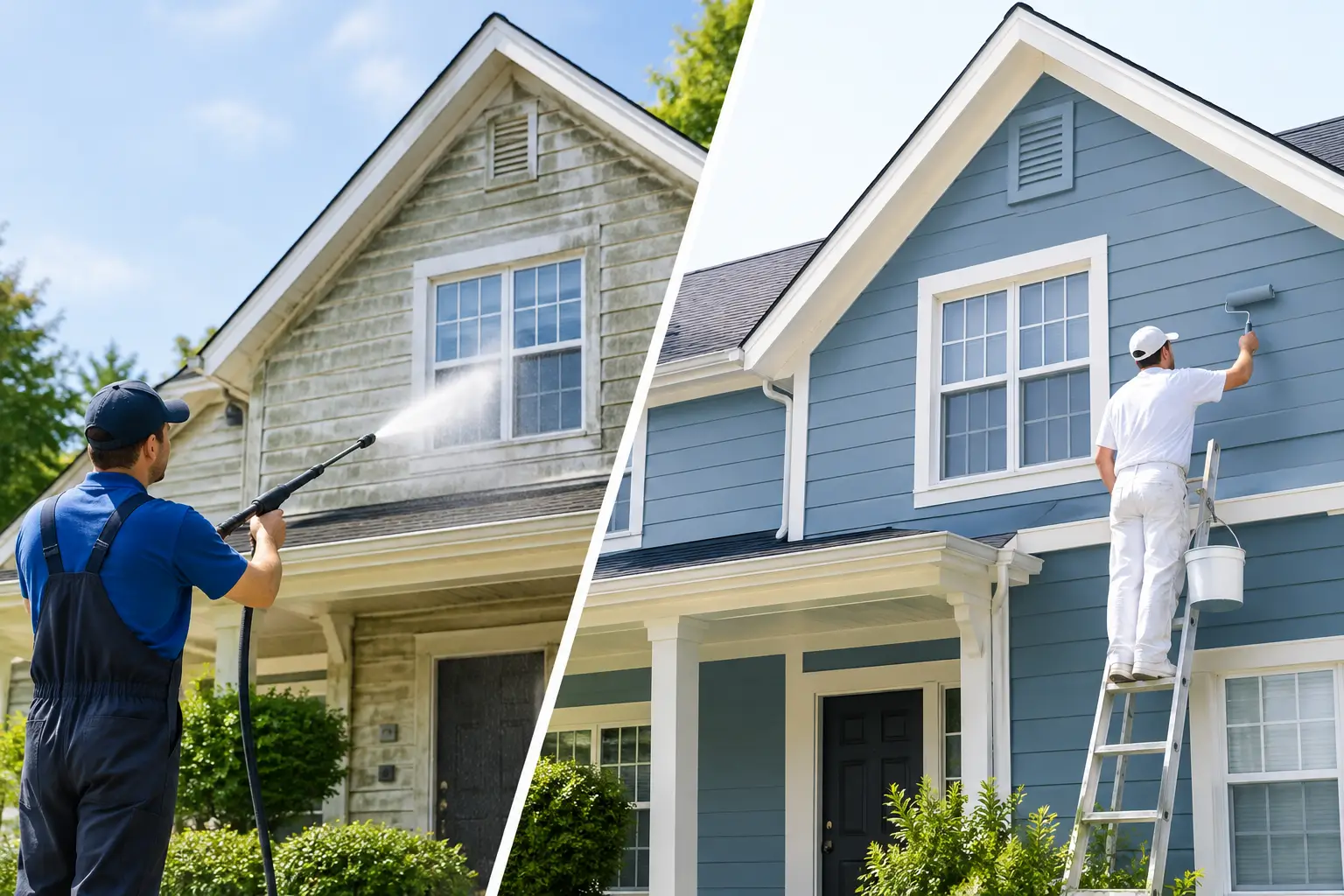
A Florida home can look ready for paint when it is really covered in algae, mildew, pollen, and weather-borne grime. That is why the question of house washing versus repainting deserves more than a quick glance from the driveway. A professional low-pressure wash can reveal the true condition of your exterior, restore color you thought was gone, and help you avoid paying for paint before it is necessary.
For homeowners in Homosassa, Citrus County, and nearby communities, moisture is usually the deciding factor. Humid conditions feed organic growth on siding, soffits, trim, stucco, and painted concrete. Before scheduling a repaint, it makes sense to find out whether the dull, stained appearance is surface contamination or a sign that the coating itself has reached the end of its life.
House Washing Versus Repainting: Start With the Surface
House washing and repainting solve different problems. Washing removes what is sitting on top of the surface. Repainting replaces or repairs the protective coating that has begun to fail. One is maintenance; the other is restoration.
That distinction matters because grime can hide a surprisingly healthy paint finish. Green algae on shaded walls, black mildew beneath soffits, and gray film on light-colored siding can make a home appear faded or neglected. Once those contaminants are removed, the original color may look far brighter and more even.
A careful house wash is especially worthwhile if your paint is still firmly attached, the color remains consistent beneath the dirt, and there are no major bare patches. Low-pressure cleaning uses appropriate equipment and cleaning solutions to treat algae and mildew without blasting at the exterior. The goal is to clean the painted surface, not force water behind siding or strip off paint that is still doing its job.
Repainting becomes the better choice when cleaning exposes deeper failure. If paint is peeling, blistering, cracking, chalking heavily, or separating from the wall, washing will not restore its protective qualities. It may make those defects easier to see, which is useful, but paint repair and preparation will still be needed.
Signs Your Home May Need Washing, Not Paint
Most exterior paint does not become dirty all at once. The changes tend to show up where moisture lingers: north-facing walls, shaded entryways, around gutters, under rooflines, and along screened lanais. These stains often respond well to professional cleaning.
A wash may be the right first move when you notice green or black streaks, patchy discoloration, pollen buildup, cobwebs, or soil splashed along the lower walls. A formerly white wall that looks yellowed or gray may simply be carrying a layer of grime. The same is true for soffits and fascia, which can look worn long before the paint has actually failed.
Run a hand lightly across a small, dry area. A little residue from Florida dust is normal. If a large amount of white, powdery material comes away, the finish may be chalking. Mild chalking can sometimes be cleaned and monitored, but heavy chalking is usually a signal that repainting is getting closer.
Look closely for the condition beneath the staining. If the paint is smooth, intact, and solid around edges, windows, trim, and joints, cleaning can often bring back the curb appeal you wanted from a paint job. Homeowners are frequently surprised by the difference after algae is removed from a light-colored exterior.
When Repainting Is the Smarter Investment
Paint is part of your home’s defense against sun, rain, and everyday exposure. Once that barrier breaks down, waiting too long can allow moisture to affect wood trim, fascia, siding seams, or other vulnerable areas.
Plan for repainting if you see widespread peeling or flaking, exposed substrate, cracking that reaches beyond a few isolated spots, or bubbling that suggests trapped moisture. Rust stains around fasteners, soft or damaged wood, and repeated paint failure in the same location should also be evaluated before anyone applies a new coat.
A fresh paint job may also be appropriate if the color has genuinely faded from years of sun exposure. Washing can remove dirt and biological staining, but it cannot put pigment back into paint that has been bleached by the Florida sun. If one side of the home remains noticeably lighter even after cleaning, repainting may be the only way to create an even finish.
There is a middle ground, too. Your home may not need a full repaint. Sometimes a thorough wash followed by targeted prep and touch-up work is enough. This approach can be practical when most walls are in good condition but sun-facing trim or one weather-exposed section needs attention.
Why Washing Before Repainting Is Usually Wise
Even when repainting is clearly needed, cleaning should come first. Paint needs a clean, sound surface to adhere properly. Applying new paint over algae, mildew, chalk, dirt, or loose residue can shorten the life of the job and lead to uneven results.
Professional exterior cleaning gives painters a more accurate starting point. It exposes loose paint, damaged caulk, hairline cracks, and areas where moisture has left a mark. It also removes contaminants that could interfere with primers and coatings.
The method matters. High pressure can damage delicate exterior materials, scar softer surfaces, and drive water where it does not belong. For painted siding, stucco, soffits, trim, and similar areas, low-pressure house washing is the safer approach. The cleaning solution does the work of treating organic growth, while controlled rinsing clears the surface without unnecessary force.
A careful crew should protect plants, wet surrounding landscaping as needed, and pay attention to doors, windows, fixtures, and outdoor furnishings. That level of preparation is not an extra detail. It is how you get a cleaner home while treating the property with respect.
Consider Cost in Terms of Timing, Not Just Price
Repainting is a meaningful investment, particularly when prep work, repairs, primer, and quality coatings are involved. If a professional wash can safely restore the look of your exterior and extend the time before repainting, it may be the more economical choice.
At the same time, washing is not a substitute for needed repairs. Cleaning a house with failing paint may improve its appearance temporarily, but it will not stop peeling or seal exposed areas. The best decision comes from an honest assessment of what is on the surface and what is happening underneath it.
For many Central Florida homes, routine washing every year or two helps reduce the buildup that makes a house look older than it is. The ideal schedule depends on shade, nearby trees, drainage, roof runoff, and how quickly algae returns. Homes near dense vegetation or water may need attention more often than open, sunny properties.
A Simple Way to Make the Decision
Start by choosing a small, inconspicuous section of the exterior and looking at it in direct daylight. Check for algae, streaks, loose paint, cracking, fading, and bare spots. Then ask a practical question: if the grime disappeared, would this surface still look sound?
If the answer is yes, house washing is likely the sensible first step. If the answer is no because the coating is breaking down, repainting should be part of the plan. When the answer is unclear, a professional exterior-cleaning estimate can help identify whether a low-pressure wash will revive the finish or simply prepare it for the painter.
White Diamond Pressure Washing takes the careful route: matching the cleaning method to the material, treating algae and mildew thoroughly, and protecting the details that make your property feel like home. A clean exterior does more than make the house shine like a diamond. It gives you a clear view of what your home actually needs next.