

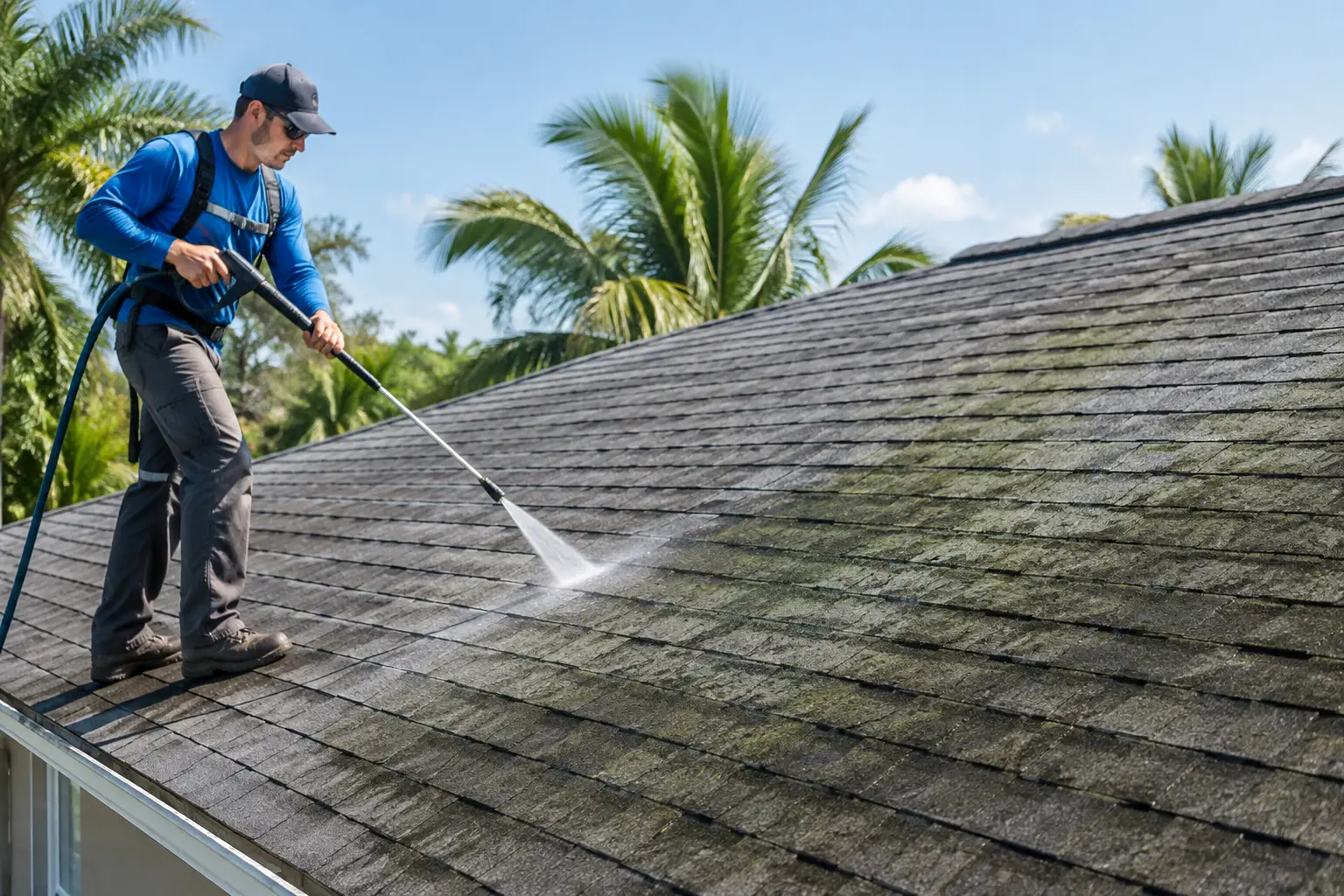
Those dark roof streaks are more than a curb appeal problem. In Citrus County’s heat, rain, and humidity, algae can spread quickly across shingles, tile, and metal roofing. To remove roof algae safely, the cleaning method matters just as much as the cleaning result. A roof may look tough from the ground, but the wrong pressure, harsh scrubbing, or careless chemical use can damage its surface, affect nearby landscaping, and create an unnecessary safety risk.
For most Florida homes, professional soft washing is the careful answer. It removes the organic growth causing the discoloration without blasting the roof with high pressure. The goal is simple: revive the roof’s appearance while protecting the materials that keep your home covered.
Why roof algae grows so quickly in Florida
Florida roofs provide almost perfect conditions for algae. Warm temperatures, high humidity, afternoon rain, tree shade, and morning dew all allow moisture to linger. The black streaks many homeowners notice are commonly caused by a type of blue-green algae that feeds on moisture and airborne debris. On other roofs, growth may appear green, gray, or patchy where algae, mildew, moss, and lichen have settled in.
Roof algae is especially common on north-facing slopes and areas shaded by trees. It can also collect around valleys, vents, chimneys, and gutters where water or leaf debris tends to remain longer. A roof that looked clean last year can develop noticeable staining after a wet season.
Algae does not always mean a roof is failing. Still, letting heavy buildup remain for years can hold moisture against the surface and make it harder to spot cracked shingles, loose tiles, or other maintenance concerns. It also takes away from the clean, cared-for look of the rest of your property.
The safe way to remove roof algae
The safest approach depends on the roof material, its age, its condition, and how much growth is present. Asphalt shingles, concrete tile, clay tile, metal panels, and coated roofing products do not all respond the same way. That is why a one-size-fits-all pressure washing approach is not the right choice.
A proper roof cleaning begins with an inspection from the ground and, when appropriate, a closer look at the roofline. A trained professional checks for fragile areas, loose materials, roof access issues, gutters, landscaping, and nearby surfaces that need protection. This preparation is not an extra step. It is what keeps the work controlled from beginning to end.
The cleaning solution is then applied at low pressure using equipment designed for soft washing. Manufacturer-endorsed roof-cleaning agents are used to treat algae at the source rather than merely knocking the surface stain loose. The solution needs time to work, so not every dark mark disappears instantly. Some remaining discoloration may continue to lighten as weather rinses the treated surface over the following days or weeks.
High-pressure rinsing is avoided on most roofing materials. Pressure that is useful on a concrete driveway can strip granules from asphalt shingles, disturb tile, force water beneath roofing components, or damage protective coatings. A clean roof is never worth shortening the useful life of the roof itself.
Plant and property protection come first
The roof is not the only surface that needs care. Cleaning agents can affect plants if runoff is not managed properly. Before work begins, surrounding shrubs, flower beds, grass, pool decks, screens, and exterior fixtures should be identified and protected.
A careful crew wets vegetation before treatment, controls runoff during application, and thoroughly rinses plants and nearby surfaces afterward. Downspouts may need attention because they direct roof runoff into concentrated areas of the yard. Extra care is particularly valuable around delicate tropical landscaping, potted plants, ponds, and outdoor living spaces.
At White Diamond Pressure Washing, roof cleaning is handled with the same attention given to lanais, pool cages, driveways, and painted exterior surfaces. The work is designed to deliver a dramatic before-and-after change without treating your landscaping or home materials as an afterthought.
Why DIY roof cleaning can go wrong
It is understandable to consider cleaning a roof yourself. The stains are visible, and store shelves make roof-cleaning products seem straightforward. But roof work combines slippery surfaces, ladders, chemical handling, and water management. A small mistake can become a serious fall, a damaged roof section, or burned landscaping.
Walking on a roof can crack or shift certain tiles, particularly if they are older or already weakened. Wet algae is slick, and even a low roof pitch can be dangerous when carrying a hose, sprayer, or bucket. Homeowners can also accidentally mix chemicals, use a solution that is too strong, or fail to rinse nearby plants sufficiently.
Pressure washers create another common problem. Even if the pressure setting is reduced, the narrow spray pattern can still hit one area too aggressively. On asphalt shingles, that can remove the granules that help protect against sun exposure. On tile and metal roofs, pressure can push water where it does not belong or leave uneven results.
There are situations where a homeowner can help safely from the ground, such as keeping gutters clear, trimming branches away from the roof, and removing loose leaves from accessible areas. The actual algae treatment is usually best left to a properly equipped exterior-cleaning professional.
What to expect after a soft-wash roof cleaning
A treated roof often looks substantially better the same day, especially where algae buildup is heavy and dark. However, the final result can vary by roof type and the age of the staining. Thick lichen or long-established growth may release gradually rather than coming away all at once. That slower change is often preferable to aggressive scrubbing or pressure that could damage the roof.
You may also notice clean streaks or a brighter overall color as the algae treatment takes effect. This can make faded areas, existing repairs, or roof wear more visible. Cleaning does not repair a roof, but it does provide a clearer view of its true condition.
After service, keep an eye on your landscaping for the next day or two and water plants if conditions are especially hot or dry. A reputable company will explain what was treated, what to expect as the roof continues to brighten, and when routine maintenance may be helpful.
How often should Florida roofs be cleaned?
There is no single schedule for every home. A roof beneath oak trees or dense shade may need attention sooner than one with open sun exposure and good airflow. Homes near the coast, surrounded by vegetation, or exposed to frequent storms may also collect organic debris faster.
For many homeowners in Homosassa and surrounding Central Florida communities, checking the roof once or twice a year is a sensible habit. Watch for new dark streaks, green patches, leaf accumulation, gutter overflow, or staining along shaded sections. Addressing algae early is generally easier than waiting until the entire roof looks discolored.
Preventive steps help as well. Keep tree limbs trimmed back from the roof where practical, maintain gutters so water can drain properly, and avoid allowing piles of wet leaves to sit in valleys. These measures will not eliminate Florida’s humidity, but they can reduce the moisture and debris algae needs to thrive.
Choosing a roof cleaner you can trust
Ask how the company plans to clean your specific roof. The answer should include low-pressure application, roof-appropriate cleaning agents, and clear steps for protecting plants and exterior materials. Be cautious of anyone who promises to pressure wash shingles or gives a price without considering roof size, material, access, and surrounding landscaping.
A written estimate and a straightforward explanation of the process are good signs. You should feel comfortable asking whether the cleaner will walk on the roof, how runoff will be managed, and what results are realistic for older or heavily stained areas. Careful work is not just about making the roof look better for a day. It is about helping your home keep shining like a diamond through Florida’s next rainy season.
If roof algae is starting to take over your home’s appearance, act before the streaks become the first thing visitors notice. A surface-appropriate soft wash can bring back the clean look you remember while giving the roof, landscaping, and the people around your home the care they deserve.