

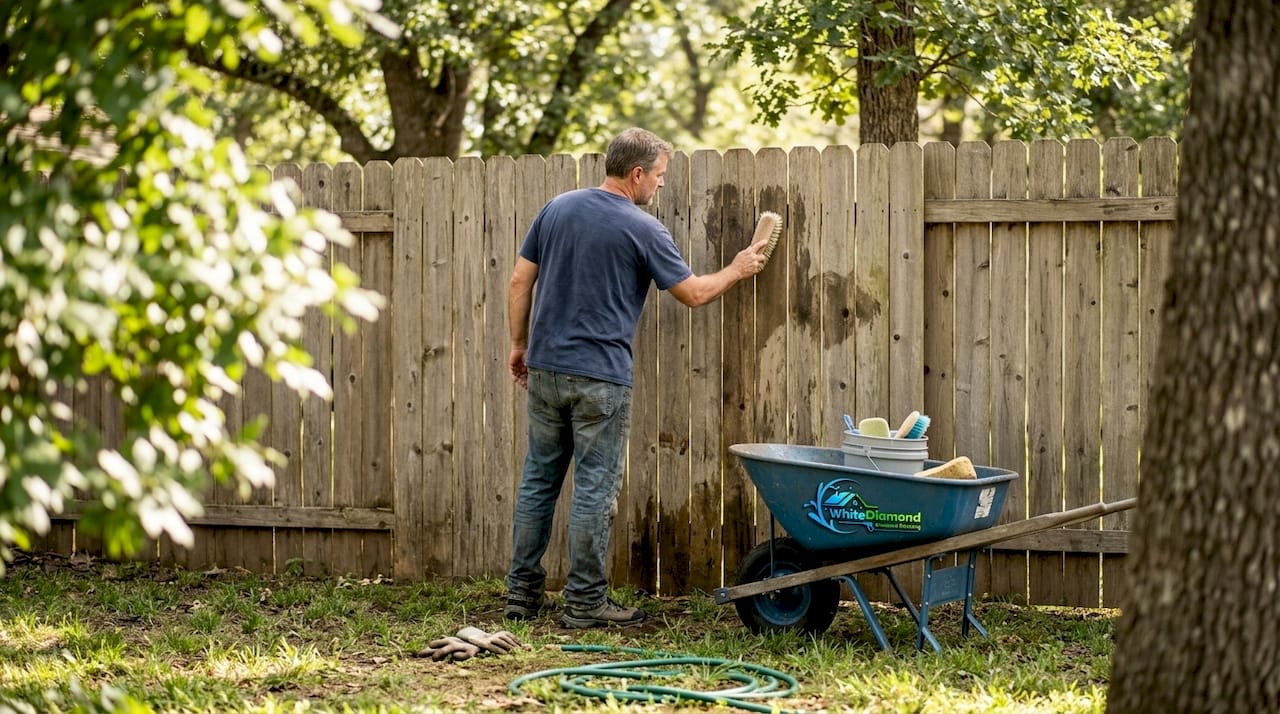
Many homeowners think fence cleaning is just hosing down wood or vinyl, but effective cleaning requires understanding materials, contaminants, and safe techniques. Your fence faces constant assault from mold, mildew, algae, and dirt that degrade its structure and appearance over time. Without proper cleaning methods, you risk damaging surfaces, voiding warranties, or wasting money on ineffective approaches. This guide explains what fence cleaning truly involves, which techniques work best for different materials, and how to maintain your investment for years to come.
Table of Contents
- Key takeaways
- Understanding fence cleaning and its importance
- Methods and techniques for effective fence cleaning
- DIY fence cleaning vs professional services
- Maintaining your clean fence: tips for longevity and appearance
- Explore professional fence cleaning services in Citrus County
- Frequently asked questions
Key Takeaways
| Point | Details |
|---|---|
| Protects fence life | Regular cleaning protects against mold and moisture damage, helping extend the fence’s lifespan. |
| Material specific methods | Wood, vinyl, metal and composite fences each demand tailored cleaners and techniques to prevent surface damage and protect warranties. |
| Low pressure cleaning | Low pressure washing uses reduced water pressure typically between 500 and 1500 PSI to safely remove dirt and biological growth without harming surfaces. |
| Warranty and maintenance | Regular professional service helps preserve manufacturer warranties and creates maintenance records for insurance or storm damage claims. |
| Neglect reduces lifespan | Neglecting cleaning for two years can reduce fence lifespan by about 30 percent and cause permanent staining. |
Understanding fence cleaning and its importance
Fence cleaning removes accumulated dirt, mold, mildew, and algae that attach to fence surfaces and break down materials over time. Unlike simple rinsing, proper cleaning targets biological growth and embedded grime that cause long-term damage. Wood fences develop rot when moisture and mold penetrate grain patterns. Vinyl fences lose color and become brittle from algae buildup. Metal fences corrode faster when dirt traps moisture against protective coatings.
Citrus County’s humid climate creates ideal conditions for organic growth on outdoor surfaces. High humidity levels combined with frequent rain and warm temperatures accelerate mildew and algae formation on fences. Trees and vegetation drop debris that holds moisture against fence materials, speeding deterioration. Without regular cleaning, these contaminants permanently stain surfaces and compromise structural integrity.
A clean fence significantly enhances curb appeal and property value for homeowners. First impressions matter when selling or simply maintaining neighborhood standards. Clean fences signal proper home maintenance to buyers and neighbors alike.
Different fence types require tailored approaches:
- Wood fences need gentle cleaning to avoid grain damage and paint removal
- Vinyl fences tolerate slightly higher pressure but can crack if blasted directly
- Metal fences require rust prevention and protective coating preservation
- Composite materials need pH-balanced cleaners to prevent discoloration
Professional cleaning protects manufacturer warranties that often require documented maintenance. Many fence warranties become void if improper cleaning causes damage or if neglect leads to preventable deterioration. Regular professional service creates maintenance records that preserve warranty coverage and insurance claims if storm damage occurs.
Neglecting fence cleaning for just two years can reduce fence lifespan by 30% and create permanent staining that no amount of cleaning can remove.
Methods and techniques for effective fence cleaning
Selecting the right cleaning method determines whether your fence looks refreshed or suffers permanent damage. Three primary approaches exist, each with distinct advantages and risks depending on fence material and contamination level.
Low-pressure washing uses reduced water pressure, typically between 500 and 1500 PSI, to clean surfaces without causing damage. This method works exceptionally well for wood and vinyl fences where high pressure would strip paint, gouge wood grain, or crack vinyl panels. Low-pressure washing offers seven key advantages for homeowners, including safety and gentle cleaning that preserves surface integrity.
High-pressure washing delivers 2000 to 4000 PSI and removes stubborn stains quickly but carries significant risks. While effective on concrete and brick, this force can splinter wood, force water behind siding, and destroy protective sealants on painted surfaces. Many DIY enthusiasts permanently damage fences by using pressure settings meant for driveways on delicate fence materials.
Soft washing combines specialized detergents with low-pressure application to kill organic growth at its source. The cleaning solution does the work rather than relying on water force alone. This approach penetrates porous materials like wood to eliminate mold roots and prevents regrowth for months longer than pressure washing alone.
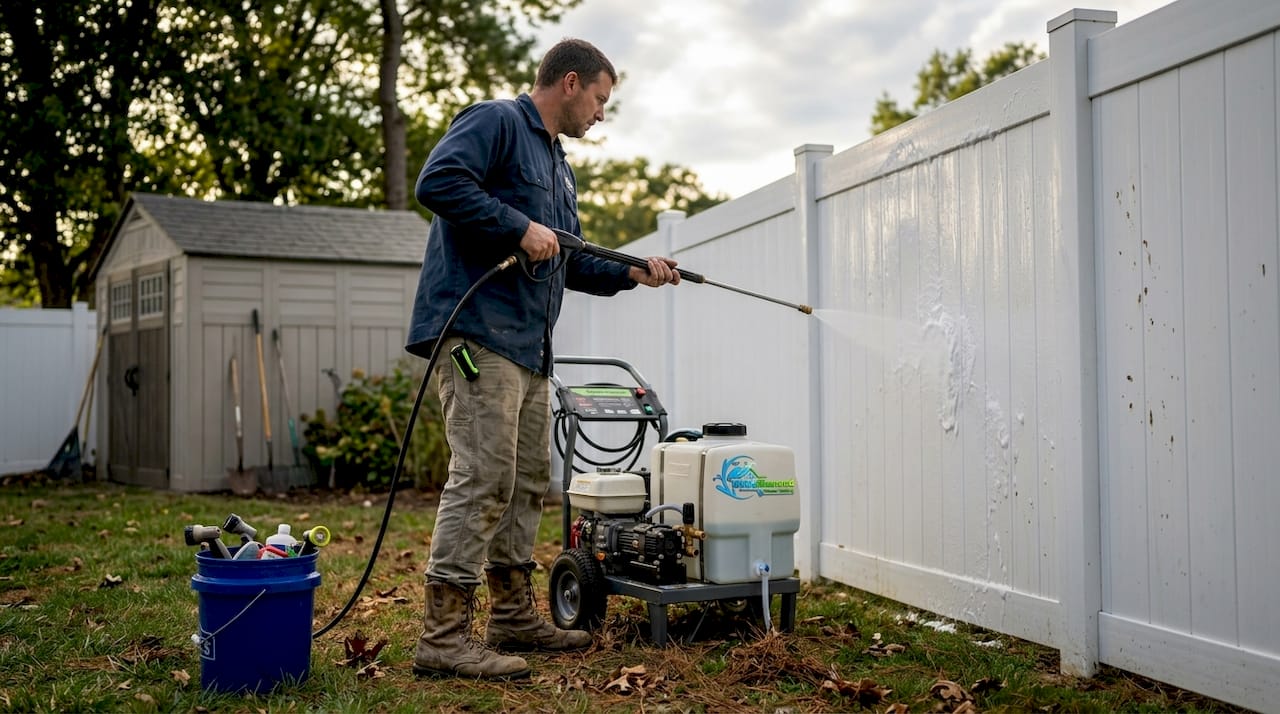
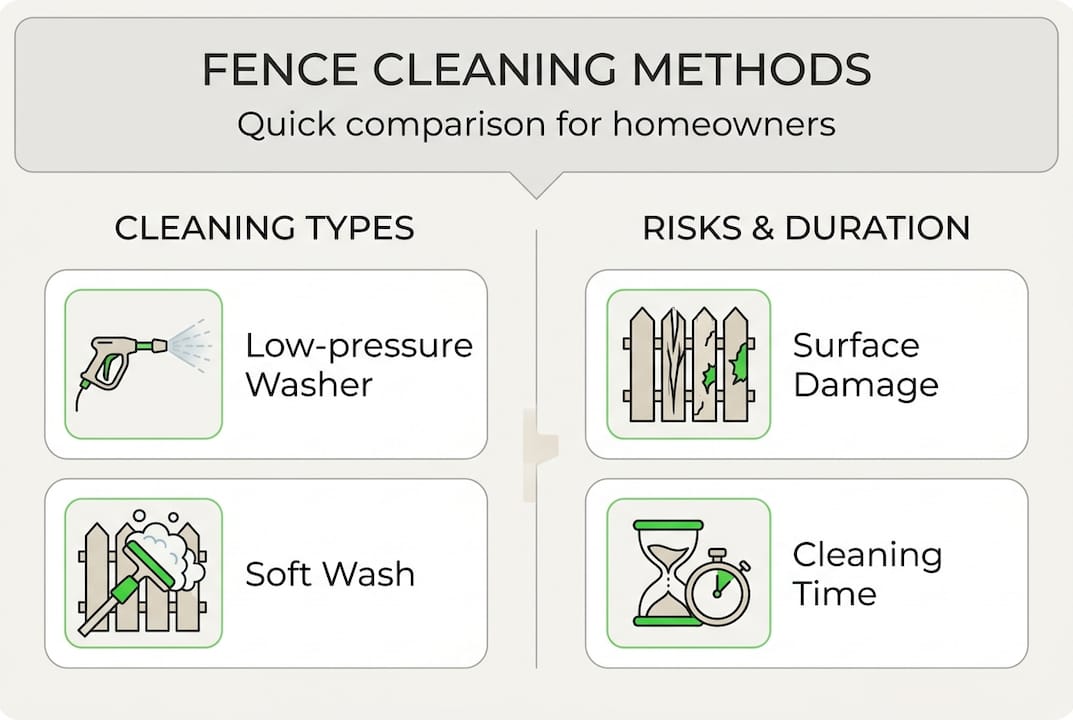
| Method | Pressure Level | Best For | Risk Level | Cleaning Duration |
|---|---|---|---|---|
| Low-pressure washing | 500-1500 PSI | Wood, vinyl, composite | Low | Moderate |
| High-pressure washing | 2000-4000 PSI | Metal, concrete posts | High | Fast |
| Soft washing | Under 500 PSI | All materials with growth | Very low | Longest lasting |
Some fences require detergent pretreatment before any water application. Mildew and algae form protective biofilms that water alone cannot penetrate. Applying appropriate cleaning solutions 10 to 15 minutes before rinsing allows chemicals to break down these films and lift contaminants from surface pores. Oxygen bleach works well for wood, while pH-neutral cleaners suit vinyl and composite materials.
Understanding the differences between pressure and power washing helps homeowners choose the right method for fence cleaning. Power washing adds heat to the equation, which benefits grease removal on driveways but offers no advantage for fence cleaning and can warp wood or melt vinyl in extreme cases.
Pro Tip: Test your chosen cleaning method on a hidden fence section, like behind shrubs or in a back corner, before treating visible areas to ensure the technique won’t cause discoloration or damage.
DIY fence cleaning vs professional services
Homeowners face an important decision between tackling fence cleaning themselves or hiring experienced professionals. Both approaches have merit depending on your situation, budget, and risk tolerance.
DIY fence cleaning appeals to budget-conscious homeowners and those who enjoy hands-on property maintenance. Renting a pressure washer costs $40 to $100 per day, and purchasing cleaning solutions adds another $20 to $50. You control the timeline and can work at your own pace across multiple weekends. However, inexperience with pressure settings and spray angles leads to common mistakes. Many homeowners unknowingly use excessive pressure, hold nozzles too close, or apply inappropriate cleaning chemicals that bleach or stain fence materials.
The risks of improper DIY cleaning include permanent surface damage, voided warranties, personal injury from equipment misuse, and ultimately spending more to repair damage than professional cleaning would have cost initially. There are risks to do-it-yourself pressure washing that can cause permanent home exterior damage.
Professional fence cleaning services bring expertise, commercial-grade equipment, and liability insurance to every job. Experienced technicians identify fence materials instantly and adjust pressure, nozzle type, and cleaning solutions accordingly. They spot early signs of rot, loose boards, or structural issues that homeowners might miss. Most professionals complete fence cleaning in hours rather than the full weekend DIY attempts typically require.
Hiring professional cleaners ensures safe, effective cleaning and can prevent damage caused by improper DIY methods. Professional services typically cost $200 to $500 for average residential fences, depending on length, height, material, and contamination level. This investment includes proper insurance coverage, warranty protection, and guaranteed results.
Cost factors influencing both approaches:
- Fence length and height directly impact time and materials needed
- Material type affects cleaning difficulty and required products
- Contamination severity determines whether single or multiple treatments are necessary
- Equipment quality influences cleaning effectiveness and damage risk
- Your available time and physical capability to complete the job safely
Pro Tip: If choosing DIY, invest in a pressure washer with adjustable PSI settings and multiple nozzle options, and always wear safety goggles and closed-toe shoes to protect against debris and chemical splashes.
Maintaining your clean fence: tips for longevity and appearance
Cleaning your fence is just the beginning. Proper maintenance between professional cleanings maximizes your investment and keeps your fence looking great year-round.
Preventative exterior cleaning strategies help protect your home and extend the lifespan of exterior surfaces including fences. Regular inspections catch small problems before they become expensive repairs. Walk your fence line quarterly, looking for loose boards, rust spots, mildew patches, or areas where vegetation touches fence surfaces.
Follow this maintenance routine for optimal fence longevity:
- Inspect your entire fence every three months for damage or growth
- Trim vegetation to maintain six inches clearance from fence surfaces
- Rinse fence sections with a garden hose monthly during humid months
- Apply wood sealant or stain every two to three years after thorough cleaning
- Schedule professional deep cleaning annually or biannually based on growth rate
- Address repairs immediately when you spot loose boards or hardware
Climate considerations matter significantly in Citrus County. Summer humidity accelerates mold growth, requiring more frequent attention. Winter’s drier months offer ideal timing for applying protective coatings that need several days to cure properly. Plan major cleaning and sealing projects for fall or early spring when weather conditions optimize product performance.
Key preservation tips:
- Use gentle cleaning agents for touch-ups between major cleanings rather than harsh chemicals
- Never let sprinklers directly spray fence surfaces, as constant moisture promotes rot
- Remove fallen leaves and debris promptly to prevent moisture trapping
- Reapply protective sealants immediately after professional cleaning for maximum benefit
- Document all maintenance and cleaning with photos and dates for warranty purposes
Wood fences benefit enormously from protective treatments applied after cleaning. Clean wood absorbs sealants and stains far better than dirty surfaces, creating deeper penetration and longer-lasting protection. Wait 48 hours after cleaning before applying any treatments to ensure wood dries completely. Applying products to damp wood traps moisture inside, leading to rot from within.
Vinyl and composite fences require less intensive maintenance but still benefit from regular attention. These materials resist rot but still accumulate dirt and grow mildew in humid climates. The benefits of exterior cleaning extend beyond appearance to include preventing permanent discoloration and material degradation.
Explore professional fence cleaning services in Citrus County
Now that you understand what effective fence cleaning involves and why proper techniques matter, consider how professional services simplify the entire process while delivering superior results. White Diamond Pressure Washing specializes in fence cleaning tailored specifically to Citrus County’s challenging climate and the unique needs of local homeowners.

Our team uses proven low-pressure and soft washing techniques that protect your fence while eliminating mold, mildew, and stubborn stains other methods leave behind. We adjust our approach based on your specific fence material, ensuring wood stays intact, vinyl maintains its color, and metal resists corrosion. Every service includes a thorough inspection to identify potential issues before they become costly problems. Understanding the role of water pressure in exterior cleaning helps us deliver consistently excellent results without risking damage to your property. Professional service offers the convenience of expert care, quality results backed by experience, and complete peace of mind knowing your fence receives proper treatment.
Frequently asked questions
What cleaning methods are best for wooden fences?
Soft washing with oxygen-based cleaners works best for wood fences because it kills mold without damaging grain or stripping protective finishes. Low-pressure rinsing after chemical treatment removes contaminants safely. High-pressure washing should be avoided as it splinters wood and forces water deep into boards, causing rot.
How often should I clean my fence in Citrus County?
Most Citrus County fences need professional cleaning once or twice yearly due to high humidity and organic growth rates. Wood fences benefit from annual spring cleaning before applying fresh sealant. Vinyl and composite fences typically need cleaning every 12 to 18 months unless heavy shade or vegetation accelerates mildew growth.
Can I pressure wash my vinyl fence myself safely?
You can pressure wash vinyl fences yourself if you use low pressure settings under 1500 PSI and maintain proper nozzle distance of 12 to 18 inches from the surface. Closer distances or higher pressure can crack vinyl panels or force water behind them. Testing on a hidden section first prevents visible damage.
What are signs my fence needs cleaning immediately?
Green or black streaks indicate active mold or algae growth requiring prompt attention. Visible dirt buildup, discoloration that doesn’t rinse away with a hose, or rough texture where surfaces should be smooth all signal the need for professional cleaning. Waiting too long allows contaminants to penetrate deeply and cause permanent staining.
Is professional fence cleaning worth the cost?
Professional cleaning typically costs $200 to $500 but prevents thousands in premature replacement expenses by extending fence life and maintaining warranty coverage. Professionals complete jobs in hours rather than days, use proper techniques that avoid damage, and provide guaranteed results. The investment pays for itself through preserved property value and avoided repair costs.
Recommended
- What is brick cleaning? Essential guide for homeowners 2026 – white-diamond-pressure
- What is deck cleaning? A homeowner’s 2026 guide – white-diamond-pressure
- Benefits of Exterior Cleaning for Homeowners – white-diamond-pressure
- 7 Essential Types of Exterior Cleaning Every Homeowner Should Know – white-diamond-pressure
- The Essential Guide to Regular Cleaning Benefits – Yarra Valley Carpet Cleaning