

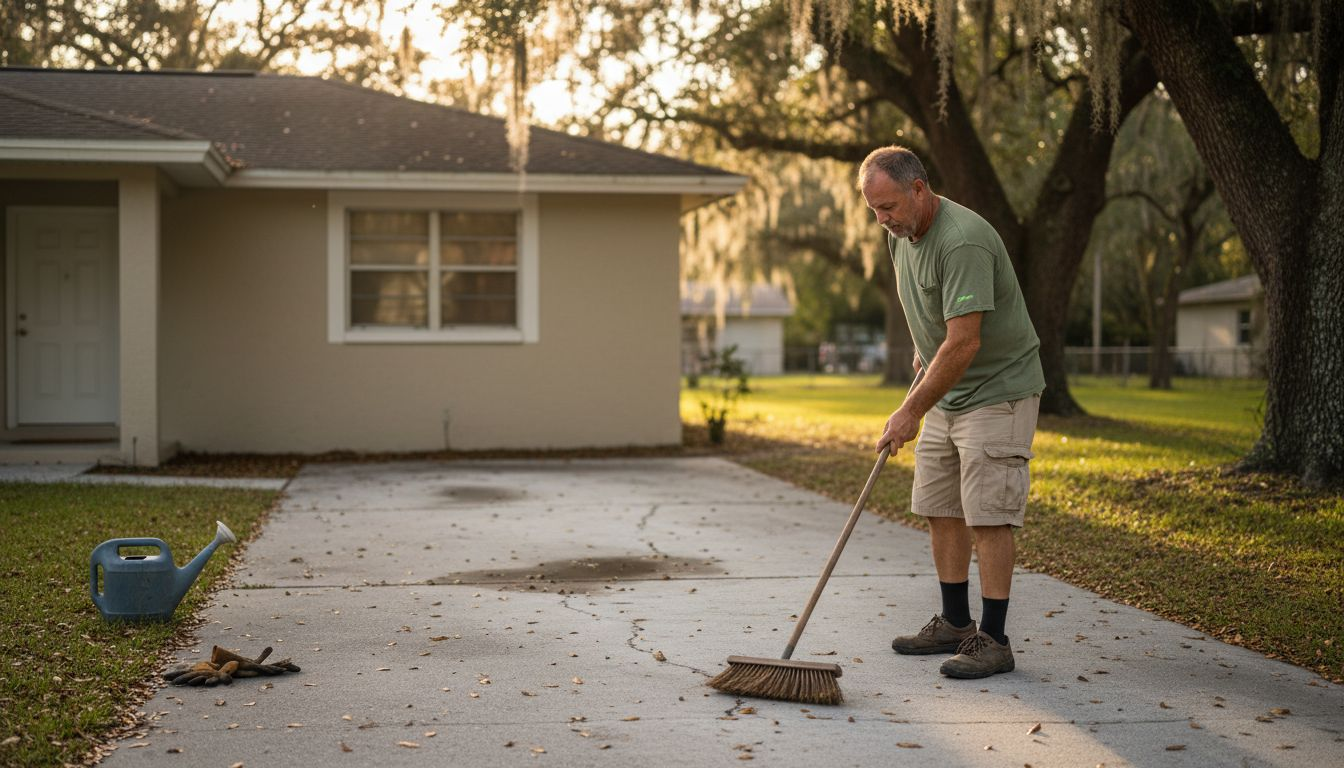
Most American homeowners in Citrus County struggle with unsightly driveways that pull down curb appeal and threaten the longevity of expensive surfaces. Regular debris, oil stains, and mold are all common issues that can erode even the best-kept driveways if ignored. Discover easy and affordable solutions that not only protect your driveway materials but transform your home’s exterior into something you can be proud of.
Table of Contents
- 1. Manual Sweeping For Quick Surface Dirt Removal
- 2. Using Eco-Friendly Cleaners For Tough Stains
- 3. Pressure Washing For Deep Driveway Cleaning
- 4. Soft Washing Techniques To Preserve Materials
- 5. Removing Oil And Grease Spots Safely
- 6. Treating And Preventing Mold And Mildew Growth
- 7. Sealing Your Driveway For Long-Lasting Protection
Quick Summary
| Key Message | Explanation |
|---|---|
| 1. Perform Manual Sweeping Regularly | Use a broom to remove loose debris from your driveway, preventing sediment buildup and drainage issues. |
| 2. Utilize Eco-Friendly Cleaners for Stains | Choose natural cleaning solutions, like vinegar and baking soda, to effectively tackle stubborn stains while minimizing environmental impact. |
| 3. Implement Pressure Washing for Deep Cleaning | Use a pressure washer to remove accumulated dirt and stains; this prepares the driveway surface for better sealing. |
| 4. Adopt Soft Washing for Gentle Cleaning | Soft washing helps safely clean delicate driveway materials without damage, utilizing low-pressure solutions for organic growth removal. |
| 5. Schedule Regular Driveway Sealing | Seal your driveway every 2 to 5 years to protect against water, UV damage, and other environmental factors, extending its lifespan. |
1. Manual Sweeping for Quick Surface Dirt Removal
Manual sweeping is your first line of defense in maintaining a clean driveway surface in Citrus County. By using simple tools like brooms, you can quickly remove loose debris, leaves, and surface dirt before they become more challenging cleaning problems.
This fundamental cleaning technique is an essential starting point for driveway maintenance. Surface debris removal helps prevent sediment buildup and minimizes potential drainage issues. When sediment is dry and loose, manual sweeping works most effectively at removing surface contaminants.
To perform manual sweeping effectively, select a sturdy broom with stiff bristles that can handle outdoor surfaces. Begin at one end of your driveway and systematically sweep debris toward a central collection point or directly into a dustpan or garbage bag. Pay special attention to corners, edges, and areas near landscaping where debris tends to accumulate.
Additionally, manual sweeping serves as an excellent preliminary step before more intensive cleaning methods. Regular sweeping can reduce the amount of dirt and sediment that might otherwise require pressure washing or more complex cleaning techniques.
Pro tip: Sweep your driveway early in the morning when surfaces are dry and debris is easier to collect, preventing potential mud formation and ensuring more efficient cleaning.
2. Using Eco-Friendly Cleaners for Tough Stains
Tackle stubborn driveway stains without harming the environment by leveraging eco-friendly cleaning solutions that are both powerful and sustainable. These natural alternatives provide effective cleaning power while minimizing chemical exposure and environmental impact.
Eco-friendly cleaners work exceptionally well on various driveway stains including oil, grease, and organic materials. Biodegradable cleaning agents offer safe and powerful alternatives to harsh chemical treatments. Household ingredients like baking soda, vinegar, and cat litter can transform your stain removal process into an environmentally responsible approach.
Start by identifying the type of stain you are dealing with. For oil and grease stains, sprinkle cat litter or baking soda directly onto the affected area to absorb excess liquid. Let the absorbent material sit for several hours before sweeping it away. For organic stains like mold or mildew, prepare a solution of white vinegar and water to effectively break down and remove the contaminants.
When preparing your eco-friendly cleaning solution, mix one part white vinegar with one part water in a spray bottle. This natural cleaning solution works effectively on multiple surfaces and helps prevent future stain development. Always test your solution on a small, inconspicuous area first to ensure compatibility with your specific driveway material.
Pro tip: Combine baking soda with vinegar to create a powerful fizzing reaction that can help lift and remove even the most stubborn driveway stains.
3. Pressure Washing for Deep Driveway Cleaning
Pressure washing represents the ultimate solution for transforming your driveway from grimy to gleaming in a single comprehensive cleaning session. This powerful technique uses high pressure water streams to blast away years of accumulated dirt, grime, algae, and stubborn stains.
When performed correctly, pressure washing techniques can restore your driveway to near original condition without causing surface damage. The process involves carefully controlling water pressure typically between 2,500 and 3,000 PSI, which allows deep cleaning while protecting your concrete or asphalt surface.
To achieve optimal results, start by manually sweeping loose debris and treating obvious stains. Pre-treat challenging areas with mild cleaning solutions to help loosen embedded dirt. When pressure washing, maintain consistent distance from the surface and use sweeping motions to ensure uniform cleaning. Avoid concentrating the stream in one spot to prevent potential surface etching or damage.
Importantly, pressure washing serves more than aesthetic purposes. Driveway surface preparation opens surface pores and removes contaminants, which is crucial if you plan to apply a protective sealer later. This process ensures better adhesion and longer lasting protection for your driveway.
Pro tip: Rent or invest in a pressure washer with adjustable pressure settings and practice on an inconspicuous area first to master your technique before tackling the entire driveway.
4. Soft Washing Techniques to Preserve Materials
Soft washing offers a gentler alternative to traditional high-pressure cleaning, protecting your driveway and other exterior surfaces from potential damage. This innovative technique combines low-pressure water application with specialized cleaning solutions to remove dirt, organic growth, and stains without risking surface integrity.
Soft washing techniques utilize a unique approach that prioritizes chemical cleaning over mechanical force. Instead of blasting surfaces with high-pressure water, this method uses sodium hypochlorite-based solutions to break down and eliminate mold, mildew, algae, and bacteria. The low-pressure spray ensures your driveway materials remain unscathed while achieving a thorough clean.
To implement soft washing effectively, you will need a low-pressure sprayer and a carefully mixed cleaning solution. Specialized cleaning solutions typically include diluted bleach combined with surfactants that help the solution cling to surfaces and penetrate deep into organic stains. This approach is particularly beneficial for older or more delicate driveway materials that might suffer from high-pressure washing.
When applying soft wash techniques, work in sections and maintain a consistent distance from the surface. Begin by pre-treating heavily stained areas and allow the cleaning solution to sit for several minutes before gently rinsing. This method not only cleans your driveway but also helps prevent future growth of mold and mildew.
Pro tip: Always wear protective gear and test your cleaning solution on a small, inconspicuous area first to ensure compatibility with your specific driveway surface.
5. Removing Oil and Grease Spots Safely
Oil and grease spots can quickly transform your pristine driveway into an unsightly mess, potentially causing permanent staining and surface damage if left untreated. Understanding how to safely and effectively remove these stubborn spots is crucial for maintaining your driveway’s appearance and integrity.
Quick action is essential when dealing with oil spills. Oil stain removal techniques typically involve using common household absorbents to soak up the initial spill before deeper cleaning. Non-clumping cat litter, baking soda, or sawdust work exceptionally well at drawing out fresh oil, preventing it from penetrating deeper into the driveway surface.
After absorbing excess oil, prepare a cleaning solution using biodegradable detergents. Gently scrub the area with a stiff brush, working the cleaning solution into the stain. Rinse thoroughly with clean water, taking care to avoid petroleum-based solvents that can further damage your driveway surface. Asphalt driveway protection requires a delicate approach to prevent additional deterioration.
For older or more set-in stains, consider creating a poultice using materials like talcum powder or sawdust mixed with a gentle cleaning solution. Apply the poultice, cover with plastic wrap, and allow it to sit for several hours to draw out deeply embedded oil. This method can be particularly effective for stubborn grease spots that resist initial cleaning attempts.
Pro tip: Place a piece of plywood under vehicle jacks or tires when performing maintenance to prevent concentrated oil and grease spots from forming on your driveway surface.
6. Treating and Preventing Mold and Mildew Growth
Mold and mildew can quickly transform your driveway from a pristine surface into an unsightly, potentially hazardous environment. Understanding how to effectively treat and prevent their growth is crucial for maintaining both the aesthetic and structural integrity of your outdoor spaces.
Mold prevention strategies begin with controlling moisture and addressing potential sources of dampness. Mold thrives in moist environments, so ensuring proper drainage and reducing standing water around your driveway is the first line of defense. Look for areas where water might pool or where vegetation creates consistent shade and humidity.
To clean existing mold and mildew, prepare a solution using white vinegar or mild detergent mixed with water. Cleaning techniques for mold recommend scrubbing the affected areas gently with a stiff brush, working the solution into the surface. After cleaning, thoroughly rinse the area and allow it to dry completely. Rapid drying is essential to prevent spore regrowth and further spread.
Preventive maintenance includes regularly inspecting your driveway for early signs of mold, maintaining proper drainage, trimming nearby vegetation to increase sunlight exposure, and ensuring the surface remains as dry as possible. Consider applying a mold-resistant sealant that can provide an additional protective layer against moisture and organic growth.
Pro tip: Create a routine maintenance schedule that includes quarterly inspections and immediate cleaning of any moisture-prone areas to stop mold growth before it becomes a significant problem.
7. Sealing Your Driveway for Long-Lasting Protection
Driveway sealing represents the ultimate defensive strategy for preserving your property’s exterior surface and preventing costly long-term damage. By applying a protective layer, you can dramatically extend your driveway’s lifespan and maintain its aesthetic appeal.
Pavement preservation techniques are crucial for protecting your driveway from environmental wear and tear. Sealing creates a robust barrier against water infiltration, UV rays, oil spills, and chemical exposure that can cause gradual deterioration. This protective measure helps minimize cracking, oxidation, and surface degradation.
Optimal sealing timing occurs during mild and dry weather conditions, typically between late spring and early fall. Proper surface preparation is critical this involves thoroughly cleaning the driveway, filling any existing minor cracks, and ensuring the surface is completely dry before application. Choose a high-quality sealer compatible with your specific driveway material, whether asphalt or concrete.
When applying the sealant, work systematically in small sections, using a roller or specialized squeegee to ensure even coverage. Allow adequate curing time between coats, and avoid walking or driving on the surface until the sealer has completely dried. Most driveways require resealing approximately every 2 to 5 years, depending on local weather conditions and surface usage.
Pro tip: Purchase a professional-grade sealant and invest in quality application tools to ensure maximum protection and a smooth, uniform finish.
Below is a comprehensive table summarizing the primary driveway cleaning and maintenance techniques discussed throughout the article, including their applications, steps, and benefits.
| Technique | Application Steps | Advantages |
|---|---|---|
| Manual Sweeping | Use a sturdy broom to remove debris systematically, focusing on corners and edges. | Prevents sediment buildup and prepares the surface for further cleaning. |
| Eco-Friendly Cleaners | Apply natural solutions like vinegar or absorbents to treat stains, then rinse thoroughly. | Minimizes environmental impact while managing tough stains effectively. |
| Pressure Washing | Use water at controlled pressure to clean thoroughly after pre-treating areas. | Restores the driveway’s appearance and prepares it for sealing. |
| Soft Washing | Apply low-pressure water using specialized cleaning solutions to target organic growth. | Preserves delicate materials while achieving thorough cleanliness. |
| Oil and Grease Spot Removal | Absorb fresh spills with materials like non-clumping cat litter and clean with biodegradable agents. | Prevents long-term stains and maintains the driveway’s integrity. |
| Mold and Mildew Treatment | Scrub affected areas with detergent and ensure dry conditions to prevent regrowth. | Maintains a pristine appearance and reduces potential health hazards. |
| Driveway Sealing | Apply a protective layer systematically during mild weather after cleaning and repairs. | Increases lifespan and resists environmental damage, stains, and cracking. |
Restore Your Citrus County Driveway with Expert Care from White Diamond Pressure Washing
Maintaining a clean and durable driveway in Citrus County can be challenging. Whether you are dealing with stubborn oil stains, mold growth, or general surface grime, this article highlights smart cleaning methods such as manual sweeping, eco-friendly stain removal, pressure washing, and sealing techniques. These pain points remind us that improper cleaning can lead to permanent damage and costly repairs. White Diamond Pressure Washing specializes in safe and effective soft washing and pressure washing methods designed to preserve your driveway’s material while delivering a deep clean.

Experience the difference of professional driveway cleaning with our experienced team using industry-approved products and flexible scheduling. Don’t wait until stains and deterioration worsen. Visit the White Diamond Pressure Washing homepage to book your service now and enjoy lasting protection and curb appeal. Learn more about our pressure washing solutions and how we carefully prepare driveways before sealing to maximize durability. Take action today for a fresh, spotless driveway that enhances your home’s value and safety.
Frequently Asked Questions
What is the best method for removing loose debris from my driveway?
Manual sweeping is the best method for quickly removing loose debris such as dirt and leaves. Use a sturdy broom with stiff bristles and sweep systematically from one end of your driveway to the other to ensure thorough cleaning.
How can I effectively remove oil stains from my driveway?
To remove oil stains, first absorb the excess liquid using materials like cat litter or baking soda. After absorption, scrub the area with a biodegradable cleaning solution and rinse thoroughly to prevent any potential surface damage.
What should I use to clean mold and mildew off my driveway?
To clean mold and mildew, prepare a solution of white vinegar or mild detergent mixed with water. Scrub the affected areas gently, then rinse thoroughly and allow to dry completely to prevent regrowth.
How often should I seal my driveway to maintain its appearance?
You should reseal your driveway approximately every 2 to 5 years, depending on local weather conditions and usage. Ensure proper surface preparation and cleaning prior to sealing for optimal results.
What is the difference between pressure washing and soft washing for driveway cleaning?
Pressure washing uses high-pressure water streams for deep cleaning, while soft washing combines low-pressure water with specialized cleaning solutions to protect delicate surfaces. Choose soft washing for sensitive driveway materials to avoid damage while still achieving a thorough clean.
Recommended
- Discover the Advantages of Professional House Washing Today – white-diamond-pressure
- Discover the Top Roof Cleaning Advantages for Homeowners – white-diamond-pressure
- Master Roof Cleaning with Proven Pressure Washing Techniques – white-diamond-pressure
- Top Advantages of Professional Pool Cage and Deck Cleaning – white-diamond-pressure
- Essential Guide to Trimming Citrus Trees
- What Is Gutter Cleaning? Protecting Florida Homes
3 thoughts on “7 Smart Driveway Cleaning Methods for Citrus County Homes”