

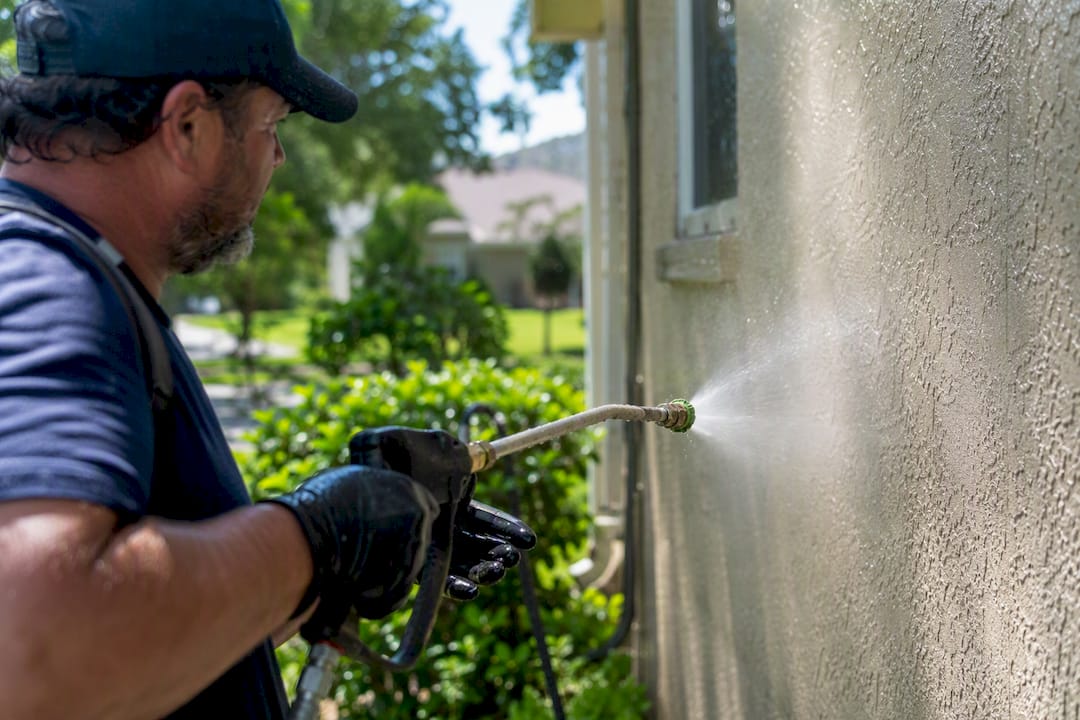
Yes, you can pressure wash stucco, but only with low-pressure, soft-wash technique. High pressure is where stucco jobs go wrong. For hard-coat stucco, stay within a low-pressure range suitable for the material, use a fan tip of at least 40 degrees, hold the wand an appropriate distance from the wall, and always angle the spray downward. EIFS (synthetic stucco) needs far less force, often under 500 PSI, and a chemical soft-wash approach is usually the better call.
- Hard-coat stucco: up to roughly 1,000 to 1,200 PSI, 40 degree minimum fan tip, 18 to 24 inch distance
- EIFS/synthetic stucco: under 500 PSI or soft-wash only
- Never spray upward, into window and door perimeters, or straight into visible cracks
Before any water touches the wall, walk the exterior and repair failed caulk or cracked stucco. Pressure forces water into any opening it finds, and that’s how a cleaning job turns into a drywall repair. If your home is multiple stories, has EIFS siding, or shows signs of delamination (hollow-sounding patches when tapped), that’s your cue to call a professional rather than DIY it.
Key Takeaways
Stucco needs low-pressure or soft-wash cleaning, repair before washing, and 24 to 48 hours of dry time before painting or sealing.
| Point | Details |
|---|---|
| Safe pressure range | Hard-coat stucco tolerates roughly 800 to 1,200 PSI; EIFS needs under 500 PSI or a chemical soft wash. |
| Repair before you wash | Patch cracks and replace failing caulk first so pressure doesn’t force water behind the wall. |
| Nozzle and distance matter | Use a 40 degree fan tip minimum, 18 to 24 inches from the surface, spray angled downward only. |
| Drying window before finishing | Wait 24 to 48 hours in warm, dry conditions before painting or sealing the surface. |
| Call a professional for EIFS or multi-story jobs | Whitediamondpressurewashing uses soft-wash and pressure-limited protocols matched to your stucco type. |
Table of Contents
- When Does Stucco Actually Need Pressure Washing?
- How Do You Inspect Stucco for Damage Before Washing?
- What Cleaning Products Work Best on Stucco?
- Step-by-Step: How to Pressure Wash Stucco Safely
- Handling EIFS and Painted Stucco Without Stripping the Finish
- How Long Should Stucco Dry Before Painting or Sealing?
- Why Multi-Story Homes and EIFS Call for a Professional
- Book a Soft-Wash Stucco Cleaning With White Diamond
- Frequently Asked Questions
- Sources
When Does Stucco Actually Need Pressure Washing?
Not every dirty wall needs a pressure washer. Light dust, pollen, and surface grime often come off with a garden hose and a soft-bristle brush, no chemicals or machinery required. Save the pressure equipment for the jobs that actually call for it.
Pressure washing (or a chemical soft wash) earns its place when you’re dealing with:
- Dark streaking from algae or mildew that a hose won’t touch
- Green or black staining in shaded, moisture-prone areas
- Chalky buildup or embedded grime that’s been baking on for a season or more
Jumping straight to pressure on light dirt is a common mistake. It’s overkill that risks eroding the stucco’s textured finish and driving water behind the surface where it doesn’t belong. If you notice soft spots, bulging patches, or stucco that sounds hollow when tapped, that’s delamination, and it means the substrate underneath has already failed. Add multi-story access to that list, and you’re well past DIY territory. Common pressure washing mistakes tend to start exactly here.
How Do You Inspect Stucco for Damage Before Washing?
Skipping inspection is the single most common reason stucco washing jobs go sideways. Sto’s own maintenance guidance treats repair-before-wash as a prerequisite, not a suggestion, and for good reason: any pressure applied over a crack or gap in caulk pushes water straight into the wall assembly.
Run through this before you touch a hose:
- Tap test. Knock on the wall in a grid pattern; a hollow or dull sound signals delamination underneath.
- Check crack widths. Hairline cracks under 1/16 inch are typically cosmetic; anything wider needs patching first.
- Inspect perimeter caulk. Look at window, door, and trim joints for cracking, shrinkage, or gaps.
- Clear the weep screed. Make sure the bottom edge of the stucco isn’t blocked by soil, mulch, or debris.
Patch small cracks with an elastomeric stucco patch, and replace failing caulk with a paintable exterior sealant. Follow the manufacturer’s cure time on the label. Most sealants need 24 hours minimum before they can handle water contact, and rushing that step defeats the purpose of repairing at all.
Pro Tip: Do the tap test on a cool morning after the walls have had all night to lose the day’s heat. Temperature swings make hollow spots easier to hear.
What Cleaning Products Work Best on Stucco?
The right cleaner depends on what’s actually on the wall. For general dirt and light staining, BobVila recommends a diluted TSP mix, applied with a soft-bristle brush and rinsed after a short dwell period. For algae and mildew, Sto’s guidance points toward a bleach-based mildewcide at a diluted ratio, applied and left to sit before rinsing.
- TSP mix for general grime, dwell 5 to 10 minutes
- Diluted bleach solution for algae/mildew, dwell 10 to 15 minutes depending on staining severity
- Always rinse thoroughly before the solution dries on the surface
Skip solvent-based cleaners, steam cleaning, and anything abrasive. These strip acrylic coatings and can permanently discolor pigmented stucco finishes. Wear gloves and goggles when handling TSP or bleach, and wet down nearby plants beforehand, then rinse them again after you’re done. Runoff from bleach or TSP kills landscaping fast if it pools around root zones.
Step-by-Step: How to Pressure Wash Stucco Safely
Gather your tools first: a pump sprayer or pressure washer with a 40-degree fan tip, a soft-bristle brush for spot scrubbing, your chosen cleaner, and PPE (gloves, eye protection). Lowe’s how-to guidance and Ferguson’s power-washing instructions both build their process around the same core sequence: repair, apply, dwell, scrub, rinse.
- Test a small area first. Sto’s own specification calls for testing your pressure and distance on an inconspicuous patch before committing to the whole wall.
- Wet the wall lightly, then apply detergent from the bottom up in overlapping passes to avoid streaking.
- Let it dwell per the product label, usually 5 to 15 minutes. Don’t let it dry on the surface.
- Spot-scrub stubborn stains with the soft-bristle brush.
- Rinse top to bottom at low pressure, holding the wand 18 to 24 inches away with the spray angled downward.
Work in sections roughly 4 to 6 feet wide so no area sits with wet detergent too long. Keep the nozzle away from window and door perimeters entirely; a direct hit there is the fastest way to push water past the caulk line. Understanding water pressure and distance matters more on stucco than almost any other exterior surface, since the textured finish hides erosion until it’s already happened. If the wall is painted or has a thin decorative coating, drop your pressure further and lean more on chemical dwell time than mechanical force.
Handling EIFS and Painted Stucco Without Stripping the Finish
EIFS is not hard-coat stucco, even though it looks similar from the curb. It’s a foam substrate under a thin synthetic coating, and it can’t take the pressure that traditional stucco tolerates. Sto specifically caps EIFS cleaning at 500 PSI, and many professionals skip mechanical pressure on EIFS entirely in favor of a chemical soft wash.
- EIFS: use chemical soft-wash first; if pressure is used at all, stay well under 500 PSI and keep the nozzle several feet off the wall
- Painted stucco: test adhesion on a small patch before washing; aged or chalking paint lifts easily under pressure
- Mechanical pressure is acceptable on sound, unpainted hard-coat stucco; it’s the wrong call on anything synthetic, freshly painted, or already showing wear
When in doubt on either surface, soft washing is the safer default, since it relies on chemistry rather than force to lift dirt and organic growth.
How Long Should Stucco Dry Before Painting or Sealing?
Give stucco 24 to 48 hours to dry under warm, low-humidity conditions before you paint or seal it. Porous materials like stucco hold moisture longer than smooth siding, and painting over damp stucco traps that moisture under the new coat, which leads to blistering down the road.
Shade, high humidity, and cooler temperatures all stretch that window out further. Before you schedule paint or sealant, check for:
- Interior dampness or new stains on drywall near exterior walls
- Blistering or soft spots on the stucco surface itself
- Caulk that pulled away or cracked further during washing
If any of those show up, hold off and address them before finishing work begins.
Why Multi-Story Homes and EIFS Call for a Professional
Some stucco jobs are built for a homeowner with a garden hose and a Saturday afternoon. Others aren’t. Multi-story access, EIFS siding, suspected delamination, or a wall that needs both repair work and chemical cleaning are the situations where hiring out stops being optional caution and starts being common sense.
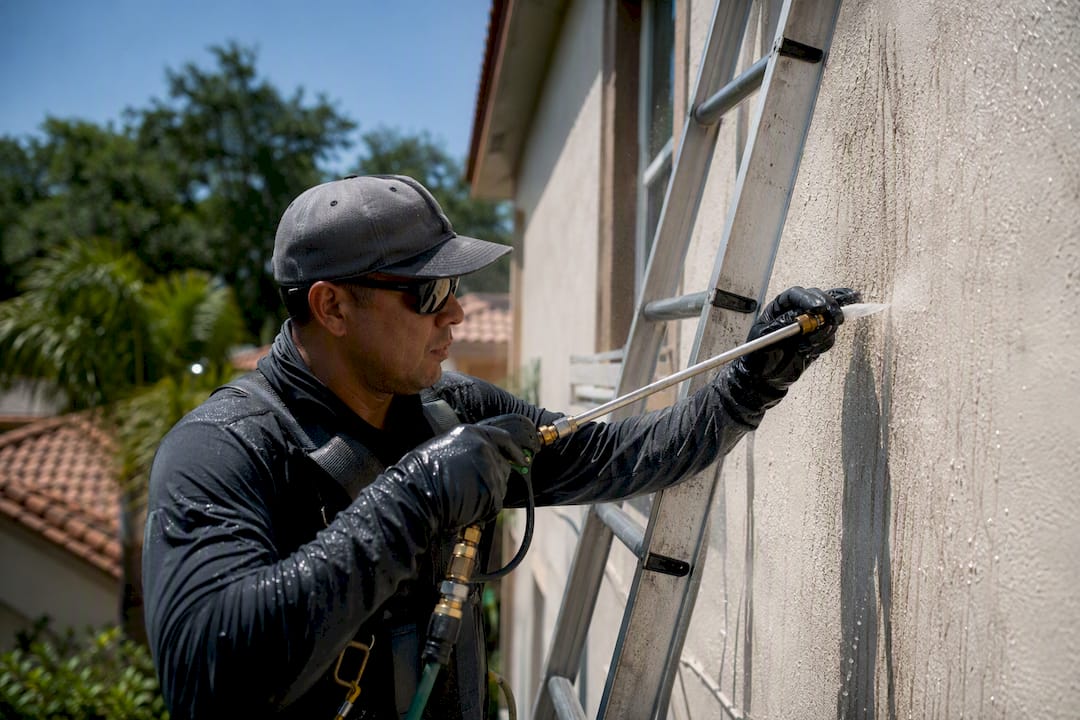
A contractor worth hiring will offer soft-wash options as the default, not the upsell, and will explain pressure limits before they ever turn on a machine. Ask for a written estimate, proof of liability insurance, and a description of the specific method they’ll use on your finish type. Vendor evaluation tips for exterior cleaning walk through exactly what separates a careful operator from one who’ll blast your finish and move on to the next job.
White Diamond Pressure Washing built its process around manufacturer-aligned, pressure-limited protocols specifically because stucco and EIFS punish shortcuts. That means matching pressure and nozzle choice to your actual substrate, not running one setting on every house on the block. Homeowners tend to notice the difference in the finish, not just the cleanliness, once the job’s done.
Book a Soft-Wash Stucco Cleaning With White Diamond
Whitediamondpressurewashing handles stucco cleaning the way this article just described: soft-wash first, pressure-limited protocols when mechanical cleaning is appropriate, and a written estimate before anyone touches your walls. That’s the difference between a crew that treats stucco like concrete and one that treats it like the delicate, coated substrate it actually is.

If you’ve got algae streaking on a shaded wall, chalky buildup that a hose won’t budge, or a painted finish you’re worried about stripping, that’s exactly the kind of job Whitediamondpressurewashing handles daily across residential and commercial properties. The team inspects for cracks and failed caulk before washing, adjusts pressure to your specific stucco type, and rinses top to bottom the same way outlined above. Get a free estimate and find out what settings your home actually needs before anyone shows up with a machine.
Frequently Asked Questions
Can you pressure wash stucco without damaging it?
Yes, if you keep pressure in the safe range for your stucco type, hold the nozzle 18 to 24 inches away, and use a wide fan tip. EIFS and painted finishes need lower pressure or a chemical soft wash instead of mechanical force.
What PSI is safe for washing a stucco house?
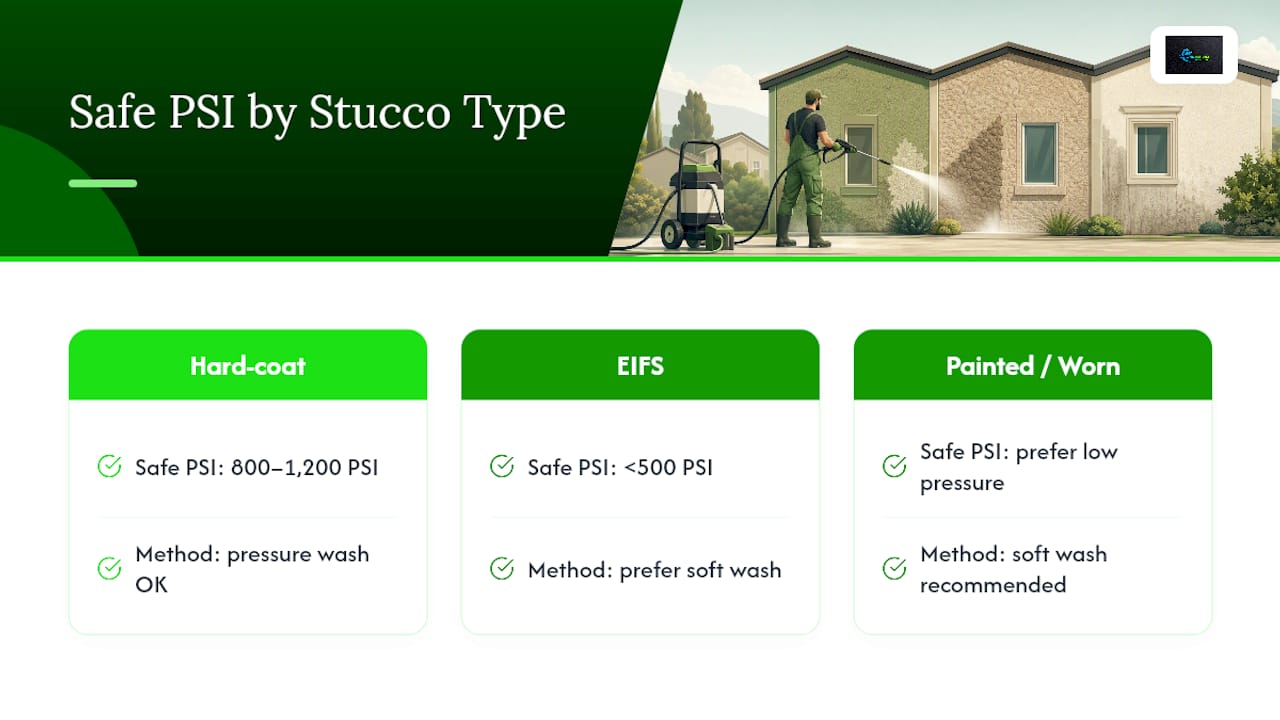
Hard-coat stucco generally handles 800 to 1,200 PSI. EIFS should stay under 500 PSI, and many professionals skip pressure entirely on EIFS in favor of soft washing.
Do you need to soft wash stucco instead of pressure wash it?
Soft washing is the safer default for EIFS, painted stucco, or any finish showing wear. It uses cleaning chemicals at low pressure to lift dirt and organic growth without eroding the texture coat.
How much does stucco cleaning typically involve?
Cost depends on square footage, staining severity, and whether repairs are needed first. A written estimate from a contractor after an on-site inspection is the most reliable way to get an accurate number for your property.
How long should stucco dry before painting after washing?
Plan on 24 to 48 hours under warm, low-humidity conditions. Shade and higher humidity extend that window, so check for interior dampness or blistering before you paint.
Sources
Recommended
- Soft Washing Process Explained: A Step-by-Step Guide for Safety – white-diamond-pressure
- Avoid These Pressure Washing Mistakes: Safer, Cleaner Home – white-diamond-pressure
- Should You Pressure Wash Painted Siding? Here’s the Safe Way – white-diamond-pressure
- Safety Protocols in Pressure Washing: Protecting Citrus County Homes – white-diamond-pressure