

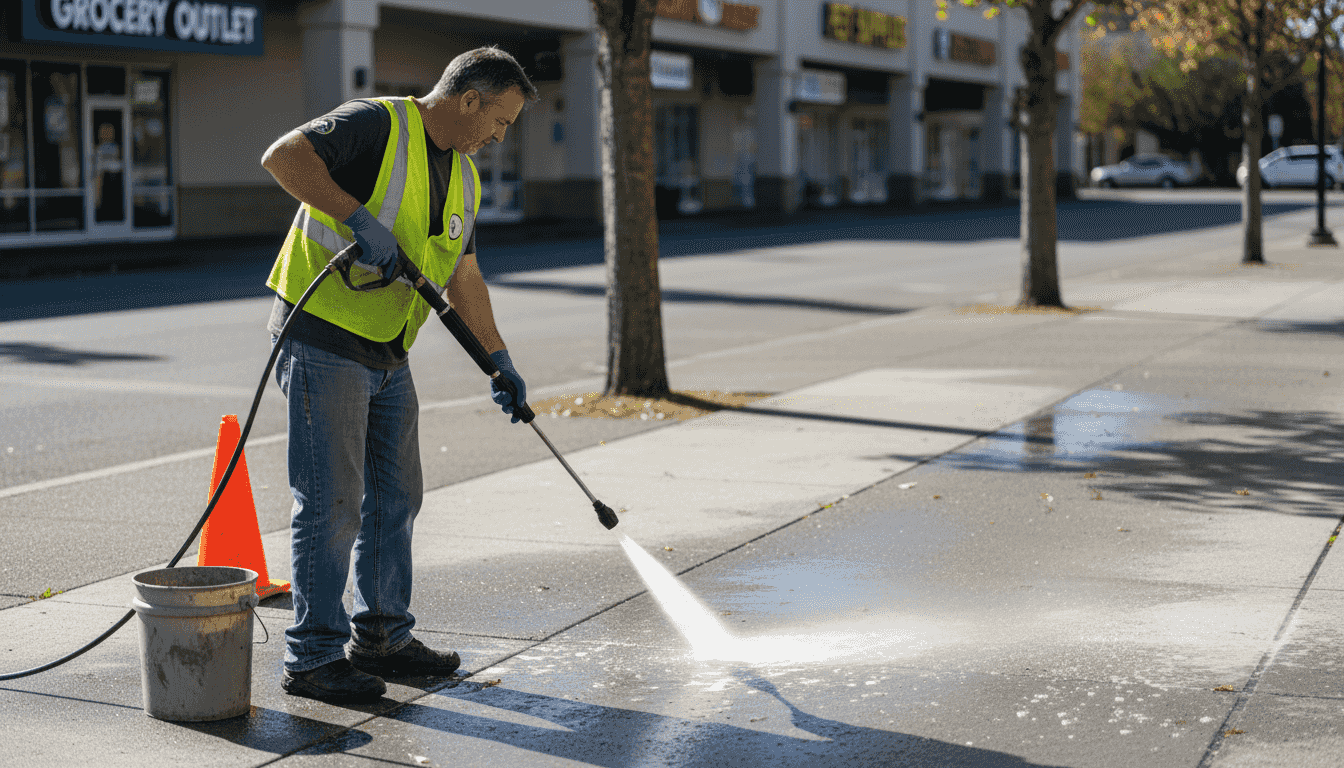
Weather in Citrus County can leave your home’s exterior looking tired and stained after just a season or two. Choosing between pressure washing and power washing can mean the difference between restoring a fresh curb appeal or causing unnecessary damage. With both methods using high-pressure water spray but differing mainly in water temperature, understanding the proper technique for your surfaces helps preserve their beauty and structure while getting the clean results you want.
Table of Contents
- Pressure Washing and Power Washing Defined
- Key Differences: Water Temperature and Applications
- Ideal Surfaces for Each Cleaning Method
- Safety, Material Preservation, and Risks
- Costs and Common Mistakes to Avoid
Key Takeaways
| Point | Details |
|---|---|
| Pressure Washing vs. Power Washing | Pressure washing uses cold water, while power washing uses heated water for more effective cleaning of tough contaminants. |
| Surface Selection | Choose the appropriate method based on surface material; power washing is ideal for industrial and heavily soiled surfaces, while pressure washing suits residential needs. |
| Safety Considerations | Proper technique and equipment knowledge are essential to avoid injuries and surface damage during pressure washing. |
| Cost Management | Pressure washing costs can vary; homeowners should prevent common mistakes to minimize unnecessary repairs and additional expenses. |
Pressure Washing and Power Washing Defined
Pressure washing and power washing are professional exterior cleaning techniques that utilize high-pressure water spray to remove dirt, grime, and debris from surfaces. While many homeowners use these terms interchangeably, subtle differences exist that are critical to understanding their applications.
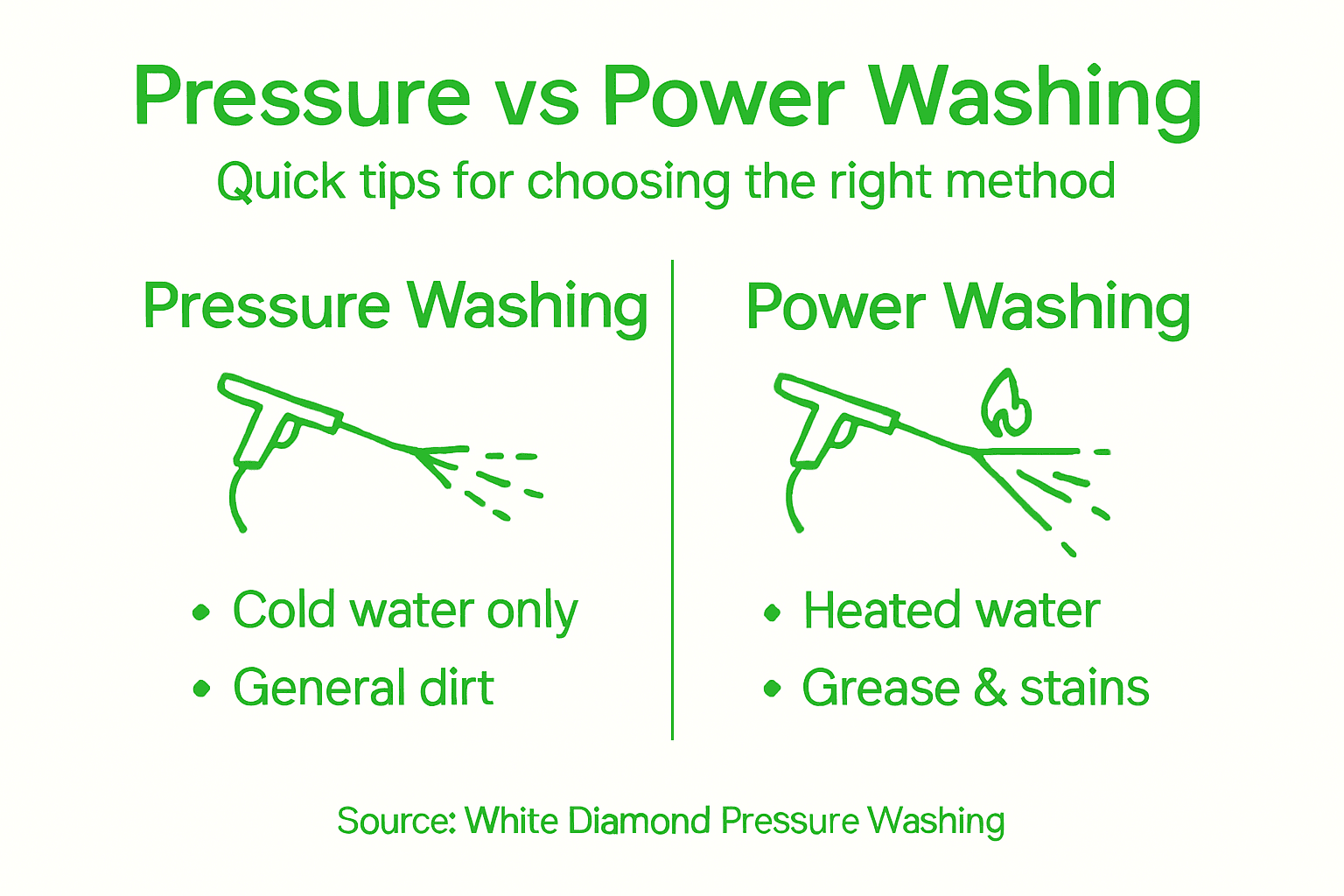
According to research, high-pressure water spray removes contaminants from buildings, concrete, and vehicles through mechanical force. Both methods employ water pressure ranging from 750 to 30,000 pounds per square inch (psi), depending on the specific cleaning requirements. The primary distinction lies in water temperature:
- Pressure Washing: Typically uses cold water
- Power Washing: Uses heated water for more intensive cleaning
Hot water power washing proves especially effective for:
- Removing tough grease and oil stains
- Sanitizing surfaces
- Breaking down stubborn organic materials
Cold water pressure washing works well for standard residential cleaning tasks like:
- Removing loose dirt and dust
- Cleaning concrete surfaces
- Preparing surfaces for painting
Professional cleaning requires understanding the nuanced differences between these techniques to protect surface integrity and achieve optimal results.
Understanding proper containment requirements is crucial, particularly when working around sensitive areas or potential lead-containing surfaces. Professionals must ensure proper work area isolation to prevent environmental contamination.
Pro tip: Always match your water pressure and temperature to the specific surface you’re cleaning to prevent potential damage.
Key Differences: Water Temperature and Applications
The core distinction between pressure washing and power washing lies in their water temperature and cleaning capabilities. Hot water power washing offers superior cleaning performance for challenging surfaces with stubborn contaminants, while cold water techniques serve different residential cleaning needs.
Power washing leverages heated water to effectively tackle complex cleaning scenarios:
- Removing heavy grease and oil stains
- Cleaning industrial surfaces like concrete driveways
- Breaking down tough organic residues
- Sanitizing commercial and industrial spaces
Cold water pressure washing remains ideal for residential applications:
- Cleaning house siding
- Washing decks and patios
- Removing standard dirt and debris
- Preparing surfaces for painting or refinishing
Professional cleaners understand that water temperature dramatically impacts cleaning effectiveness and surface preservation.
Hot water techniques enable more efficient cleaning by helping emulsify difficult substances faster than cold water methods. The burner unit in power washers generates temperatures that break down grime more quickly, making them superior for heavy-duty cleaning tasks.
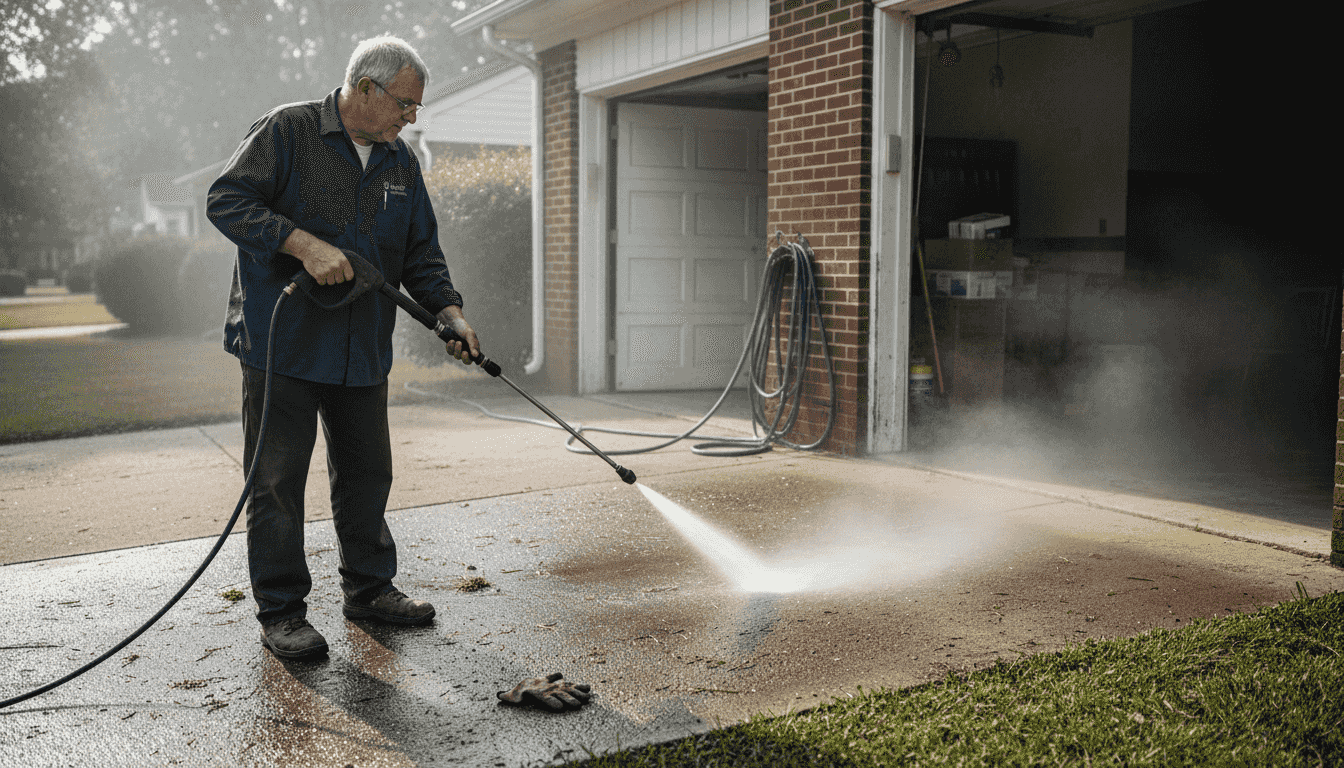
Environmental considerations also play a crucial role in selecting the appropriate washing technique. Cold water methods typically consume less energy and are more environmentally friendly for standard residential cleaning projects.
Pro tip: Always evaluate the surface material and contamination level before selecting between hot and cold water washing techniques to ensure optimal cleaning results.
Ideal Surfaces for Each Cleaning Method
Pressure washing and power washing are versatile cleaning techniques with specific applications across different surfaces. Cleaning approaches vary based on surface material and contamination type, requiring careful selection of water temperature and pressure settings.
Ideal surfaces for hot water power washing include:
- Concrete driveways
- Parking garages
- Gas station forecourts
- Industrial workshop floors
- Commercial loading docks
- Areas with heavy grease and oil buildup
Cold water pressure washing works best for residential applications:
- Wood decks
- House siding
- Outdoor furniture
- Brick pathways
- Garden walls
- Vinyl surfaces
Not all surfaces are equally suitable for high-pressure cleaning techniques.
Surface cleaners help manage large flat areas effectively, providing even cleaning across expansive spaces like patios and driveways. Specialized accessories and nozzle attachments can further customize cleaning approaches for different materials.
Professional cleaners must exercise caution with delicate surfaces such as older paint, wooden shingles, and certain automotive finishes. Inappropriate pressure can cause permanent damage, making technique selection critical for preserving surface integrity.
Pro tip: Always test a small, inconspicuous area first to ensure your chosen washing method won’t cause unexpected surface damage.
Here’s a quick reference guide to help select the right cleaning method for various surfaces:
| Surface Type | Best Method | Key Consideration |
|---|---|---|
| Concrete Driveway | Power Washing (Hot) | Removes oil; withstands high temperature |
| Wood Deck | Pressure Washing | Use low-pressure; protects wood fibers |
| Brick Pathway | Pressure Washing | Prevents mortar damage |
| Industrial Floor | Power Washing (Hot) | Handles tough grime; sanitizes |
| Vinyl Siding | Pressure Washing | Avoids melting or warping |
| Garage or Loading Dock | Power Washing (Hot) | Removes grease and industrial residues |
Safety, Material Preservation, and Risks
Pressure washing involves inherent safety risks that require careful attention and professional expertise. High-pressure water spray can cause significant injuries if not handled with proper precautions and technical knowledge.
Key safety considerations include:
- Maintaining appropriate nozzle distance
- Wearing protective personal equipment
- Avoiding direct spray towards people or pets
- Protecting delicate surface materials
- Understanding equipment operational limits
- Monitoring water pressure settings
Potential risks associated with improper pressure washing techniques:
- Paint stripping from surfaces
- Wood etching and surface damage
- Personal injury from high-pressure streams
- Equipment malfunction
- Unintended property destruction
- Water penetration into sensitive areas
Professional operators understand that safety begins with equipment knowledge and controlled technique.
Industrial pressure systems require rigorous safety protocols to prevent potential equipment failures. Regular maintenance, professional training, and systematic inspection processes are critical for minimizing operational risks.
Material preservation demands careful technique selection. Different surfaces require specialized approaches, with some materials being more vulnerable to high-pressure cleaning methods than others. Concrete and brick typically withstand more aggressive techniques, while wood, older painted surfaces, and delicate materials need gentler treatment.
Pro tip: Always consult a professional when dealing with complex surfaces or uncertain cleaning requirements to prevent potential damage.
Costs and Common Mistakes to Avoid
Pressure washing expenses can vary dramatically depending on equipment and service complexity. Consumer pressure washer models range widely in price from budget-friendly options to professional-grade investments.
Pressure washing equipment cost breakdown:
- Consumer electric models: $100-$300
- Mid-range gas-powered units: $300-$600
- Commercial-grade professional equipment: $600-$2,000
- Professional service rates: $0.15-$0.75 per square foot
Common mistakes homeowners frequently make include:
- Using incorrect water pressure
- Selecting wrong nozzle types
- Maintaining improper spraying distance
- Skipping essential safety equipment
- Neglecting surface-specific cleaning techniques
- Failing to prepare surrounding areas
Professional results demand precision, knowledge, and careful equipment selection.
Wastewater management and environmental considerations play crucial roles in responsible pressure washing. Professionals must obtain necessary permits, use environmentally friendly detergents, and implement proper disposal techniques to minimize ecological impact.
Financial risks extend beyond equipment costs. Improper techniques can lead to expensive surface damage, requiring costly repairs or complete surface replacement. Concrete, wood, paint, and delicate materials each demand specialized approaches to prevent unintended destruction.
Review this summary to avoid frequent errors and manage costs more effectively:
| Mistake Type | Cost Impact | Prevention Tip |
|---|---|---|
| Using high pressure | Surface damage | Match setting to material |
| Wrong nozzle choice | Uneven cleaning | Consult equipment manual |
| Ignoring prep steps | Increased repairs | Cover sensitive areas |
| No protective gear | Injury risk | Wear goggles, gloves, boots |
| Poor wastewater handling | Legal/clean-up fees | Use approved disposal methods |
Pro tip: Request multiple quotes from certified professionals and always verify their insurance and environmental compliance before hiring a pressure washing service.
Choose the Right Cleaning Method with Confidence
Understanding the difference between pressure washing and power washing is the first step to protecting your home or commercial property from costly damage. If you are worried about selecting the right water temperature, pressure level, or cleaning technique to preserve delicate surfaces while removing tough stains, you are not alone. Many homeowners face the challenge of matching cleaning methods to surfaces like wood decks, vinyl siding, or concrete driveways without risking damage.
At White Diamond Pressure Washing, we specialize in professional exterior cleaning solutions tailored to each surface and severity of grime. Our team uses industry-approved soft washing and low-pressure techniques alongside high-powered options when needed, ensuring your property is cleaned safely and effectively. With expert knowledge of containment, water temperature, and material preservation, you can trust us to deliver reliable results while maintaining the integrity of your home or business surfaces.

Don’t risk surface damage or ineffective cleaning by guessing the right method. Visit our website to explore how our custom pressure washing services can protect your investment. Ready for a spotless exterior with expert care? Get your free estimate today or book now for professional pressure washing tailored to your needs.
Frequently Asked Questions
What is the main difference between pressure washing and power washing?
The main difference lies in the temperature of the water used. Pressure washing typically uses cold water, while power washing utilizes heated water, making it more effective for removing tough stains and sanitizing surfaces.
When should I use power washing instead of pressure washing?
Use power washing when dealing with tough contaminants like grease, oil stains, or organic materials that require heated water for effective cleaning, particularly on industrial and commercial surfaces.
Can pressure washing damage surfaces?
Yes, if not done correctly, pressure washing can cause damage such as paint stripping, etching wood, or even personal injury. It’s essential to choose the appropriate pressure and technique based on the surface being cleaned.
What are the ideal surfaces for each cleaning method?
Power washing is best for heavy-duty surfaces like concrete driveways and industrial floors, while pressure washing is ideal for residential surfaces like house siding, wood decks, and outdoor furniture.
Recommended
- Soft Washing vs Power Washing – Choosing the Right Method – white-diamond-pressure
- Why Avoid DIY Pressure Washing at Home – white-diamond-pressure
- 7 Types of Pressure Washers Every Homeowner Should Know – white-diamond-pressure
- Why Avoid High-Pressure Washing: Lasting Home Risks – white-diamond-pressure
- How to Clean Siding on House: Easy Tips for a Fresh Look | Sabatalo Contracting
4 thoughts on “Pressure vs Power Washing—Choosing the Right Method”