

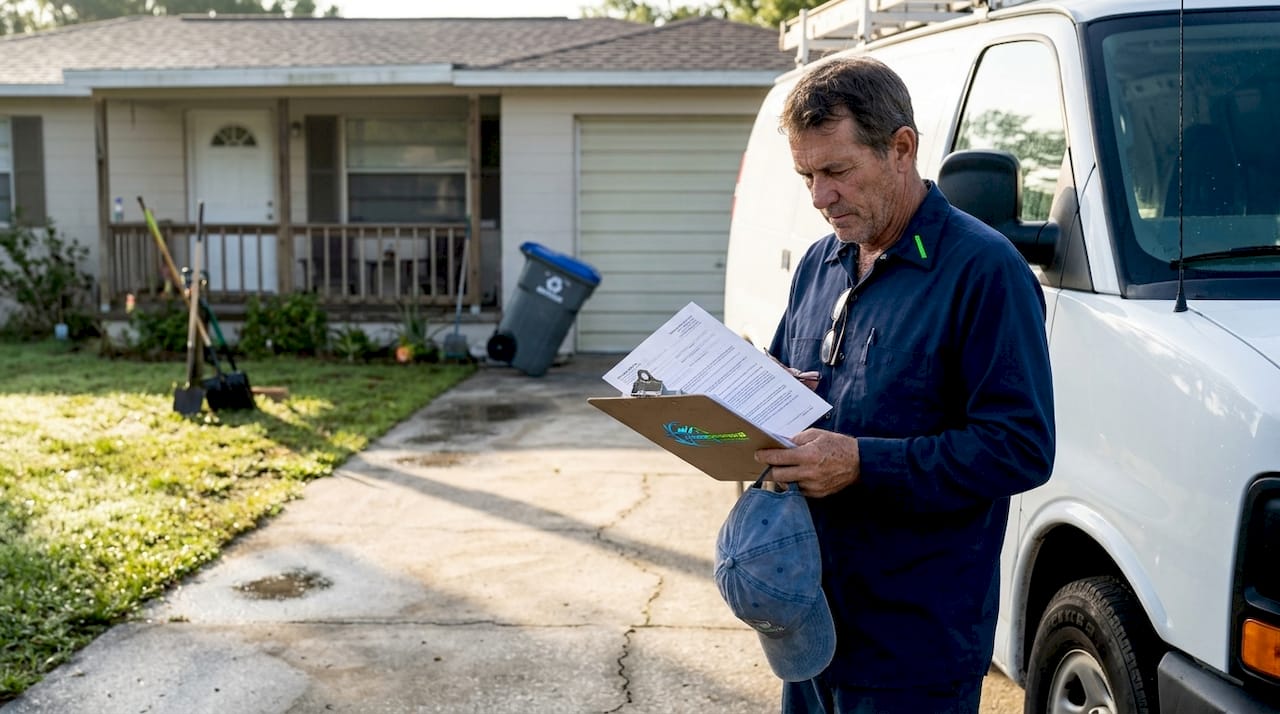
When you search for exterior cleaning services in Citrus County, you’ll see many companies advertising as “licensed professionals.” But what does that actually mean? Unlike general contractors, most exterior cleaning businesses don’t need a state contractor license in Florida. The licensing landscape is more nuanced than homeowners realize, involving local permits, insurance requirements, and professional standards that directly impact your property’s safety. Understanding these distinctions helps you make informed decisions that protect your home and investment while ensuring quality results from your cleaning service provider.
Table of Contents
- Key takeaways
- Understanding licensing and permits for exterior cleaning in Citrus County
- Why liability insurance and workers’ compensation matter for homeowners
- Proper methodologies and environmental care in Citrus County’s climate
- Risks of hiring unlicensed operators and the real benefits of licensing
- Discover trusted licensed pressure washing services in Citrus County
- Frequently asked questions
Key Takeaways
| Point | Details |
|---|---|
| Local permits matter | Florida exterior cleaning does not require a state license, so local business tax receipts prove registration. |
| BTR proves registration | A current Business Tax Receipt verifies the business is registered locally, not that it has technical expertise. |
| Insurance protects homeowners | Adequate liability and workers’ compensation insurance shield you from property damage and injuries during cleaning. |
| Unlicensed operators risk | Hiring unlicensed or uninsured workers increases your liability and the chance of costly damage without recourse. |
Understanding licensing and permits for exterior cleaning in Citrus County
The term “licensed” creates confusion for many Citrus County homeowners seeking exterior cleaning services. Florida doesn’t require state contractor licenses for general exterior cleaning or pressure washing. Instead, cleaning businesses must obtain a Business Tax Receipt (BTR) from Citrus County or their specific municipality. This local registration differs significantly from the state-level contractor licensing that applies to construction trades.
Your cleaning professional’s BTR proves they’ve registered their business locally and paid required fees. It doesn’t necessarily indicate technical training or expertise. The confusion arises because many homeowners assume “licensed” means state-certified, when it typically refers to local business registration. This distinction matters when evaluating service providers and understanding what credentials truly protect your interests.
Certain situations do require additional licensing. Bundled services may require DBPR licensing if your cleaning project includes repairs, painting, or structural modifications. A company offering roof cleaning plus minor repairs might need a contractor license for the repair portion. Pure cleaning services, however, operate under different requirements.
When vetting potential cleaning professionals, verify these credentials:
- Valid Business Tax Receipt from Citrus County or your local municipality
- Current liability insurance coverage with adequate limits
- Workers’ compensation insurance if they employ staff
- References from recent local projects similar to yours
- Clear written estimates detailing scope, methods, and timeline
Understanding licensed pressure washing importance helps you ask the right questions. Request proof of BTR and insurance certificates before signing any contract. Legitimate professionals readily provide this documentation and welcome your due diligence. Those who hesitate or make excuses often lack proper coverage, transferring risk directly to you.
Why liability insurance and workers’ compensation matter for homeowners
Insurance coverage provides the real protection that licensing alone cannot guarantee. Licensed professionals carry required liability insurance and workers’ compensation, shielding homeowners from financial disaster if something goes wrong during cleaning. Without this coverage, you become personally liable for property damage or injuries occurring on your property.
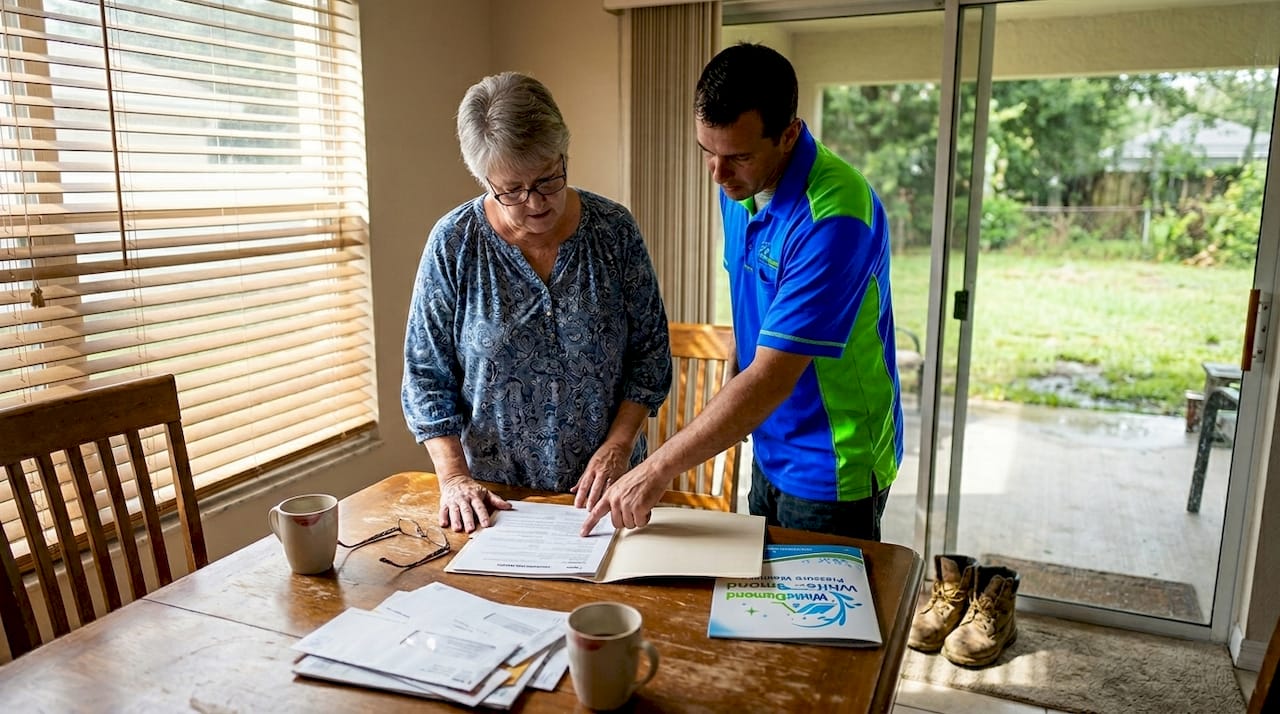
Consider the financial exposure. Uninsured damage costs include cracked concrete at $2,000 to $8,000 and roof leaks ranging from $3,000 to $12,000. If an uninsured cleaner damages your driveway or roof, you’ll pay these costs out of pocket. Their lack of insurance leaves you with no recourse for recovery. The initial savings from hiring a cheaper, uninsured operator evaporates when damage occurs.
Workers’ compensation protects you from even greater liability. If an uninsured cleaner falls from your roof or suffers injury on your property, you could face medical bills, lost wages, and legal fees exceeding $50,000. Florida law may hold property owners liable for contractor injuries when proper insurance isn’t in place. This risk far outweighs any cost savings from budget services.
Pro Tip: Always request current certificates of insurance before work begins. Call the insurance company directly to verify coverage is active and adequate. Certificates can be forged, but a quick phone call confirms legitimacy and protects your interests.
“The cheapest quote often becomes the most expensive mistake. Proper insurance isn’t an optional extra, it’s your financial protection when things go wrong.”
Insured professionals also demonstrate accountability. Companies investing in proper coverage typically maintain higher standards because they have more to lose. Their insurance carriers often require safety protocols and quality standards that benefit you. Understanding pressure washing safety protocols in Citrus County reveals how insured professionals approach risk management differently than unlicensed operators.
Verify these insurance elements:
- General liability coverage of at least $1 million per occurrence
- Workers’ compensation for all employees (not just subcontractors)
- Current policy dates that cover your project timeline
- Your property listed as additional insured for the project duration
Proper methodologies and environmental care in Citrus County’s climate
Citrus County’s humid subtropical climate demands specialized cleaning approaches that protect both your property and the local environment. Different surfaces require distinct pressure levels and cleaning solutions. Professionals use correct methodologies like soft washing under 500 PSI for roofs and stucco versus high pressure for concrete, preventing damage that amateur cleaners often cause.
Soft washing uses lower water pressure combined with specialized detergents to clean delicate surfaces safely. This method works exceptionally well on roofs, painted surfaces, and stucco common in Citrus County homes. High-pressure washing, while effective for concrete driveways and walkways, can strip paint, damage wood, and crack stucco when misapplied. Licensed professionals understand these distinctions and select appropriate methods for each surface.
| Surface Type | Recommended Method | Typical PSI Range | Key Considerations |
|---|---|---|---|
| Asphalt Shingle Roofs | Soft Washing | 100-500 PSI | Prevents granule loss and shingle damage |
| Tile Roofs | Low Pressure | 500-1200 PSI | Protects tile integrity and underlayment |
| Vinyl Siding | Soft Washing | 100-500 PSI | Prevents water intrusion behind panels |
| Stucco Exterior | Soft Washing | 100-500 PSI | Avoids cracking and moisture penetration |
| Concrete Driveways | High Pressure | 2500-3500 PSI | Removes deep stains effectively |
| Wood Decks | Low Pressure | 500-1200 PSI | Prevents splintering and surface damage |
Environmental compliance matters significantly in Florida. Citrus County humidity requires pros to manage runoff compliantly with Florida Department of Environmental Protection rules. Licensed professionals use containment systems and biodegradable cleaning agents that protect local waterways. Improper runoff can contaminate storm drains, harm aquatic life, and result in fines for property owners.
Experienced cleaners also protect your landscaping and home systems during cleaning:
- Cover and protect plants, shrubs, and grass from chemical exposure
- Shield electrical fixtures, outlets, and HVAC units from water damage
- Prevent water intrusion around windows, doors, and foundation
- Use appropriate nozzles and spray patterns for each surface type
- Apply cleaning solutions at correct dilution rates for effectiveness and safety
Pro Tip: Ask potential cleaners to explain their surface-specific approach before hiring. Professionals who discuss PSI ranges, cleaning agents, and protection methods demonstrate genuine expertise. Those offering one-size-fits-all solutions likely lack the knowledge to protect your property properly.
The soft washing process explained step by step reveals the technical precision required for safe exterior cleaning. Understanding pressure versus power washing helps you evaluate whether a service provider truly grasps the methodological differences that protect your home.
Risks of hiring unlicensed operators and the real benefits of licensing
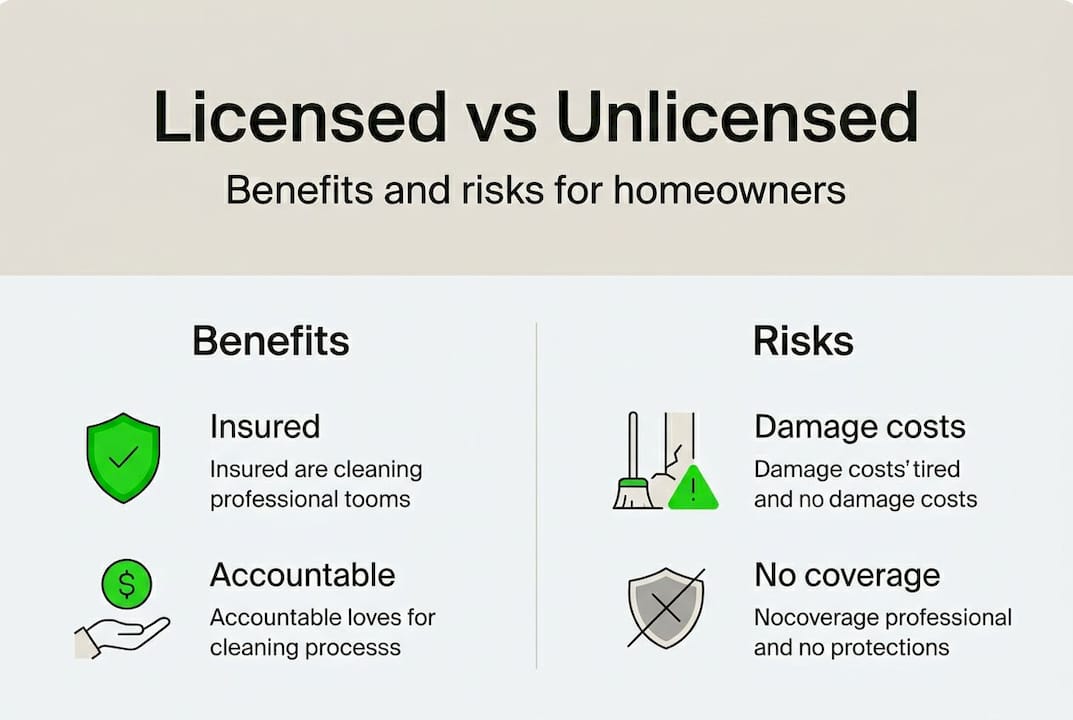
Unlicensed and uninsured operators create substantial risks that extend beyond poor cleaning results. Unlicensed operators pose risks including no accountability for damage, poor results, and legal liability transferred to homeowners. When problems arise, you have limited recourse against operators without proper business registration and insurance coverage.
Common problems from unlicensed cleaners include damaged roofing materials, cracked concrete, stripped paint, water intrusion, destroyed landscaping, and electrical system damage. These operators often lack training in proper techniques and environmental regulations. Their lower prices reflect reduced overhead from skipping insurance, permits, and professional development. You pay the difference when their mistakes require expensive repairs.
Personal liability represents the greatest risk. If an unlicensed cleaner injures themselves on your property, you could face workers’ compensation claims even though they’re not your employee. Florida courts sometimes hold property owners responsible for contractor injuries when proper insurance isn’t verified. Medical bills, lost wages, and legal defense costs can exceed $100,000 for serious injuries.
Interestingly, licensing has little empirical impact on cleaning health and safety outcomes according to research studies. The benefits center mainly on liability protection and method expertise rather than guaranteed superior results. This finding doesn’t diminish licensing’s value, it clarifies what licensing actually provides: accountability, insurance requirements, and professional standards rather than safety guarantees.
Licensed professionals typically offer these advantages:
- Formal training in surface-specific cleaning methods and safety protocols
- Knowledge of local environmental regulations and compliance requirements
- Investment in proper equipment and biodegradable cleaning products
- Clear contracts outlining scope, timeline, and warranty terms
- Established business presence with verifiable references and reviews
Pro Tip: Check online reviews across multiple platforms, but focus on detailed reviews describing specific situations. Generic five-star reviews may be fabricated, while detailed accounts of how professionals handled challenges reveal true character and expertise.
The real value of working with licensed professionals lies in risk transfer and accountability. When you hire properly licensed and insured cleaners, their insurance covers damage and injuries. You gain legal recourse through their business registration if disputes arise. These protections justify higher costs compared to unlicensed operators whose savings disappear when problems occur.
Exploring benefits of exterior cleaning reveals how professional services protect and enhance your property value. Licensed professionals deliver these benefits with minimized risk to homeowners through proper insurance and accountability structures.
Discover trusted licensed pressure washing services in Citrus County
Protecting your Citrus County home requires choosing licensed, insured professionals who understand local conditions and regulations. White Diamond Pressure Washing combines proper licensing, comprehensive insurance coverage, and expertise in climate-appropriate cleaning methods that protect your investment. Their team specializes in soft washing and low-pressure techniques that safely clean roofs, siding, driveways, and walkways without causing damage common with improper methods.

Their professional exterior cleaning services comply with Florida environmental regulations while delivering exceptional results. You benefit from liability protection, expert surface-specific techniques, and the peace of mind that comes from working with accountable professionals. Their established presence in Citrus County means they understand local building materials, climate challenges, and homeowner needs.
Explore how licensed pressure washing importance translates into tangible protection for your property. Schedule a consultation to discuss your exterior cleaning needs with professionals who prioritize both results and your financial protection.
Frequently asked questions
What licensing do exterior cleaning professionals actually need in Citrus County?
Exterior cleaning professionals in Citrus County need a local Business Tax Receipt rather than a state contractor license for basic pressure washing services. This BTR proves business registration with the county or municipality. They must also carry liability insurance and workers’ compensation if employing staff, though these are insurance requirements rather than licenses.
How does liability insurance protect me as a homeowner?
Liability insurance transfers financial responsibility for property damage from you to the cleaning company’s insurer. If a professional cracks your driveway or damages your roof during cleaning, their insurance pays repair costs. Without this coverage, you pay out of pocket or sue the operator personally, often unsuccessfully if they lack assets.
Do licensed professionals cost significantly more than unlicensed operators?
Licensed professionals typically charge 15 to 30 percent more than unlicensed operators due to insurance costs, proper equipment, and business overhead. However, this premium provides damage protection worth thousands of dollars and eliminates your liability risk. The apparent savings from unlicensed cleaners evaporates when damage or injuries occur, making licensed professionals more cost-effective.
What cleaning methods work best for Citrus County’s humid climate?
Soft washing with pressures under 500 PSI works best for roofs, siding, and stucco in Citrus County’s humid environment. This method uses specialized detergents to kill mold, mildew, and algae that thrive in moisture without damaging surfaces. High-pressure washing suits concrete surfaces but damages delicate materials common in Florida homes.
How can I verify a cleaning professional’s credentials before hiring?
Request their Business Tax Receipt number and verify it with Citrus County or your local municipality. Ask for current insurance certificates showing liability coverage and workers’ compensation, then call the insurance company directly to confirm active policies. Check online reviews across multiple platforms and request references from recent local projects similar to yours.
Recommended
- Importance of Licensed Pressure Washing for Citrus County Homes – white-diamond-pressure
- Why Invest in Exterior Cleaning for Citrus County Homes – white-diamond-pressure
- Importance of Driveway Cleaning for Citrus County Homes – white-diamond-pressure
- Why Choose Professional Pressure Washing Services – white-diamond-pressure