

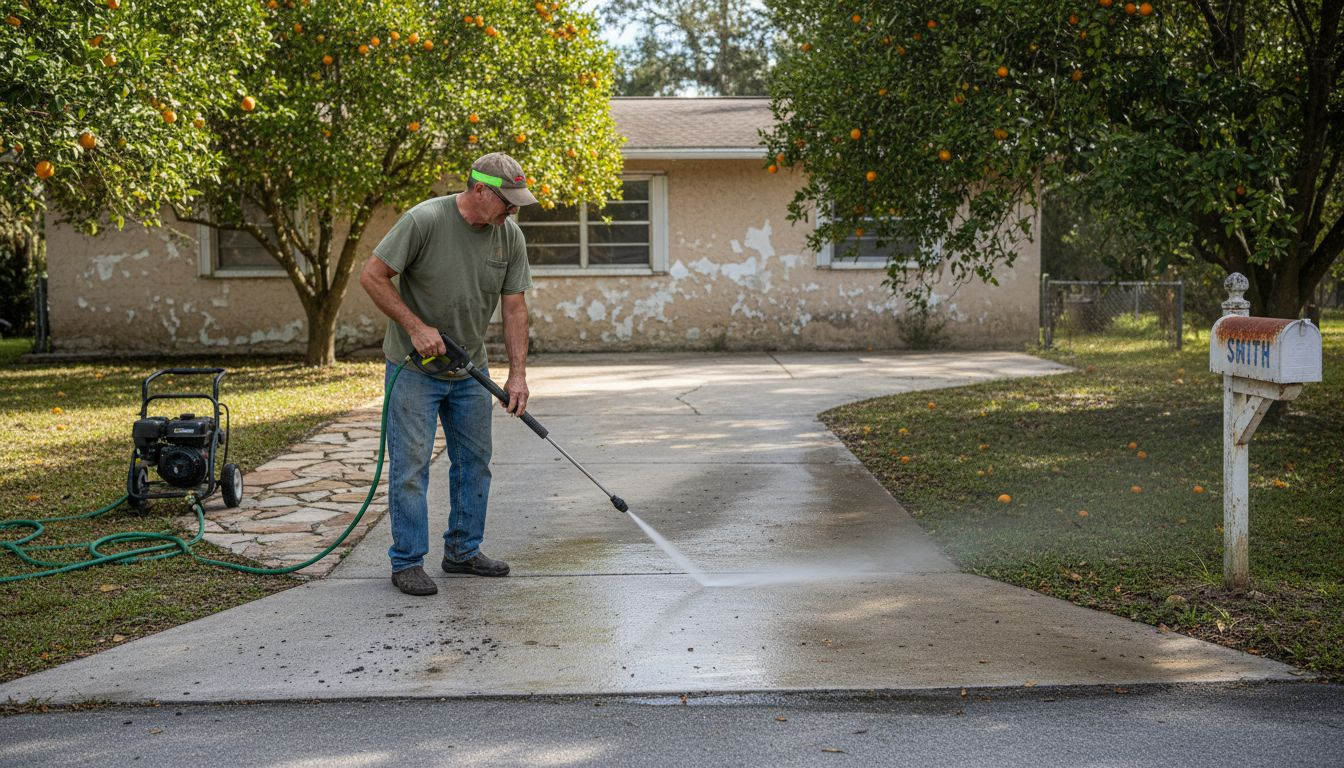
Every Citrus County homeowner knows how quickly moss, mildew, and grime can dull the look of a driveway. With our humid Florida weather and constant vehicle traffic, keeping this space clean feels like an ongoing battle. Driveway cleaning is more than just hosing down a surface. It removes the stains and organic growth that can lead to cracks, slippery conditions, and costly repairs. Regular, professional cleaning preserves your driveway’s material, boosts curb appeal, and protects the investment you’ve made in your property.
Table of Contents
- What Is Driveway Cleaning And Why It Matters
- Types Of Driveway Surfaces And Cleaning Methods
- Matching Your Surface To The Right Cleaning Method
- How Professional Driveway Cleaning Works
- The Science Behind Professional Cleaning
- Impacts On Curb Appeal And Property Value
- The Financial Reality Of Maintenance Versus Neglect
- Risks Of Neglected Driveway Maintenance
- Choosing Safe And Effective Cleaning Solutions
Key Takeaways
| Point | Details |
|---|---|
| Driveway Cleaning Importance | Regular driveway cleaning enhances curb appeal and protects the material from damage caused by stains and moisture retention. |
| Professional Services Benefit | Hiring professionals ensures appropriate methods and cleaning products that preserve your driveway’s integrity and appearance. |
| Financial Implications | Consistent maintenance costs a fraction of potential repair or replacement expenses, preserving property value. |
| Safety Considerations | Neglected driveways can pose safety risks due to slippery surfaces, increasing the likelihood of accidents. |
What Is Driveway Cleaning and Why It Matters
Your driveway is often the first thing visitors see when they approach your home. Unfortunately, it’s also one of the hardest working surfaces on your property, constantly exposed to the elements, vehicle traffic, and accumulating debris. Driveway cleaning involves removing moss, dirt, grime, and oil stains that settle into the surface over time. In Citrus County’s humid climate, this buildup happens faster than you might expect. Mildew and algae thrive in our moisture-rich environment, creating slippery surfaces and darkening what should be an attractive entry to your home. What starts as minor discoloration quickly becomes embedded, making basic sweeping and hosing ineffective. This is where professional cleaning steps in to restore both appearance and safety.
The real value of driveway cleaning goes beyond curb appeal, though that matters plenty. Your driveway is typically made of concrete, asphalt, brick, or similar materials that require ongoing maintenance to prevent cracking, staining, and structural degradation. When you ignore buildup and stains, you’re allowing moisture and contaminants to penetrate the surface. Over time, this penetration weakens the material from within. Cracks expand, potholes develop, and what seemed like a cosmetic issue becomes a costly structural problem. Regular cleaning interrupts this destructive cycle by removing substances before they bond with the material itself. This preventive approach protects your investment and extends your driveway’s lifespan by years. Beyond preservation, a clean driveway signals that you maintain your property. It increases curb appeal measurably, which directly impacts how potential buyers perceive your home if you ever sell. Realtors consistently note that clean, well-maintained driveways influence first impressions during showings.
Citrus County homes face unique challenges that make professional cleaning particularly valuable. Our region’s combination of humidity, seasonal rainfall, and proximity to vegetation creates ideal conditions for moss, mildew, and algae growth. These aren’t just cosmetic problems. The organic buildup holds moisture against your driveway surface, accelerating deterioration. Additionally, pressure from vehicle tires and the sun’s UV rays working together break down surface sealants over time. When you apply appropriate cleaning methods, you’re not just making your driveway look better. You’re actively protecting the material, maintaining functionality, and preserving your home’s overall value. Professional services use techniques calibrated to handle each surface type safely, avoiding the damage that can result from incorrect pressure or inappropriate cleaning solutions.
Pro tip: Schedule driveway cleaning during spring or fall when the weather is mild and growth is active but not at its peak. This timing maximizes visibility of what needs cleaning while conditions remain optimal for thorough removal.
Types of Driveway Surfaces and Cleaning Methods
Not all driveways are created equal, and what works beautifully for one surface can damage another. Your driveway material determines everything from how often you need cleaning to which techniques are safe to use. The most common driveway surfaces in Citrus County homes include concrete, asphalt, pavers, gravel, and crushed stone. Concrete driveways are durable and low-maintenance, making them popular choices for homeowners wanting longevity. Asphalt offers affordability and quick installation but requires more regular maintenance due to UV exposure and oil penetration. Pavers provide aesthetic appeal and allow for creative designs, though they demand careful handling during cleaning. Gravel and crushed stone driveways are budget-friendly options but need periodic raking and material replenishment. Understanding your specific surface type is the first step toward effective maintenance.
Each driveway material requires a tailored approach to cleaning. Concrete and pavers benefit from pressure washing combined with mild detergents that lift dirt without etching the surface. Asphalt responds best to gentler pressure settings and often needs regular sealcoating to prevent damage from oil stains and UV rays. For gravel driveways, the focus shifts entirely to raking out debris and adding fresh material to maintain proper drainage and appearance. Professional cleaners adapt their methods based on the surface, avoiding the high-pressure blasting that can crack concrete, dislodge pavers, or scatter gravel. This customization is critical because using the wrong technique not only fails to clean effectively but can cause thousands of dollars in damage. Chemical cleaners and eco-friendly solutions also vary depending on what you’re treating. Degreasing agents work wonders on asphalt oil stains but might be unnecessary for concrete that’s primarily dirty from organic growth.
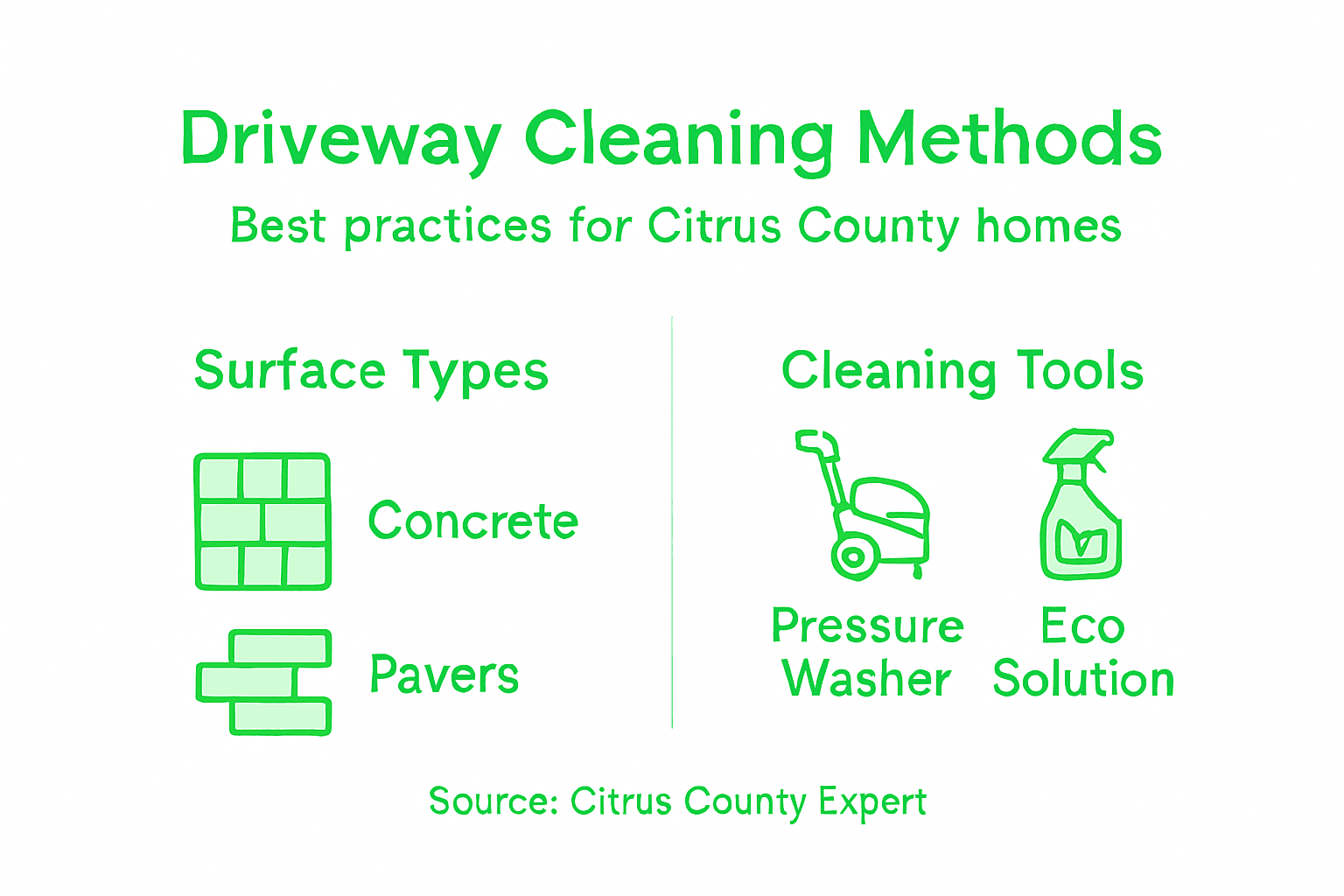
Here’s a comparison of common driveway surfaces and their ideal cleaning approaches:
| Surface Type | Recommended Cleaning Method | Maintenance Frequency | Special Considerations |
|---|---|---|---|
| Concrete | Pressure washing, mild detergent | Every 12–18 months | Avoid etching, protect joints |
| Asphalt | Low-pressure wash, degreaser | Every 12–18 months | Needs sealcoating after cleaning |
| Pavers | Soft wash, gentle cleaner | Every 12–18 months | Protect joint sand, low pressure |
| Gravel/Crushed | Raking, material replacement | Twice yearly | Maintain edge control |
Matching Your Surface to the Right Cleaning Method
When you work with professionals, they assess your driveway material first and then select appropriate cleaning solutions. Soft washing and low-pressure techniques protect delicate surfaces while still removing stubborn buildup. For instance, a concrete cleaning process might involve pre-treating mold and mildew with a specialized solution, allowing it to work for 15 to 20 minutes, then rinsing with controlled pressure. Asphalt cleaning typically requires lower pressure to avoid gouging but benefits from chemical treatments that break down oil and tar. Brick and natural stone pavers need even more caution, as high pressure can force water into joints and compromise the foundation. Gravel driveways skip pressure washing altogether in favor of raking, edging, and sometimes applying a stabilizing agent to prevent spreading.
The timeline for cleaning also depends on your surface and Citrus County’s environmental factors. Concrete and asphalt typically need professional cleaning every 12 to 18 months, while gravel might need refreshing twice yearly. If your driveway has significant staining, moss, or algae, the cleaning method becomes more intensive but remains tailored to your specific material. Neglecting this customization is where most DIY cleaning goes wrong. Homeowners rent pressure washers, crank them to maximum settings, and end up with pitting on concrete or exposed gravel. Professional services have the equipment, knowledge, and experience to know exactly what each surface can tolerate.
Pro tip: Ask your cleaning service to identify your driveway material and recommend a maintenance schedule specific to it, since concrete, asphalt, and pavers all have different longevity expectations and cleaning intervals.
How Professional Driveway Cleaning Works
Professional driveway cleaning is not simply pointing a hose at your surface and hoping for the best. It’s a methodical process that begins before any water or pressure enters the picture. When a cleaning technician arrives, they first assess your driveway’s condition, material type, and any problem areas requiring special attention. This inspection determines which cleaning method will be used, what chemical treatments are appropriate, and whether your landscaping needs protection during the process. The preparation phase includes clearing loose debris through sweeping or blowing, which prevents dirt from becoming a slurry that can scratch your surface during pressure washing. Technicians also identify and mark areas with delicate plants, decorative elements, or surfaces that need extra caution. This planning step separates professional results from amateur damage.
Once preparation is complete, professionals apply chemical treatments designed to kill moss and algae without harming your driveway or nearby vegetation. These solutions work by breaking down organic growth at a molecular level, making the subsequent cleaning much more effective. Common treatments include diluted bleach solutions for organic growth or specialized degreasing agents for oil stains on asphalt. The chemicals are allowed to dwell on the surface for 15 to 20 minutes, giving them time to penetrate and dissolve buildup before rinsing. This is where patience matters. Rushing this step means the chemicals never fully activate, and you end up with incomplete cleaning. After the dwell time, professionals use pressure washers with calibrated settings specific to your driveway material. Concrete might tolerate 2500 to 3000 PSI, while asphalt requires gentler 1500 to 2000 PSI to avoid damage. Pavers and natural stone get even lower pressure combined with soft washing techniques that protect the surface while still removing stubborn stains.
The Science Behind Professional Cleaning
What makes professional cleaning fundamentally different from DIY approaches is the combination of equipment precision and chemical knowledge. Professionals understand that approved cleaning agents suitable for driveway materials ensure long-term preservation while minimizing environmental impact. They use low-pressure, high-volume rinsing rather than high-pressure blasting, which is gentler on surfaces but still removes buildup effectively. The final step involves thorough rinsing with clean water to remove all chemical residue and prevent mineral deposits from forming. For Citrus County homes, this is particularly important because our water can be hard, leaving behind whitish residue if not properly rinsed. Many professional services also apply optional protective sealers after cleaning, which repel water and prevent future staining.
The entire process typically takes 2 to 4 hours depending on driveway size and condition. Homeowners are instructed to avoid driving on the freshly cleaned surface for at least 24 to 48 hours, allowing any applied treatments to fully cure. Professional cleaning addresses not just visible dirt but also microscopic organic growth, oxidized surface layers, and embedded contaminants that regular washing never touches. This depth of cleaning extends your driveway’s lifespan by years and maintains its structural integrity. When you compare the cost of professional cleaning to the price of driveway replacement, the investment becomes obvious. A professional service costs a few hundred dollars once every 12 to 18 months. Replacing a driveway runs into thousands. The math works out in favor of regular professional maintenance.
Pro tip: Request that your cleaning service apply a protective sealant after washing your concrete or asphalt driveway, as this single step can reduce the frequency of future cleanings and dramatically extend your driveway’s lifespan.
Impacts on Curb Appeal and Property Value
Imagine a potential buyer driving down your Citrus County street. Their first impression forms in seconds, and it often centers on what they see from the street. Your driveway occupies a significant portion of that initial visual experience. A clean, well-maintained driveway signals that you care about your property, while a stained, moss-covered surface tells a different story. This matters because curb appeal can add up to 7 percent to a home’s value at sale. That percentage translates to real money. On a $400,000 home, that’s an additional $28,000 in perceived value, often determined within the first 10 seconds of viewing. Your driveway is one of the easiest elements to control and improve, yet homeowners frequently overlook it. A professional cleaning costs a few hundred dollars and can directly influence how much your property is worth when you decide to sell.
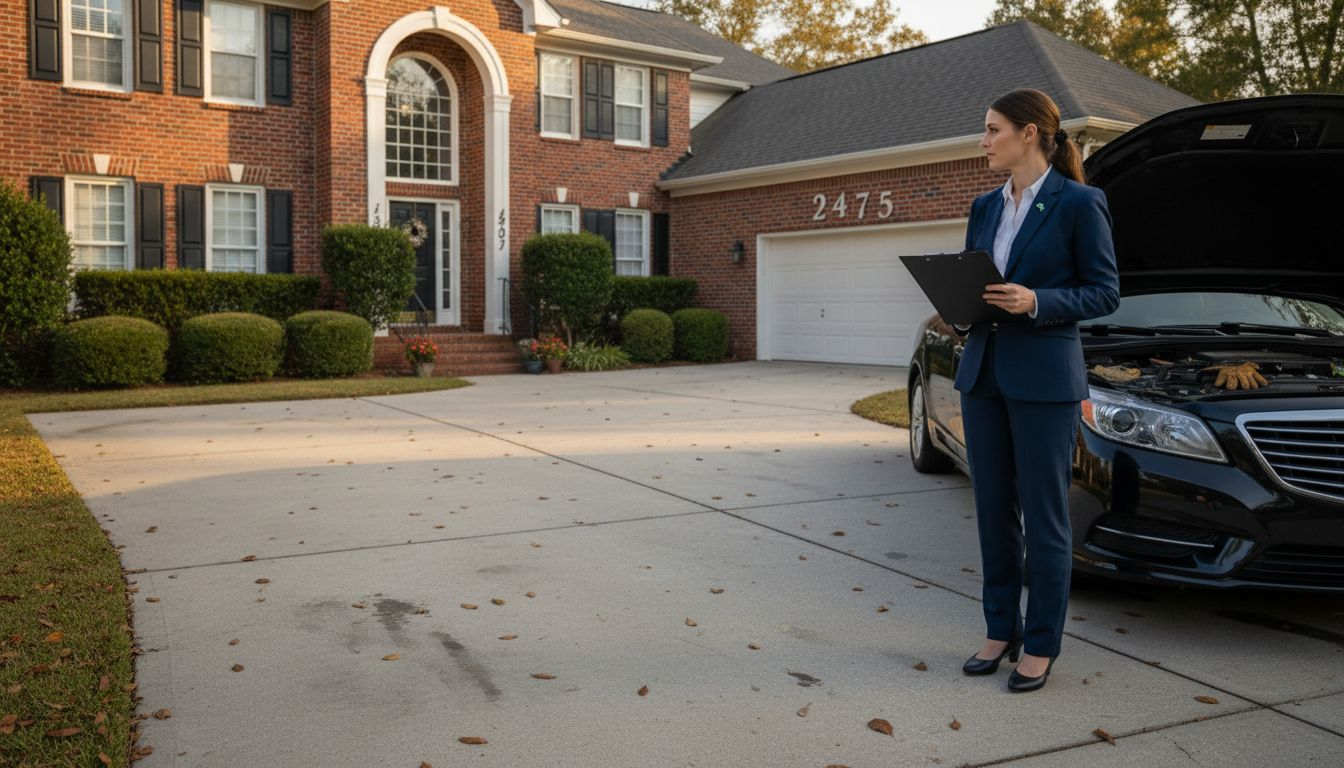
Real estate professionals understand that buyers make emotional decisions before rational ones. A clean driveway surrounded by manicured landscaping creates a narrative of care and maintenance. Conversely, visible stains, cracks, and organic growth raise questions about what else might be neglected. Property appraisers use visual assessments to value homes, and driveway condition factors into their evaluations. When a home appears well-maintained on the exterior, appraisers are more likely to assume the interior has received similar attention. This psychological anchoring effect means that driveway cleanliness indirectly influences how appraisers evaluate your roof, gutters, plumbing, and electrical systems. You’re not just cleaning concrete; you’re telling a story about how you maintain your entire property. In competitive real estate markets like Citrus County, where multiple homes compete for buyer attention, this story matters enormously. Homes with visibly clean driveways spend less time on the market and often sell closer to asking price.
The Financial Reality of Maintenance Versus Neglect
Consider the long-term financial implications of ignoring driveway maintenance. A clean driveway cost roughly $300 to $500 for professional cleaning in Citrus County. Ignore it for three years, and you might need to invest in crack sealing, spot repairs, or even partial resurfacing, which runs $500 to $2,000. Ignore it for seven years, and replacement costs enter the equation at $3,000 to $8,000 or more depending on size and material. The math becomes painfully clear. Regular professional cleaning extends your driveway’s lifespan, prevents expensive damage, and maintains property value. Beyond the direct cost savings, a clean driveway appeals to buyers emotionally and rationally. It suggests the home was properly maintained, reducing their anxiety about hidden problems. This confidence often translates into higher offers and faster sales. When you’re trying to sell, every percentage point of increased value matters. A 7 percent boost on a $400,000 home is substantial. On a $600,000 home, it’s $42,000. That money came from a clean driveway and the impression it created.
The relationship between exterior appearance and property value isn’t superficial. Investors, appraisers, and buyers consistently demonstrate that they value homes with clean, well-maintained exteriors. Your driveway is the gateway to your property, and it deserves investment. Professional cleaning is one of the highest-return maintenance tasks available to homeowners. You spend a few hundred dollars once or twice yearly, and you potentially preserve thousands in property value while extending your driveway’s lifespan. In Citrus County’s humid climate, where moss and algae grow aggressively, professional cleaning becomes even more critical. What might be optional in drier regions becomes practically essential here. The question isn’t whether you can afford professional driveway cleaning. It’s whether you can afford not to clean it.
This table summarizes the financial impact of professional maintenance versus neglect:
| Scenario | Estimated 10-Year Cost | Structural Impact | Resale Value Effect |
|---|---|---|---|
| Regular professional | $3,000–$5,000 | Surface and base preserved | Boosts buyer confidence |
| Three years neglect | $800–$2,000 repairs | Early cracks, stains | Minor value reduction |
| Seven+ years neglect | $3,000–$8,000+ replace | Major damage, full replace | Significant loss, longer sale |
Pro tip: Schedule a professional cleaning before listing your home for sale, even if the sale is months away, as this positions your property to compete effectively during showings and improves your chances of receiving multiple offers.
Risks of Neglected Driveway Maintenance
Neglecting your driveway isn’t a victimless choice. What seems like a minor cosmetic issue today becomes a dangerous and expensive problem tomorrow. When moss, algae, and grime accumulate on your driveway surface, they do more than create an unattractive appearance. These organic materials trap moisture against the concrete or asphalt, beginning a destructive cycle that weakens the structural integrity of your driveway from within. In Citrus County’s humid climate with frequent rain and morning dew, this moisture retention accelerates dramatically. The problem compounds because neglected moss and algae impede efficient water drainage, fostering further damage from moisture retention and freeze-thaw cycles. Even during our mild winters, temperature fluctuations cause water trapped in surface cracks to expand and contract repeatedly. Each cycle makes cracks deeper and wider. What started as a hairline fracture becomes a full-width chasm in just a few years. Your driveway’s lifespan decreases significantly, and repair costs skyrocket accordingly.
The safety implications of neglected driveways extend beyond property damage. A moss-covered or algae-laden driveway becomes dangerously slippery, especially when wet or during morning hours when dew covers the surface. This creates serious injury risks for you, your family, and anyone visiting your home. Vehicles can experience reduced traction, increasing accident risk when entering or exiting your driveway. Your own liability increases if a visitor slips and falls on your neglected surface. Beyond pedestrian hazards, structural damage such as cracks and potholes can lead to safety hazards like vehicle damage. A pothole that develops from deferred maintenance can cause tire damage, bent rims, or suspension problems. These repairs average $300 to $500 per incident. One accident covers the cost of years of professional cleaning. The financial math becomes indefensible when you factor in liability concerns and potential injury lawsuits.
The Escalating Cost of Delayed Repairs
Time is your enemy when it comes to driveway maintenance. Small problems ignored become large problems requiring expensive solutions. Consider this progression: A clean driveway costs $300 to $500 annually in professional maintenance. A driveway with early-stage staining and moss growth still responds well to professional cleaning at the same price. But a driveway that has been neglected for three to five years often requires pressure washing combined with crack sealing and spot repairs, running $800 to $1,500. After five to seven years of neglect, you’re looking at partial resurfacing or overlay work at $1,500 to $3,500. Complete driveway replacement becomes necessary after a decade of neglect, costing $3,000 to $8,000 or more depending on size and material. The homeowner who spent $400 annually on maintenance invested $4,000 over ten years and maintained a durable driveway. The homeowner who ignored the problem spent nothing initially but faced a complete replacement bill that far exceeds what regular maintenance would have cost. The delay creates compounding expense, not savings.
Beyond immediate financial costs, neglected driveways damage your property’s overall value and marketability. A driveway in advanced stages of deterioration signals to potential buyers that the property hasn’t been maintained properly. This perception leads to lower offers, longer time on market, and increased negotiating leverage for buyers. Some prospective buyers simply won’t make an offer if the driveway condition suggests deeper maintenance issues. In competitive real estate markets like Citrus County, a neglected driveway can be the deciding factor that causes a buyer to choose a competing property. Regular professional cleaning prevents this damage spiral entirely. You maintain a durable, attractive driveway that functions safely and looks appealing. Your property retains its value. You avoid expensive emergency repairs. Prevention always costs less than restoration.
Pro tip: Establish a maintenance schedule with a professional cleaning service and stick to it consistently, as regular preventive cleaning costs a fraction of what emergency repairs and driveway replacement will eventually cost.
Choosing Safe and Effective Cleaning Solutions
Not all cleaning solutions work equally well, and some can actually damage your driveway or harm your family and pets. This is where understanding your options becomes critical. When you’re shopping for driveway cleaners or evaluating professional services, you need to know what chemicals are safe, what actually works, and what might create more problems than it solves. The cleaning product landscape includes everything from harsh industrial chemicals to gentle natural alternatives. Your job is matching the right solution to your specific problem. A mild detergent works beautifully for routine dirt and grime on concrete. But that same product won’t effectively kill established moss or stubborn algae growth. Conversely, a strong chemical treatment that kills moss in days might damage delicate plants bordering your driveway if not applied carefully. This balance between effectiveness and safety matters tremendously.
When selecting cleaning products for driveways, understanding chemical ingredients, their hazards, and proper usage is essential before you apply anything to your surface. Common effective options include diluted bleach solutions, which are powerful against organic growth but require careful handling. Diluted bleach is typically mixed at concentrations of one part bleach to three or four parts water, applied to the affected area and allowed to work for 15 to 20 minutes before rinsing thoroughly. The key word here is diluted. Undiluted bleach or overly strong solutions can damage concrete, bleach nearby plants, and create toxic fumes. Vinegar offers a gentler natural alternative for moss removal, though it works more slowly and may require multiple applications. For oil stains on asphalt, specialized degreasing agents break down petroleum products without harming the asphalt itself. Professional-grade products used by cleaning services are formulated specifically for driveway materials and applied at proper concentrations. These products are often unavailable to consumers or require licensing to purchase, which is one reason professional cleaning delivers superior results.
Prioritizing Safety in Your Cleaning Approach
The most effective cleaning solution is worthless if it creates safety hazards for you, your family, or your environment. Safe and effective driveway cleaning solutions require protective equipment and proper application methods to ensure safety for people, pets, and surrounding vegetation. If you’re handling chemical cleaners yourself, this means wearing gloves to protect your skin, eye protection in case of splashing, and ensuring good ventilation to avoid inhaling fumes. It means keeping children and pets away from treated areas during application and dwell time. It means rinsing thoroughly to remove all chemical residue before allowing anyone on the surface. Most homeowners underestimate these precautions or skip them entirely, increasing risk of injury or damage. Professional services handle these requirements as part of their standard procedure. They use low-pressure washing techniques that are safer and more effective than high-pressure blasting, protecting your driveway while still removing stubborn buildup. They apply chemicals at correct concentrations, allow proper dwell time, and rinse completely. They protect your landscaping and ensure no chemical residue remains.
The convenience of hiring professionals extends beyond just physical labor. You’re purchasing expertise in product selection, safety protocols, and application techniques. A professional knows which product works best for your specific driveway material and staining problem. They understand which chemicals interact safely with surrounding plants. They have insurance covering accidental damage or injury. They handle cleanup and disposal properly. When you attempt DIY cleaning with retail products, you’re making educated guesses at best. You might succeed, or you might damage your driveway, harm your plants, or expose yourself and your family to unnecessary chemical hazards. The cost difference between professional service and retail products often vanishes when you factor in time, effort, potential mistakes, and cleanup. More importantly, professional services deliver results that last longer and look better because they use proper techniques and products not available to consumers.
Pro tip: If you choose DIY cleaning, always read and follow product label instructions exactly, test solutions on inconspicuous areas first, and prioritize safety equipment over speed to protect your driveway and your family.
Protect and Enhance Your Citrus County Driveway with Expert Cleaning
Your driveway faces constant challenges from moss, algae, and grime that can damage its surface and reduce your home’s curb appeal. The article highlights how professional driveway cleaning not only restores appearance but also prevents costly repairs by using gentle, tailored methods like soft washing and low-pressure techniques. White Diamond Pressure Washing understands these unique Citrus County conditions and offers expert solutions that preserve your driveway’s integrity and boost your property value.

Don’t wait for stains and cracks to become expensive problems. Experience the difference of a perfectly cleaned driveway done right by skilled professionals who use industry-approved methods and top-tier cleaning products. Visit White Diamond Pressure Washing today to Book Now or Get Free Estimate. Protect your investment and make a lasting impression with Citrus County’s trusted exterior cleaning service.
Frequently Asked Questions
What is driveway cleaning and why is it important?
Driveway cleaning involves the removal of moss, dirt, grime, and oil stains from your driveway surface. It’s important for enhancing curb appeal, ensuring safety by preventing slippery surfaces, and prolonging the lifespan of your driveway material by preventing structural damage.
How often should I clean my driveway?
For most driveway materials, it’s recommended to clean every 12 to 18 months. However, gravel driveways may require maintenance about twice a year due to their unique composition and drainage needs.
Can I clean my driveway myself, or should I hire professionals?
While DIY cleaning is possible, professional services are recommended for effective and safe results. They use tailored cleaning methods appropriate for each driveway type and have access to specialized equipment and products that can ensure a thorough clean without damaging the surface.
What methods are used for cleaning different driveway surfaces?
Different surfaces require specific cleaning methods: concrete and pavers benefit from pressure washing with mild detergents, asphalt requires low-pressure washing and degreasers, while gravel driveways need raking and material replacement. Using the wrong technique can lead to surface damage and ineffective cleaning.