

TL;DR:
- Proper stain removal requires understanding chemistry and surface-specific methods, not just power washing.
- Humid Florida climate accelerates mold, algae, and stains, needing regular maintenance and sealing.
- Professional cleaning and sealing strategies are essential for long-term outdoor surface protection and appearance.
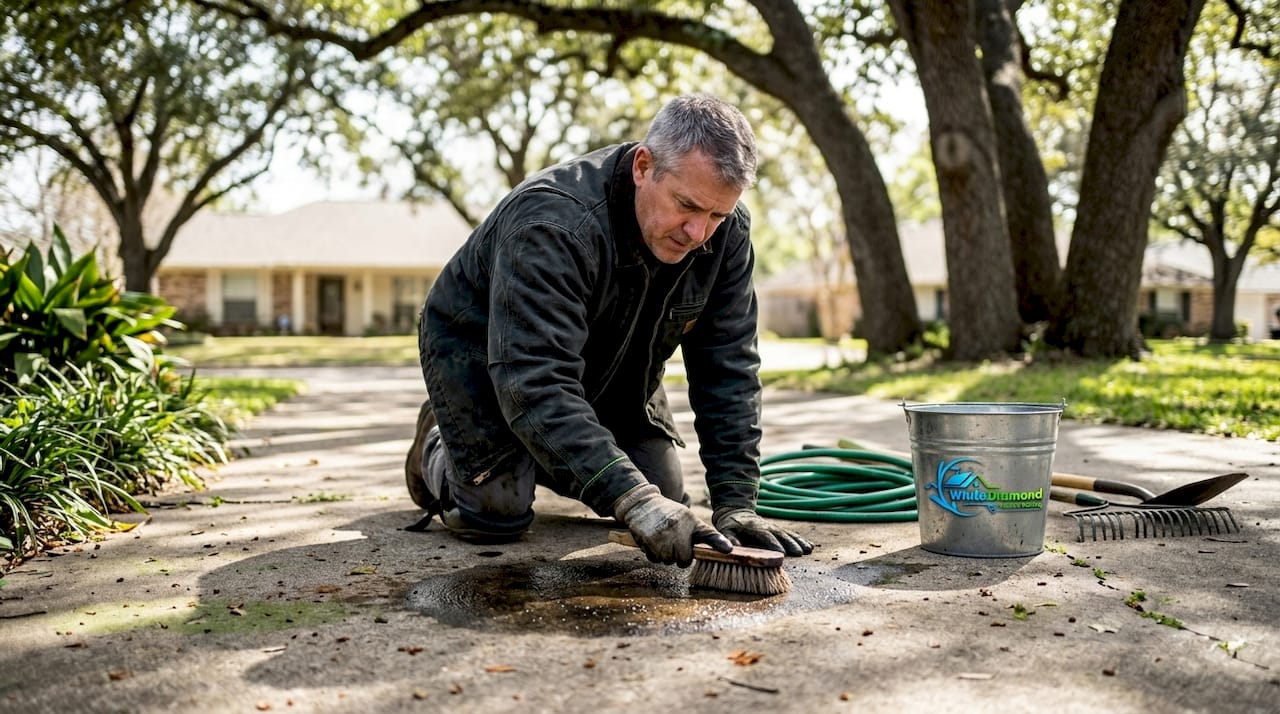
Power washing alone rarely solves stubborn outdoor stains — and that assumption costs Citrus County homeowners more time and money than almost any other cleaning mistake. Florida’s humidity accelerates mold and algae growth at a rate that surprises even long-time residents, leaving driveways, patios, and pavers looking worn within months of cleaning. The real fix isn’t just water pressure. It’s understanding the chemistry behind each stain type, matching the right removal method to the right surface, and following a consistent maintenance plan. This guide covers exactly that, so you can protect your property’s appearance and its long-term value.
Table of Contents
- What is stain removal? Core concepts and surface science
- Stain removal methods: Chemical, mechanical, and soft washing explained
- Addressing specific stains: Oil, rust, mold, algae, and deep discoloration
- Preventing stains and minimizing recurrence: Expert strategies for Citrus County
- What most guides miss: The real-life challenges of stain removal in Citrus County
- Get expert help: Professional stain removal for lasting results in Citrus County
- Frequently asked questions
Key Takeaways
| Point | Details |
|---|---|
| Stain removal fundamentals | Removing outdoor stains involves chemical, mechanical, or biological methods suited to specific surfaces and stain types. |
| Method effectiveness comparison | Chemical, mechanical, and soft washing approaches each have unique strengths, safety considerations, and eco impacts. |
| Tailored stain solutions | Oil, rust, mold, and algae require different protocols; acting fast and using the right products boosts success. |
| Prevent recurrence | Routine cleaning and sealing reduce repeat stains by up to 90%, especially in humid Citrus County climates. |
| Expert help advantage | Professional services minimize risk, protect property, and ensure optimal stain removal and prevention. |
What is stain removal? Core concepts and surface science
With property value hinging on appearance, let’s clarify what stain removal truly means and how Citrus County’s weather impacts outdoor surface maintenance.
Stain removal is not just scrubbing until something looks better. It involves breaking bonds or lifting particles from concrete, patios, driveways, and pavers using chemical, mechanical, or biological methods. Each approach works differently depending on the stain type and the surface material. Understanding these differences is what separates a clean result from a damaged one.
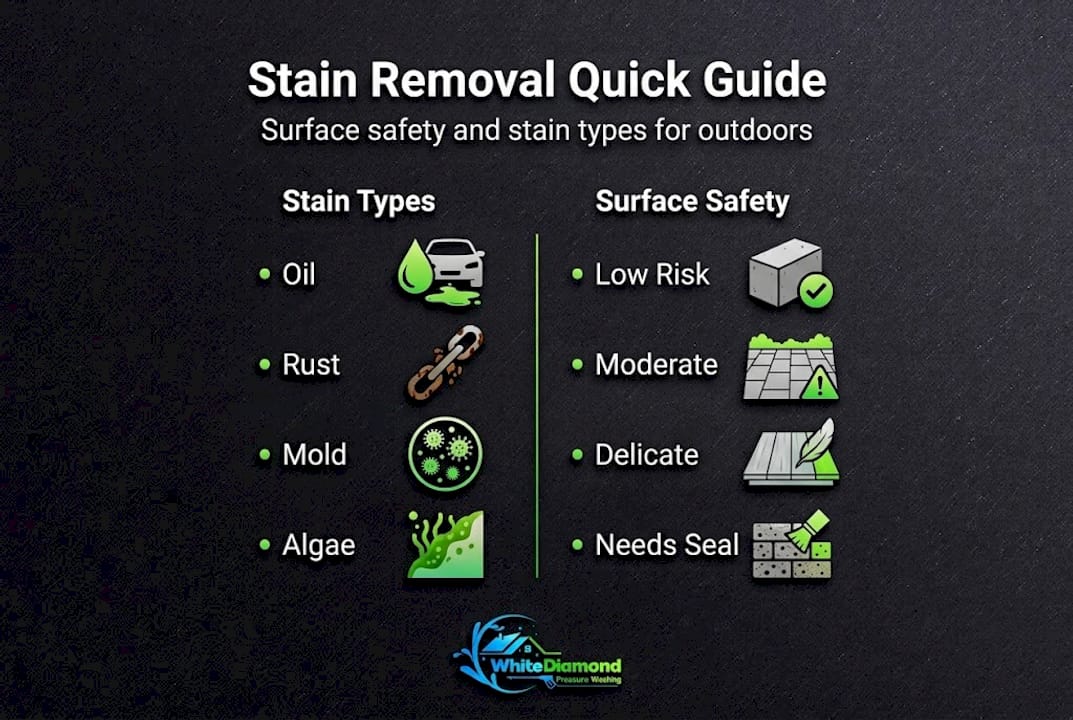
Outdoor surfaces in Citrus County face a unique mix of stain threats. Oil drips from vehicles, rust from metal furniture and sprinkler systems, mold from shaded areas, and algae from Florida’s persistent moisture are the most common. Each of these stains reacts differently depending on how porous the surface is and how long the stain has been sitting. For a deeper look at cleaning terminology used by professionals, it helps to know the basics before choosing a treatment.
Here’s a quick look at the most common outdoor stains and how difficult they are to remove:
| Stain type | Removal difficulty | Surface damage risk |
|---|---|---|
| Oil (fresh) | Low to moderate | Low |
| Oil (set-in) | High | Moderate |
| Rust | High | Moderate to high |
| Mold/mildew | Moderate | Low |
| Algae | Low to moderate | Low |
| Deep discoloration | Very high | High |
Citrus County’s humid subtropical climate creates ideal conditions for mold and algae to form rapidly on any surface that holds moisture. A concrete driveway that looks spotless in January can have visible green or black growth by March. This is not a cleaning failure. It’s the environment working against you, which is why removal strategy and prevention both matter.
When it comes to concrete stain removal methods, the general rule is this:
Mechanical methods like sandblasting or grinding achieve 100% removal but permanently alter the surface texture. Chemical poultices and enzyme treatments are more surface-friendly and typically reach 80-95% effectiveness on most stain types.
Knowing this upfront helps you set realistic expectations and choose the right approach for each situation.
Stain removal methods: Chemical, mechanical, and soft washing explained
Now that the basics are clear, let’s look at the proven methods for tackling stains — what works, how, and why.
The primary methodologies for outdoor stain removal fall into three main categories: chemical treatments, mechanical force, and soft washing. Each has its place, and using the wrong one can make a stain worse or permanently damage your surface.
Chemical treatments use active agents to dissolve or lift stain molecules. Degreasers break down oil-based stains. Acids like oxalic or citric acid target rust. Enzyme or bio-digestant solutions eat through organic stains like mold, algae, and food residue. These are effective when matched correctly to the stain.
Mechanical methods apply direct force. Pressure washing uses water at high PSI (pounds per square inch) to blast surface-level stains away. Grinding removes deep discoloration but scours the surface permanently. These work well for tough stains but carry a higher risk of surface damage when used incorrectly.
Soft washing uses low water pressure combined with biodegradable cleaning solutions. It’s ideal for delicate surfaces like painted concrete, older pavers, or roof-adjacent areas. Understanding the difference between soft vs power washing is critical for choosing the right tool for your property.
Here’s a comparison to help you decide:
| Method | Effectiveness | Surface safety | Eco impact | Recurrence risk |
|---|---|---|---|---|
| Chemical only | High (80-95%) | Moderate | Varies | Moderate |
| Pressure washing | High (surface stains) | Low to moderate | Low | Moderate |
| Grinding | 100% | Low (alters surface) | Low | Low |
| Soft washing | High (organic stains) | High | Low (biodegradable) | Low with sealant |
The choice between pressure vs traditional cleaning often comes down to how deep the stain goes and how sensitive the surface is. For instance, using high-pressure water on aged pavers can erode grout and shift stones. Understanding water pressure in cleaning helps you avoid costly mistakes.
Here’s a simple order of operations for most outdoor stain scenarios:
- Identify the stain type before applying anything.
- Test your chosen method on a small, hidden area first.
- Apply the treatment and allow proper dwell time.
- Rinse thoroughly and assess the result.
- Repeat or escalate to a stronger method only if needed.
Pro Tip: Never skip the test patch step. What works perfectly on one surface can discolor or etch another. Even experienced cleaners test first.
For help with removing rust stains specifically, acid-based treatments need careful handling and should never be rushed.
Addressing specific stains: Oil, rust, mold, algae, and deep discoloration
Understanding the removal methods, let’s zoom in on the practical approaches for each type of stain you’ll encounter outdoors.
Oil stains are one of the most common issues on driveways and garage floors. Fresh oil stains under 24 hours old respond well to absorbents like cat litter or cornstarch followed by a degreaser rinse. Set-in stains need more power. Bio-digestant poultices applied overnight and covered with plastic can pull up to 92-98% of the oil from the concrete. Speed matters here — the longer oil sits, the deeper it penetrates.
Rust stains are tricky because they look similar to dirt but require a completely different treatment. Oxalic or citric acid at a 2-5% solution with a 15-35 minute dwell time achieves about 92% rust removal on most surfaces. Never use chlorine bleach on rust stains. Bleach chemically reacts with iron compounds and can make the stain darker and harder to remove.
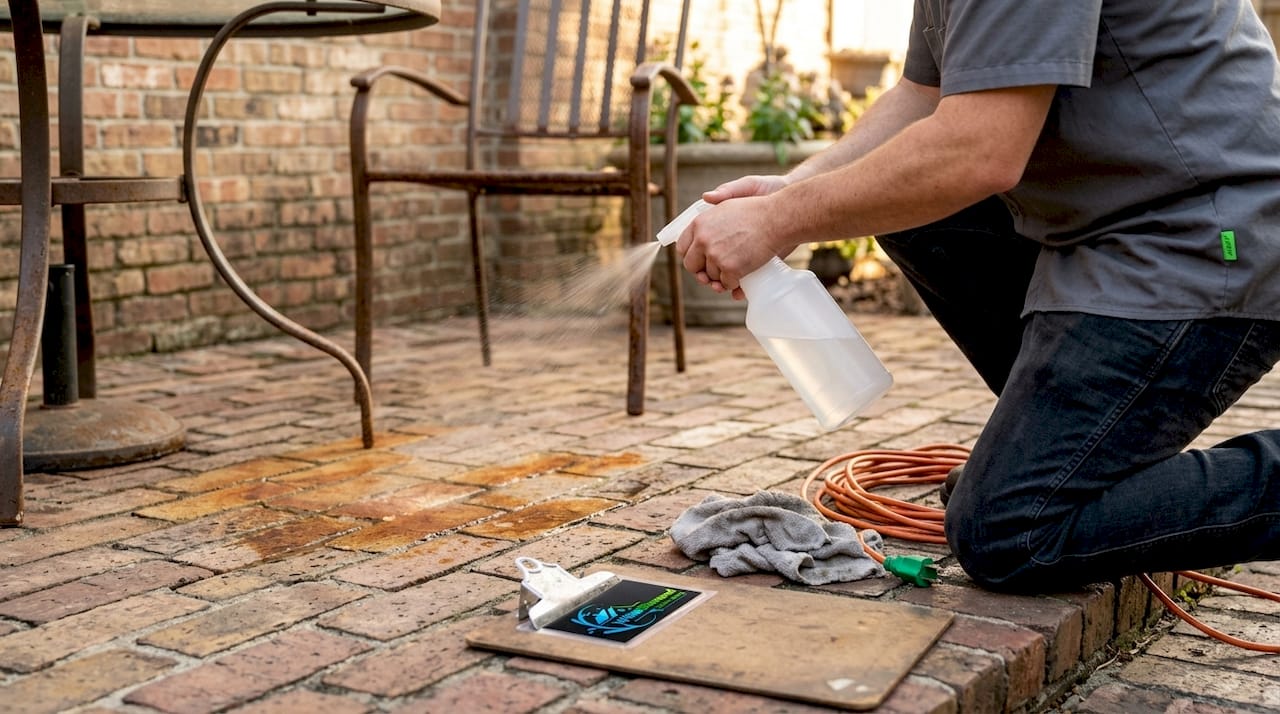
Mold and algae are the stains Citrus County homeowners deal with most often. Soft washing with oxygen bleach or a vinegar-water mix (1 part vinegar to 3 parts water) is highly effective without damaging most surfaces. Review the soft washing guide for a step-by-step breakdown of this process.
Here’s a quick reference list for each stain type:
- Oil (fresh): Absorb, degrease, rinse within 24 hours
- Oil (set-in): Poultice with bio-digestants, repeat if needed
- Rust: Apply acid solution, dwell, rinse. Never use bleach
- Mold/algae: Soft wash with oxygen bleach or vinegar solution
- Deep discoloration: Try chemical strippers first; grinding is a last resort
Deep discoloration from years of vehicle traffic or embedded minerals often resists standard cleaning. Sealed surfaces need a chemical stripper applied before any other treatment. Grinding works but leaves a visibly different texture, so it’s reserved for situations where nothing else succeeds. Knowing 6 signs you need pressure washing can help you catch discoloration early before it becomes a grinding-level problem.
Pro Tip: Florida’s humidity means even freshly cleaned surfaces can develop mold or algae within a few months. Schedule professional cleanings every 6-12 months to stay ahead of recurrence rather than constantly reacting to it.
Preventing stains and minimizing recurrence: Expert strategies for Citrus County
Armed with stain removal tactics, it’s crucial to know how to keep surfaces clean for the long haul — here’s how the experts do it.
Reactive cleaning is expensive and exhausting. The smarter approach is prevention paired with a maintenance schedule. Sealing concrete surfaces reduces re-staining by 70-90%, largely because sealed pores block oil from wicking up from below and prevent moisture from feeding mold growth. That single step can cut your cleaning frequency in half.
Here are the core prevention strategies every Citrus County property owner should follow:
- Clean spills immediately. Oil, rust-causing water, and organic debris cause the least damage when treated within hours.
- Apply a quality sealant after every major cleaning session. Reapply every 1-3 years depending on traffic and weather exposure.
- Choose the right sealant for each surface. Penetrating sealers work best for porous concrete and natural stone. Topical sealers suit pavers and decorative concrete.
- Monitor for subsurface oil wicking. Stains that keep returning despite repeated cleaning often come from oil trapped below the surface rather than new spills on top.
- Use eco-friendly cleaning products to avoid runoff that harms nearby landscaping or water features. Green formulas also tend to be gentler on sealed surfaces.
For guidance on surface sealing tips specific to Florida’s climate, there are tailored options for the heat and humidity Citrus County delivers year-round.
Schedule an annual surface assessment, ideally before and after the rainy season. Early detection of cracks, efflorescence (white mineral deposits), or early-stage algae lets you treat small problems before they become costly ones.
Pro Tip: Use biodegradable, pH-neutral cleaners for routine maintenance washes. They’re effective against light organic buildup and won’t degrade your sealant between professional visits.
What most guides miss: The real-life challenges of stain removal in Citrus County
Most stain removal guides are written for general climates. Citrus County is not a general climate. The combination of heat, humidity, and Florida’s frequent rain creates staining conditions that accelerate faster and return sooner than guides based on northern or inland environments would suggest. Mold and algae can recolonize a clean surface in as little as six weeks here, especially in shaded areas near trees or water features.
Another gap in most guides is the overselling of DIY methods. Acid treatments, high-pressure washing, and even some enzyme solutions can permanently etch or discolor surfaces when applied without experience. We see this regularly when homeowners come to us after a DIY attempt left white streaks or pitting on their concrete. Professional techniques avoid this because the experience to recognize when to stop, switch methods, or adjust dwell time makes a real difference.
The honest answer for long-term results in Citrus County is a combination approach. Preventative sealing, regular soft washes, and knowing when to call in professionals rather than escalating a DIY attempt are what actually keep outdoor surfaces looking clean year after year. Choosing between soft vs power washing is often the first decision that determines whether a surface gets clean or gets damaged.
Get expert help: Professional stain removal for lasting results in Citrus County
If you’re ready to safeguard your property’s value, discover how Citrus County professionals can support long-lasting, effective stain removal.
Handling stains on your own carries real risks — from surface damage to stains that return faster because the underlying cause wasn’t addressed. White Diamond Pressure Washing brings the right methods, the right products, and the experience to match both to your specific surface and stain type.

Explore our full range of professional cleaning services designed for Citrus County’s unique outdoor conditions. Whether it’s a single driveway or an entire property, our team handles it safely and thoroughly. Learn more about the exterior cleaning benefits that go beyond aesthetics, and see how our soft wash service guide can preserve your surfaces while delivering a deep, lasting clean. Book your free estimate today.
Frequently asked questions
What is the most effective way to remove oil stains from concrete?
Bio-digestant poultices applied overnight and repeated as needed can remove up to 98% of oil stains, making them the top choice for set-in discoloration on driveways and garage floors.
Will pressure washing remove deep stains on driveways and patios?
Pressure washing handles surface-level stains well, but deep stains may need grinding if they’ve penetrated more than half an inch, which permanently alters the surface texture.
How often should outdoor surfaces be cleaned in Citrus County to prevent mold and algae?
Cleaning every 6-12 months is the standard recommendation for Citrus County, where humidity accelerates mold and algae growth significantly faster than in drier climates.
Is sealing outdoor surfaces necessary to prevent stains?
Yes. Sealing reduces re-staining by 70-90%, making it one of the most cost-effective steps you can take to protect driveways, patios, and pavers over the long term.
Recommended
- Exterior Restoration: Boost Your Curb Appeal Safely – white-diamond-pressure
- 7 Common Exterior Surfaces to Clean for Better Curb Appeal – white-diamond-pressure
- Surface Restoration Explained: Enhance Your Home’s Curb Appeal – white-diamond-pressure
- 6 Clear Signs You Need Pressure Washing at Home – white-diamond-pressure
- How to clean heritage home exteriors: Expert guide
One thought on “Stain Removal Guide: Restore Outdoor Surfaces in 2026”