

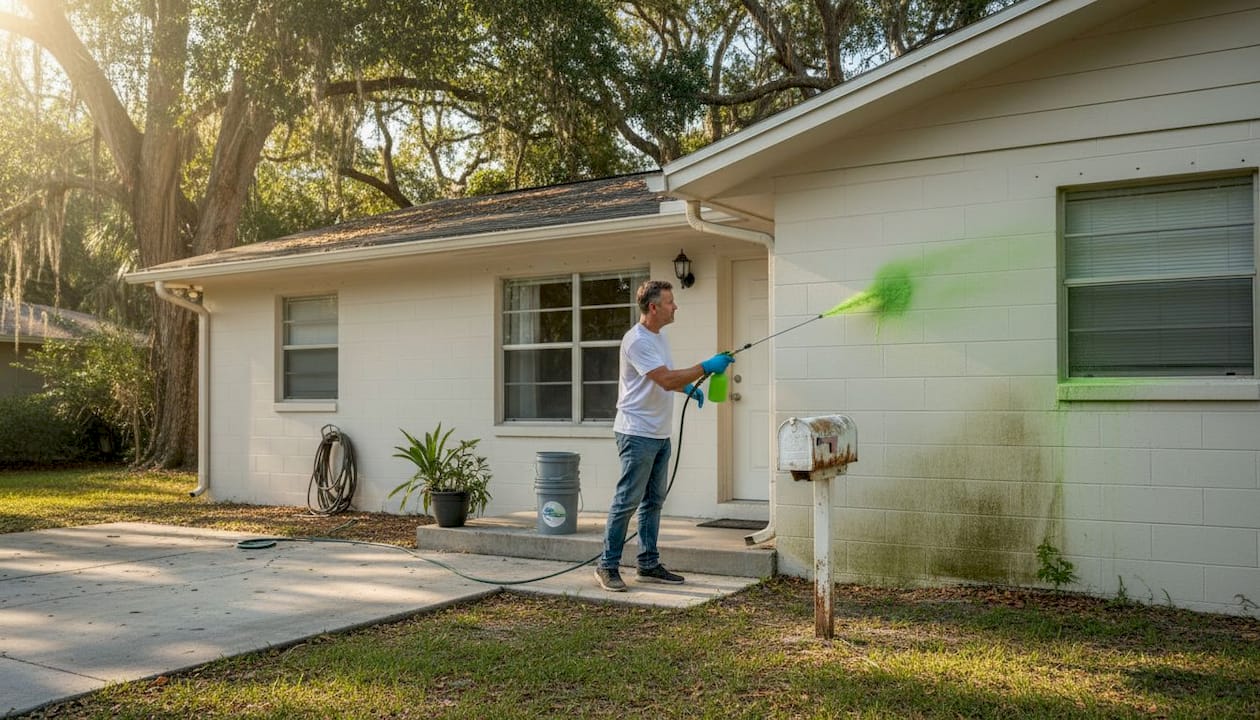
TL;DR:
- Pre-treatment applies specialized cleaning agents before pressure washing for longer-lasting results.
- It targets contaminants at their source, slowing regrowth and preventing surface damage.
- Proper pre-treatment is especially crucial in humid areas like Citrus County to protect surfaces and maintain curb appeal.
Most homeowners assume that pointing a pressure washer at their siding or driveway is the whole job. Crank up the pressure, blast away the grime, done. But that approach often leaves behind mold spores, algae roots, and embedded contaminants that bounce back within weeks. The real secret to a long-lasting, visibly cleaner exterior is what happens before the water ever hits the surface. Pre-treatment, the application of specialized cleaning agents ahead of the main wash, is the step that separates a superficial rinse from a deep, durable clean that genuinely elevates your home’s curb appeal.
Table of Contents
- What is pre-treatment in exterior cleaning?
- Why pre-treatment matters for Citrus County homeowners
- Pre-treatment vs. soft washing vs. pressure washing: Key differences
- How to ensure effective and safe pre-treatment
- Pre-treatment: What most homeowners miss
- Get expert exterior cleaning and lasting curb appeal
- Frequently asked questions
Key Takeaways
| Point | Details |
|---|---|
| Pre-treatment definition | Pre-treatment is the targeted use of cleaning solutions before main washing to boost results and protect surfaces. |
| Local homeowner benefits | Citrus County residents enjoy longer-lasting curb appeal and less surface damage with regular pre-treatment. |
| Comparing cleaning methods | Pre-treatment is the foundation of soft washing and enhances pressure washing results. |
| Practical guidelines | Always verify products, dwell times, and contractor practices for safe and effective pre-treatment. |
| Professional value | Expert exterior cleaners prioritize pre-treatment for lasting cleanliness and property protection. |
What is pre-treatment in exterior cleaning?
Pre-treatment is exactly what it sounds like: applying a cleaning solution to an exterior surface before the primary washing step begins. Think of it like soaking a stubborn pot before scrubbing it. The solution does the heavy lifting first, so you don’t need as much physical force to finish the job.
These solutions are not generic soap. Professionals use targeted formulas that may include biodegradable detergents, mildewcides (agents that kill mildew), algaecides (agents that kill algae), and degreasers, each selected based on the surface type and the specific contaminants present. A driveway with oil stains gets a different pre-treatment than a roof covered in black algae streaks. This specificity is what makes pre-treatment so powerful.
The chemistry works by breaking the molecular bond between the contaminant and the surface. Algae, for example, anchors itself to shingles or concrete. A pre-treatment solution disrupts that anchor so the organism lifts away cleanly instead of being driven deeper into the material by high-pressure water. This directly supports the benefits of exterior cleaning that go beyond appearance, including protecting your home’s structural materials.
As noted in industry discussions, soft washing prioritizes chemistry over mechanical force, operating at under 500 PSI, compared to traditional pressure washing which can exceed 3,000 PSI. Pre-treatment is the reason soft washing works so well despite using so little pressure.
Key agents used in professional pre-treatment:
- Sodium hypochlorite (diluted bleach): targets mold, mildew, and algae
- Surfactants: help solutions cling to vertical surfaces instead of running off
- Degreasers: break down oil and grease on driveways and garage floors
- Biodegradable detergents: lift general dirt and organic matter safely
- Enzyme-based cleaners: break down biological matter at a microscopic level
| Surface type | Common contaminant | Typical pre-treatment agent |
|---|---|---|
| Asphalt shingles | Black algae (Gloeocapsa magma) | Diluted sodium hypochlorite |
| Concrete driveway | Oil, tire marks, mildew | Degreaser plus surfactant |
| Vinyl or wood siding | Mold, mildew, oxidation | Biodegradable detergent blend |
| Wood deck | Algae, tannin stains | Oxygenated cleaner |
| Brick walkway | Moss, efflorescence | Mild acid-based solution |
Pro Tip: Always ask your cleaning professional which specific agents they use and why. A contractor who can explain their product selection clearly is one who understands the science, not just the equipment.
Understanding why clean exteriors matter goes hand-in-hand with understanding pre-treatment. The two are inseparable from a results standpoint.
Why pre-treatment matters for Citrus County homeowners
Citrus County sits in central Florida where the climate is warm, humid, and frequently wet. That combination is essentially a growth laboratory for mold, mildew, algae, and lichen. These organisms don’t just look bad. They eat into paint, degrade grout, break down wood fibers, and can even compromise roofing materials over time.
If you’ve ever cleaned your driveway and noticed the green or black streaks return within a couple of months, that’s because pressure alone doesn’t eliminate the organism. It removes the visible layer while leaving behind spores and root structures (called rhizoids) that regenerate quickly in Florida’s heat and moisture. Pre-treatment kills those organisms at the source, dramatically slowing regrowth.
The benefits of regular exterior cleaning in a humid climate like Citrus County’s go beyond aesthetics. When contaminants are left untreated for long periods, they can cause paint to peel, wood to rot prematurely, and concrete to develop surface erosion. Pre-treatment is essentially preventative maintenance that protects your investment.
Why pre-treatment is especially important in Citrus County:
- Average annual humidity regularly exceeds 70%, creating near-constant conditions for biological growth
- Frequent rain keeps surfaces damp, giving algae and mold ideal conditions year-round
- Tree canopy coverage common in the area accelerates moss and lichen development on driveways and roofs
- Florida’s intense UV exposure degrades surface materials faster, making gentle cleaning methods even more critical
- Coastal proximity in parts of Citrus County adds salt deposits that compound grime buildup
Because pre-treatment reduces the pressure needed to clean a surface, it also reduces the risk of damage. High-pressure washing on older siding or weathered wood can strip paint, force water into wall cavities, or gouge soft surfaces. When soft washing prioritizes chemistry at under 500 PSI, surfaces get cleaned without that mechanical stress.
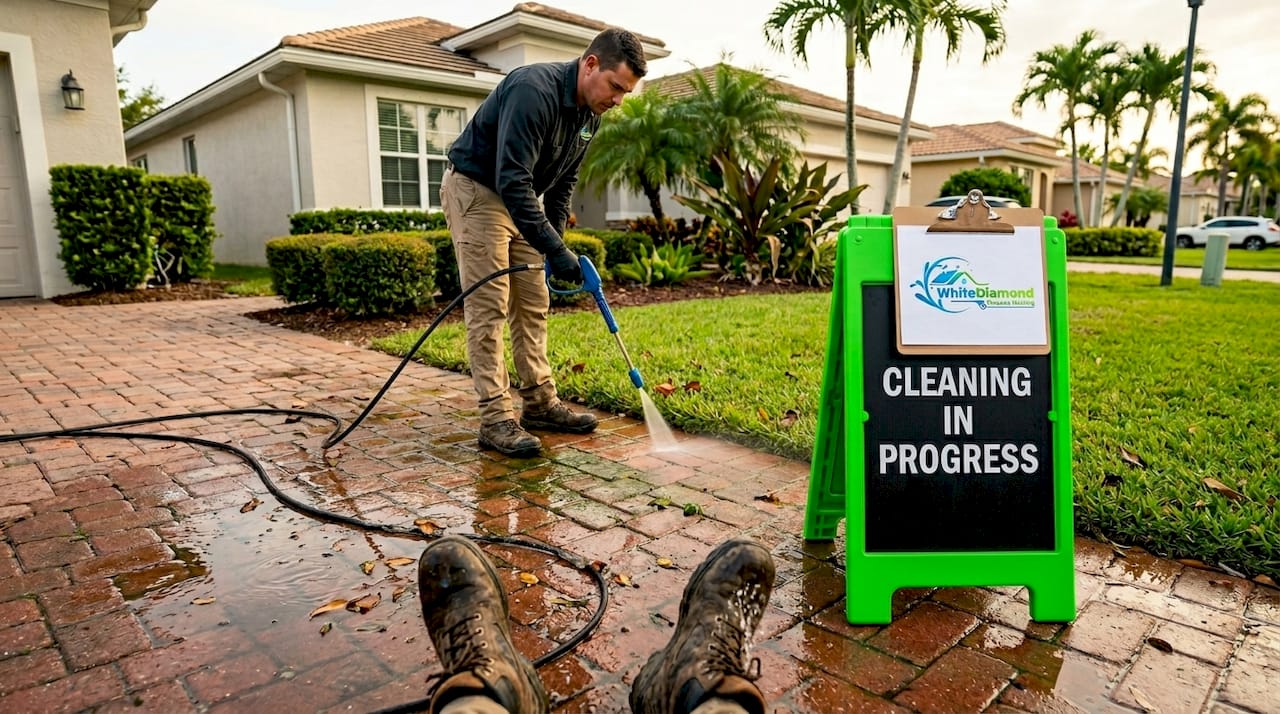
Curb appeal in Citrus County also has real financial implications. Whether you’re preparing to sell, refinancing, or simply maintaining pride of ownership, a clean exterior signals care and maintenance to anyone who sees your home. The importance of curb appeal for property value is well established, and pre-treatment is one of the most cost-effective ways to sustain it between deep cleanings.
Pro Tip: Schedule a pre-treatment-based exterior cleaning in the early spring before humidity peaks, and again in fall after heavy summer growth. This timing keeps biological buildup from reaching the stage where it can cause permanent staining or material degradation. You can also explore preventative cleaning strategies to build a maintenance routine that works year-round.
Pre-treatment vs. soft washing vs. pressure washing: Key differences
These three terms get used interchangeably in casual conversation, but they describe very different things. Understanding the distinction helps you make smarter decisions when hiring a cleaning service or evaluating a quote.
Pressure washing uses high-force water, typically between 1,500 and 4,000 PSI, to blast contaminants off surfaces. It’s effective for hard, durable surfaces like concrete pads or brick when handled correctly. However, it can damage softer materials, and it often skips pre-treatment entirely, meaning contaminants return faster.
Soft washing is a method that uses very low water pressure (under 500 PSI, similar to a garden hose) paired with specialized cleaning solutions applied as a pre-treatment. The chemistry does most of the work. Soft washing is the gold standard for roofs, painted siding, wood decks, and screens because it cleans thoroughly without damaging the surface.
Pre-treatment is not a standalone method. It’s a step within a cleaning process. You can use pre-treatment before either soft washing or pressure washing to improve results significantly. According to professional discussions in the industry, pre-treatment incorporates chemistry as the primary cleaning mechanism, which is what separates excellent results from mediocre ones.
| Method | PSI range | Uses pre-treatment? | Best for | Risk level |
|---|---|---|---|---|
| Pressure washing | 1,500 to 4,000 | Sometimes | Concrete, brick | Moderate to high |
| Soft washing | Under 500 | Always | Roofs, siding, wood | Low |
| Pre-treatment | N/A (applied step) | Is the step | All surfaces as prep | Low |
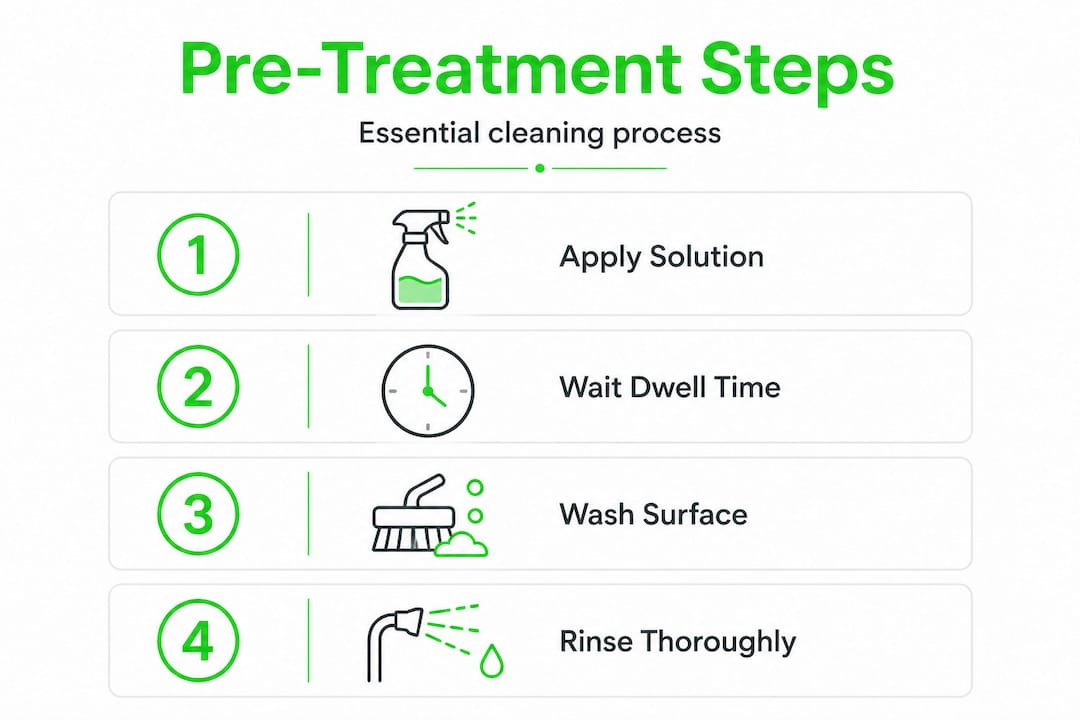
Here’s the order that produces the best exterior cleaning results:
- Inspect the surface and identify contaminants (mold, algae, oil, oxidation)
- Select the appropriate pre-treatment agent for that specific surface and contaminant
- Apply the pre-treatment solution and allow proper dwell time (time for it to work)
- Use the correct water pressure and technique to rinse the treated surface
- Inspect results and spot-treat stubborn areas if needed
“The chemistry does the cleaning. The water just carries away what’s already been broken down.”
This process is exactly what separates professional results from a DIY pressure washer rental job. You can compare the two approaches in detail by looking at soft washing vs power washing as a reference point. For a step-by-step breakdown of the full approach, the soft washing process guide walks through each phase clearly.
How to ensure effective and safe pre-treatment
Whether you’re hiring a professional or evaluating a past cleaning job, knowing what proper pre-treatment looks like protects your property and your wallet. Here’s what to look for and ask about.
Steps to verify effective and safe pre-treatment:
-
Confirm surface compatibility. Every pre-treatment product has a label specifying which surfaces it’s safe for. Applying an acid-based cleaner to painted aluminum siding, for example, can strip the finish. A good professional always checks compatibility before selecting a product. The role of detergents in cleaning safety and effectiveness is more important than most homeowners realize.
-
Check dwell time practices. Dwell time is how long the pre-treatment solution sits on the surface before rinsing. Too short, and the chemistry doesn’t finish its job. Too long, and some solutions can cause discoloration or dry out and leave residue. Standard dwell times range from 5 to 20 minutes depending on the solution concentration and grime level. Ask your contractor directly what dwell time they use and why.
-
Verify thorough rinsing. After dwell time is complete, the surface must be rinsed thoroughly. Leftover chemical residue can attract new dirt faster, leave streaking, or cause surface damage over time. Thorough rinsing is especially important near plant beds and grass, where runoff can affect landscaping.
-
Ask about plant and pet protection. Many biodegradable pre-treatment products are formulated to be safer around landscaping, but dilution and rinsing of surrounding plants is still best practice. A professional exterior cleaning prep always includes protecting adjacent plants, mulch, and soil before applying chemical solutions.
-
Evaluate results 24 to 48 hours later. Some biological contaminants, particularly algae, take a day or two to fully show the results of treatment. If you’re still seeing green or black staining after that window, it may indicate the wrong product was used or dwell time was insufficient.
If you’re prepping your home for repainting, pre-treatment becomes even more critical. Residue, mold, or dirt trapped beneath new paint causes peeling and premature failure. Learn more about how pre-paint washing directly extends the life of your exterior paint job. You can also see practical soft washing examples to visualize how these principles apply to real homes.
Pro Tip: Before any cleaning service begins, walk your property with the technician and ask them to explain their pre-treatment product choice for each surface area. A knowledgeable professional welcomes this conversation. It’s your home, and you deserve to understand exactly what’s going on it.
Pre-treatment: What most homeowners miss
Here’s something we’ve observed repeatedly in our work across Citrus County: homeowners who skip pre-treatment don’t usually realize they’ve skipped it. They hire someone with a pressure washer, the job takes an hour, the driveway looks better, and they’re satisfied. Then, three months later, the green is back, the black streaks have returned, and they feel like exterior cleaning just doesn’t last.
It’s not that cleaning doesn’t last. It’s that incomplete cleaning doesn’t last.
Many contractors skip pre-treatment because it adds time and product cost to the job. It requires knowledge of chemistry, dwell times, and surface compatibility. Rushing that step is the path of least resistance. But the homeowner pays the price in faster regrowth, repeated cleaning cycles, and in some cases, accelerated surface degradation that leads to expensive repairs.
We’ve found that the homeowners who genuinely understand the professional cleaning benefits are the ones who ask the right questions upfront. They ask about products. They ask about dwell time. They ask whether soft washing or pressure washing is appropriate for their specific surfaces. And they almost always get better results.
The investment in proper pre-treatment is small relative to the cost of repainting a house, replacing roof shingles prematurely, or resurfacing a driveway that’s been damaged by repeated high-pressure washing. In our experience, chemistry-first cleaning paired with appropriate pressure consistently outperforms pure force, every single time.
Force impresses in the short term. Chemistry delivers results that actually hold.
Get expert exterior cleaning and lasting curb appeal
If this article has clarified anything, it’s that effective exterior cleaning is more than pointing a hose at a wall. The pre-treatment step is where real results begin, and it takes knowledge, the right products, and careful application to do it correctly.

At White Diamond Pressure Washing, our exterior cleaning services are built around chemistry-first methods tailored to each surface type and each homeowner’s specific situation. We use industry-approved, biodegradable solutions applied with care for your landscaping, pets, and property materials. Our soft washing process ensures that every job starts with the right pre-treatment, allowing us to deliver results that last months, not weeks. If you’re ready to experience the difference that a properly planned cleaning makes, see what exterior cleaning can do for your home, then reach out for a free estimate today.
Frequently asked questions
What surfaces benefit most from pre-treatment?
Siding, driveways, roofs, decks, and fences all see noticeably better results when pre-treated before the main cleaning begins, particularly in humid climates where biological growth is persistent.
Is pre-treatment safe for plants and pets?
Most professional pre-treatment products are biodegradable and applied with plant protection measures in place, but always confirm the specific products with your technician before the job starts.
How long does pre-treatment need to sit before washing?
Typical dwell times range from 5 to 20 minutes depending on the solution used and how heavy the contamination is; following the product directions ensures the chemistry fully works before rinsing.
Can I skip pre-treatment if my home looks clean?
Skipping pre-treatment can leave behind invisible mold spores, algae rhizoids, and embedded contaminants that cause faster regrowth and shortened results, even on surfaces that appear clean to the eye. As industry professionals note, soft washing with pre-treatment prioritizes chemistry precisely because surface appearances are often misleading.
Does pre-treatment cost extra?
Many reputable exterior cleaning services include pre-treatment as part of their standard process rather than an add-on charge; always ask for a detailed, itemized quote so you know exactly what’s included.
Recommended
- 7 Common Exterior Surfaces to Clean for Better Curb Appeal – white-diamond-pressure
- Top 5 Benefits of Exterior Cleaning for Curb Appeal – white-diamond-pressure
- Exterior Restoration: Boost Your Curb Appeal Safely – white-diamond-pressure
- Curb Appeal Explained: Boost Home Value and Sell Faster – white-diamond-pressure
- Travertine Decor Maintenance Workflow for Lasting Luxury – Marmorique
2 thoughts on “Pre-treatment for exterior cleaning: boost curb appeal”