

TL;DR:
- Low-pressure soft washing uses specialized solutions to clean roofs without damaging shingles.
- High-pressure washing can strip roof granules, shorten lifespan, and void warranties.
- Proper documentation and professional assessment are essential for effective, safe, and long-lasting roof cleaning.
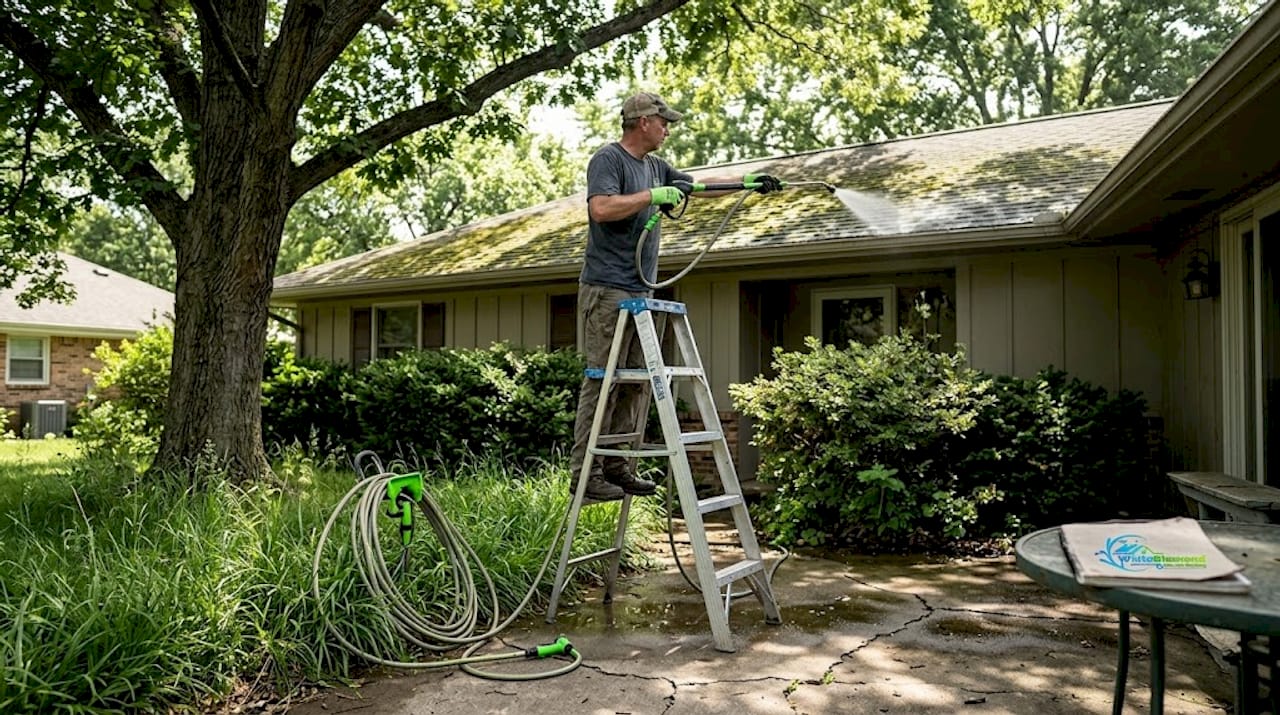
Most homeowners assume that more pressure means a deeper, more thorough clean. That logic works fine on a concrete driveway, but apply it to your roof and you’re looking at stripped shingles, voided warranties, and a repair bill that far outweighs the cost of a proper cleaning. Low-pressure roof washing, often called soft washing, is the method that major manufacturers and industry authorities actually recommend, and understanding why it works protects both your home’s structure and its long-term value.
Table of Contents
- Why low-pressure roof washing is essential
- How does low-pressure roof washing work?
- Comparing low-pressure washing to other roof cleaning methods
- Expert tips and edge cases for Citrus County homes
- What most roof washing guides miss: The real key to roof longevity
- Get safe, lasting results with Citrus County’s trusted soft washing experts
- Frequently asked questions
Key Takeaways
| Point | Details |
|---|---|
| Manufacturer-safe method | Low-pressure washing is the only roof cleaning method approved by major shingle manufacturers. |
| Preserves roof and value | Soft washing prevents costly damage and extends the life and warranty of your roof. |
| Results take time | Full cleaning results appear gradually, with algae and stains fading naturally over weeks. |
| Special handling required | Unique roof types and heavy growths need expert techniques for safe cleaning. |
| Professional documentation matters | Documenting cleaning methods is crucial for warranty claims and peace of mind. |
Why low-pressure roof washing is essential
Here’s the part that surprises most Citrus County homeowners: the cleaning power in soft washing doesn’t come from water pressure at all. It comes from specially formulated cleaning solutions that break down algae, mold, lichen, and mildew at the root level. The water is just the delivery and rinse mechanism.
High pressure, on the other hand, does real damage. It blasts off the protective granules embedded in asphalt shingles, the same granules that shield your roof from UV rays and weather. Once those granules are gone, they don’t grow back. Your shingles age faster, lose their reflective properties, and become far more vulnerable to cracking and leaking.
“ARMA and major shingle manufacturers including GAF and Owens Corning recommend low-pressure soft washing for asphalt shingles, explicitly prohibiting high-pressure washing above 100 to 500 PSI because it strips protective granules, forces water under shingles, voids warranties, and shortens roof life.”
That’s not a technicality buried in fine print. That’s a hard line drawn by the companies that made your roof. If a contractor shows up with a standard pressure washer and points it at your shingles, they are working against the manufacturer’s own guidelines.
The financial case for low-pressure washing is just as clear. A typical asphalt shingle roof lasts 20 to 30 years when properly maintained. Granule loss from high-pressure cleaning can cut that lifespan by years, forcing an early replacement that costs $8,000 to $20,000 or more for an average Citrus County home. Compare that to the cost of a professional roof cleaning for shingles done correctly, and the math is obvious.
Here’s what low-pressure actually means in practice:
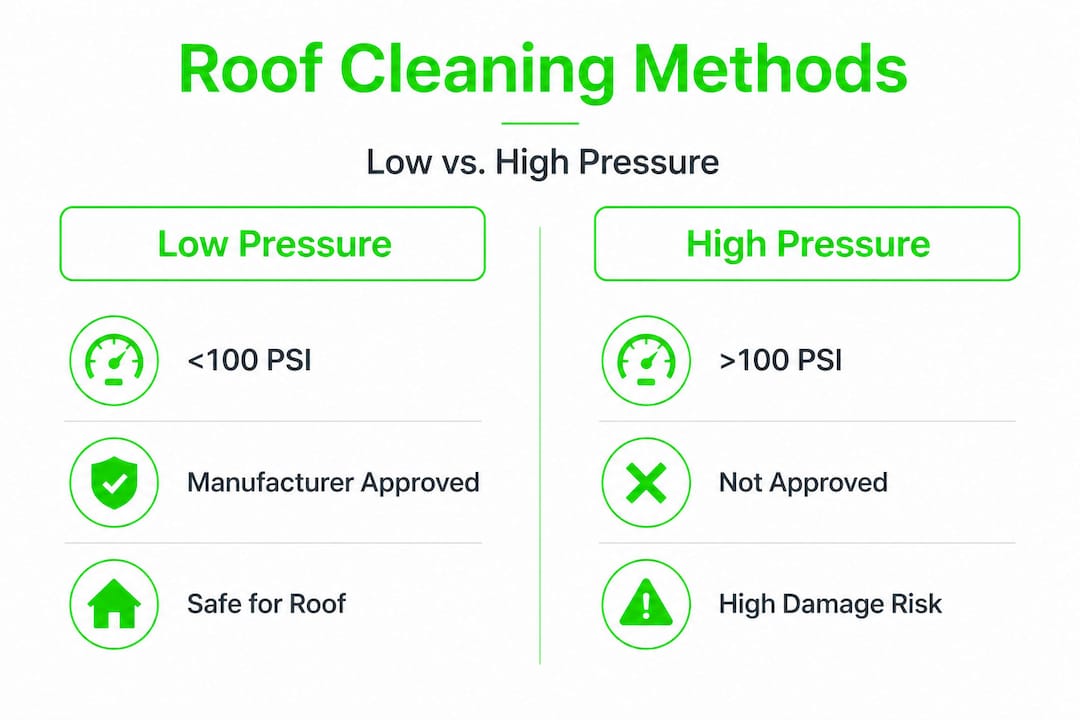
- Soft wash systems operate below 100 PSI on the roof surface, compared to standard pressure washers that run between 1,500 and 3,000 PSI
- Cleaning solutions dwell on the surface long enough to kill biological growth at the root, not just rinse it off visually
- A gentle, low-volume rinse removes residue without forcing water beneath shingles or into flashing gaps
- The result is cleaner for longer because the source of the growth is eliminated, not just displaced
Learning about effective roof cleaning techniques before hiring anyone is one of the smartest moves you can make as a homeowner.
How does low-pressure roof washing work?
With the reasons for choosing low pressure clear, let’s walk through how the soft washing process actually works and what to expect at every stage.
Soft washing equipment looks very different from a standard pressure washer. Instead of a high-powered pump, it uses a low-pressure pump and larger-volume hoses to deliver cleaning solution evenly across the roof surface. The nozzles are designed to produce a wide, gentle fan spray rather than a concentrated jet.
The step-by-step process looks like this:
- Pre-inspection. A technician assesses the roof type, pitch, age, and level of biological growth. This determines which cleaning solution concentration is appropriate and whether any areas need special attention.
- Surrounding area protection. Plants, landscaping, and gutters are rinsed and protected before application begins. Some solutions can affect vegetation if not managed properly.
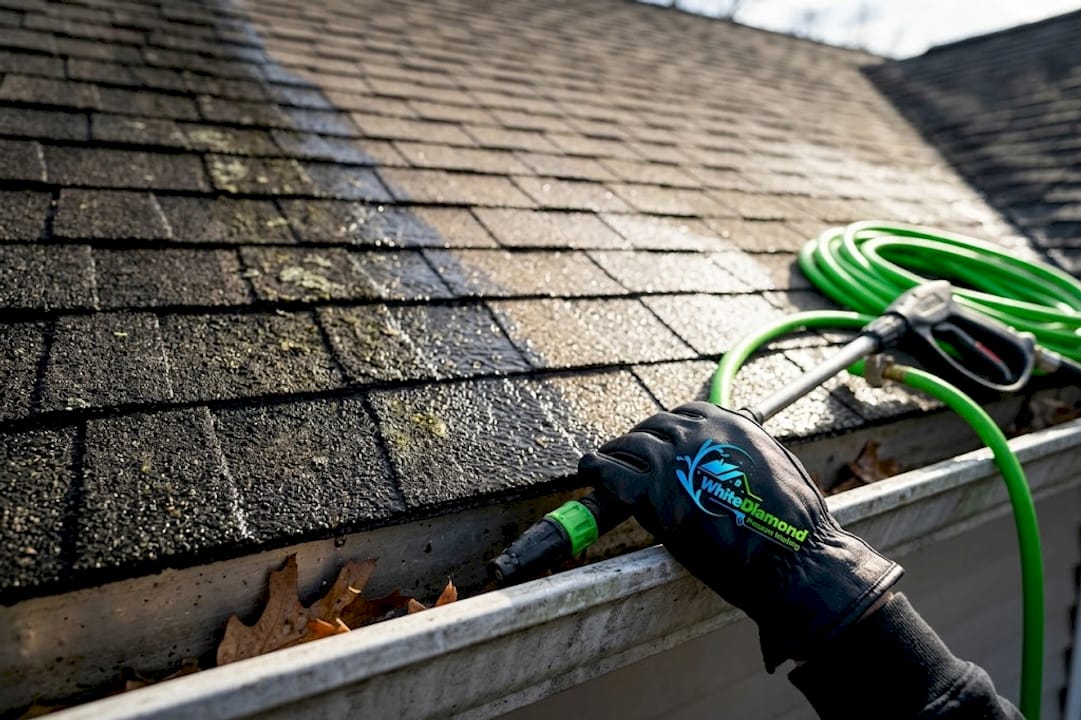
- Solution application. The cleaning solution, typically a sodium hypochlorite blend with surfactants, is applied evenly across the entire roof surface. Surfactants help the solution cling to vertical and angled surfaces instead of running off immediately.
- Dwell time. The solution sits on the roof for 15 to 30 minutes, depending on the level of contamination. This is when the active chemistry kills algae, mold, and lichen at the cellular level.
- Low-pressure rinse. Once the dwell time is complete, the roof is rinsed with low-pressure water to remove the solution and loosened biological material.
- Post-treatment check. The technician inspects the roof and surrounding areas, neutralizes any runoff, and documents the method used.
Pro Tip: Always ask your roof washing provider for written documentation of the method used, including PSI levels and chemical concentrations. This paperwork is your proof of compliance if you ever need to make a warranty claim.
One thing that catches homeowners off guard is the timeline for visible results. The roof will look noticeably cleaner immediately after the rinse, but the full effect takes longer. According to roof cleaning methods comparison research, chemical kill is visible within 24 to 72 hours, but full clearance through natural weathering takes 30 to 90 days. Black algae streaks fade gradually as rain and sun break down the dead biological matter.
| Stage | Timeframe | What you’ll see |
|---|---|---|
| Immediately after rinse | Day 0 | Significant visible improvement, lighter surface |
| Chemical kill complete | 24 to 72 hours | Algae and mold appear bleached or gray |
| Streaks fading | 1 to 4 weeks | Dark streaks lighten with each rain |
| Full clearance | 30 to 90 days | Clean, uniform roof color restored |
Understanding this timeline prevents homeowners from calling back a contractor unnecessarily or assuming the job wasn’t done right. Patience is part of the process. The difference between soft washing vs power washing becomes especially clear here because soft washing delivers lasting biological kill, not just a surface-level visual change.
The advantages of low-pressure washing extend beyond safety. Because the cleaning solution eliminates the root system of algae and lichen, regrowth is significantly slower compared to high-pressure methods that simply blast the surface clean without killing the source.
Comparing low-pressure washing to other roof cleaning methods
Understanding the process helps, but it’s vital to see how low-pressure cleaning compares to alternatives, so you can make informed choices.
| Method | PSI used | Manufacturer approved | Warranty impact | Effectiveness | Risk level |
|---|---|---|---|---|---|
| Low-pressure soft wash | Under 100 PSI | Yes | Preserved | High, kills at root | Low |
| High-pressure washing | 1,500 to 3,000 PSI | No | Voided | Surface only | High |
| DIY bleach spray | Varies | Partial | At risk | Inconsistent | Medium to high |
| Dry brushing only | N/A | No | At risk | Very low | Medium |
The table tells a clear story. High-pressure washing is prohibited above 100 PSI on asphalt shingles, full stop. No matter how experienced the operator, the physics of high pressure on granulated shingles creates damage that accumulates over time. You may not see it immediately, but your roof’s lifespan shortens with every high-pressure cleaning.
DIY methods fall into a gray area. Homeowners sometimes apply diluted bleach solutions from a garden sprayer, which can work to some degree, but the risks are real. Incorrect concentrations can damage shingles or surrounding vegetation. Uneven application leaves untreated patches where algae regrows quickly. And without proper surfactants, the solution runs off sloped surfaces before it has time to work. Most importantly, without documentation of professional method and equipment, a DIY cleaning can still put your warranty at risk.
Pro Tip: If a contractor quotes you a very low price and shows up with a standard pressure washer, walk away. The short-term savings will cost you far more in premature roof replacement. Always ask specifically whether they use soft wash equipment and what PSI they operate at on the roof surface.
The soft wash roof cleaning benefits go beyond just preserving your shingles. A clean roof also reflects heat more efficiently, which matters a lot in Citrus County’s climate. Dark algae staining absorbs solar heat, which can increase attic temperatures and push your cooling costs higher during the long Florida summer.
Expert tips and edge cases for Citrus County homes
Knowing what’s generally safest, let’s highlight local nuances and tricky roof types you might encounter in Citrus County.
Florida’s warm, humid climate creates ideal conditions for biological growth on roofs. Gloeocapsa magma, the bacteria responsible for those dark black streaks, thrives in humidity and spreads via airborne spores. Citrus County homeowners often deal with faster regrowth cycles than homeowners in drier climates, which makes choosing the right method even more important.
Here are the key edge cases and how professionals handle them:
- Heavy moss and lichen growth. Lichen has root-like structures called rhizines that anchor into shingle surfaces. For severe cases, removing algae from roofs often requires a gentle pre-treatment, sometimes light manual brushing, before the soft wash application. This loosens the physical mass so the chemical solution can penetrate to the root level.
- Steep pitches above 6:12. On steeper roofs, cleaning solutions run off faster before they can dwell effectively. Professionals use higher-concentration surfactants to increase the solution’s cling time on the surface, ensuring adequate contact with biological growth.
- Metal roofs. Metal roofing is increasingly popular in Florida and requires a pH-neutral cleaning solution. Standard sodium hypochlorite blends used on asphalt can corrode metal panels or damage protective coatings. Always confirm your provider uses metal-safe chemistry.
- Older or fragile roofs. Slate and some older wood shake roofs are not good candidates for any form of washing without specialist assessment. The roof washing safety tips for these materials differ significantly from standard asphalt protocols.
- Documentation for warranties. After every professional cleaning, request a written record that includes the date, method used, PSI levels, chemical types, and the technician’s name. Store this with your other home maintenance records. If you ever need to file a warranty claim, this documentation is your strongest protection.
According to roof softwashing guidelines, moss and lichen with deep roots require mechanical pre-treatment followed by soft washing, steep roofs need surfactants for adequate dwell time, and metal roofs specifically require pH-neutral solutions to avoid damage.
Pro Tip: In Citrus County’s climate, scheduling a roof inspection and cleaning every 18 to 24 months is a practical maintenance interval. Catching early algae growth before it becomes a heavy infestation is far easier and less expensive to treat.
What most roof washing guides miss: The real key to roof longevity
Most guides stop at technique. They tell you what soft washing is, why high pressure is bad, and leave you there. But after working with hundreds of Citrus County homeowners, we’ve learned that the homeowners who get the most years out of their roofs do one thing most others skip entirely: they keep records.
The cleaning method matters enormously, but so does the paper trail. When a warranty claim comes up, the manufacturer doesn’t take your word for it. They want documentation. A professional cleaning record that shows method, date, and compliance with manufacturer guidelines is what actually protects you in that moment.
We also see homeowners get frustrated when their roof doesn’t look spotless three days after a soft wash. They assume something went wrong. In reality, the 30 to 90 day weathering process is working exactly as it should. The biology is dead. The visual clearing just takes time. Chasing a “quick fix” by asking for a second high-pressure blast is how people end up with damaged shingles and a voided warranty.
The other thing guides rarely mention is that experienced professionals ask questions before they start. How old is the roof? Has it been cleaned before? What method was used last time? Those answers change the approach. A roof cleaned with high pressure two years ago may have compromised granules that require extra care. An older roof near the end of its lifespan may not be a good candidate for any chemical treatment without a full inspection first.
Our roof cleaning services are built around this kind of assessment-first approach because cutting corners at the start is what creates expensive problems later.
Get safe, lasting results with Citrus County’s trusted soft washing experts
You now understand why low-pressure roof washing isn’t just a preference but a requirement for protecting your home, your warranty, and your investment. The next step is making sure the job gets done right.
At White Diamond Pressure Washing, we specialize in professional soft washing for Citrus County homeowners. Our team uses manufacturer-approved methods, roof-safe chemistry, and proper documentation practices so you get results that last and protection that holds up when it matters. We assess every roof individually before we start, and we explain the full soft washing process step-by-step so you always know exactly what’s happening on your property. Whether you’re dealing with stubborn algae streaks or just want to stay ahead of Citrus County’s humidity, we’re here to help. Get your free estimate today and see why local homeowners trust us with their most valuable asset.
Frequently asked questions
How long does it take to see results after low-pressure roof washing?
Most roofs show visible improvement right after the rinse, but full algae clearance takes 30 to 90 days as dead biological matter fades through natural weathering.
Will low-pressure roof washing void my roof warranty?
Following manufacturer guidelines with soft washing at under 100 PSI keeps your warranty intact. Always get written documentation of the method used after each cleaning.
Are all roof materials safe for low-pressure washing?
Most roofs handle soft washing well, but fragile slate and wood require special handling, and metal roofs need pH-neutral solutions rather than standard bleach-based chemistry.
Is it safe to clean my roof with household bleach or DIY methods?
DIY applications often use incorrect concentrations and lack proper surfactants, which can damage shingles and create uneven results. Manufacturer guidelines specifically prohibit high-pressure methods, and undocumented DIY cleaning can still put your warranty at risk.
Recommended
- 7 Key Advantages of Low-Pressure Washing for Homeowners – white-diamond-pressure
- 7 Essential Roof Washing Safety Tips for Homeowners – white-diamond-pressure
- Effective Roof Cleaning Techniques for Homeowners – white-diamond-pressure
- Why Avoid High-Pressure Washing: Lasting Home Risks – white-diamond-pressure
- How to Prevent Roof Leaks: A Step-by-Step Guide for Homeowners | Sabatalo Contracting
2 thoughts on “Low-pressure roof washing: safe results for your home”