

TL;DR:
- Using low-pressure soft washing with surface-appropriate chemistry prevents damage and extends the lifespan of exterior surfaces.
- Employ gentle tools and pH-neutral cleaners to effectively remove grime without harming materials like wood, shingles, or painted surfaces.
- Prioritizing surface preservation over aggressive cleaning avoids costly repairs and maintains your home’s aesthetic and structural integrity.
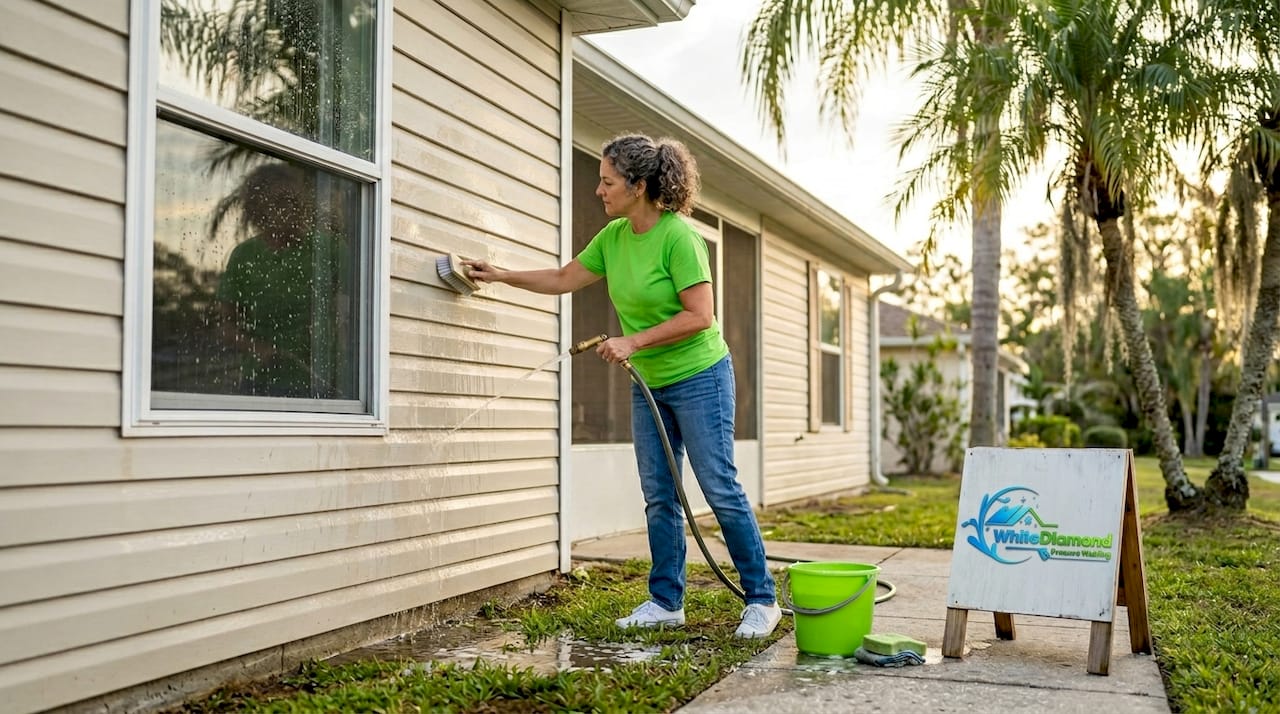
Most homeowners assume that stronger pressure and harsher chemicals equal better cleaning results. That assumption costs real money. Soft washing is a low-pressure method that uses cleaning chemistry to remove dirt and organic growth without damaging the surface underneath. In Citrus County, where high humidity, intense sun, and salt air put homes under constant stress, choosing the wrong cleaning method can fade paint, split wood, or strip protective coatings off roofing shingles. This guide walks you through everything you need to know about non-abrasive washing, from the tools and techniques to a step-by-step workflow designed to protect your home’s value for years to come.
Table of Contents
- Why non-abrasive washing matters for Citrus County homes
- What is non-abrasive washing? Methods, tools, and cleaning chemistry
- Matching your method: Choosing the right approach for every home surface
- Non-abrasive washing workflow: Steps for safe, beautiful results
- Our perspective: Why surface preservation should always come first
- Ready for safe, effective home cleaning?
- Frequently asked questions
Key Takeaways
| Point | Details |
|---|---|
| Low-pressure saves surfaces | Gentle water flow and mild cleaners protect home exteriors from long-term damage. |
| Method matters by material | Always match your cleaning approach to the exact surface for best results. |
| Test and dry quickly | Always try products on a hidden area and dry cleaned areas to avoid lasting issues. |
| Prevention is best | Non-abrasive, routine cleaning keeps your home looking great and avoids expensive repairs. |
Why non-abrasive washing matters for Citrus County homes
Florida’s climate is relentless. In Citrus County, the combination of subtropical humidity, intense UV exposure, and frequent rainfall creates the ideal environment for mold, mildew, algae, and general grime to build up on virtually every exterior surface. When homeowners respond with high-pressure blasting or caustic chemicals, they often trade a visible dirt problem for a less visible, far more expensive structural one.
Here is what abrasive cleaning actually does over time:
- Strips protective paint layers from siding, leaving bare wood or vinyl exposed to moisture
- Erodes the granule coating on asphalt shingles, shortening roof lifespan significantly
- Forces water behind siding panels and into wall cavities, promoting mold growth inside the home
- Warps or splits wood decks and fences when blasted repeatedly at close range
- Etches concrete or stone surfaces with uneven streaking that becomes permanent
High-pressure and harsh chemicals can damage painted, vinyl, wood, and roofline materials, making soft washing the safer and smarter choice for most residential surfaces. The safe cleaning methods that protect your property’s long-term value are the ones that respect the material’s tolerance level.
“The most expensive home repair is always the one you caused while trying to clean. A stripped shingle or a warped deck board doesn’t announce itself until the damage is already deep.”
On top of pressure risks, chemical choice matters enormously. Excess water and incorrect pH cleaners can warp or corrode surfaces, especially wood and soft finishes. If you have ever noticed a wood deck turn gray, fuzzy, or spongy after cleaning, an overly aggressive approach is almost certainly the reason.
Non-abrasive washing solves all of this. By using the right combination of low pressure, gentle tools, and surface-appropriate cleaning chemistry, you remove dirt, algae, and staining effectively without sacrificing the materials underneath. It is also worth noting that the same preventative care tips that protect your exterior surfaces also apply to outdoor water features. If you have a pool, for example, cleaning Florida pool surfaces requires the same thoughtful, material-first approach.
What is non-abrasive washing? Methods, tools, and cleaning chemistry
Non-abrasive washing is exactly what it sounds like. It is any cleaning method that removes grime without physically scratching, eroding, or forcing water through a surface material. This covers several specific approaches, each suited to different situations.
Soft washing is the gold standard for most home exteriors. It applies a specialized cleaning solution at very low water pressure to break down organic growth and loosen dirt. The chemistry does the work, not the force. Hand washing involves applying a cleaning agent directly with a soft tool and gently agitating the surface by hand. This is ideal for smaller areas like shutters, trim, or window frames. Foam washing applies a thick foam solution that clings to vertical surfaces longer, increasing dwell time and cleaning effectiveness without any scrubbing at all.
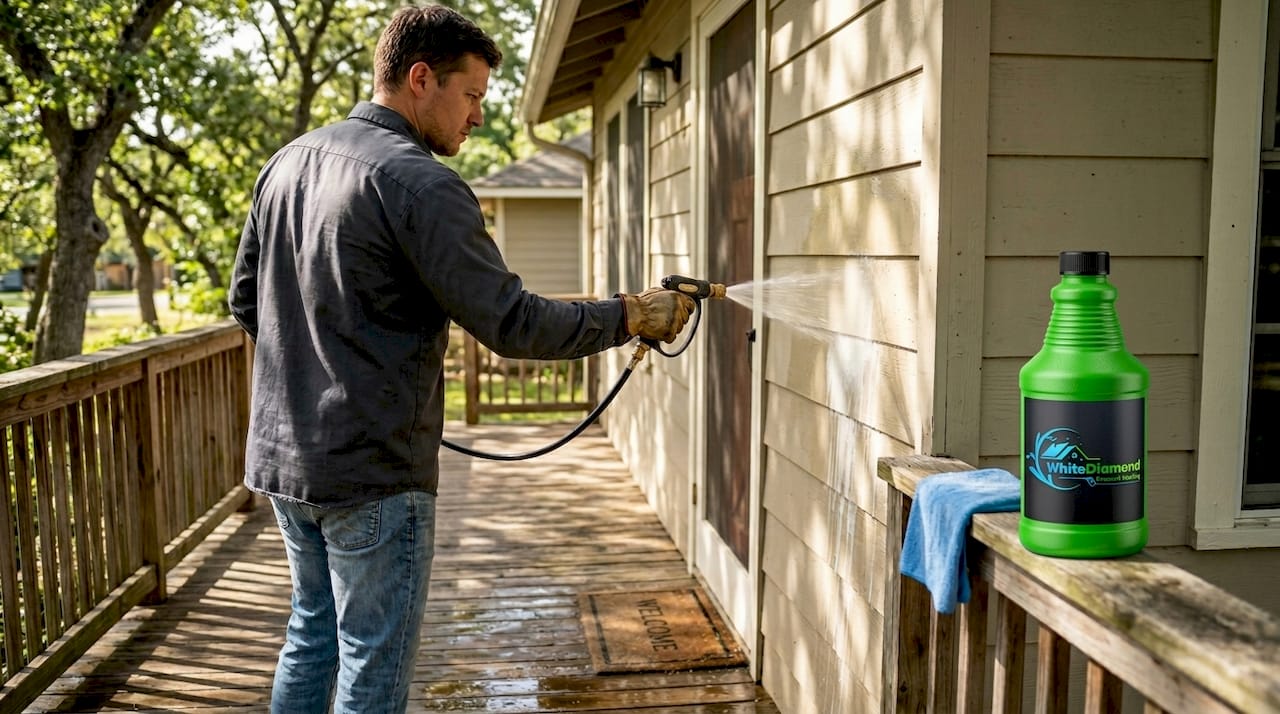
The pressure difference is significant. Soft washing uses 100 to 200 PSI, with a maximum of around 500 PSI, compared to traditional pressure washing which operates at 2,000 to 3,000 PSI. That is a ten to fifteen times reduction in force. That difference is the gap between preserving your roof and stripping it.
Tools to use:
- Microfiber cloths and towels
- Soft bristle brushes (natural or synthetic)
- Cellulose sponges
- Low-flow soft washing nozzles
- Pump-up garden sprayers for applying solutions
Tools to avoid entirely:
- Scouring pads or steel wool
- Stiff wire brushes
- High-pressure nozzles on delicate surfaces
- Abrasive powders or gritty cleansers
For cleaning chemistry, the rule is simple: stay in the middle of the pH scale. pH-neutral products and microfiber or soft bristle tools avoid surface damage while still delivering genuine cleaning power. Avoid strong acids (like undiluted vinegar or muriatic acid) and high-alkaline products (like straight bleach or industrial degreasers) unless the surface and situation specifically call for them and you know the dilution ratio precisely.
Pro Tip: When choosing a cleaning product, look for labels that say “pH balanced,” “surface safe,” or “non-etching.” If the label only says “industrial strength” with no guidance on materials, skip it.
For a clear comparison of how these approaches stack up, here is a quick reference:
| Method | Pressure level | Best for | Risk level |
|---|---|---|---|
| Soft washing | 100 to 500 PSI | Roofs, siding, wood, painted surfaces | Very low |
| Hand washing | No pressure | Trim, windows, furniture | Minimal |
| Foam washing | No pressure | Vertical siding, stucco | Minimal |
| Power washing | 1,500 to 3,000 PSI | Concrete, driveways, stone | Moderate to high |
Understanding soft vs. power washing helps you make better decisions before you pick up any equipment. The low-pressure washing benefits go beyond just surface safety; they also extend the life of sealants, paints, and coatings that would otherwise be blasted off.
Matching your method: Choosing the right approach for every home surface
Not every surface on your property has the same tolerance for pressure and chemicals. One of the most common and costly DIY mistakes is treating a roof the same way you would treat a concrete driveway. The two require fundamentally different approaches.
Here is a practical guide to how common residential surfaces should be treated:
| Surface | Recommended method | Pressure tolerance | Avoid |
|---|---|---|---|
| Asphalt shingle roof | Soft wash only | Under 200 PSI | Any direct pressure |
| Painted siding | Soft wash or hand wash | Under 500 PSI | High pressure, bleach |
| Wood decks and fences | Soft wash or hand wash | Under 500 PSI | Prolonged soaking |
| Vinyl siding | Soft wash | 500 to 1,200 PSI | Strong acids |
| Concrete driveways | Pressure wash acceptable | 2,000 to 3,000 PSI | Acidic etching products |
| Brick and stone | Low-pressure wash | 500 to 1,500 PSI | Acid-based cleaners |
| Stucco | Soft wash | Under 500 PSI | Direct high pressure |
Soft washing is best for siding, painted areas, wood, and rooflines, while pressure washing is more appropriate for durable stone or concrete. The visual difference between a soft-washed roof and a pressure-washed one tells the story plainly. One looks clean and intact; the other often shows granule loss, bare patches, or streaking that no sealer can fully fix.
For harder surfaces like natural stone, the rules still apply. For stone, avoid acids like vinegar, citrus, or bleach, and always test cleaners in a hidden spot before applying them to the full surface. Natural stone is porous, and acidic cleaners etch the surface at the microscopic level, dulling the finish permanently.
The surfaces you should be most careful with include:
- Asphalt shingles: Granule loss is irreversible and voids most manufacturer warranties
- Wood (decks, fences, trim): Absorbs water deeply, swells, and can split if over-saturated
- Painted surfaces: High pressure removes paint that often takes years to fully cure and bond
- Stucco: Highly porous and prone to cracking when water is forced behind the surface layer
Exploring the full range of exterior surfaces to clean reveals just how varied the needs are, and why a single approach never fits all. For homes weighing a DIY project against hiring a pro, reviewing pressure vs. traditional cleaning methods can help clarify when professional equipment and expertise are worth the investment.
Non-abrasive washing workflow: Steps for safe, beautiful results
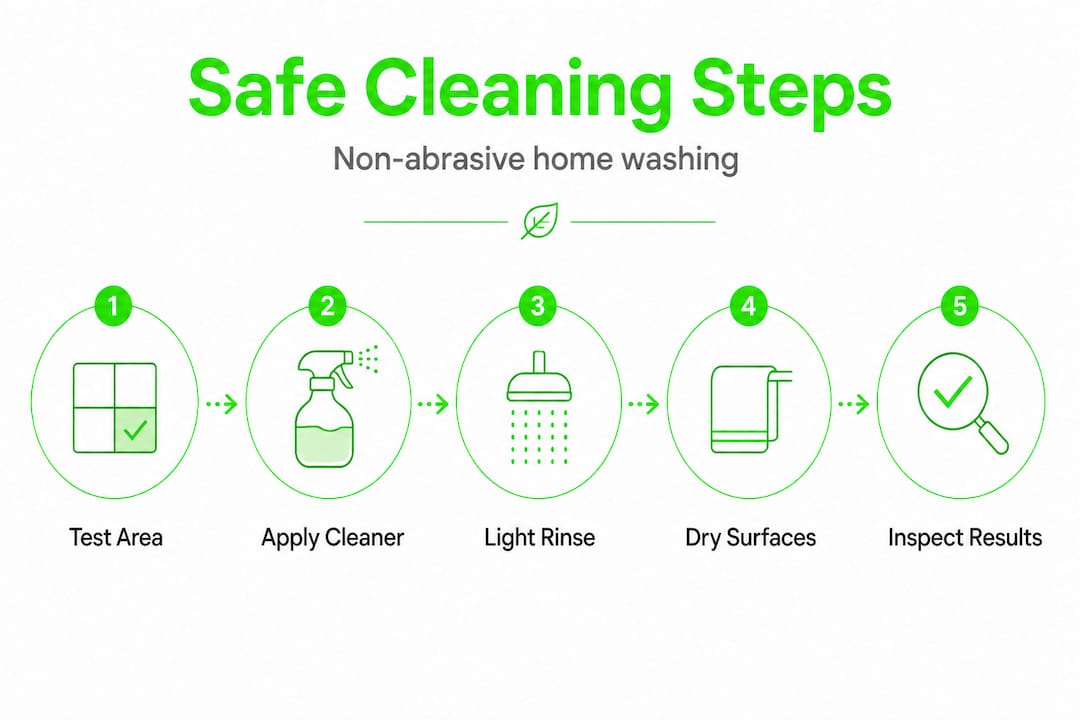
Following a consistent, material-safe process makes a significant difference in both the result you see and the damage you avoid. Here is a proven workflow that applies across most exterior surfaces when using non-abrasive methods.
- Inspect the surface first. Look for cracks, peeling paint, loose panels, or soft spots in wood. Cleaning a compromised surface pushes problems deeper. Address repairs before washing.
- Remove loose debris dry. Use a soft brush or low-speed leaf blower to clear leaves, cobwebs, and loose dust. Starting wet on a debris-covered surface turns dry dirt into muddy abrasive paste.
- Pre-rinse carefully if needed. A low-pressure pre-rinse loosens surface grime and preps the material to accept the cleaning solution evenly. Keep pressure below 500 PSI for delicate surfaces.
- Apply your cleaning solution. Use a pump sprayer, soft wash system, or sponge to apply a pH-appropriate cleaner to the surface. Work in sections. Allow appropriate dwell time (usually 5 to 15 minutes) for the chemistry to break down organic material.
- Agitate gently where needed. For stubborn spots, use a soft bristle brush with light, circular pressure. No scrubbing hard. The cleaning solution is doing the heavy lifting.
- Rinse thoroughly at low pressure. Remove all cleaning solution residue before it dries. Residue left behind can attract new dirt faster or cause streaking.
- Dry quickly. For wood, stone, or painted surfaces, pat dry with microfiber towels or allow fast air circulation. A material-safe workflow involves mild solutions, gentle agitation, quick drying, and testing on a hidden spot first.
- Inspect the result. Walk the surface in good light to check for missed spots, streaks, or areas needing a second pass.
Pro Tip: Always test your cleaning solution on a small, inconspicuous area before applying it broadly. A two-minute test can save you from an irreversible mistake on a full wall or deck surface.
Want to see how these steps look in action on specific property types? Soft washing examples show real before-and-after scenarios that demonstrate what gentle methods can actually achieve. Understanding pressure washing safety practices also helps when some sections of your property do need more power.
Our perspective: Why surface preservation should always come first
Here is something most cleaning guides will not tell you directly. The push toward “get it as clean as possible” has done more damage to residential properties than years of weather ever could. We have seen it firsthand in Citrus County. A homeowner rents a commercial pressure washer on a Saturday morning, runs it at full blast across a shingled roof or a painted cedar fence, and declares the job done. The surface looks clean. Six months later, the roof shows early leak signs. Two years later, the fence needs full replacement. The connection between that one aggressive cleaning session and the costly outcome rarely gets made.
Restoration is always more expensive than maintenance. Always. Replacing a deck costs five to fifteen times more than cleaning and sealing it properly once a year. Repainting a home’s exterior after the primer coat is stripped by excessive pressure runs into thousands of dollars. Roof replacement because granule loss accelerated shingle degradation can run tens of thousands.
The most effective mindset shift is this: cleaning your home’s exterior is not about removing every molecule of grime. It is about resetting the surface condition gently, consistently, so the original material can do its job for its intended lifespan. Think of it like dental hygiene. Gentle brushing twice daily beats scraping everything off aggressively every few months.
When you are unsure about a surface or a cleaning agent, the right answer is always to start with the least aggressive method. The low-pressure benefits extend well beyond just avoiding damage. Lower pressure means lower risk of water intrusion, lower risk of dislodging caulk seals around windows and doors, and lower risk of forcing moisture into wall cavities where it breeds mold invisibly for years. If a gentle approach does not get the surface as clean as you want, you can always escalate. You cannot undo the damage from going too hard too soon.
Ready for safe, effective home cleaning?
Protecting your home’s exterior in Citrus County means choosing methods that work with your surfaces, not against them. Non-abrasive washing delivers results that look great and last, without the hidden damage that aggressive cleaning leaves behind.
At White Diamond Pressure Washing, we specialize in exactly this kind of care. Our team uses industry-approved soft washing methods tailored to each surface type on your property. Whether you want to explore the soft washing process in more detail, learn how to avoid mistakes that cost homeowners money, or simply get your home cleaned right the first time, we are ready to help. Visit our professional cleaning services page or book your free estimate today. Your home’s surfaces deserve better than a one-size-fits-all approach.
Frequently asked questions
What is the difference between soft washing and pressure washing?
Soft washing uses low pressure (100 to 200 PSI) and specialized cleaning solutions to gently clean surfaces, while pressure washing uses 2,000 to 3,000 PSI of force that can easily damage shingles, paint, and wood.
Can I use vinegar or bleach to clean my wood floors or exterior wood surfaces?
No. Avoid acids like vinegar, citrus, and bleach on wood and stone because they etch and corrode the surface over time. pH-neutral cleaners with minimal water are far safer and more effective long-term.
What are the best tools for non-abrasive home washing?
Use microfiber towels, soft bristle brushes, and cellulose sponges. Gentle tools like these are recommended for all surfaces, and scouring pads or steel wool should never be used on painted, sealed, or finished exterior materials.
How can I avoid moisture damage during cleaning?
Use as little water as possible, keep your cleaning tools barely damp rather than soaking wet, and dry the surface quickly after rinsing. Minimal water on wood and immediate drying prevents warping, swelling, and residue buildup that leads to long-term surface deterioration.
Recommended
- 7 Key Advantages of Low-Pressure Washing for Homeowners – white-diamond-pressure
- Soft Washing Process Explained: A Step-by-Step Guide for Safety – white-diamond-pressure
- 7 Practical Examples of Soft Washing for Homeowners – white-diamond-pressure
- Low-pressure roof washing: safe results for your home – white-diamond-pressure
- How To Clean Pool Surfaces: Expert Steps For Florida Homes
3 thoughts on “Safe and effective non-abrasive washing for homeowners”