

TL;DR:
- Applying high-pressure water to delicate surfaces like stucco, vinyl siding, or historic masonry can cause significant damage, including cracks and water intrusion. Properly matching cleaning techniques and PSI levels to each material is essential to maintain property integrity and prevent costly repairs. Partnering with experienced professionals ensures tailored, safe, and effective exterior cleaning that preserves your investment long-term.
Not every exterior surface is built the same, and treating them like they are is one of the most common and costly mistakes Citrus County property owners make. Many homeowners assume pressure washing is a one-size-fits-all solution, but high-pressure cleaning uses anywhere from 1,500 to 4,000 PSI, and applying that force to the wrong surface can erode mortar, strip paint, crack window seals, or force water into places it should never go. This guide will walk you through which surfaces need what approach, so you can protect your property instead of accidentally damaging it.
Table of Contents
- Understanding materials compatibility for exterior cleaning
- Common exterior materials and recommended cleaning techniques
- Risks of using the wrong cleaning method or pressure
- How to assess and protect your property before exterior cleaning
- The overlooked importance of compatibility in long-term property care
- Partner with Citrus County’s exterior cleaning experts
- Frequently asked questions
Key Takeaways
| Point | Details |
|---|---|
| Check material compatibility | Each exterior surface requires its own cleaning method and pressure to avoid accidental damage. |
| Avoid high pressure on delicate surfaces | Roofs, windows, and fiber cement siding should never be pressure washed to prevent costly repairs. |
| Conduct pre-cleaning assessments | Inspect all surfaces and test in an inconspicuous area before starting your exterior cleaning project. |
| Choose the right cleaning professional | Work with experts who know which techniques and pressures are safe for every material on your property. |
Understanding materials compatibility for exterior cleaning
Here’s a question most people never think to ask before picking up a pressure washer: Can this surface actually handle it? The answer changes dramatically depending on what your home or property is made of. Materials compatibility means matching the right cleaning method and pressure level to each specific surface material.
Concrete driveways and brick walkways are built tough. Concrete can typically handle up to 2,800 PSI, while brick tolerates somewhere between 1,500 and 2,500 PSI without sustaining damage. But vinyl siding, stucco, and wood are a completely different story. These softer materials can crack, warp, or absorb water when hit with the wrong pressure, leading to damage that far outweighs the cost of a cleaning job.
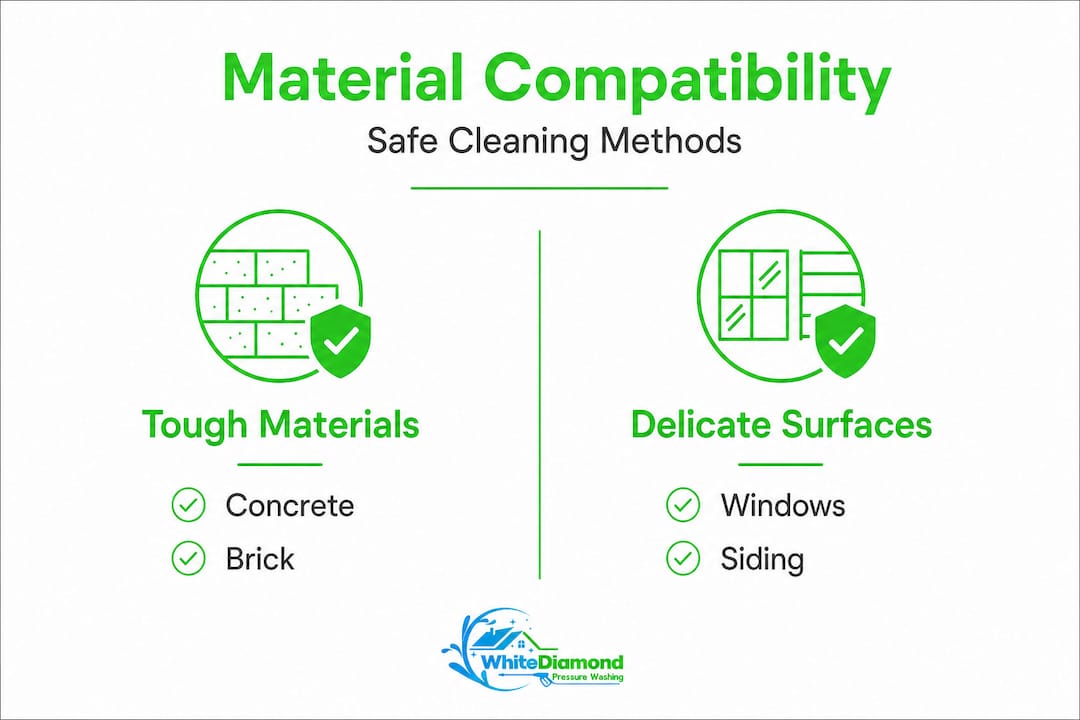
Understanding the role of water pressure in exterior cleaning helps you see why this matters so much. Pressure is measured in PSI (pounds per square inch), and even small increases can double or triple the physical force applied to a surface. Here’s a quick reference to orient yourself:
| Surface material | Recommended PSI range | Risk level if exceeded |
|---|---|---|
| Concrete | 2,000 to 2,800 PSI | Low to moderate |
| Brick | 1,500 to 2,500 PSI | Moderate |
| Vinyl siding | 1,200 to 1,500 PSI | High |
| Stucco | 1,200 to 1,500 PSI | High |
| Wood (decks, fences) | 500 to 1,200 PSI | Very high |
| Roof shingles | Soft wash only | Extreme |
| Windows | Hand cleaning only | Extreme |
“The most common error we see is homeowners using the same pressure setting for their concrete driveway that they then apply to their wood deck or stucco walls. Materials behave very differently under pressure, and the damage often isn’t visible until it’s too late.”
The table above should be your starting reference, not a strict rule. Local conditions in Citrus County, including humidity, salt air near the coast, and algae growth, can make some surfaces more fragile than their baseline rating suggests. Weathered or older materials should always be treated with more caution than newer construction.
Common exterior materials and recommended cleaning techniques
Once you understand compatibility basics, it’s time to examine specific materials and what cleaning methods work best for each one. There’s a real difference between pressure washing, soft washing, and hand cleaning. Knowing which to use keeps your property safe and your results looking great.
Pressure washing uses high-force water to blast away dirt, grime, and buildup. It’s ideal for hard, non-porous surfaces that can handle the force without absorbing water or cracking.
Soft washing uses low pressure (often under 500 PSI) combined with biodegradable cleaning agents to break down biological growth like algae, mold, and mildew. It’s the method of choice for roofs, siding, and other sensitive surfaces.
Hand cleaning is reserved for extremely delicate areas like window glass, ornamental fixtures, or surfaces with existing cracks or damage.
| Surface | Recommended method | Notes |
|---|---|---|
| Concrete driveways | Pressure washing | Use 25° green nozzle |
| Brick walls | Pressure washing | Lower end of PSI range |
| Vinyl siding | Soft washing | Never exceed 1,500 PSI |
| Stucco | Soft washing | Watch for existing cracks |
| Wood decks/fences | Low-pressure washing | Always go with wood grain |
| Fiber cement siding | Soft washing only | High pressure voids warranty |
| Roof shingles | Soft washing only | Pressure lifts shingles, removes granules |
| Windows | Hand cleaning | Pressure cracks seals |
| Historic masonry | Hand cleaning or soft wash | Pressure erodes old mortar |
According to exterior cleaning safety guidelines, roofs, windows, and fiber cement siding should never receive high-pressure water because the consequences include lifted shingles, granule loss, broken window seals, and voided warranties. Historic masonry is especially vulnerable because the mortar used in older construction is softer and more brittle than modern versions.
When it comes to surfaces like brick, cleaning moss off brick naturally is often a better approach than blasting it with high pressure, because the water can work its way into micro-cracks and worsen them over time.
For nozzles, the color-coded guide is practical and simple:
- White 40° nozzle: Best for delicate surfaces, wide spray reduces force
- Green 25° nozzle: General purpose, concrete, brick, and hard surfaces
- Yellow 15° nozzle: Tough stains on concrete, use with care
- Red 0° nozzle: Never use on any house surface. The concentrated jet can cut into almost any material
Avoiding common pressure washing mistakes starts with nozzle selection. You’d be surprised how many DIY pressure washing jobs go wrong simply because the wrong nozzle was attached. The low-pressure washing advantages are real: less damage risk, better penetration with cleaning agents, and results that last longer because the surface isn’t stripped or roughened.
Pro Tip: Always test a small, hidden area of any surface before cleaning the full section. Choose a spot behind a bush, under a deck rail, or near the foundation where any unintended marks won’t be visible. Wait a few minutes and inspect the test patch before moving forward.
Risks of using the wrong cleaning method or pressure
With cleaning methods matched to surface types, it’s vital to know what can go wrong if your approach doesn’t fit the material. This isn’t just about cosmetics. The wrong pressure setting can trigger a chain of events that leads to serious, expensive structural damage.
Here’s how a single misstep can escalate:
- Excess PSI on stucco or wood: The surface appears fine immediately, but fibers or coatings are compromised beneath the surface.
- Water intrusion begins: Microscopic cracks or loosened material allow moisture to enter the wall cavity.
- Mold and rot develop: Florida’s heat and humidity accelerate organic growth inside the wall structure within weeks.
- Paint bubbles and peels: The moisture pushes outward, visibly ruining the exterior finish.
- Structural repair becomes necessary: What started as a cleaning job turns into a remediation project costing thousands of dollars.
The risks of high-pressure washing are not limited to the surface itself. Window seals cracked by pressure washing allow moisture into the insulated glass unit, causing permanent fogging that can only be fixed by replacing the window. Mortar eroded from brick joints weakens the structural integrity of the wall, especially in older Citrus County homes. Lifted roof shingles expose the underlayment to UV damage and rain penetration.
On top of that, preventing surface damage matters from an insurance standpoint too. Some homeowner insurance policies won’t cover damage that results from improper DIY maintenance. If an adjuster determines that high-pressure cleaning caused the issue, your claim could be denied, leaving you responsible for the full repair cost.
The high-pressure cleaning damage potential for softer materials is real and well-documented. What makes this especially tricky is that pressure damage often isn’t visible right away. You finish the job, the house looks clean, and two weeks later you notice paint peeling, caulk cracking, or water stains appearing on interior walls. By that point, the damage is already done.
Pro Tip: When in doubt, always use the widest nozzle available and the lowest pressure that still gets the job done. You can always increase pressure gradually, but you can’t undo surface damage after the fact.
How to assess and protect your property before exterior cleaning
Armed with knowledge of risks and techniques, proactive assessment is the final step before any cleaning project. Taking 30 to 60 minutes to walk your property beforehand can prevent hours of repair work later.
Here’s a reliable pre-cleaning assessment process:
- Identify every exterior material on your property. Walk the full perimeter and note every surface type: concrete, brick, wood, stucco, vinyl, fiber cement, painted surfaces, and roofing material.
- Look for existing damage. Inspect for cracks, loose paint, spalling (flaking) concrete, gaps in caulk or mortar, and soft or spongy wood. These vulnerabilities mean those areas need extra care or should be avoided entirely until repaired.
- Check for decorative or historical features. Ornamental brick patterns, hand-laid stonework, or textured stucco accents are often more fragile than they look.
- Photograph everything before you start. Document the current condition of all surfaces. This protects you if there’s any dispute about pre-existing damage.
- Cover and protect surrounding features. Shield plants, outdoor furniture, electrical outlets, and light fixtures. Tape over window frames and door thresholds if you’re cleaning adjacent walls.
- Mark off no-go zones. Areas with active cracks, compromised caulk, or older windows should be flagged as hand-clean only or skipped until repaired.
- Confirm water drainage paths. Make sure runoff won’t pool near the foundation or flow into landscaped areas where cleaning chemicals could harm plants.
Certain surfaces require that you avoid pressure on specific areas entirely, particularly roofs and windows, even during a full exterior cleaning session. The assessment step is where you draw those boundaries clearly.
Understanding pressure washing safety goes hand-in-hand with material knowledge. It’s not just about protecting surfaces; it’s also about keeping yourself safe. High-pressure water can cause serious injuries, especially when working at heights or near electrical panels.
If you’re working with a professional crew, share your property assessment notes with them. Reviewing the step-by-step soft washing process ahead of time helps set the right expectations and ensures your property gets the tailored treatment it deserves.
The overlooked importance of compatibility in long-term property care
Here’s something we’ve observed over many years of exterior cleaning in Citrus County: most property damage from pressure washing doesn’t happen because someone didn’t know the rules. It happens because they knew the rules and decided to take a shortcut anyway.
Speed is the enemy of compatibility. A property owner wants the job done fast. The driveway, the siding, the porch, the roof: same machine, same setting, get it done before noon. That mindset is understandable. It’s also the exact mindset that creates expensive repair bills. Speed and safety are not the same thing in exterior cleaning.
What we advocate for is a maintenance philosophy, not just a maintenance checklist. Following industry cleaning standards isn’t just about compliance. It reflects a deeper respect for the investment you’ve made in your property. Every surface on your home or commercial building has a lifespan. The right cleaning method extends that lifespan. The wrong one shortens it, sometimes dramatically.
Professionals bring something that a guide like this can’t fully replace: pattern recognition. An experienced technician who has cleaned hundreds of Citrus County properties can look at a section of stucco or a patch of weathered wood and immediately know what it needs, and what will hurt it. That judgment comes from repetition and real-world exposure to the specific combinations of Florida heat, salt air, humidity, and biological growth that affect local materials differently than they would in a drier climate.
The bottom line is this: cosmetic cleaning is short-term thinking. True property care means preserving the integrity of every material through every cleaning cycle, year after year. That requires compatible techniques every single time.
Partner with Citrus County’s exterior cleaning experts
If protecting your property for the long haul matters, partnering with pros who understand these principles is the logical next step.

At White Diamond Pressure Washing, we don’t apply a single approach to every property. We assess each surface, match the right technique and pressure, and use industry-approved cleaning products that get results without risking damage. Whether it’s a concrete driveway, a stucco exterior, a tile roof, or a vinyl-sided rental property, we have the knowledge and the equipment to do it right. Our soft washing process details show exactly how we approach sensitive surfaces with care. Ready to protect your investment? Contact us today for a free estimate and let us put the right technique to work for your property.
Frequently asked questions
What pressure is safe for stucco and vinyl siding?
Both stucco and vinyl siding should be cleaned using a PSI of 1,200 to 1,500 to avoid surface damage. Soft washing with a low-pressure nozzle and appropriate cleaning agents is typically the preferred method for these materials.
Which surfaces should never be pressure washed?
You should avoid pressure washing roofs, windows, fiber cement siding, and historic masonry, as high pressure can lift shingles, crack window seals, void material warranties, and erode fragile mortar.
What’s the difference between soft washing and pressure washing?
Soft washing uses water pressure under 500 PSI combined with biodegradable cleaning solutions to break down mold, algae, and grime safely. Pressure washing uses high-force water alone, making it suitable for tough, hard surfaces like concrete but risky for softer materials.
How can I check if my surface can handle pressure washing?
Test a small, inconspicuous area first using a wide-angle nozzle and the lowest effective pressure. Inspect the test patch closely before proceeding with the full surface.
What tools help ensure safe cleaning for all exterior materials?
Always match nozzle color to surface type: use the white 40° nozzle for delicate surfaces and the green 25° nozzle for general use. Start at the lowest effective pressure and inspect the surface thoroughly before beginning any full cleaning session.
Recommended
- Why choose industry-approved cleaners for safe results – white-diamond-pressure
- Eco-friendly outdoor cleaning guide for Citrus County homes – white-diamond-pressure
- Role of Detergents in Exterior Cleaning Success – white-diamond-pressure
- How detergents transform home exterior cleaning results – white-diamond-pressure
One thought on “Ensure safe exterior cleaning: a guide to materials compatibility”