

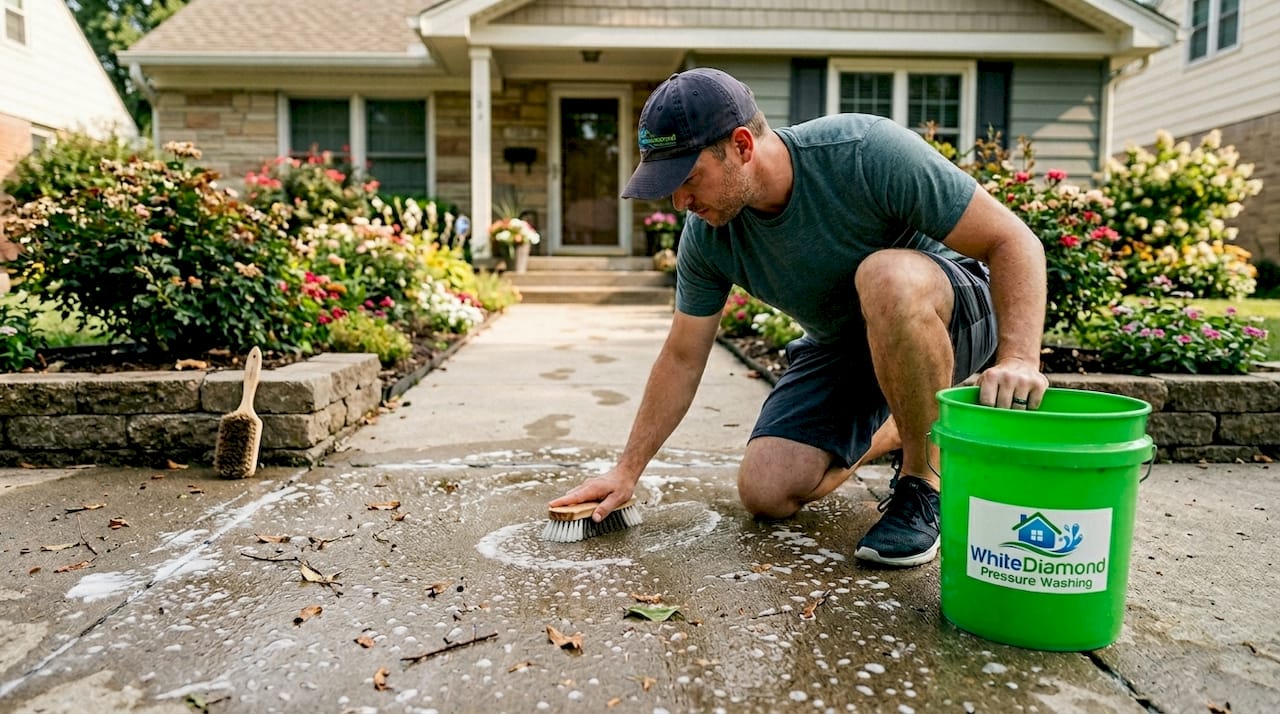
TL;DR:
- In Citrus County, humid conditions promote rapid moss, algae, and grime buildup on sidewalks, requiring careful cleaning approaches. Selecting methods based on surface type, environmental factors, and safety is crucial to prevent damage and maintain curb appeal.Professional pressure washing, eco-friendly treatments, and routine maintenance tailored to local conditions help homeowners preserve surface integrity and prevent recurring issues.
Moss creeping across your front walkway, tire tracks baked into the concrete, black streaks that no garden hose seems to touch. If you live in Citrus County, you already know the problem. The humidity, shade trees, and year-round warmth create the perfect conditions for grime, algae, and moss to take hold fast. Good sidewalk cleaning tips are not just about appearances. They protect surfaces from premature deterioration, prevent slip hazards, and keep your property looking like you actually care about it. This guide gives you tested methods, clear comparisons, and practical decisions that work for local conditions.
Table of Contents
- Key factors to consider when selecting sidewalk cleaning methods
- Pressure washing for concrete and paver sidewalks: best practices and precautions
- Gentle and eco-friendly cleaning options for moss and algae removal
- Comparing common sidewalk cleaning methods: effectiveness, risks, and maintenance needs
- Choosing the right cleaning routine and maintenance tips for Citrus County homeowners
- Why the common sidewalk cleaning myths might slow your progress and what really works
- Explore expert sidewalk and driveway cleaning services in Citrus County
- Frequently asked questions
Key Takeaways
| Point | Details |
|---|---|
| Regular cleaning schedule | Clean your sidewalk once or twice a year, more often in shaded or moss-prone areas to keep it looking its best. |
| Proper pressure washing | Use moderate pressure and keep the nozzle 12–24 inches away to avoid damaging concrete or removing sand between pavers. |
| Natural moss treatment | Diluted white vinegar and baking soda are effective eco-friendly options for moss removal with proper precautions. |
| Seal for protection | Applying a sealant every 2–4 years helps prevent staining and reduces cleaning frequency. |
| Avoid common mistakes | Do not let cleaners dry on the surface and protect plants when using chemicals to ensure effective and safe cleaning. |
Key factors to consider when selecting sidewalk cleaning methods
Before you drag out a pressure washer or pour bleach on your front walkway, slow down for a second. The method you pick should match your surface, your schedule, and your surroundings. Getting this wrong costs you time, money, and sometimes an irreversibly damaged walkway.
Cleaning frequency depends heavily on your environment. Heavily used sidewalks typically need cleaning once or twice a year, ideally in spring and fall. But shaded walkways in Citrus County’s moist climate? Those can develop moss and mold growth fast enough to need attention every three to four months. Most homeowners underestimate this gap until they are scrubbing off a thick green mat in August.
Surface material changes everything. Concrete tolerates more aggressive cleaning than brick or natural stone pavers. Pavers have sand-filled joints that can erode with high-pressure water. Brick is porous and sensitive to harsh acids. Knowing your surface before you pick a cleaner or tool is not optional, it is the starting point. You can find a detailed breakdown of sidewalk cleaning importance and how surface type affects results.
Here are the main factors to evaluate before you begin:
- Surface material: Concrete, pavers, brick, or natural stone each respond differently to pressure, acids, and alkaline cleaners
- Shade and moisture exposure: More shade means more moss and algae; increase cleaning frequency accordingly
- Chemical compatibility: Some cleaners harm limestone, sandstone, or the plants lining your walkway
- Landscaping proximity: Runoff from chemical cleaners can damage grass, flower beds, and tree roots if you are not careful
- Pre-cleaning prep: Cover or water down surrounding plants before applying any chemical treatment
Pressure washing for concrete and paver sidewalks: best practices and precautions
Pressure washing is the fastest way to remove deep-set grime, oil stains, and biological growth from sidewalks. But it is also the method most homeowners misuse. The difference between a clean sidewalk and a damaged one often comes down to nozzle angle, distance, and pressure setting.
Follow these steps for safe, effective pressure washing:
- Sweep the surface first. Remove loose debris, leaves, and dirt before wetting anything. Wet debris just becomes mud and smears.
- Pre-apply your cleaner. Spray your chosen detergent across the surface and allow a dwell time of at least five minutes. Do not let it dry.
- Set your pressure correctly. For concrete, a medium setting (1500 to 2000 PSI) works well. For pavers, go lower to protect the joint sand.
- Maintain proper nozzle distance. Stay 12 to 24 inches from the surface to avoid etching concrete or blasting out paver sand.
- Work from high to low. Start at the highest point of your sidewalk and move downward in overlapping strokes so dirty water flows away from cleaned areas.
- Rinse thoroughly. Flush all detergent residue completely, especially near plants and grass.
Key precautions to keep in mind:
- Use a wide-angle nozzle (25 to 40 degrees) rather than a zero-degree nozzle that concentrates all force on one spot
- Cover or wet down nearby plants before and after cleaning to dilute chemical runoff
- Avoid directing water into paver joints at steep angles; horizontal strokes are safer
- Test your pressure setting on an inconspicuous corner before cleaning the full walkway
Before applying chemicals, reviewing soft washing steps can show you how lower pressure combined with the right detergent often outperforms brute-force spraying. It also helps you avoid the pressure washing mistakes that cost homeowners hundreds in surface repairs each year.
Pro Tip: For pavers specifically, avoid blasting water directly into the joints. Even at moderate pressure, repeated cleaning erodes the stabilizing sand. After cleaning pavers, inspect the joints and re-sand any areas that look thin or hollow-sounding when tapped.
Gentle and eco-friendly cleaning options for moss and algae removal
Not every sidewalk problem needs a pressure washer. For moss and algae growth on sensitive surfaces, a gentler approach often produces better long-term results without the risk of surface damage or chemical runoff into your garden.
Here is how to tackle moss the low-impact way:
- Start with a stiff broom. Physically remove as much loose moss as you can before applying any solution. This reduces the amount of chemical treatment you need and improves contact with the surface.
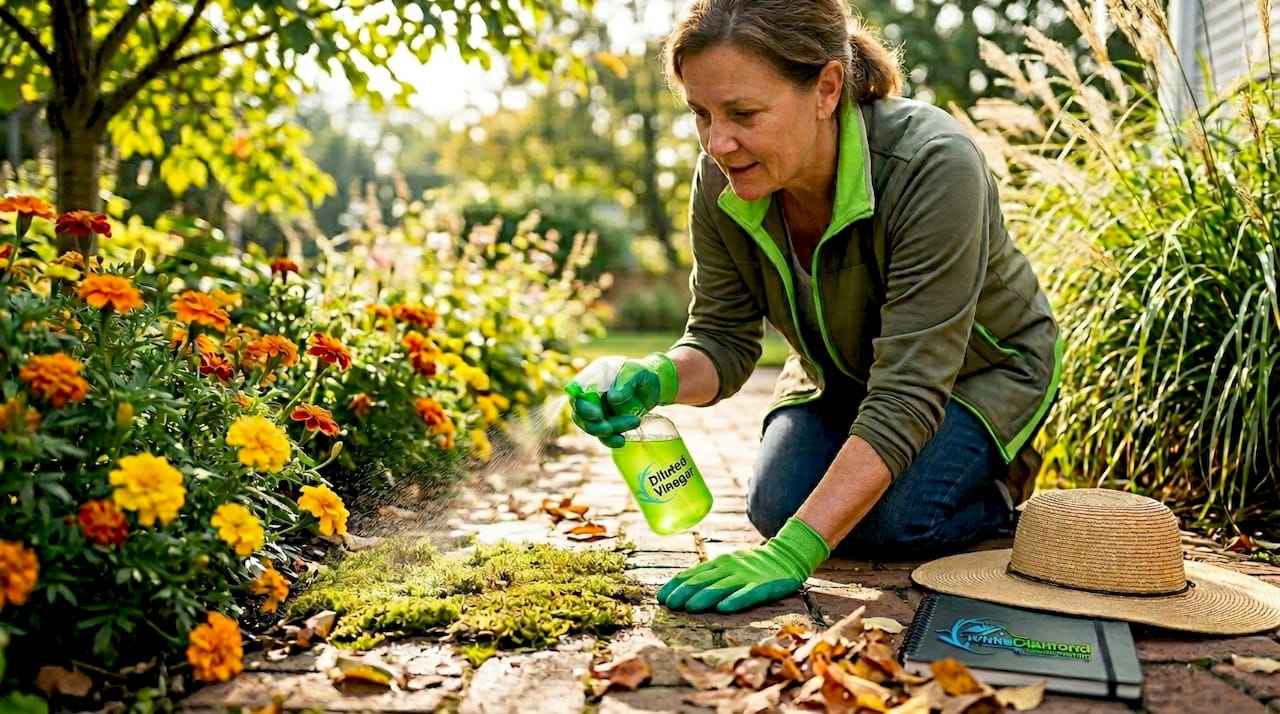
- Apply diluted white vinegar (1:1 ratio with water). White vinegar applied with a stiff broom and left to soak for about an hour effectively kills moss on most surfaces. It is a genuine DIY sidewalk cleaning solution that most people already have at home.
- Try baking soda for sensitive surfaces. Baking soda raises the pH of the surface, creating an alkaline environment that kills moss over several days. It is slower than vinegar but far safer for sandstone, limestone, and older concrete.
- Protect surrounding plants. Vinegar is acidic enough to damage grass and flowers near your walkway. Water the surrounding area first and rinse off any overspray quickly.
- Rinse completely after treatment. Residual acid from vinegar can continue working on the stone surface long after the moss is dead.
For homeowners who want to protect local waterways and landscaping, eco-friendly outdoor cleaning methods are worth exploring before defaulting to bleach or commercial chemical products.
Pro Tip: Always test your chosen solution on a small, hidden patch of your sidewalk before treating the whole surface. Vinegar can permanently etch certain stones, and the damage is not reversible. A ten-minute test saves you from a permanent mistake.
Comparing common sidewalk cleaning methods: effectiveness, risks, and maintenance needs
Understanding your options side by side makes the decision clearer. Each method works well under specific conditions, and choosing the wrong one for your surface type or stain type is the most common reason DIY sidewalk stain removal fails.
| Method | Speed | Cost | Best surface | Main risk | Maintenance frequency |
|---|---|---|---|---|---|
| Pressure washing | Fast | Medium | Concrete | Paver sand loss, etching | 1 to 2 times per year |
| Soap and scrubbing | Slow | Low | All surfaces | Labor intensive, less effective on moss | 2 to 4 times per year |
| White vinegar | Moderate | Very low | Most surfaces | Damage to limestone, sandstone | Every 3 to 4 months |
| Bleach solution | Moderate | Low | Concrete | Plant damage, discoloration | 1 to 2 times per year |
| Professional soft wash | Fast | Higher | All surfaces | Minimal when done correctly | 1 time per year |
A few practical notes on what the table does not show:
- Pressure washing can remove dirt efficiently but risks washing out paver joint sand if misused, which then requires re-sanding to maintain paver stability
- Bleach is effective at killing biological growth but should never be used near plants or in areas where it can reach storm drains
- Keeping cleaners wet and allowing proper dwell time dramatically improves stain and moss removal success
- Sealing your sidewalk surface after any cleaning extends how long it stays clean and significantly reduces the frequency of deep cleaning sessions
You can compare these options in more detail through a breakdown of sidewalk cleaning methods tailored to Citrus County surfaces and conditions.
Choosing the right cleaning routine and maintenance tips for Citrus County homeowners
A cleaning routine that works in a dry northern climate falls apart in Citrus County. The combination of heat, humidity, and overhanging oak or citrus trees creates near-constant organic material landing on your walkways. Here is how to build a routine that actually fits the environment.
- Set your base schedule. Most sidewalks need cleaning once or twice a year. If your walkway gets significant shade or stays damp for long periods, bump that to every three to four months. Shaded sidewalks prone to moss need that increased frequency to stay ahead of regrowth in Florida’s humid climate.
- Seal your surface every two to four years. A quality concrete or paver sealant repels moisture, reduces staining, and makes regular cleaning far easier. This is the single best investment most homeowners skip.
- Sweep and edge weekly. Removing leaf litter and organic debris regularly prevents the decomposition that feeds moss and algae. It takes five minutes and saves you hours of scrubbing.
- Address stains immediately. Fresh oil, rust, or organic stains are dramatically easier to remove than stains that have had weeks to penetrate the surface. A quick spot-clean with dish soap and a brush handles most fresh stains without any chemical treatment.
- Rinse after using chemical treatments on time. Pre-treatment dwell time matters, but letting cleaners sit too long or dry out actually reduces their effectiveness and can leave residue that attracts more dirt.
For more on protecting your walkway and driveway surfaces long term, the driveway maintenance tips and pre-treatment for cleaning resources offer Citrus County-specific guidance worth bookmarking.
Pro Tip: Trim any shrubs or trees that overhang your walkway and adjust sprinkler heads so they do not spray onto the sidewalk surface. Reducing moisture exposure cuts moss growth significantly between cleanings.
Why the common sidewalk cleaning myths might slow your progress and what really works
Here is the truth most cleaning guides skip: the biggest enemy of a clean sidewalk is not the wrong chemical. It is the wrong timing.
The most widespread myth among homeowners is that more pressure equals better results. In reality, excessive pressure strips joint sand from pavers, micro-etches concrete surfaces making them rougher and more prone to staining, and does not actually remove the biological growth that causes most discoloration. Moss and algae require chemical action to die. Blasting them with water often just spreads live spores to new areas.
The second myth is that one thorough cleaning a year handles everything. For a sunny, open sidewalk in a low-traffic area, that might be true. For a shaded Citrus County walkway under a canopy of live oaks or near an irrigation zone, that schedule sets you up for thick moss regrowth and deep staining by midsummer.
The failure mode we see most consistently in DIY attempts comes down to letting the cleaner dry before rinsing, which sharply reduces the treatment’s effectiveness. The chemistry needs moisture to keep working on biological growth and stains. Once it dries, the reaction stops.
“Timing your rinse to keep cleaners moist is more effective than merely using stronger chemicals.” — professional exterior cleaning insight
The fix is straightforward. Apply your cleaner, watch for it starting to lose its wet sheen, and rinse before it reaches that point. On a hot Citrus County afternoon, that window can be under ten minutes. Work in sections and keep a hose within reach. Pair that with the right chemical for your surface type, and you will get results that match or exceed what most people assume requires a professional visit. For sensitive surfaces, non-abrasive washing tips give you the practical framework to clean thoroughly without creating new damage.
Explore expert sidewalk and driveway cleaning services in Citrus County
Knowing the right methods is half the battle. Executing them with the right equipment and calibrated pressure is where professional results come from.

At White Diamond Pressure Washing, we bring calibrated pressure settings, professional-grade eco-friendly detergents, and surface-specific knowledge to every job. We assess your sidewalk type before we touch it, apply the right treatment at the right pressure, and protect your landscaping throughout the process. Whether you need a one-time deep clean or a recurring maintenance plan tailored to your property, we make maintaining clean sidewalks genuinely simple. Explore our full professional cleaning services or learn more about the exterior cleaning benefits and preventative exterior cleaning strategies that protect your investment year-round.
Frequently asked questions
How often should I clean my sidewalk in Citrus County?
For heavily used sidewalks, once or twice a year is typical, but shaded or moss-prone areas in Citrus County’s humid climate may need cleaning every three to four months to prevent moss and mold from establishing.
Can I use a pressure washer on paver sidewalks?
Yes, but use a low-pressure setting and keep the nozzle 12 to 24 inches away from the surface to avoid washing out joint sand; plan to inspect and re-sand joints after cleaning if needed.
Is white vinegar safe for removing moss on sidewalks?
Diluted white vinegar works well on most surfaces, but it can harm sensitive stones like sandstone or limestone, so always test a small hidden patch before treating the full area.
What is the best way to prevent moss from returning on sidewalks?
Trim overhanging shrubs to increase sunlight, avoid sprinkler overspray onto walkways, clean regularly, and consider applying a surface sealant since sunlight exposure and regular cleaning are the most effective long-term deterrents.
Recommended
- What is sidewalk cleaning and why it matters in 2026 – white-diamond-pressure
- 7 Common Exterior Surfaces to Clean for Better Curb Appeal – white-diamond-pressure
- Walkway cleaning: boost curb appeal and home value 15% – white-diamond-pressure
- 7 Essential Tips for Your Spring Cleaning Exterior Checklist – white-diamond-pressure
One thought on “Sidewalk cleaning tips that protect and impress”