

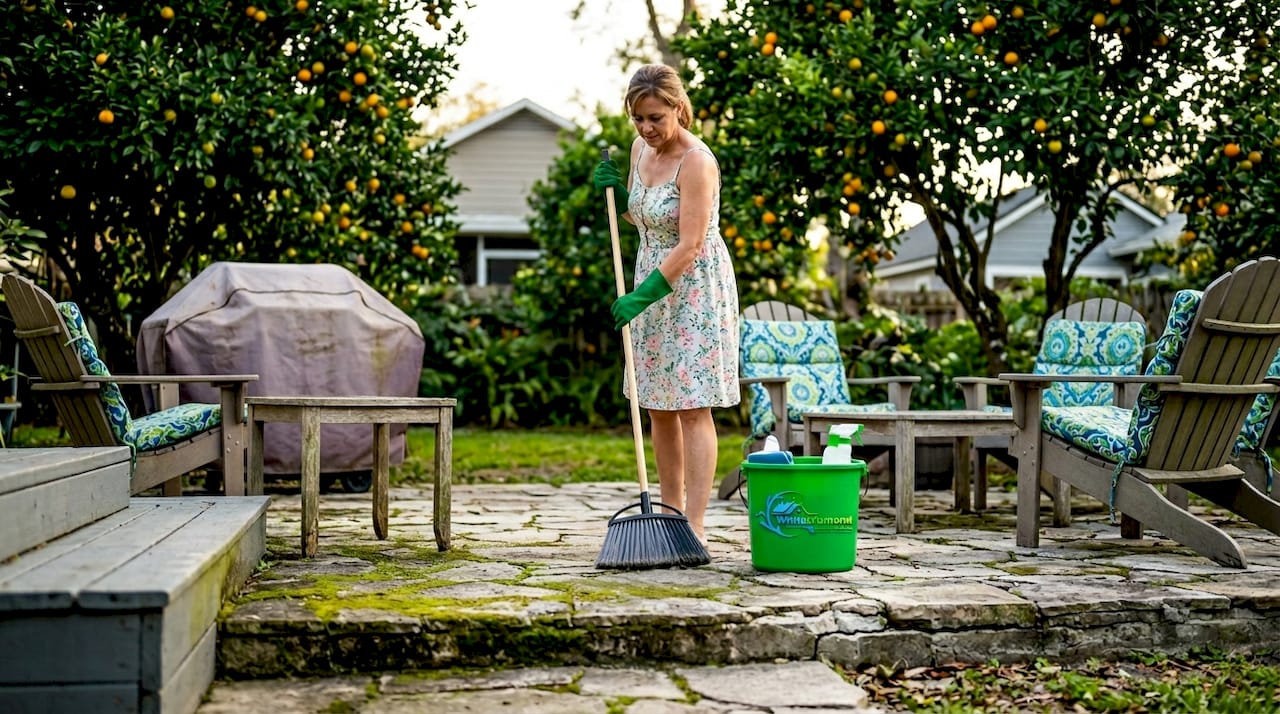
TL;DR:
- Homeowners often neglect outdoor patio cleaning until visible dirt appears, risking accelerated biological growth. Regular, material-specific cleaning methods prevent damage, slip hazards, and deterioration caused by algae, moss, and moisture. Professional services offer safe, effective, long-lasting results that protect property value and safety in humid Citrus County conditions.
Most Citrus County homeowners think about patio cleaning only when things look obviously dirty. That’s the trap. Understanding why clean outdoor patios matter goes well beyond removing surface grime. Your patio faces a specific threat here: Florida’s humidity, frequent rain, and heavy shade create the perfect conditions for algae, moss, and mold to take hold fast. Left alone, these growths don’t just look bad. They make surfaces dangerously slippery, accelerate surface deterioration, and quietly erode your property value. This guide covers why it matters, how to do it right, and how to protect your investment for the long haul.
Table of Contents
- Understanding why cleaning outdoor patios is essential
- Safe and effective patio cleaning methods
- How algae and moss impact patio safety and appearance
- Step-by-step process for professional patio cleaning
- Practical maintenance tips for Citrus County patios
- Why typical patio cleaning advice misses the mark
- Professional patio cleaning services to protect your Citrus County home
- Frequently asked questions
Key Takeaways
| Point | Details |
|---|---|
| Humidity accelerates buildup | Citrus County’s moist climate speeds up mold and algae growth, making regular patio cleaning essential. |
| Safe technique is critical | Using low pressure and correct tools prevents damage to patio surfaces and joints. |
| Algae reduce safety | Invisible moisture trapped by algae makes patios slippery even when they look clean. |
| Proper cleaning sequence matters | Sweeping, spot treatment, scrubbing, then rinsing yields even, lasting cleaning results. |
| Professional care saves money | Experts prevent costly repairs by maintaining patios properly and avoiding common DIY mistakes. |
Understanding why cleaning outdoor patios is essential
Citrus County’s outdoor environment is genuinely tough on patios. The combination of warmth, shade, and moisture means biological growth can appear within weeks of your last cleaning. What looks like simple discoloration is often a layer of algae or mold actively breaking down your surface. As confirmed in surface cleaning guidance specific to this region, humidity accelerates mold and algae growth on patios, making routine cleaning vital to prevent deterioration.
The stakes go beyond cosmetics. Concrete can develop a process called spalling, where moisture trapped beneath the surface causes the top layer to flake and crumble. Wood decking rots from the inside out when moisture sits trapped under a film of biological growth. Stone pavers can shift when joints erode from unchecked organic buildup. None of these happen overnight, but they all follow the same first step: a patio that wasn’t cleaned on a regular schedule.
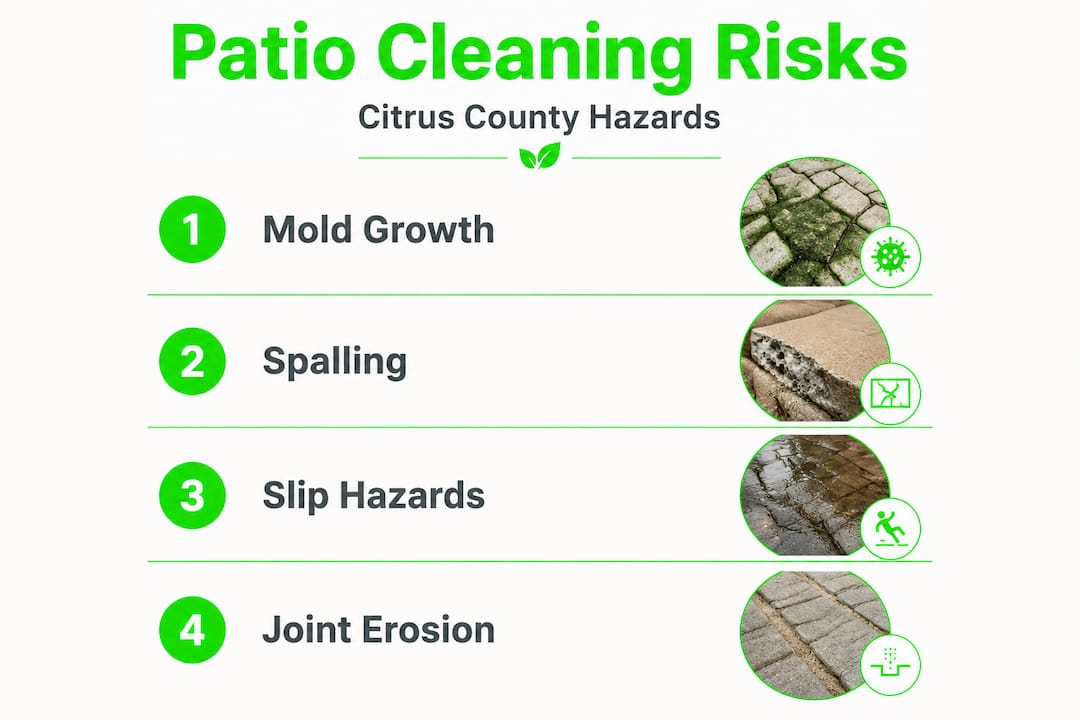
The benefits of exterior cleaning extend to real estate value as well. A clean, well-maintained patio signals to buyers that the property has been cared for, which directly influences offers.
Here’s what goes wrong when patios are neglected:
- Algae and moss create a slick biofilm that makes the surface hazardous after rain
- Organic matter speeds up surface degradation on concrete, wood, and stone alike
- Stains from leaves, rust, and mildew become permanent if left too long
- Deteriorating joints allow water to penetrate deeper, worsening freeze and thaw damage
- Declining curb appeal reduces time spent outdoors and perceived home value
“A patio that looks merely dull may already be compromised structurally. Appearance is the last thing to change, not the first.”
Safe and effective patio cleaning methods
Cleaning a patio incorrectly is often worse than not cleaning it at all. The method that works on concrete can permanently etch natural stone. The pressure that removes moss from a durable surface can strip the finish off a softer one. Getting this right starts with knowing your material and matching the technique to it.
Follow this sequence for safe and effective results:
- Sweep and clear the surface completely. Remove furniture, planters, and loose debris. This prevents wet debris from smearing and blocking cleaner contact with the surface.
- Identify your patio material. Concrete, brick, pavers, slate, travertine, and wood each respond differently to pressure and chemicals.
- Select the right cleaning agent. pH-neutral cleaners work for most stone. Oxygen bleach solutions handle biological growth without the harshness of chlorine on sensitive materials.
- Set your pressure washer to a wide fan nozzle (40 to 60 degrees) at a low PSI. This covers more area with less force, protecting joints and surface finishes.
- Work in sections, moving the wand in even, overlapping passes. Never stop the wand in one spot while the machine is running.
- Rinse thoroughly to remove all cleaning agent residue. Residue left in sunlight creates streaks and dull patches.
As cleaning damage research confirms, high pressure or holding the nozzle too close can damage patio surfaces and joints. Starting with lower pressure and testing on a small section helps prevent lasting harm.
Before you start, check for pressure washing mistakes to avoid so you don’t turn a cleaning session into a repair bill. Also know which top patio surfaces to pressure wash are appropriate for high-pressure methods versus soft washing.
“The most common DIY cleaning error is skipping inspection before washing. Spraying water into an existing crack forces moisture deeper, setting up freeze damage or joint failure.”
Pro Tip: Before any wash, inspect your patio joints. If grout or sand between pavers is already loose, high-pressure washing will remove it entirely. Fill gaps first, let them cure, then clean.
How algae and moss impact patio safety and appearance
Here’s what most homeowners don’t realize: a patio can look clean and still be dangerous. Algae creates a biofilm, a thin, often invisible layer, that drastically reduces friction underfoot. It’s most aggressive in shaded, damp areas, which describes a large portion of Citrus County patios during the rainy season.
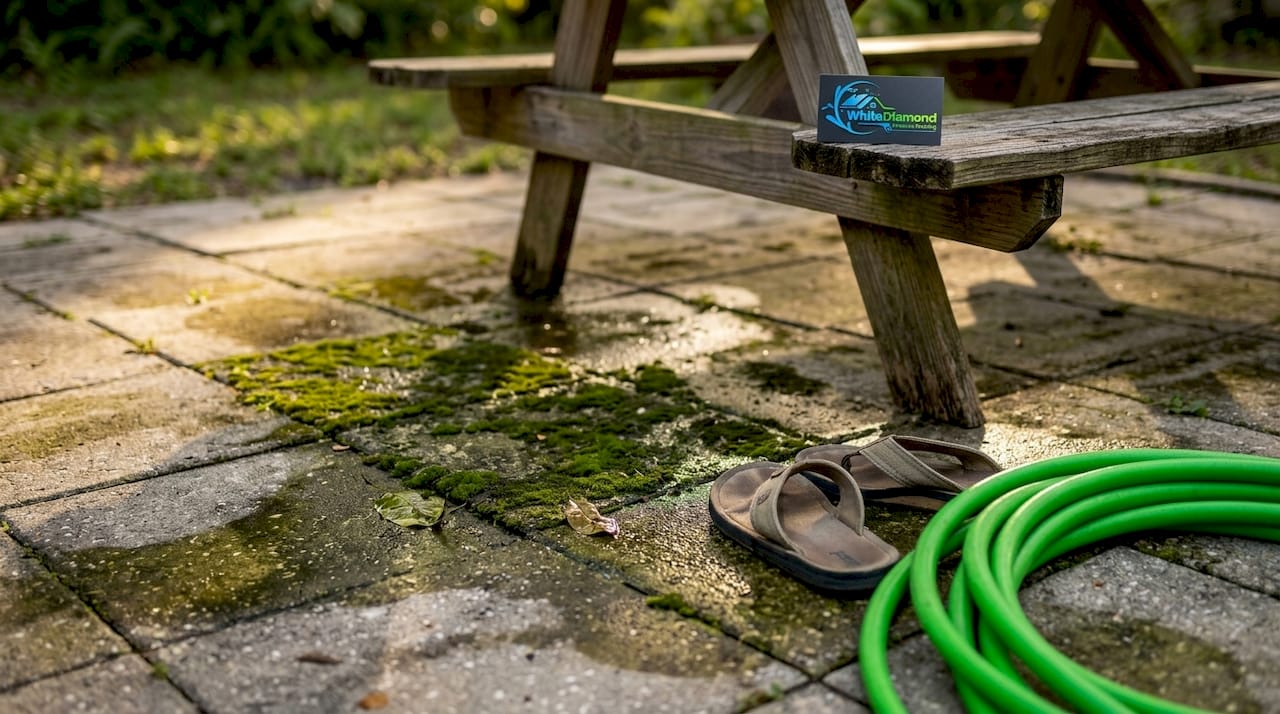
Research into surface slipperiness confirms that algae and moss trap moisture and create slippery surfaces, often unnoticed because appearance alone is a poor safety indicator. A patio that dried out overnight might look fine but still carry residual biofilm.
Different materials absorb and release moisture at different rates. Travertine and natural stone hold moisture longer than sealed concrete, meaning slipperiness can persist hours after rain. Pressure washing the surface without treating the underlying growth conditions leads to rapid regrowth, often within three to four weeks in Florida’s humid summers.
Key facts about biological growth on patios:
- Algae spores travel by wind and water, making recontamination nearly instant if conditions are right
- Shaded areas with poor drainage are the highest-risk zones for slip hazards
- Moss roots penetrate porous surfaces, physically widening micro-cracks over time
- A visually dry patio can still have a wet biofilm layer beneath the surface texture
- Removing visible algae without treating the root causes only delays the next outbreak by days
Pro Tip: Trimming overhanging branches and improving drainage near your patio reduces algae regrowth cycles significantly. Less shade and faster drying means fewer conditions for biological growth to take hold.
Understanding the full picture of exterior cleaning benefits means recognizing that cleaning is as much about safety as appearance.
“Surface-level cleaning treats the symptom. Addressing drainage, shade, and moisture is the actual solution.”
Step-by-step process for professional patio cleaning
Professional cleaning follows a deliberate sequence that prevents the patchy, uneven results many DIY efforts produce. The order matters as much as the technique.
- Dry sweep the entire surface. A clean, dry start ensures that cleaning solutions contact the patio material rather than washing over a layer of loose debris.
- Spot-treat individual stains. Rust, wine, grease, and tannin stains from leaves each require a different treatment. Applying the right agent to each stain before the full wash dramatically improves final results.
- Apply the appropriate cleaning solution in sections. Work from one end to the other in manageable areas, roughly 4 by 4 feet at a time, to maintain even dwell time.
- Scrub using a stiff-bristle brush or surface cleaner attachment. This works the solution into the pores of the material rather than just sitting on top.
- Rinse each section thoroughly before moving on. This prevents the cleaning agent from drying mid-process and creating streaks.
- Final inspection pass and post-clean sealing. Sealing is optional but recommended for concrete and porous stone, especially in Citrus County’s rainy climate.
Use the stain removal guide to match the right treatment to each stain type before you start.
| Surface type | Recommended method | Pressure setting | Seal after cleaning? |
|---|---|---|---|
| Concrete | Pressure wash + degreaser | Medium (1500 to 2500 PSI) | Yes, every 2 to 3 years |
| Natural stone (travertine, slate) | Soft wash + pH-neutral cleaner | Low (under 1000 PSI) | Yes, annually |
| Brick pavers | Pressure wash + oxygen bleach | Medium (1500 PSI) | Yes, every 1 to 2 years |
| Wood decking | Soft wash + wood-safe cleaner | Very low (500 to 800 PSI) | Yes, annually |
| Composite decking | Manual scrub + mild detergent | Avoid high pressure | No |
Pro Tip: Always rinse in the same direction the water naturally drains from your patio. Rinsing against the slope pushes dirty water back across areas you’ve already cleaned, causing streaking and uneven results.
Practical maintenance tips for Citrus County patios
Maintaining a clean patio in Citrus County isn’t a once-a-year event. The climate demands consistent attention. The good news is that small, regular efforts between professional cleanings keep the workload manageable and the surface in far better condition year-round.
- Sweep the patio weekly to remove leaves, pollen, and debris before they break down and stain
- Rinse with a garden hose after heavy rain to flush away organic material before it dries
- Treat visible algae or mold spots immediately with an appropriate cleaner rather than waiting for a full wash
- Clear standing water from the surface and around the edges after storms to reduce moisture retention
- Trim vegetation near the patio edge to reduce debris fall and improve airflow for faster drying
Soft washing two to three times annually and annual pressure washing maintain Citrus County patios in humid conditions without causing surface damage. Scheduling professional cleanings in spring and fall aligns with the seasons when biological growth is most active.
Professional cleaning services eliminate the guesswork from technique, pressure selection, and chemical compatibility. The cost of a professional visit is consistently lower than the cost of repairing a surface damaged by incorrect DIY cleaning. For visible improvements that also boost resale appeal, understanding curb appeal benefits makes the maintenance investment even clearer.
Pro Tip: A patio sealer applied after a professional clean extends the time between deep cleanings by reducing how easily biological growth adheres to the surface. Ask your cleaning professional which sealer is compatible with your specific patio material.
Why typical patio cleaning advice misses the mark
After years of working on patios across Citrus County, one pattern shows up constantly: homeowners who grab the highest-pressure setting because they assume more power equals better results. It’s an understandable instinct. It’s also wrong.
Excessive pressure leads to joint erosion and recurring moss growth, compromising patio longevity. We’ve seen concrete surfaces permanently etched by machines set far above what the material can handle. We’ve seen joints between pavers stripped bare, requiring complete regrouting after a single overzealous cleaning session.
The deeper issue is that most advice treats patio cleaning as a surface problem. It isn’t. A patio is a system: the surface material, the joints between units, the drainage beneath it, and the environmental conditions surrounding it. Cleaning only the top layer while ignoring drainage, shade, and moisture retention is like treating a symptom without the underlying cause. The growth comes back fast, sometimes faster than before, because the cleaning disturbed the existing biofilm without removing the conditions that create it.
The advantages of low-pressure washing become obvious once you’ve compared results side by side. Gentle, targeted cleaning paired with the right chemical treatment removes biological growth more completely than brute-force pressure alone. It also leaves joints intact, surfaces undamaged, and the patio looking better for longer.
The professional approach isn’t just about equipment. It’s about sequencing, testing, and matching the method to the material. That discipline is what separates a patio that looks great for two years from one that needs repairs six months after cleaning.
Professional patio cleaning services to protect your Citrus County home
If reading this has made you realize your patio needs more than a quick rinse, you’re not alone. Most Citrus County patios we inspect have some level of biological growth, staining, or joint degradation that goes beyond what a garden hose and brush can address.

At White Diamond Pressure Washing, we use calibrated equipment and surface-specific techniques to clean patios without causing the damage that aggressive DIY methods often leave behind. Our crews follow proven cleaning sequences, spot-treat stains before full washing, and select the right pressure and chemistry for your patio material. Whether your patio is concrete, natural stone, brick pavers, or wood, we have the exterior cleaning expertise to get it clean safely. We also review pressure washing safety protocols on every job to protect both the surface and the people who use it. Ready to protect your patio investment? Visit White Diamond Pressure Washing to book your free estimate today.
Frequently asked questions
Why is it important to sweep the patio before cleaning?
Sweeping removes loose debris that can turn to mud when wet, ensuring cleaning solutions contact the patio surface properly for better results. A clean, dry starting surface allows cleaners to reach the patio material instead of washing over loose grime.
How can high-pressure washing damage my patio?
Excessive pressure or spraying too close can erode stone, strip joints, and create permanent patchy marks, leading to costly repairs. High pressure strips surfaces and forces water into joints, causing damage especially on softer stones.
Why does my patio remain slippery even after cleaning?
Algae and moss trap moisture beneath the surface, so slipperiness can persist if environmental factors like shade and drainage are not addressed. Slipperiness often returns if the conditions causing moisture and growth remain untreated.
How often should I clean my patio in Citrus County?
Soft washing every two to three months and annual pressure washing are recommended to manage rapid biological growth in Citrus County’s humid climate. Soft washing two to three times per year and annual pressure washing maintain patios effectively in humid regions.
Can I safely clean my patio myself?
Manual cleaning works for light surface grime, but professional services reduce the risk of damage and deliver deeper, safer cleaning results. Professional cleaning achieves better results and avoids the DIY mistakes that can harm surfaces and void material warranties.