

TL;DR:
- Black streaks on roofs result from living bacteria called Gloeocapsa magma producing pigment to protect against UV rays. If left untreated, these streaks increase roof heat absorption, raising cooling costs, and accelerate deterioration, risking structural damage. Using soft washing with low-pressure chemicals and installing preventative metal strips can effectively remove stains and prevent future growth.
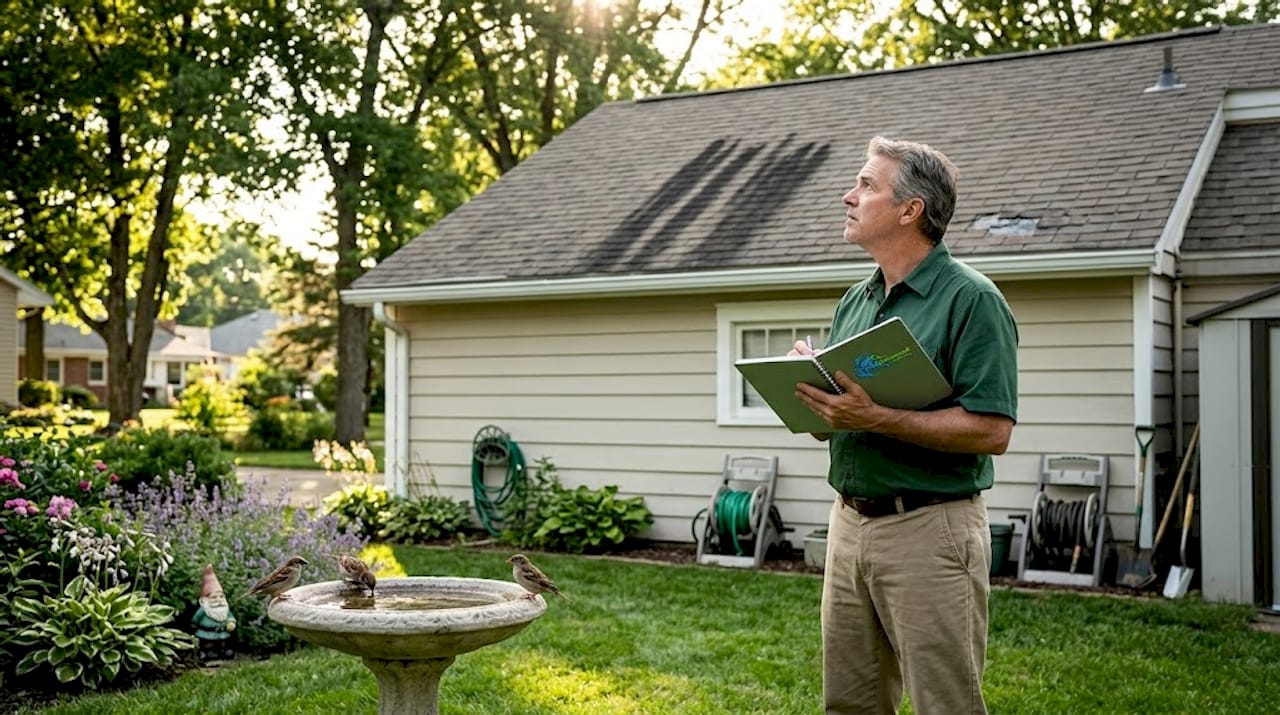
Those dark, ugly streaks running down your roof are not dirt, and they are not mold. Understanding roof black streaks starts with one surprising fact: you are looking at living bacteria feeding on your shingles right now. A cyanobacterium called Gloeocapsa magma colonizes asphalt shingles by consuming the limestone filler manufacturers use as a weight and strength additive. What you see are not the bacteria themselves, but the dark protective pigment the organism produces as armor against UV radiation. Left alone, these streaks accelerate roof aging, raise your cooling bills, and can invite far worse biological damage over time.
Table of Contents
- Key takeaways
- Understanding roof black streaks: the science behind the stain
- Algae, moss, and lichen: knowing the difference
- The real cost of ignoring black streaks
- Safe roof streak removal methods
- Preventing roof discoloration long-term
- My honest take after years of cleaning roofs
- Get professional roof cleaning from Whitediamondpressurewashing
- FAQ
Key takeaways
| Point | Details |
|---|---|
| Black streaks are biological | Gloeocapsa magma bacteria, not dirt or mold, cause the dark staining on asphalt shingles. |
| Streaks raise energy costs | Infected roof surfaces run significantly hotter, pushing summer cooling costs up by 10 to 15 percent. |
| Pressure washing causes damage | High-pressure cleaning strips granules and can void your shingle warranty. Soft washing is the safe method. |
| Prevention beats repeated cleaning | Zinc or copper strips near the ridge line and algae-resistant shingles stop regrowth long-term. |
| Correct identification matters | Algae, moss, and lichen look similar but require different treatments and carry different damage risks. |
Understanding roof black streaks: the science behind the stain
Gloeocapsa magma is a cyanobacterium, meaning it photosynthesizes like a plant but belongs to the bacteria kingdom. It thrives in warm, humid conditions and spreads through airborne spores that land silently on your roof. Once established, the colony feeds on the crushed limestone that manufacturers blend into asphalt shingles as a filler material. That food source is literally built into your roof.
The bacteria protect themselves from sunlight by secreting a dark, melanin-like pigment sheath. That sheath is what creates the visible black streaks you can see from the street. The organism itself is microscopic, but its pigment accumulates in layers over months and years, turning faint gray discoloration into thick, dramatic black runs down your shingle surface.
“Black streaks on roofs are not a cosmetic nuisance. They represent active biological colonization of your roofing material, and the conditions that allow them to grow will keep feeding them until you intervene.” — National Roof Cleaning Authority
Geography plays a significant role in how fast colonies grow. The Southeast, Gulf Coast, and Mid-Atlantic regions see the most severe outbreaks due to high humidity, warm temperatures, and frequent rainfall. Notably, Gloeocapsa magma has been expanding northward since the 1990s, likely due to shifting climate patterns, which means this is no longer just a southern problem. Shade from large trees keeps shingles damp longer, and north-facing roof sections tend to stay wetter, creating ideal colonization zones.
Algae, moss, and lichen: knowing the difference
Not every stain on your roof is Gloeocapsa magma, and that distinction matters a great deal when you choose a treatment approach. Getting the diagnosis wrong can mean wasted money, damaged shingles, or a contamination that comes back within weeks.
Black streaks from algae are flat and two-dimensional. They follow the path of water runoff and appear as long, dark ribbons running vertically down the slope. Moss is unmistakably different: it has physical volume, grows in green or brown cushiony patches, and you can often feel its texture when you inspect a shingle up close. Lichen looks like a crusty, gray-green growth bonded tightly to the surface. It has a circular, spreading shape and will not brush off.
The damage profiles of these three organisms vary significantly:
- Algae (Gloeocapsa magma): Primarily causes cosmetic staining, heat absorption, and minor moisture retention. Structural damage is slow but cumulative.
- Moss: Physically lifts shingle tabs at the edges, allows water to penetrate beneath the shingle layer, and softens the asphalt base over time. Moss growth pushes shingle tabs and retains enough moisture to accelerate rot.
- Lichen: The most damaging of the three. Its root-like rhizine structures bond chemically with the shingle surface, and lichen removal without shingle damage is essentially impossible once it is fully established.
| Organism | Appearance | Damage level | Moisture retention |
|---|---|---|---|
| Algae | Flat black streaks | Low to moderate | Minimal |
| Moss | Thick green-brown cushions | High | Significant |
| Lichen | Crusty gray-green growth | Severe | Moderate to high |
Distinguishing algae, moss, and lichen is critical because they require different treatment methods and carry different long-term damage profiles. A bleach-based soft wash works well on algae. Lichen that has bonded for years may require professional assessment to determine whether treatment or partial replacement is the better path.
The real cost of ignoring black streaks
Most homeowners frame black streaks as a curb appeal problem. That framing is costly. The actual consequences reach well beyond how your roof looks to a neighbor walking by.
Heat absorption is the most immediately measurable consequence. Studies using thermography show that algae-stained roof surfaces can reach 140°F while clean sections of the same roof stay around 110°F on the same summer day. That 30-degree difference forces your air conditioning system to work harder, raising summer cooling costs by roughly 10 to 15 percent. Over a season, that adds up to a real dollar figure you can calculate against the cost of a professional cleaning.
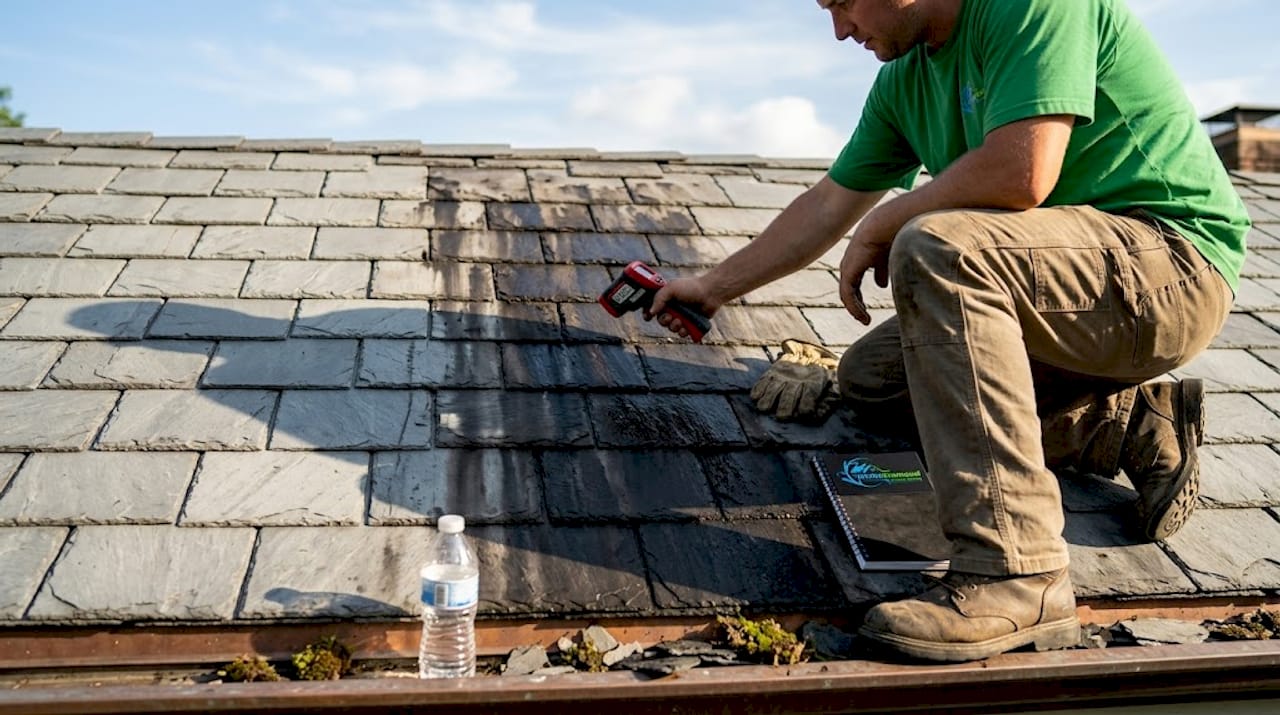
Moisture retention is the second major consequence. Biological growth holds water against the shingle surface far longer than a clean roof would. Over time, this accelerates granule loss and roofing deterioration. Granules are the protective layer embedded in asphalt shingles that deflect UV rays and shed water efficiently. Once they erode, the underlying asphalt degrades rapidly.
Pro Tip: Check your gutters after a rainstorm. If you find grit that looks like coarse coffee grounds, your shingles are losing granules at a significant rate. That is your signal to get an inspection before any cleaning takes place.
The downstream effects do not stop at the shingle. Compromised shingles allow moisture infiltration into the decking and attic space. Wet attic insulation loses its thermal performance and creates conditions where mold can establish. What began as black streaks on shingles becomes an attic moisture problem, a mold remediation bill, and potentially a structural repair.
Safe roof streak removal methods
The worst thing you can do when you spot black streaks on your roof is grab a pressure washer and go to town. Pressure washing at high PSI strips granules from the shingle surface and can void manufacturer warranties. The Asphalt Roofing Manufacturers Association recommends a maximum of 1,200 PSI with soft wash methods, and even that requires careful technique. Most consumer-grade pressure washers start above that threshold.
The industry-standard approach is soft washing: a low-pressure application of a diluted sodium hypochlorite solution combined with surfactants. Here is how the process works in practice:
- Inspect before you treat. Walk the perimeter and look for cracked, curling, or missing shingles. Cleaning a structurally compromised roof can drive water into existing damage. If you notice the coffee-ground granule grit in your gutters, get a professional inspection first.
- Mix the solution properly. Professional soft washing uses sodium hypochlorite at 1 to 3 percent concentration with surfactants at 0.5 to 2 percent by volume. The surfactant keeps the solution clinging to the shingle surface.
- Apply low and let it dwell. Use a low-pressure sprayer and apply the solution evenly across affected areas. Allow 15 to 30 minutes of contact time so the chemical can kill the organism at its root rather than just wash the surface.
- Rinse gently. A low-pressure rinse removes the dead biological material without blasting granules loose. You should see the black streaks lighten immediately and fade further over the following weeks as residual dead pigment washes away in rain.
- Protect landscaping. Pre-wet any plants or grass below the roofline and rinse them again after the job. Sodium hypochlorite is effective on algae but can damage vegetation if it pools at roots.
For guidance on avoiding high-pressure washing risks, the consequences extend beyond just the roof and are worth understanding before you attempt any cleaning.
Preventing roof discoloration long-term
Cleaning removes the current colony. Prevention stops the next one from forming. These two goals require different strategies, and both are worth investing in.
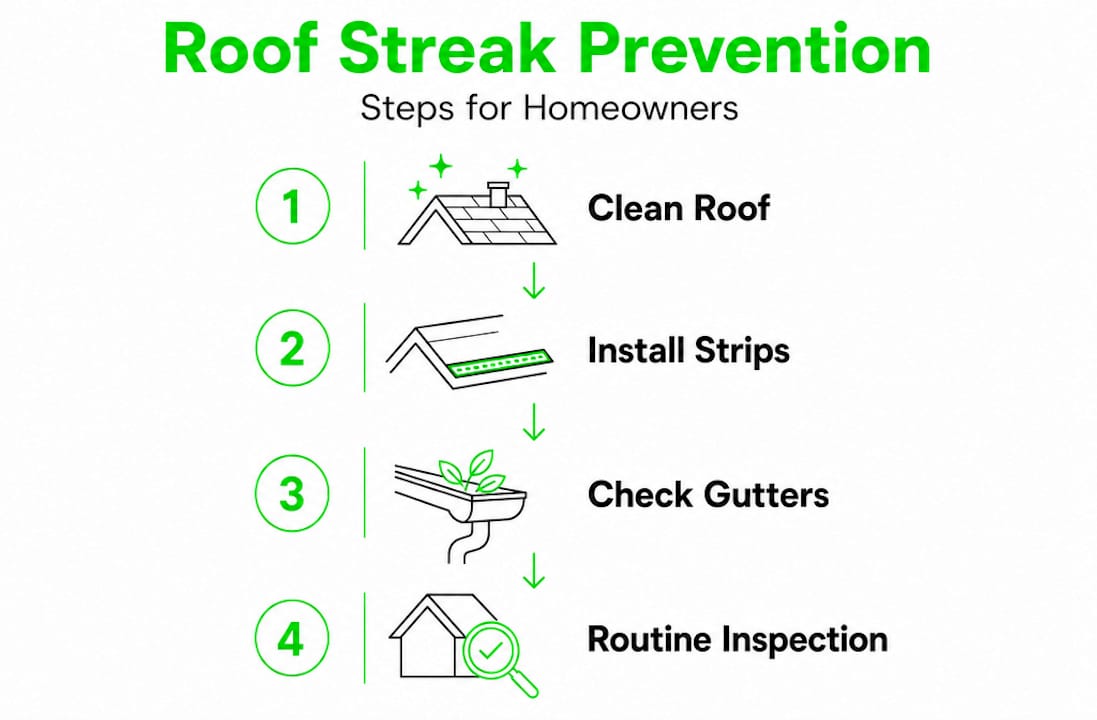
Zinc and copper are the most reliable passive prevention tools available to homeowners. When you install metal strips near the ridge, rainfall activates the metal and carries ions down the roof surface. Those ions are toxic to Gloeocapsa magma and other biological organisms, creating a treated zone that resists colonization. The strips need to be near the peak so rainwater carries the ions across as much of the roof surface as possible.
Additional prevention strategies that make a measurable difference:
- Choose algae-resistant shingles when it is time to replace your roof. Many manufacturers now embed copper granules directly into the shingle material, providing built-in protection for the life of the product. This is especially worth prioritizing in humid or heavily shaded environments.
- Trim overhanging tree branches to reduce shade on the roof surface. Shade keeps shingles wet longer after rain, extending the moist window that algae need to establish and grow.
- Maintain your gutters. Proper attic ventilation and gutter maintenance reduce moisture retention across the roofing system. Clogged gutters back water up under the shingle edge and create persistent wet zones.
- Schedule periodic soft wash treatments every two to three years in humid climates, or immediately when you spot early-stage streaking before a colony fully establishes.
Pro Tip: If your neighbors have black streaks and you do not yet, that is not luck. It is a window. Install zinc or copper strips now and you will likely avoid the problem entirely while they deal with cleaning costs.
My honest take after years of cleaning roofs
I have seen a lot of homeowners make the same two mistakes. The first is waiting too long, dismissing black streaks as a cosmetic problem until the damage is already done. The second mistake is overcorrecting: grabbing a pressure washer or hiring the cheapest crew they can find, only to end up with stripped granules, voided warranties, and a roof that looks cleaner for about six months before the bacteria return with a vengeance.
What I have learned is that roof condition is one of those things where the timing of your intervention determines the outcome more than almost anything else. A soft wash performed on an algae-colonized roof that still has good granule coverage is a straightforward, affordable job. The same job on a roof where granule loss is already advanced becomes complicated, because cleaning accelerates further deterioration on compromised shingles.
My honest advice: before you do anything, look at the age of your roof and check those gutters. If your roof is over 15 years old and you are already seeing significant granule loss, a professional inspection should come before any cleaning. You need to know what you are working with. Treating prevention as an investment rather than an afterthought is always the better financial decision. A set of zinc strips and a routine cleaning schedule costs a fraction of what an early roof replacement does.
— Bobby
Get professional roof cleaning from Whitediamondpressurewashing

If black streaks have already taken hold on your roof, or you want to protect a clean roof before they do, Whitediamondpressurewashing has the experience and equipment to handle it correctly. Serving Citrus County and surrounding areas, the team specializes in soft washing methods that remove Gloeocapsa magma and other biological growth without damaging your shingles or voiding your warranty. Every job starts with an honest assessment of your roof’s condition, because cleaning the wrong roof the wrong way helps no one.
Visit Whitediamondpressurewashing to request a free estimate or book a soft wash inspection today. Protecting your roof now is always less expensive than replacing it later.
FAQ
What causes black streaks on roof shingles?
Black streaks on asphalt shingles are caused by Gloeocapsa magma, a cyanobacterium that feeds on the limestone filler in shingles and produces a dark protective pigment. The streaks you see are that pigment accumulating over months or years.
Is it safe to pressure wash black streaks off a roof?
No. High-pressure washing strips granules from shingles and can void manufacturer warranties. The recommended method is soft washing with diluted sodium hypochlorite and surfactants applied at low pressure.
How do black streaks affect my energy bills?
Algae-stained roof sections absorb significantly more heat, reaching up to 140°F compared to 110°F on clean areas. That heat difference can raise summer cooling costs by roughly 10 to 15 percent.
Can I prevent black streaks from coming back after cleaning?
Yes. Installing zinc or copper strips near the roof ridge releases metal ions during rainfall that inhibit algae growth. Algae-resistant shingles with embedded copper granules provide similar long-term protection.
Are black streaks the same as moss or lichen?
No. Black streaks are flat algae staining, while moss grows in raised cushiony patches and lichen forms a crusted growth bonded to the shingle surface. Moss and lichen cause more structural damage than algae and require different removal approaches.
Recommended
- Don’t Skip Roof Maintenance: Key Risks You Need to Know – white-diamond-pressure
- Effective Roof Cleaning Techniques for Homeowners – white-diamond-pressure
- Discover the Top Roof Cleaning Advantages for Homeowners – white-diamond-pressure
- Why Clean Exterior Windows Matters for Homeowners – white-diamond-pressure