

TL;DR:
- Water temperature influences cleaning chemistry, fabric safety, and energy efficiency in laundry and outdoor cleaning. Warm water at 90°F to 110°F offers optimal stain removal and enzyme activity, while cold water suits delicates and minimizes energy use, and hot water is reserved for sanitization. Properly matching water temperature to the task improves results, reduces costs, and extends fabric and surface life.
Water temperature is the single most important variable controlling how well your detergent cleans, how long your fabrics last, and how much energy you burn per load. Most homeowners default to hot water out of habit, but that instinct costs money and damages clothes more often than it helps. Modern detergent chemistry and appliance engineering have rewritten the rules on optimal washing temperature, and the science behind those changes applies just as much to your driveway as it does to your dress shirts.
How does the role of water temperature in washing affect your results?
Water temperature controls cleaning chemistry at the molecular level. Modern residential washers define three standard ranges: Cold (60°F to 80°F), Warm (90°F to 110°F), and Hot (130°F and above). Each range triggers different reactions between water, detergent, and the soils you are trying to remove. Choosing the wrong range does not just reduce cleaning power. It can permanently damage fabric, set stains, or waste significant energy.
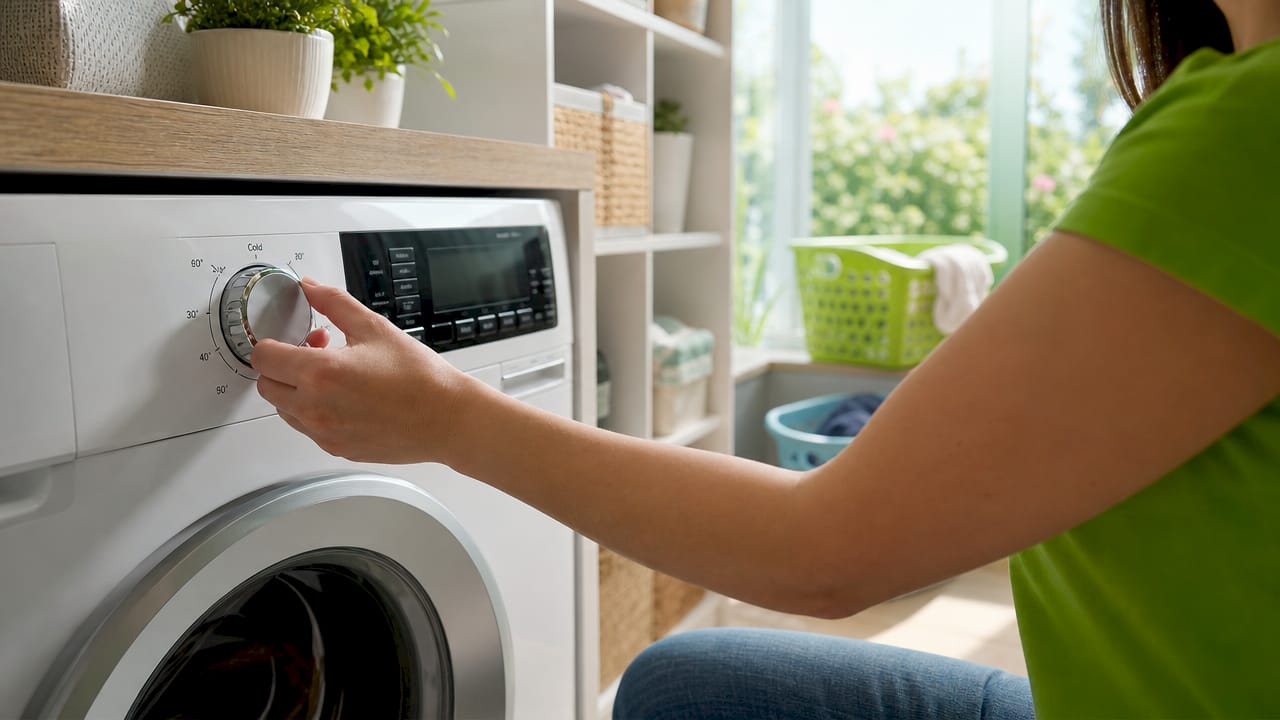
The chemistry behind temperature effects follows a well-established principle. Surfactant and enzyme kinetics accelerate as water warms, which means detergent molecules move faster, penetrate fibers more deeply, and break down oils more efficiently. The practical implication is that warm water at 90°F to 110°F delivers the best balance of cleaning power and fabric safety for most everyday laundry. Understanding this relationship gives you a decision framework that works across every load you run.
How does cold water washing work and when is it best used?
Cold water washing, defined as 60°F to 80°F, works because modern enzyme-based detergents like Tide Coldwater Clean and Persil ProClean are specifically formulated to activate at low temperatures. These detergents use protease, amylase, and lipase enzymes that break down protein, starch, and fat stains without needing heat to function. Cold water reduces fabric shrinkage, fading, and wrinkles while cutting energy costs per load.
Cold water is the right choice in these specific situations:
- Delicate fabrics like silk, wool, and lace that distort or felt under heat
- Bright and dark colors that bleed or fade when exposed to warm or hot water
- Lightly soiled everyday clothes such as T-shirts, jeans, and casual wear
- Synthetic fabrics like polyester and nylon that hold shape better at low temperatures
- Pre-rinsing protein stains like blood or egg before a full wash cycle
The energy savings are real and measurable. Switching from hot to warm water cuts energy use per load by roughly 50%, and cold water saves even more. For a household running five loads per week, that adds up to meaningful utility savings over a year.
Cold water has clear limits, though. It does not melt body oils or grease effectively, and it cannot sanitize. Heavily soiled work clothes, kitchen towels, and anything contaminated with bacteria will not come fully clean in cold water, even with premium detergents.
Pro Tip: Always check the rinse cycle setting separately. Rinse water temperature has almost no effect on stain removal, so running a cold rinse even after a warm wash saves energy without any trade-off in cleanliness.
What cleaning advantages and trade-offs come with warm water washing?
Warm water at 90°F to 110°F is the workhorse temperature range for most household laundry. At this range, enzyme activity peaks, body oils and light fats begin to melt, and detergent molecules reach their most effective kinetic state. The optimal wash temperature around 30°C to 40°C (86°F to 104°F) maximizes cleaning power while keeping fabric damage to a minimum. This is why most garment care labels default to a warm wash recommendation.
Here is why warm water outperforms both cold and hot for daily laundry:
- Enzyme activation is maximized. Protease and lipase enzymes in detergents like Ariel and Persil work fastest between 86°F and 104°F, breaking down the widest range of stains.
- Body oils and light fats liquefy. Sebum and cooking grease transition from solid to liquid state at warm temperatures, making them far easier for surfactants to lift from fabric.
- Chemical use drops. Warm water cleaning can reduce the detergent concentration needed to achieve the same result compared to cold water, which means less chemical residue on fabric.
- Most synthetic and mixed fabrics tolerate it. Polyester blends, cotton-synthetic mixes, and most casual wear handle warm water without shrinking or distorting.
- Energy use stays moderate. Warm water uses roughly half the energy of a hot wash, making it a practical middle ground for households focused on both cleanliness and utility costs.
The one scenario where warm water falls short is sanitization. Bacteria, mold spores, and dust mites require temperatures above 130°F to be reliably eliminated. For everyday laundry without contamination concerns, warm water is the right default.
When and why is hot water washing necessary despite its drawbacks?
Hot water at 130°F and above is not for everyday use. It serves a specific and important purpose: sanitization. Hot water is required for medical scrubs, cloth diapers, bed linens used by sick household members, and any item contaminated with mold, bodily fluids, or pests like dust mites or bed bugs. In these cases, heat does the work that chemistry alone cannot.
The risks of hot water are real and worth knowing before you default to it:
- Color fading accelerates significantly above 120°F, especially in synthetic dyes
- Natural fibers shrink, particularly cotton, wool, and linen
- Elastic and spandex degrade faster with repeated hot washing
- Protein stains set permanently if heat is applied before the stain is soaked out
- Energy consumption doubles compared to a warm wash
That last point about protein stains is critical and counterintuitive. Blood, egg, and dairy stains are protein-based, and hot water bonds those proteins to fabric fibers, making the stain nearly impossible to remove. The correct sequence is always a cold soak first to lift the protein, followed by a warm or hot wash to finish the job.
One more detail that surprises most homeowners: enzymes in detergents denature above roughly 60°C (140°F). At that point, the biological cleaning agents in your detergent stop working entirely, and you are relying solely on heat and surfactants. For most hot washes, this means choosing a detergent formulated for high-temperature use rather than a standard enzyme-based product.
Pro Tip: Reserve hot water for true sanitization needs. Running a hot wash on everyday clothes does not make them cleaner than a warm wash. It just wears them out faster and costs more per cycle.
How does water temperature affect cleaning on driveways and outdoor surfaces?
The role of water temperature in cleaning extends well beyond the laundry room. On exterior surfaces like driveways, walkways, and rendered walls, temperature directly controls how fast cleaning chemicals react with organic matter, mold, and grease. Warm water reduces dwell time and can cut chemical requirements by up to 50% compared to cold water methods. That is a significant reduction in both cost and environmental load.
| Surface type | Cold water result | Warm water result |
|---|---|---|
| Concrete driveway | Longer dwell time, risk of streaking | Faster reaction, more uniform clean |
| Rendered or painted walls | Incomplete grease removal | Better fat and oil penetration |
| Wooden decking | Adequate for light dirt | Improved mold and algae breakdown |
| Tile and pavers | Acceptable for dust and debris | Reduced chemical concentration needed |
Warm water lowers surface tension, which improves how cleaning solutions penetrate porous materials like concrete and brick. Cold water leaves higher surface tension, which means the cleaning solution sits on top of the surface longer before penetrating, increasing the risk of uneven results and streaking. For homeowners doing their own pressure washing, this is why temperature affects pressure washing results in ways that pressure alone cannot compensate for.
The practical recommendation for exterior cleaning is to use warm water whenever your equipment allows it. Cold water works for rinsing loose debris, but for mold removal, grease stains on driveways, and algae on walkways, warm water with the right chemical concentration will outperform cold water at any pressure setting.
How to choose the optimal washing temperature for any situation
Choosing the right temperature comes down to three factors: what the fabric or surface is made of, what type of soil you are removing, and what your energy and environmental priorities are.
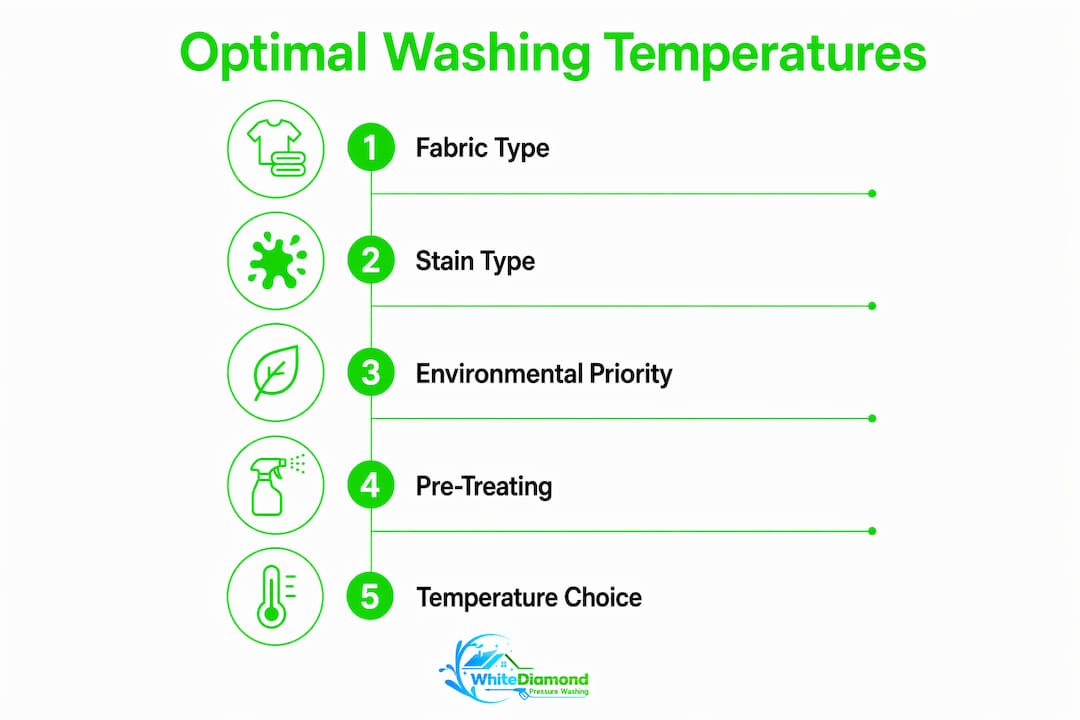
By fabric type:
Wool, silk, and delicates need cold water. Cotton and linen tolerate warm to hot. Synthetics and blends perform best at warm. Always check the care label first. A symbol with a single dot means cold; two dots means warm; three dots means hot.
By stain type:
Protein stains (blood, egg, sweat) need cold soaking before any heat. Grease and oil stains respond best to warm water with a lipase-based detergent. Mud and dirt release most effectively in warm water after the excess is brushed off dry. Using enzyme detergents at lower temps handles most stain types without the fabric damage that comes with hot water.
By environmental priority:
Cold water is the lowest-energy option and works well for lightly soiled loads with a quality detergent. Warm water is the best balance of performance and efficiency for most households. Hot water should be reserved for genuine sanitization needs, not used as a default. Reviewing common pressure washing mistakes shows that over-relying on heat is one of the most frequent errors homeowners make on exterior surfaces too.
Pro Tip: Pre-treating stains with a product like Zout or OxiClean before loading the washer lets you drop the wash temperature by one full setting without losing cleaning performance. This single habit can cut your laundry energy use by 30% to 40% over a year.
Key takeaways
Water temperature determines cleaning chemistry, fabric safety, and energy use. Warm water at 90°F to 110°F delivers the best results for most laundry and exterior surfaces, while cold and hot water each serve specific, well-defined purposes.
| Point | Details |
|---|---|
| Cold water for delicates and colors | Use 60°F to 80°F with enzyme detergents for lightly soiled fabrics and bright colors. |
| Warm water is the daily default | 90°F to 110°F maximizes enzyme activity and balances energy use for most laundry. |
| Hot water only for sanitization | Reserve 130°F and above for medical items, diapers, and pest-contaminated linens. |
| Pre-treat protein stains cold first | Cold soaking blood or egg before heat prevents permanent stain setting. |
| Temperature matters outdoors too | Warm water cuts chemical use by up to 50% on driveways and exterior surfaces. |
What I have learned from years of watching homeowners get this wrong
Bobby here. The most common mistake I see is treating water temperature as a dial for “more clean.” Homeowners crank it to hot because it feels more thorough. The reality is that hot water is a specialized tool, not a universal upgrade.
What actually changed my thinking was watching how enzyme-based detergents perform at warm temperatures on genuinely dirty surfaces. The chemistry does the work. Heat is just a catalyst, and past a certain point it becomes a liability. Enzymes stop working above 140°F. Fabrics shrink. Colors fade. You end up with a cleaner that is less effective and a wardrobe that ages twice as fast.
The same principle holds for exterior cleaning. I have seen homeowners blast driveways with cold water at maximum pressure and still leave grease stains behind. Dropping the pressure and warming the water with the right detergent concentration removes those stains in half the time with less surface wear. The advantages of low-pressure washing are real, and temperature is a big part of why.
My recommendation: default to warm water for laundry and exterior cleaning, use cold for delicates and colors, and save hot water for the specific situations that genuinely require it. Experiment with your detergent concentration at warm temperatures before reaching for a higher heat setting. You will get better results and spend less money doing it.
— Bobby
See the difference professional temperature-controlled cleaning makes

At Whitediamondpressurewashing, we apply the same temperature science discussed in this article to every exterior cleaning job we take on in Citrus County. Our team selects water temperature and chemical concentration based on the specific surface, soil type, and material sensitivity of your property. Whether it is a concrete driveway with grease stains or a rendered wall covered in algae, we match the method to the material. Visit Whitediamondpressurewashing to get a free estimate and see what properly calibrated exterior cleaning looks like on your home.
FAQ
What is the best water temperature for laundry?
Warm water at 90°F to 110°F is the best default for most laundry because it maximizes enzyme activity and removes the widest range of stains without damaging fabric. Cold water works for delicates and lightly soiled items; hot water is reserved for sanitization.
Does cold water actually clean clothes effectively?
Yes, cold water cleans effectively when paired with a modern enzyme-based detergent like Tide Coldwater Clean or Persil ProClean. It is less effective on greasy or heavily soiled items and cannot sanitize.
Can hot water set stains permanently?
Hot water sets protein-based stains like blood, egg, and dairy by bonding the proteins to fabric fibers. Always cold-soak these stains first, then wash at warm or hot after the protein has been lifted.
How does water temperature affect pressure washing results?
Warm water lowers surface tension and accelerates chemical reactions, cutting required chemical concentration by up to 50% compared to cold water on exterior surfaces like driveways and walkways.
Should I use hot water for every load to kill bacteria?
No. Hot water at 130°F and above is only necessary for items contaminated with bacteria, mold, or pests. For everyday laundry, warm water with a quality detergent removes bacteria adequately without the energy cost or fabric wear of a hot wash.