

TL;DR:
- Effective driveway oil stain removal depends on promptly treating fresh spills with absorbents and household cleaners before penetration occurs. Older stains require commercial degreasers or poultices with extended dwell times, along with multiple treatment cycles, to fully lift embedded oil. Proper surface-specific methods, combined with pre-treatment and patience, prevent surface damage and restore driveway appearance.
Driveway oil stain removal is the process of using absorbents and chemical treatments to lift and eliminate oil from porous driveway surfaces. It is not a single-step fix. The process combines absorbing fresh oil, applying degreasers or poultice cleaners, and rinsing thoroughly, with the method varying based on stain age, surface type, and severity. Products like PROSOCO Oil & Grease Stain Remover and household staples like baking soda and cat litter each play a role. Acting quickly matters most. Oil that sits for weeks wicks deeper into concrete or asphalt, making removal harder and risking permanent surface damage that lowers your property value.
What is driveway oil stain removal and how does it work?
Oil stain removal, in the professional cleaning industry, is formally called hydrocarbon extraction or degreasing. The process works in two phases. First, you address the surface layer by absorbing or blotting excess oil. Second, you break down the oil that has already penetrated the porous surface using a chemical degreaser or poultice.
The reason oil is so stubborn on driveways is that concrete and asphalt are both porous materials. Oil molecules bond to the interior walls of those pores rather than sitting on top of the surface. That is why scrubbing alone rarely works. You need a chemical agent that either dissolves those bonds or physically wicks the oil back out of the pores as it dries.
Matching your method to stain freshness is the single biggest factor in success. Fresh stains respond well to absorbents and dish soap. Stains older than a week typically need commercial degreasers or poultice products with extended dwell times. Understanding this distinction before you start saves you time, money, and frustration.
How do household methods work for fresh vs. old oil stains?
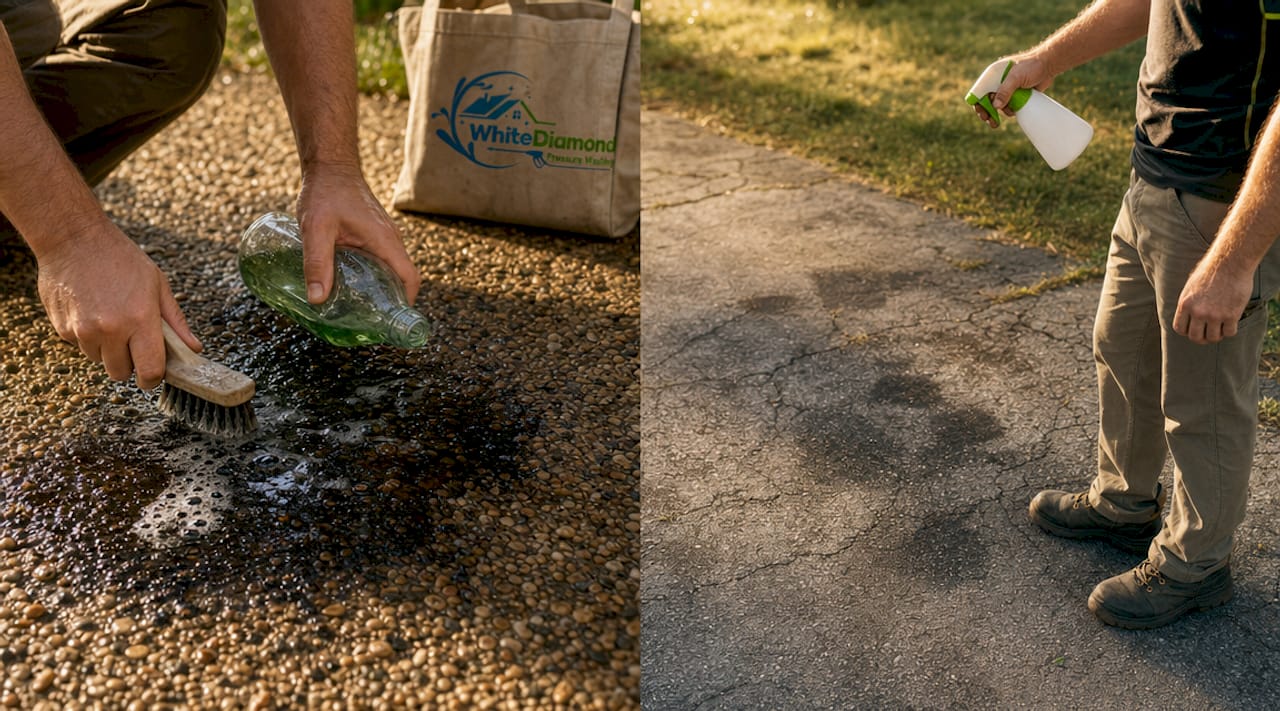
Fresh stains and older stains require completely different approaches. Using the wrong method wastes effort and can spread the stain further.
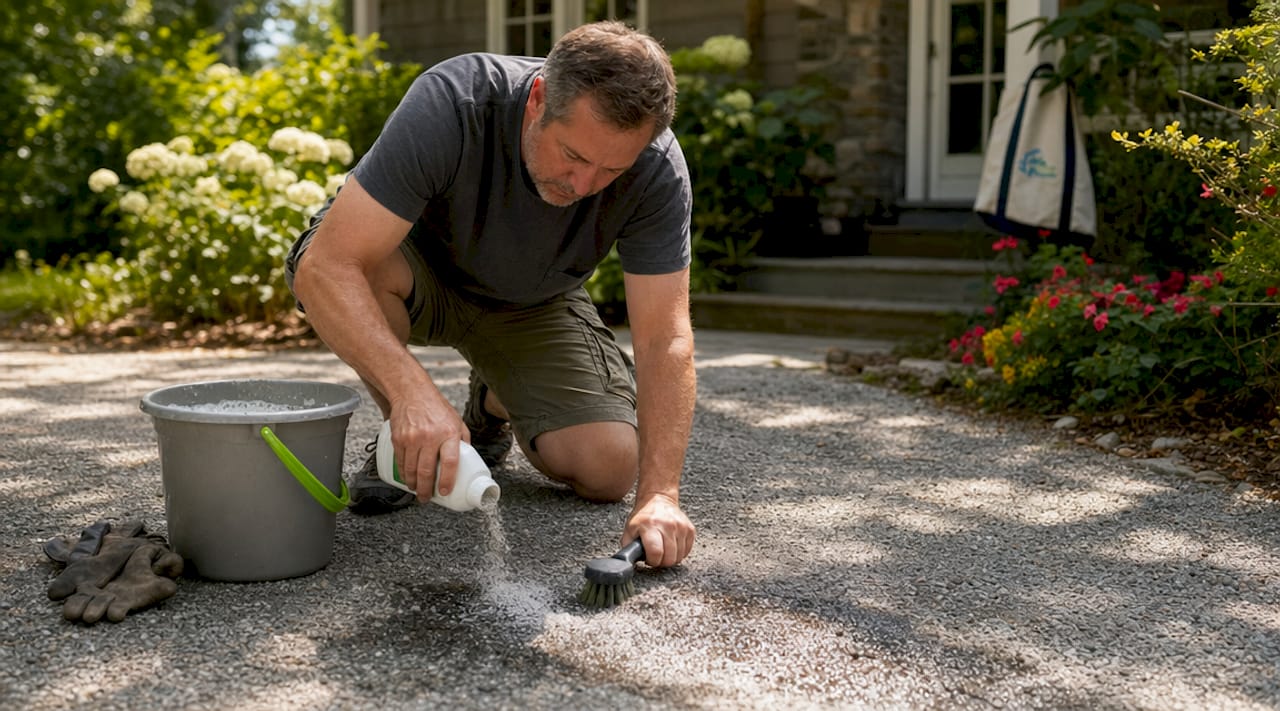
For fresh oil stains, follow these steps:
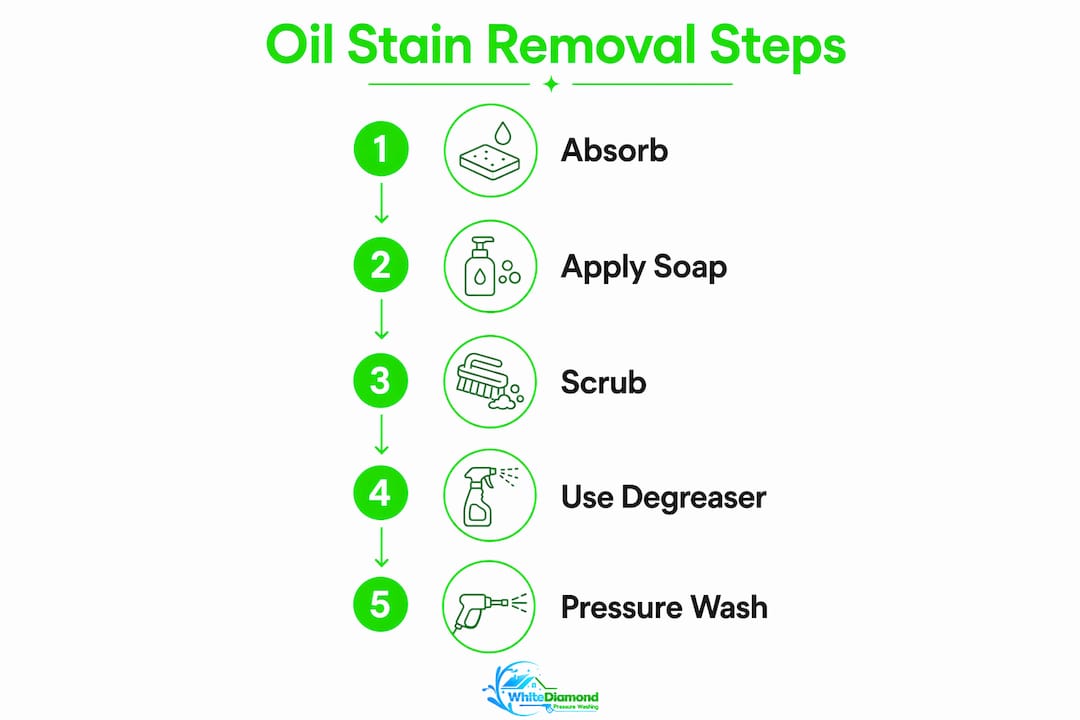
- Blot the excess oil with a rag or paper towels. Do not rub. Blotting prevents lateral spreading and keeps the stain contained to the smallest possible area.
- Cover the stain generously with cat litter, baking soda, or cornstarch. Let it sit for at least 30 minutes, or overnight for larger spills.
- Sweep up the absorbent material and discard it.
- Apply dish soap or laundry detergent directly to the stain. Scrub with a stiff-bristled brush using circular motions.
- Rinse thoroughly with hot water. Repeat the scrubbing step if the stain is still visible.
For older or dried stains, the same absorbent step is less effective because the oil has already migrated below the surface. You will need to apply a degreaser, let it dwell for at least 15 to 30 minutes, scrub aggressively, and rinse. Expect to repeat this process two or three times over several days before the stain fully lifts.
One caution that most guides skip: bleach, vinegar, and ammonia can etch or discolor concrete surfaces, especially decorative or finished concrete. Stick to pH-neutral degreasers or products specifically labeled for concrete use.
Pro Tip: Apply dish soap to the stain before it dries completely. Soap is a surfactant that breaks the oil-water surface tension, making the rinse step far more effective than water alone.
What commercial products actually remove embedded oil stains?
When household methods fall short, commercial degreasers and poultice cleaners are the next step. These products are formulated specifically for hydrocarbon extraction from porous masonry surfaces.
Poultice cleaners like PROSOCO Oil & Grease Stain Remover work through a drying mechanism rather than scrubbing force. You apply the product as a thick paste, cover it with plastic sheeting, and allow it to dwell for 5 to 8 hours. As the poultice dries, it physically wicks the oil upward out of the pores and into the paste. Skipping the dwell time reduces extraction efficiency and leaves ghost stains that are nearly impossible to remove later.
Chemical degreasers like Turbo Clean dissolve the molecular bonds between oil and the concrete surface, making the oil easier to rinse away. These products work faster than poultices but are better suited for surface-level contamination rather than deeply embedded stains.
Key considerations when choosing a commercial product:
- Dwell time matters. Products requiring 5 to 8 hour dwell times consistently outperform quick-spray options on older stains.
- Multiple treatments are normal. Professional cleaning services typically schedule two to three cycles for embedded stains before considering resurfacing.
- Surface compatibility. Always check whether the product is safe for your specific surface, whether concrete, asphalt, or pavers, before applying.
- Rinse thoroughly. Residual degreaser left on the surface can attract dirt and create new staining over time.
Pro Tip: After applying a poultice, cover it with plastic sheeting and tape the edges down. This slows the drying process and extends the extraction window, pulling more oil out of deeper pores.
How does surface type affect which oil stain removal method you use?
Concrete and asphalt respond differently to oil contamination and to the cleaning products used to treat it. Using the wrong product on the wrong surface causes more damage than the original stain.
| Surface | Oil damage risk | Best removal method | Products to avoid |
|---|---|---|---|
| Concrete | Moderate; staining and discoloration | Poultice cleaners, pH-neutral degreasers | Bleach, vinegar, strong acids |
| Asphalt | High; surface corrosion within six months | Baking soda, cat litter, mild degreasers | Petroleum-based solvents, strong alkalines |
Asphalt is petroleum-based, which means oil stains do not just discolor it. They actively break down the binder that holds the aggregate together. Left untreated, oil stains on asphalt can create soft spots and holes within six months. This makes prompt treatment non-negotiable for asphalt driveways.
Concrete is more chemically stable but more visually sensitive. Acidic or highly alkaline cleaners etch the surface, leaving a dull or bleached patch that is often more visible than the original stain. For decorative concrete, stamped concrete, or sealed surfaces, always test any cleaner on an inconspicuous area first.
For both surfaces, pressure washing with a degreaser pre-treatment is effective. The difference lies in pressure settings. Asphalt requires lower pressure to avoid dislodging aggregate, while concrete can tolerate higher pressure. Check the driveway maintenance checklist from Whitediamondpressurewashing for surface-specific guidance on pressure settings and cleaning schedules.
Can pressure washing alone remove oil stains from a driveway?
Pressure washing alone does not remove oil stains. Water at high pressure can blast away loose debris and surface grime, but oil bonds inside porous surfaces are not water-soluble. Without a chemical pre-treatment, you are essentially pushing water over a stain that will not move.
The correct process combines chemical pre-treatment with pressure washing:
- Apply a commercial degreaser like Turbo Clean directly to the stain.
- Allow the degreaser to dwell for the time specified on the label, typically 10 to 30 minutes for surface stains.
- Agitate with a stiff brush to work the product into the pores.
- Pressure wash using a 25-degree nozzle at 1,500 to 2,000 PSI for concrete, or 1,200 to 1,500 PSI for asphalt.
- Repeat the degreaser application and wash cycle for older or deeper stains.
Applying an industrial degreaser before pressure washing and scrubbing first breaks the oil bonds that water pressure alone cannot reach. This two-step approach is what separates a clean driveway from a driveway that looks clean until the next rain.
Two common mistakes cost homeowners the most time. The first is skipping the degreaser entirely and relying on pressure alone. The second is using excessively high pressure, which can etch concrete or strip the surface layer of asphalt without actually removing the stain. Improper pressure settings damage the surface and leave the oil behind. For guidance on avoiding these errors, the resource on pressure washing mistakes from Whitediamondpressurewashing covers the most common errors in detail.
Pro Tip: Pre-wet the concrete surface with plain water before applying your degreaser. A pre-wet surface absorbs the degreaser more evenly and prevents the product from drying too quickly in hot weather, which reduces its effectiveness.
Key takeaways
Effective driveway oil stain removal requires matching your method to the stain’s age and your surface type, then committing to multiple treatment rounds for anything older than a week.
| Point | Details |
|---|---|
| Act immediately on fresh stains | Absorb excess oil with cat litter or baking soda before it penetrates deeper into the surface. |
| Use poultices for old stains | Products like PROSOCO require 5 to 8 hours of dwell time to wick oil out of porous surfaces. |
| Surface type changes the method | Asphalt corrodes faster and needs gentler products; concrete tolerates stronger degreasers but is sensitive to acids. |
| Pressure washing needs pre-treatment | Chemical degreasers must be applied and allowed to dwell before pressure washing for effective oil removal. |
| Expect multiple treatment rounds | Set-in stains typically need two to three cleaning cycles before the surface is fully restored. |
What I’ve learned from years of watching homeowners tackle oil stains
Most homeowners attack an oil stain the same way they attack a spill on the kitchen floor. They grab what is nearby, scrub hard, and expect results. That approach works on tile. It does not work on concrete.
The single most consistent mistake I see is treating the stain once, deciding it did not work, and giving up. Oil stain removal on porous surfaces is cumulative. Each treatment round pulls out another layer of contamination. A stain that looks unchanged after the first round may be 60% extracted. The second round finishes the job. Patience is not optional here.
I also see homeowners skip the absorbent step on fresh stains because it feels too simple. Pouring baking soda on a puddle of oil seems almost too low-tech to work. But starting with absorbents prevents the stain from spreading laterally, which is the difference between a six-inch stain and an eighteen-inch stain by the time you finish.
For large stains, old stains, or stains on high-value driveways, I strongly recommend professional consultation before attempting aggressive DIY methods. Resurfacing a damaged driveway costs far more than a professional cleaning service. Sealers applied after cleaning also make a real difference. A quality concrete or asphalt sealer closes the pores that oil exploits, making future spills far easier to clean up. Prevention is always cheaper than restoration.
— Bobby
Get your driveway professionally cleaned by Whitediamondpressurewashing
Some oil stains need more than a weekend and a bottle of degreaser. Whitediamondpressurewashing provides specialized chemical pre-treatment and safe pressure washing for residential driveways and commercial properties across Citrus County and surrounding regions.

The team at Whitediamondpressurewashing uses industry-approved degreasers, calibrated pressure settings, and multiple treatment cycles to extract embedded oil stains without damaging your surface. Whether you are dealing with a fresh spill or a years-old stain, professional techniques deliver deeper extraction and longer-lasting results than most DIY approaches. Book a free estimate today and restore your driveway’s appearance before the stain becomes a permanent fixture.
FAQ
What is the fastest way to remove fresh oil from a driveway?
Cover the spill immediately with cat litter or baking soda, let it absorb for at least 30 minutes, sweep it up, then scrub with dish soap and rinse with hot water. Acting within the first hour prevents the oil from penetrating deep into the surface.
How many treatments does an old oil stain need?
Older, set-in stains typically require two to three treatment cycles using a commercial degreaser or poultice cleaner. Professional cleaning services document condition and schedule multiple rounds before recommending resurfacing.
Can I use bleach to remove oil stains from concrete?
No. Bleach does not dissolve oil and can discolor or etch concrete surfaces. Use a pH-neutral degreaser or a product specifically formulated for concrete oil stain removal instead.
Does pressure washing remove oil stains from driveways?
Pressure washing alone is not enough. Oil bonds inside porous surfaces require chemical pre-treatment with a degreaser before pressure washing to break down and lift the contamination effectively.
How do I prevent oil stains from coming back?
Apply a concrete or asphalt sealer after cleaning to close the surface pores that oil penetrates. Use drip pans under vehicles and clean any new spills immediately to prevent re-staining.