

TL;DR:
- Professional cleaning enhances health, asset longevity, and client retention while reducing operational costs. Outsourcing offers consistent quality, liability coverage, and measurable ROI compared to in-house maintenance. Viewing cleaning as capital investment rather than overhead leads to long-term business and asset value growth.
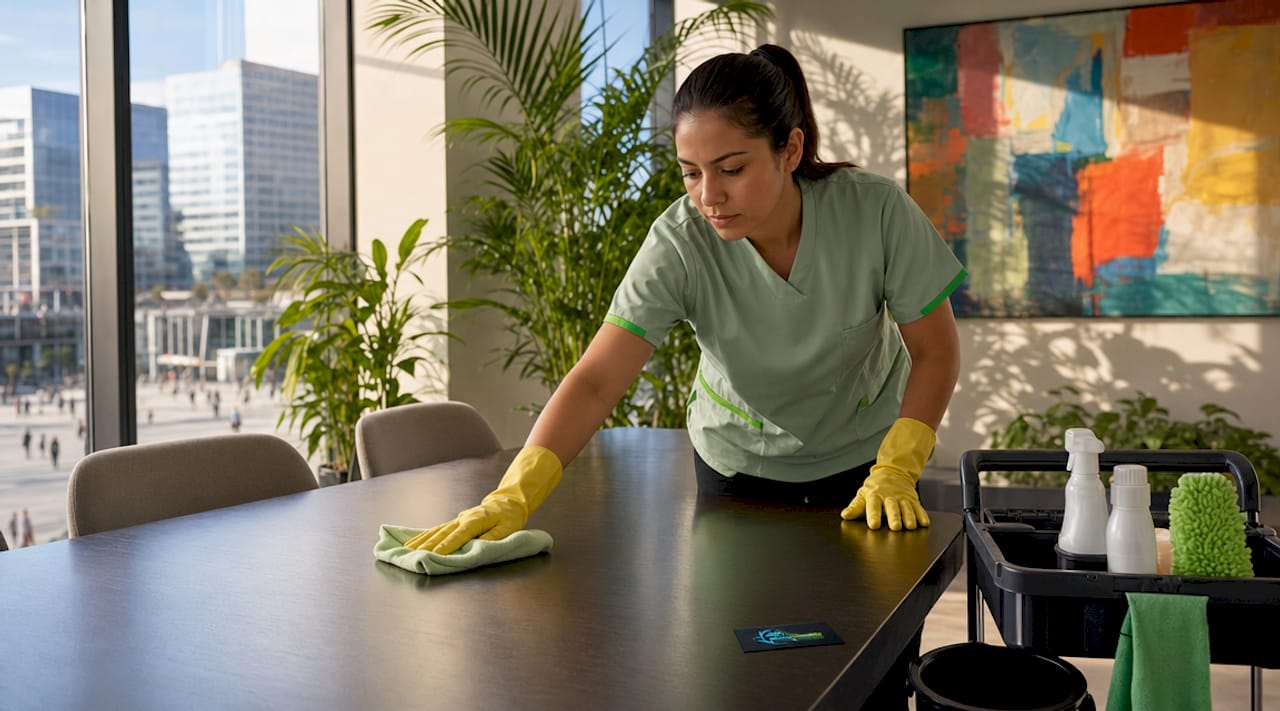
Commercial cleaning advantages are defined as the measurable financial, operational, and reputational gains a business achieves by hiring professional cleaning services instead of relying on ad hoc or in-house maintenance. For business owners and property managers, these gains are not abstract. Professional cleaning services boost workplace productivity by up to 20% and reduce illness-related absenteeism by 15%, translating to roughly $15,000 in annual savings for a 60-employee firm. The industry term for this category of services is facility hygiene management, and understanding it reframes cleaning from a line-item expense into a strategic investment with traceable ROI.
1. Commercial cleaning advantages start with fewer sick days
Professional cleaning services reduce illness-related absenteeism by 15% by targeting pathogens on high-touch surfaces such as door handles, keyboards, and shared equipment. That reduction directly lowers the cost of temporary staffing, missed deadlines, and lost output. For a 60-person office, the math is straightforward: fewer sick days mean more productive hours without adding headcount.
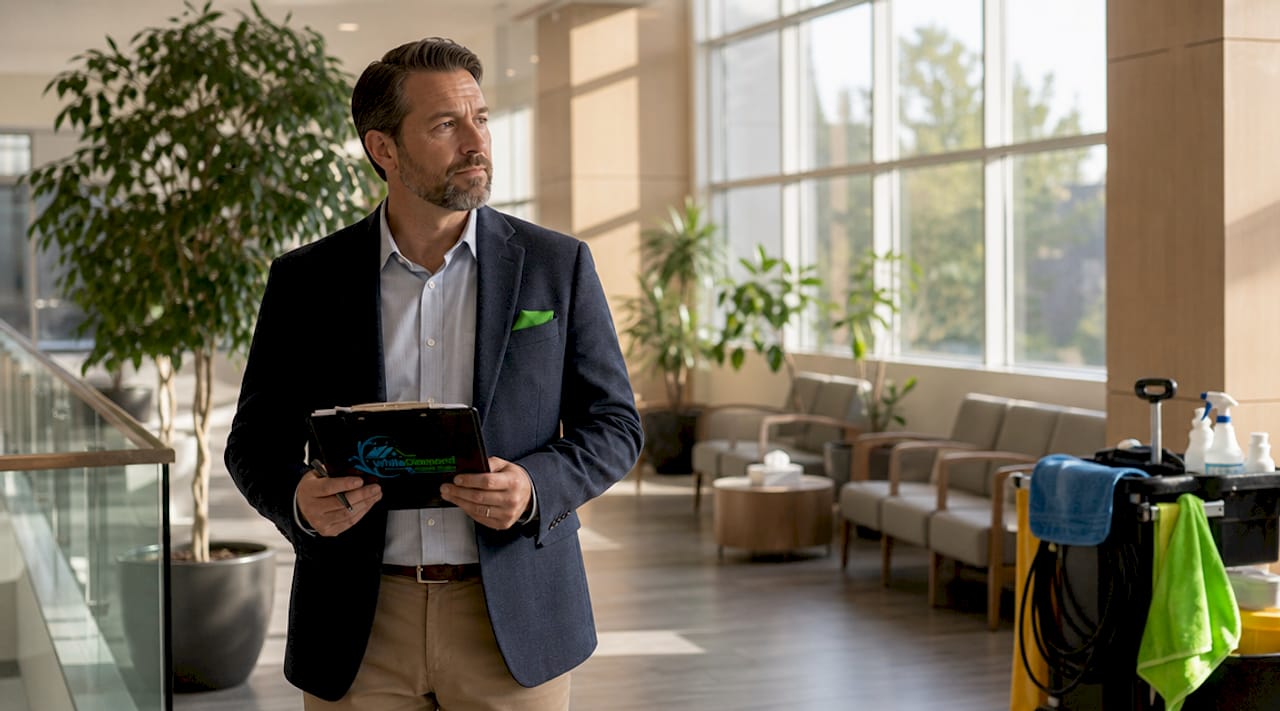
The productivity gain goes beyond physical health. Clean, organized environments reduce cognitive overload and lower cortisol levels, according to research from CleanCorp and Princeton University. When employees are not distracted by clutter, odors, or visible grime, their focus improves measurably. That cognitive benefit alone accounts for a significant share of the 20% productivity increase linked to professional cleaning programs.
Air quality is a factor most property managers underestimate. Dust, mold spores, and volatile organic compounds accumulate in HVAC systems, carpets, and upholstery. Professional crews use EPA-registered disinfectants and HEPA-filter vacuums to address these sources directly. The result is a workspace where respiratory irritants stay below the threshold that triggers sick days and reduced performance.
Pro Tip: Schedule deep-clean cycles for HVAC vents and high-touch surfaces at least quarterly. These are the two highest-impact areas for pathogen reduction and air quality improvement.
2. Asset lifespan extends significantly with professional maintenance
Professional maintenance extends carpet and upholstery life by up to three years compared to sporadic or DIY cleaning. For commercial flooring alone, that extension represents thousands of dollars in deferred capital expenditure per facility. Property managers who track depreciation schedules recognize this immediately.
The mechanism is microscopic grit. Foot traffic grinds fine particles into carpet fibers and hard flooring surfaces, cutting the material from below the surface level. Proper dwell-time chemistry and regular deep-clean cycles prevent this accumulation before it causes accelerated degradation. A professional crew applies the right concentration of cleaning agent, allows it to dwell for the correct period, and extracts the residue completely. That process is nearly impossible to replicate with a mop and a bucket.
The financial impact of skipping professional maintenance is concrete. Premature floor replacement raises annual depreciation costs by $500 to $700 per affected area. Multiply that across multiple zones in a mid-size commercial property and the cumulative cost easily exceeds the annual contract price for professional cleaning services.
| Asset type | Typical lifespan without professional care | Lifespan with professional maintenance |
|---|---|---|
| Commercial carpet | 5 to 7 years | 8 to 10 years |
| Hard flooring (tile/vinyl) | 8 to 10 years | 12 to 15 years |
| Upholstered furniture | 4 to 6 years | 7 to 9 years |
| Restroom fixtures | 6 to 8 years | 10 to 12 years |
Pro Tip: Ask your cleaning provider for a written asset maintenance log. Documented cleaning history supports warranty claims and strengthens your case when negotiating lease renewals or property sales.
3. Client impressions and brand reputation depend on cleanliness
94% of customers avoid returning to a business after encountering a dirty restroom. That single statistic captures how quickly cleanliness converts into lost revenue. A client who walks into a lobby with stained floors or a restroom with empty soap dispensers forms a judgment about your operational standards within seconds.
First impressions in commercial environments carry disproportionate weight. A prospective client touring your facility is simultaneously evaluating your attention to detail, your respect for their time, and your capacity to deliver on promises. A clean, well-maintained space communicates competence before a single word is spoken. The inverse is equally true.
“Cleanliness is not a hygiene issue alone. It is a brand signal. Every surface a client touches or sees is a data point they use to assess whether they want to do business with you.” — CleanCorp, Ultimate Guide to Commercial Cleaning Services
Repeat business and referrals are directly tied to the physical experience clients have in your space. Businesses that invest in consistent professional cleaning services report stronger client retention because the environment reinforces the quality of the service or product being sold. Exterior cleanliness matters just as much. Exterior cleaning for investors demonstrates how curb appeal and property presentation affect client confidence and asset valuation simultaneously.
4. Outsourcing beats in-house cleaning on cost and consistency
Outsourcing commercial cleaning reduces operational costs by 20% compared to maintaining an in-house team. The savings come from eliminating recruitment, onboarding, training, supervision, and benefits costs that most business owners do not fully account for when they calculate internal cleaning expenses.
The hidden costs of in-house cleaning are substantial. Consider the management time spent scheduling shifts, handling turnover, sourcing supplies, and verifying quality. That time has an opportunity cost. Every hour a facilities manager spends supervising a cleaning crew is an hour not spent on lease negotiations, vendor management, or capital planning.
Professional cleaning companies also integrate technology that internal teams cannot match. The global cleaning service software market is projected to reach $2.65 billion by 2028, driven by real-time job tracking, digital quality audits, and client-facing transparency dashboards. When you outsource to a professional provider, you gain access to that accountability infrastructure without building it yourself.
Liability is another factor. Professional cleaning companies carry their own insurance, bonding, and workers’ compensation coverage. If a cleaner is injured on your property or causes accidental damage, the liability sits with the service provider, not with your business. Understanding how experienced cleaning staff reduce property damage risk is a key part of evaluating any outsourcing decision.
5. Compliance, sustainability, and employee morale
Professional cleaning services support OSHA compliance by maintaining documented sanitation standards for restrooms, break rooms, and high-traffic areas. Failing an OSHA inspection due to inadequate facility hygiene carries fines and reputational damage that far exceed the cost of a professional cleaning contract.
Green cleaning products reduce asthma and allergy triggers, support corporate sustainability goals, and align with mandates in many jurisdictions. The cost premium for green cleaning typically runs 5 to 10% above standard service pricing, but the return includes improved indoor air quality, reduced employee health complaints, and a credible sustainability narrative for client-facing communications.
Employee morale is a less-discussed but measurable benefit of professional cleaning. Clean, organized environments improve employee satisfaction and retention, which matters in tight labor markets where the cost of replacing a single employee can reach 50 to 200% of their annual salary. Workers who feel their employer maintains a safe, clean environment report higher job satisfaction and lower intent to leave.
The psychological dimension is real. Princeton University research confirms that visual disorder increases stress and reduces the brain’s ability to process information efficiently. A professionally maintained workspace removes that friction from the daily experience of every person in the building.
Key takeaways
Commercial cleaning is a financial investment with traceable returns across health costs, asset preservation, client retention, and operational efficiency.
| Point | Details |
|---|---|
| Health and productivity gains | Professional cleaning cuts absenteeism by 15% and boosts productivity by up to 20%, saving thousands annually. |
| Asset lifespan extension | Regular professional maintenance adds up to three years to carpets, flooring, and upholstery, deferring major capital costs. |
| Client retention risk | 94% of customers avoid businesses with dirty restrooms, making cleanliness a direct driver of repeat revenue. |
| Outsourcing cost advantage | Outsourcing reduces cleaning operational costs by 20% while transferring liability and quality accountability to the provider. |
| Compliance and morale | Professional cleaning supports OSHA standards and improves employee satisfaction, reducing costly staff turnover. |
Why I stopped treating cleaning as a cost and started treating it as capital
Most business owners I talk to categorize cleaning as overhead. They negotiate it down, delay it when budgets tighten, and measure it only when something goes visibly wrong. That mindset costs more than the cleaning contract itself.
The ROI data from CWD Building Services and CleanCorp is not theoretical. A 60-person firm saving $15,000 annually in reduced absenteeism is recovering more than most small businesses spend on their entire cleaning contract. The asset preservation numbers are equally concrete. Replacing commercial carpet three years early because of inadequate maintenance is not a cleaning failure. It is a capital planning failure.
My recommendation for property managers is to treat cleaning the same way you treat preventive HVAC maintenance or roof inspections. You do not wait for the system to fail before you service it. The same logic applies to every surface your clients and employees touch daily. The businesses that view cleaning as a financial engine rather than minimal overhead are the ones that avoid the expensive surprises.
Select your provider based on documented quality assurance practices, technology integration, and verifiable insurance coverage. A provider who cannot show you a digital audit trail or a cleaning log is not operating at the standard your facility deserves.
— Bobby
How Whitediamondpressurewashing supports your commercial property
Whitediamondpressurewashing delivers professional exterior cleaning for commercial properties across Citrus County and surrounding regions, using soft washing and low-pressure techniques that protect surfaces while removing the grime, mold, and biological buildup that degrade your property’s appearance and material integrity.

Every service is backed by industry-approved methods, experienced staff, and flexible scheduling designed around your operational hours. Whether you manage a retail center, office complex, or multi-unit property, the team at Whitediamondpressurewashing brings the same accountability and quality standards that define the best commercial cleaning services. Visit Whitediamondpressurewashing to get a free estimate, or explore the full range of professional cleaning services available for your property today.
FAQ
What are the main commercial cleaning advantages for businesses?
The primary commercial cleaning advantages include a 15% reduction in employee absenteeism, up to 20% productivity gains, extended asset lifespan by up to three years, and stronger client retention driven by a professionally maintained environment.
How does professional cleaning save money compared to in-house staff?
Outsourcing commercial cleaning reduces operational costs by 20% by eliminating recruitment, training, supervision, and benefits expenses associated with internal cleaning teams.
Why does cleanliness affect customer retention so strongly?
94% of customers avoid returning to a business after encountering a dirty restroom, which means a single hygiene failure can permanently eliminate repeat revenue from a significant share of your client base.
What is the difference between day porter and nightly janitorial services?
Day porters handle high-visibility maintenance during business hours while nightly crews focus on deep cleaning. Combining both creates a program that maximizes hygiene and client perception throughout the full business day.
Do green cleaning products actually make a difference?
Green cleaning products reduce asthma and allergy triggers and support OSHA compliance. The cost premium of 5 to 10% above standard service pricing is offset by improved air quality, fewer employee health complaints, and a credible sustainability record.
Recommended
- Why Invest in Regular Cleaning? Boost Value and Health – white-diamond-pressure
- Top 5 Benefits of Exterior Cleaning for Curb Appeal – white-diamond-pressure
- 7 Key Commercial Pressure Washing Benefits for Homeowners – white-diamond-pressure
- Top Advantages of Professional Pool Cage and Deck Cleaning – white-diamond-pressure
2 thoughts on “Commercial Cleaning Advantages That Protect Your Bottom Line”