

TL;DR:
- Match your walkway cleaning methods to the surface material to prevent damage and costly repairs. Regular deep cleaning and sealing extend surface life, with frequency depending on microclimate and traffic, while safety precautions prevent accidents. Proper techniques, timely maintenance, and professional assistance ensure walkways remain clean, safe, and long-lasting.
A walkway cleaning guide is a structured approach to removing dirt, stains, algae, and biological growth from exterior paths using methods matched to the surface material. Concrete, brick, natural stone, and pavers each respond differently to pressure, chemicals, and scrubbing. The wrong method on the wrong surface causes joint erosion, surface pitting, and costly repairs. This guide covers the best walkway cleaning methods for every surface type, explains how often to clean, and gives you the safety and sealing knowledge to keep your paths looking sharp and staying safe year-round.
1. What are the best walkway cleaning methods for different surfaces?
The single most important rule in exterior surface maintenance is this: match your cleaning method to your material. Concrete tolerates aggressive cleaning. Stone, brick, and pavers do not.
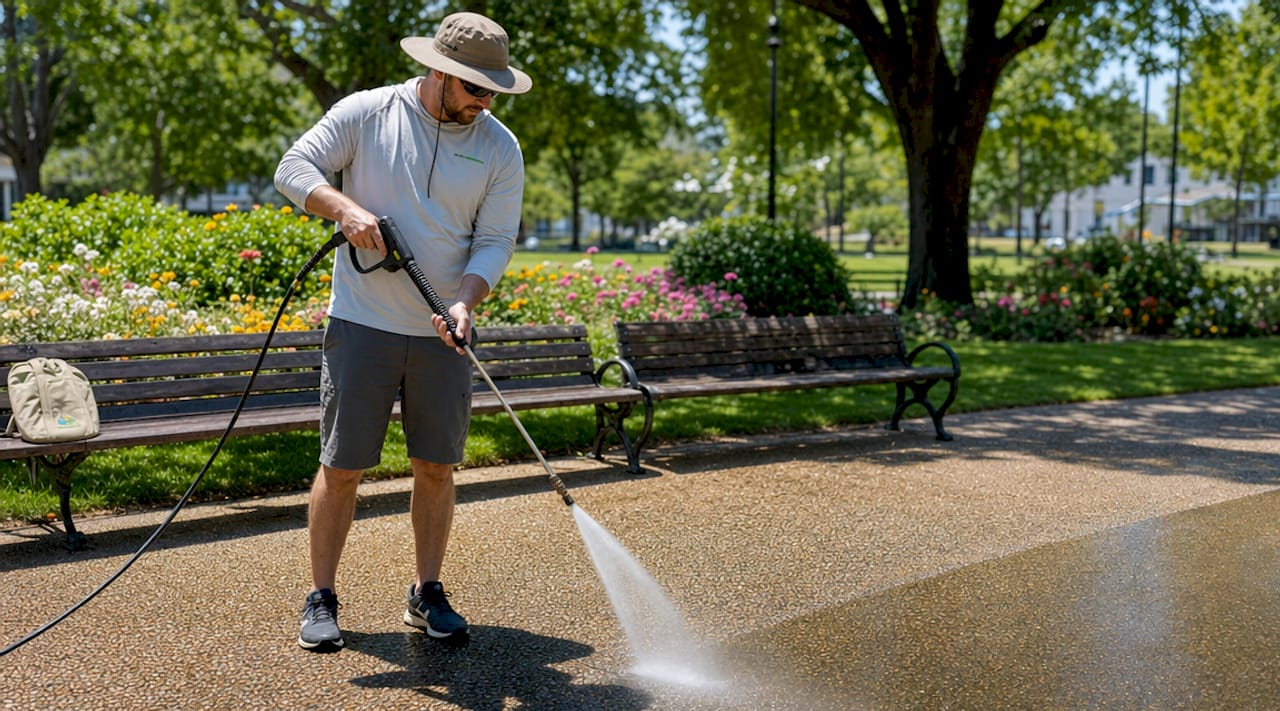
Concrete walkways respond well to pressure washing when done correctly. Pressure washing concrete requires 25-degree or 40-degree nozzles held 12 to 24 inches from the surface. Surface cleaner attachments produce more even results than a single wand. That distance matters because getting too close concentrates force into a narrow band and etches the surface permanently.
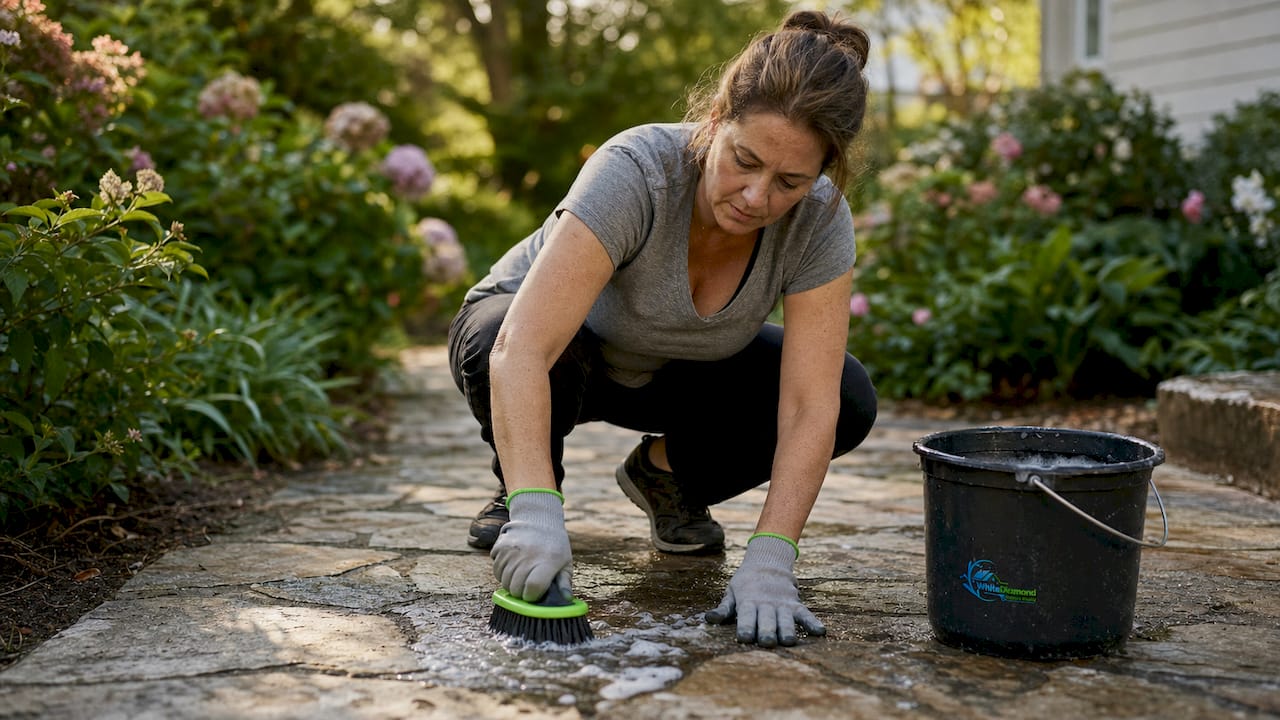
Stone and paver walkways need a completely different approach. Brick, pavers, and natural stone require soft brushing and stone-safe cleaners to avoid joint erosion and surface damage. Products like Simple Green Oxy Solve or a diluted dish soap solution applied with a stiff-bristle brush clean effectively without stripping the surface or blasting out joint sand.
Pre-treating stains before any mechanical cleaning dramatically improves results. Apply a targeted cleaner, such as an oxygen bleach solution for organic stains or a degreaser for oil, and let it dwell for 10 to 15 minutes. Then scrub or rinse. Skipping this step means you push the stain deeper rather than lifting it.
- Concrete: pressure wash with 25/40-degree nozzle, 12 to 24 inches from surface
- Pavers and brick: stiff brush with stone-safe or pH-neutral cleaner
- Natural stone: soft brush, no acid-based cleaners, rinse thoroughly
- All surfaces: pre-treat visible stains before washing or scrubbing
- Eco-friendly option: baking soda paste or Simple Green diluted in water
Pro Tip: Test any new cleaner on a small, hidden section of your walkway first. Some stone types, particularly limestone and travertine, react badly to acidic products and can etch within minutes.
2. How often should you clean walkways and why it matters
Cleaning frequency is not one-size-fits-all. It depends on foot traffic, shade, moisture levels, and your local climate. Getting this wrong in either direction costs you. Too infrequent and you get embedded stains, algae, and slip hazards. Too aggressive and you wear down surfaces prematurely.
Here is a practical schedule based on surface conditions:
- High-traffic residential walkways: Clean once or twice a year, with spot treatment applied as soon as stains appear. Waiting until your annual clean lets stains set permanently.
- Shady, damp walkways: These need cleaning every 3 to 4 months. Moisture and reduced sunlight create ideal conditions for algae and mildew, which become slip hazards fast.
- Spring deep clean: This is the most critical clean of the year. Winter deposits salt, debris, and moisture damage. A thorough spring clean removes all of it before it bakes in during summer.
- Fall deep clean: Clearing organic debris like leaves and pollen before winter prevents staining and biological growth from sitting on the surface for months.
- Monthly maintenance rinse: Routine sweeping and monthly rinsing prevent dirt buildup between deep cleans. A garden hose and a push broom handle this in under 10 minutes.
- After heavy storms: Mud, debris, and standing water accelerate biological growth. Rinse walkways within 24 to 48 hours of major weather events.
- Commercial and multi-unit properties: Property managers should schedule quarterly professional inspections and cleaning, since high foot traffic compounds staining and wear faster than residential use.
Cleaning frequency depends on microclimate: shady, damp walkways need more frequent attention than sunny, dry ones. This single variable changes your maintenance schedule more than any other factor.
3. Key safety and maintenance tips for a slip-free walkway
A clean walkway is only valuable if it is also safe. Wet surfaces, algae growth, and improper cleaning practices create real liability for homeowners and property managers alike.
- Control traffic during cleaning. Temporary barriers and signage during cleaning prevent slip-and-fall injuries. This is non-negotiable for apartment complexes and commercial properties.
- Wear non-slip footwear. Wet concrete and stone become extremely slippery. Rubber-soled boots protect you during the cleaning process itself.
- Address algae at the source. Controlling moisture by trimming obstructing vegetation and redirecting sprinklers reduces algae growth and slippery surfaces. Cleaning algae off without fixing the moisture problem means it returns within weeks.
- Allow full drying time before reopening. Wet walkways after cleaning are more slippery than dirty ones. Give surfaces at least two to four hours of drying time before foot traffic resumes.
- Inspect for cracks after cleaning. Cleaning removes the dirt that masks surface damage. Use the post-clean window to identify cracks, loose pavers, or eroded joints that need repair before they become trip hazards.
Pro Tip: Reducing moisture and increasing airflow around walkways is the most sustainable way to limit algae and mildew growth long-term. Trim back overhanging shrubs and redirect irrigation heads that spray onto the path.
For more on protecting your surfaces while cleaning, the sidewalk cleaning tips from Whitediamondpressurewashing cover both protection and presentation in detail.
4. How to seal walkways correctly for long-term protection
Sealing is the single most underused step in any walkway maintenance guide. Most homeowners clean their walkways and stop there. Sealing locks out moisture, resists staining, and extends the life of the surface by years.
Choosing the right sealant by surface type:
| Surface | Recommended sealant type | Reapplication frequency |
|---|---|---|
| Concrete | Penetrating silane/siloxane or acrylic film-former | Every 2 to 3 years |
| Brick | Breathable penetrating sealer | Every 3 to 5 years |
| Natural stone | Stone-specific impregnating sealer | Every 1 to 3 years |
| Pavers | Polymeric sand joint stabilizer plus surface sealer | Every 2 to 4 years |
The sealing process, step by step:
- Deep clean the walkway and remove all stains, algae, and debris.
- Allow the surface to dry completely. This typically takes 24 to 48 hours after washing, depending on humidity and sun exposure.
- Apply sealant with a roller or pump sprayer in thin, even coats. Thick coats trap moisture and peel.
- Allow the first coat to penetrate for 20 to 30 minutes, then apply a second coat if the product recommends it.
- Allow 24 to 48 hours for curing before foot traffic resumes. Rushing this step causes the sealer to peel or cloud.
The most common sealing mistake is applying sealant to a damp or dirty surface. Moisture trapped under the sealer causes it to bubble and fail within weeks. The second most common mistake is over-applying, which creates a sticky film that attracts dirt faster than an unsealed surface.
Post-sealing, sweep regularly and avoid harsh chemical cleaners that strip the sealant layer. A pH-neutral cleaner preserves the sealer and extends the time between reapplications.
Key takeaways
Effective walkway maintenance requires matching your cleaning method to the surface material, following a frequency schedule based on your microclimate, and sealing after every deep clean.
| Point | Details |
|---|---|
| Match method to material | Use pressure washing for concrete and soft brushing with pH-neutral cleaners for pavers and stone. |
| Clean on a schedule | Deep clean twice a year in spring and fall; clean shady, damp walkways every 3 to 4 months. |
| Control moisture to stop algae | Trim vegetation and redirect sprinklers to reduce the conditions that cause algae regrowth. |
| Seal after every deep clean | Apply the correct sealant by surface type and allow 24 to 48 hours of curing before foot traffic. |
| Prioritize safety during cleaning | Use barriers, signage, and non-slip footwear to prevent accidents on wet surfaces. |
What I’ve learned after years of watching homeowners get this wrong
Most DIY walkway cleaning mistakes come down to impatience and overconfidence with pressure washers. I have seen homeowners strip the joint sand out of brand-new paver installations in a single afternoon because they used a zero-degree nozzle at full pressure. The pavers looked clean. The joints were destroyed. Refilling polymeric sand and resetting pavers costs far more than a professional clean would have.
The other pattern I see constantly is cleaning without sealing. Homeowners put in real effort on a spring clean, get the surface looking great, and then leave it unprotected. Within six weeks, the stains are back because the porous surface absorbed everything that touched it. Sealing is not optional maintenance. It is the step that makes the cleaning last.
For property managers specifically, walkway cleaning needs to be a scheduled line item, not a reactive task. Waiting until a tenant complains or a slip-and-fall occurs is the most expensive approach possible. A quarterly rinse and twice-yearly deep clean costs a fraction of what one liability claim does.
The walkway restoration guide from Whitediamondpressurewashing is worth reading if you are dealing with surfaces that have gone past routine maintenance and need actual restoration work before sealing makes sense.
— Bobby
Why professional walkway cleaning is worth considering

DIY cleaning handles routine maintenance well. But when surfaces have years of embedded staining, biological growth, or require sealing after cleaning, professional results are measurably better. Whitediamondpressurewashing uses low-pressure washing techniques that clean thoroughly without damaging delicate pavers, stone, or brick joints. Their soft washing process applies the right chemical solution at the right pressure for each surface type, which eliminates guesswork and protects your investment. Serving Citrus County and surrounding regions, Whitediamondpressurewashing offers free estimates and flexible scheduling. Get your walkways cleaned and sealed correctly the first time.
FAQ
What is the best method for cleaning concrete walkways?
Pressure washing with a 25-degree or 40-degree nozzle held 12 to 24 inches from the surface is the most effective method for concrete. Pre-treating oil or organic stains with a targeted cleaner before washing improves results significantly.
How often should walkways be cleaned?
Deep cleaning twice a year, in spring and fall, covers most residential walkways. Shady or damp walkways prone to algae need cleaning every 3 to 4 months.
Can you pressure wash pavers and natural stone?
Aggressive jet pressure washing can damage pavers and erode their joints. A stiff brush with a pH-neutral or stone-safe cleaner is the safer and more effective choice for pavers and natural stone.
How long after sealing can you walk on a walkway?
Allow 24 to 48 hours of curing time before resuming foot traffic after sealing. Walking on a freshly sealed surface before it cures causes peeling, clouding, and sealer failure.
What causes algae to keep coming back after cleaning?
Cleaning removes algae but does not eliminate the conditions that grow it. Reducing moisture by trimming vegetation and redirecting sprinklers is the only way to prevent algae from regrowing after cleaning.