

TL;DR:
- Exterior sealing involves applying protective materials to outdoor surfaces to prevent moisture, air, and pest infiltration, thus extending material lifespan and reducing repair costs. Proper surface preparation, product selection, and application techniques are critical for ensuring long-term effectiveness, especially on foundations where external waterproofing is essential. Regular maintenance, including professional cleaning and sealing, enhances property value, decreases energy bills, and safeguards against costly structural damage.
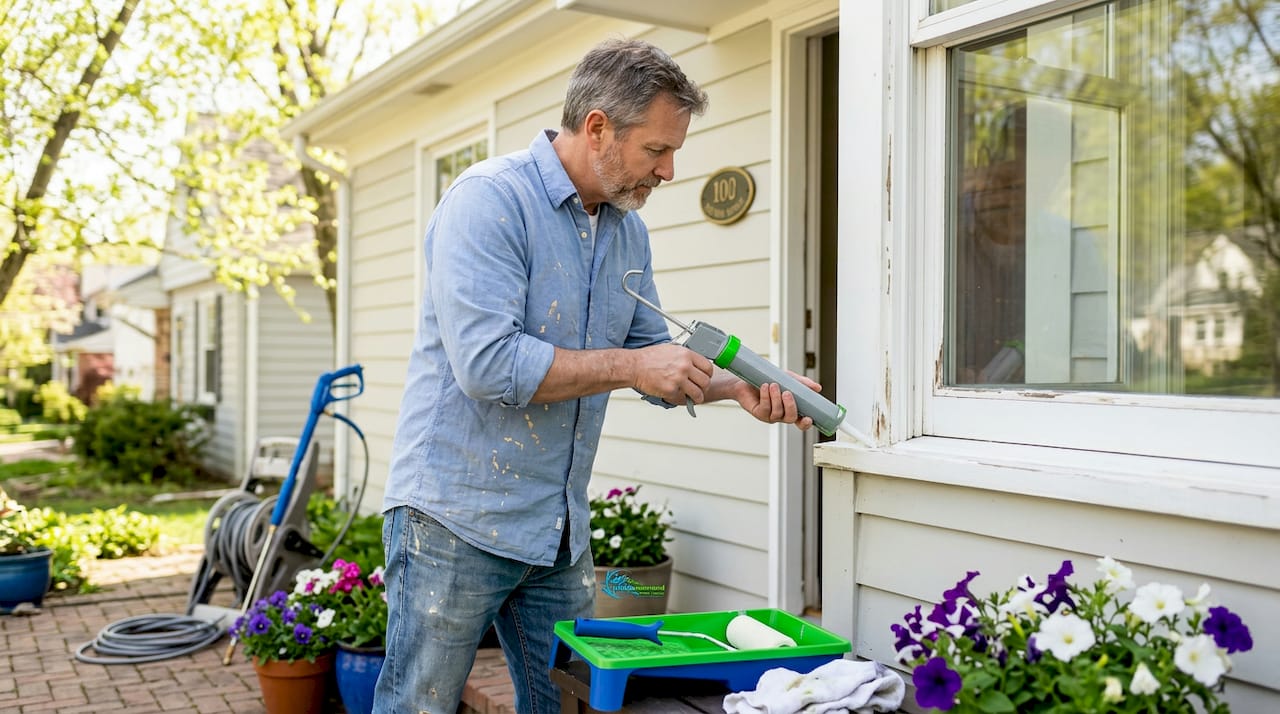
Exterior sealing is the process of applying protective sealants, coatings, or membranes to outdoor surfaces to block moisture infiltration, prevent air leaks, and shield materials from environmental damage. The industry term for this practice is “exterior waterproofing and sealant application,” and it covers everything from caulking window frames with GE Sealants to coating a foundation wall with a polyurea membrane. Homes that skip this step face repair costs 2 to 3 times higher than protected properties. That single number explains why exterior sealing belongs at the top of every property maintenance checklist, not at the bottom.
What is exterior sealing and what materials does it use in 2026?
Exterior sealing covers four primary sealant chemistries: silicone, acrylic, polyurethane, and polyurea. Each serves a different surface type and performance requirement, so choosing the wrong one is one of the most common and costly mistakes homeowners make.
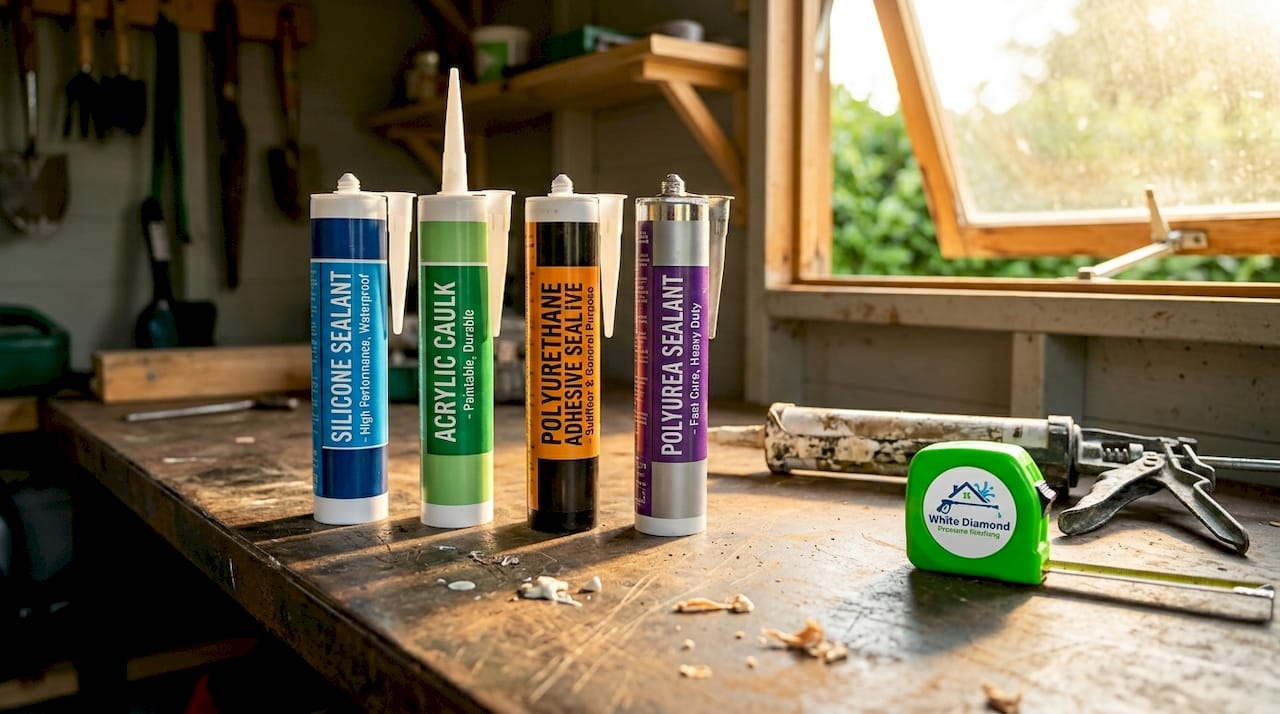
Silicone sealants stay flexible across a wide temperature range and bond well to glass, metal, and masonry. They resist UV degradation better than most alternatives, which makes them the standard choice for window and door perimeters. Acrylic sealants are paintable and easier to apply, but they shrink slightly as they cure and work best on wood trim and siding joints where movement is minimal. Polyurethane sealants offer superior adhesion to concrete and masonry and handle foot traffic and joint movement well, making them the go-to for driveways, expansion joints, and horizontal surfaces. Polyurea coatings cure quickly into seamless, flexible membranes that bridge cracks and withstand movement caused by soil and temperature shifts, which is why they dominate foundation and below-grade applications.
Beyond chemistry, exterior sealing techniques split into two broad categories: film-forming and penetrating.
| Sealer type | How it works | Best surface | Reapplication interval |
|---|---|---|---|
| Film-forming | Creates a surface layer that repels water | Pavers, wood decks, brick | Every 1 to 3 years |
| Penetrating | Absorbs into pores and reacts chemically | Concrete, stone, masonry | Every 3 to 7 years |
| Membrane systems | Applied as a liquid or sheet over substrate | Foundations, below-grade walls | 10 to 20+ years |
| Caulk and foam | Fills gaps, joints, and penetrations | Windows, doors, utility entries | Every 3 to 5 years |
Film-forming sealers need reapplication every 1 to 3 years, while penetrating sealers last 3 to 7 years on foundations and concrete. That difference in lifespan directly affects your maintenance budget, so matching sealer type to surface is a financial decision as much as a technical one.
Pro Tip: Before loading your caulk gun, test the sealant flow on a piece of cardboard. Professionals tool the bead within 10 to 15 minutes to get a smooth, consistent seal. If the material skins over on cardboard in under five minutes, the ambient temperature or humidity is too high for reliable application.
What are the main benefits of exterior sealing for homeowners?
Exterior sealing delivers measurable returns across energy costs, structural longevity, and property value. These are not abstract benefits. They show up in utility bills, inspection reports, and repair invoices.
Energy savings are immediate. Proper exterior air and water sealing reduces energy costs by 11% and blocks up to 90% of moisture infiltration. That 11% reduction comes from eliminating the drafts that force your HVAC system to work harder. Sealing gaps around windows, doors, and utility penetrations with products like GE Sealants foam or a quality silicone caulk is one of the highest-return improvements you can make per dollar spent.
Moisture damage is the biggest financial threat to any structure. Water that enters through unsealed joints or porous masonry feeds mold, rots wood framing, and corrodes metal fasteners. Moisture infiltration and trapped pollutants cause exterior surface deterioration that leads to costly structural repairs. Sealing stops that process before it starts.
The benefits extend beyond the obvious:
- Pest control. Cold air and pests enter through gaps around doors, windows, and utility lines. Sealing these entry points with expanding foam or silicone eliminates the access routes that ants, rodents, and insects use.
- Surface lifespan. Sealed concrete, masonry, and siding resist freeze-thaw cycles, UV degradation, and staining far longer than unsealed surfaces. A sealed driveway or paver patio can last twice as long before requiring replacement.
- Property value. Regular exterior cleaning and sealing significantly protects property value and extends the lifespan of materials. Buyers and appraisers notice the condition of exterior surfaces, and sealed, well-maintained surfaces signal a cared-for property.
“Exterior sealants are first-line asset protection, not cosmetic fixes. They extend material lifespan and prevent expensive repairs that compound over time.”
How to properly prepare and apply exterior sealants
Preparation determines whether a sealant lasts two years or ten. Skipping prep is the single most common reason sealant fails prematurely, and it is entirely avoidable.
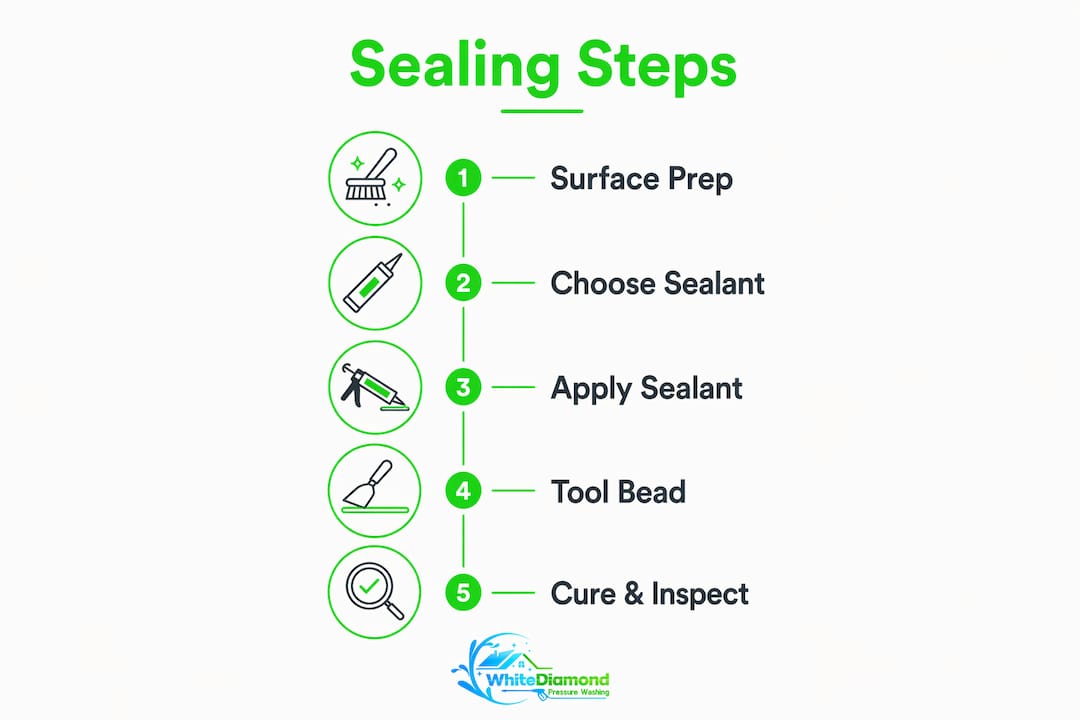
Follow these steps before applying any exterior sealant:
- Clean the surface thoroughly. Dirt, algae, mildew, and old sealant residue all prevent adhesion. Pressure washing or soft washing removes biological growth and loose material. Whitediamondpressurewashing recommends reviewing a sealant application guide to understand exactly what clean means for each surface type before you apply anything.
- Repair cracks and remove old sealant. Use a utility knife or oscillating tool to cut out deteriorated caulk completely. Fill cracks in masonry or concrete with a compatible patching compound before applying the finish sealant.
- Check environmental conditions. Ideal application conditions require dry weather and ambient temperature above 45°F for proper adhesion and curing. Applying sealant to a damp surface or in cold weather causes adhesion failure within months.
- Use backer rod for wide gaps. Any gap wider than 1/4 inch needs a foam backer rod inserted first. The rod controls the depth of the sealant bead and prevents three-sided adhesion, which causes the sealant to tear under movement.
- Apply and tool the bead immediately. Load the caulk gun, apply a consistent bead, and smooth it with a wet finger or caulk tool within 10 to 15 minutes. Do not apply in direct sunlight. Sealants applied in direct sunlight skin over prematurely, leading to poor bonding and failure.
- Allow full cure time before exposure. Most silicone and polyurethane sealants need 24 to 48 hours to cure fully. Rain or temperature drops during this window can ruin the bond.
Pro Tip: Adding silica sand to acrylic sealers on concrete and driveway surfaces prevents slippery conditions when wet. Mix at a ratio of about 1 pound of sand per gallon of sealer for walkways and pool decks.
Professional installation makes sense for foundation walls, below-grade surfaces, and any area where water intrusion has already caused damage. The cost of a professional assessment is far lower than the cost of redoing failed DIY waterproofing.
What exterior sealing methods work best for foundations?
Foundation sealing is where the stakes are highest and where the distinction between exterior sealing methods matters most. The International Residential Code (IRC R406) draws a clear line between dampproofing and waterproofing. Dampproofing resists soil moisture under normal conditions. Waterproofing resists hydrostatic pressure, which is the force of water pushing against a wall from saturated soil. Most homes only receive dampproofing at construction, which is insufficient in areas with high water tables or heavy rainfall.
Positive-side exterior waterproofing is the only reliable long-term method to prevent hydrostatic pressure water intrusion. It works by applying a membrane or coating to the outside face of the foundation wall, stopping water before it contacts the structure. Interior drainage systems and sump pumps only remove water after it has already penetrated the wall. That distinction matters enormously for long-term structural health.
| Method | Side of wall | Stops water entry | Handles hydrostatic pressure | Typical lifespan |
|---|---|---|---|---|
| Dampproofing (asphalt) | Exterior | Partially | No | 5 to 10 years |
| Penetrating sealer | Exterior | Yes | Partially | 3 to 7 years |
| Polyurea membrane | Exterior | Yes | Yes | 20+ years |
| Interior sealant paint | Interior | No | No | 1 to 3 years |
| Sump pump system | Interior | No | Manages only | Ongoing maintenance |
Interior drainage and sump pumps only remove water after it penetrates foundation walls. Exterior waterproofing prevents water entry at the source. That is the core argument for investing in positive-side membrane systems rather than relying on interior fixes.
Penetrations, cold joints, and tie holes are the most common failure points in any foundation waterproofing system. Reinforcing these areas before membrane application is non-negotiable for lasting results. Use a compatible hydraulic cement or polyurethane injection at all penetrations, then apply the membrane over the treated area while it is still tacky for maximum adhesion.
“Positive-side exterior foundation waterproofing is the only true preventive method against wet basements. Interior solutions manage damage after the fact. They do not prevent it.”
Key takeaways
Exterior sealing protects property value, reduces energy costs by up to 11%, and prevents moisture damage that costs 2 to 3 times more to repair than the sealing itself.
| Point | Details |
|---|---|
| Sealer type determines lifespan | Match silicone, polyurethane, or polyurea to the surface for results that last 3 to 20+ years. |
| Preparation drives durability | Clean, dry, and repaired surfaces are the only foundation for sealant that holds long-term. |
| Energy and cost savings are real | Proper air and water sealing cuts energy costs by 11% and blocks up to 90% of moisture infiltration. |
| Foundation waterproofing requires exterior application | Positive-side membranes stop hydrostatic pressure; interior sealers and sump pumps only react to water already inside. |
| Neglect multiplies repair costs | Homes without sealing face repair bills 2 to 3 times higher than those with regular maintenance. |
Why I think most homeowners underestimate exterior sealing
After years of working with property owners across Citrus County, I have seen the same pattern repeat itself. A homeowner notices a damp basement wall or a drafty window frame and reaches for a tube of caulk from the hardware store. They apply it over the old, cracked sealant without cleaning the surface, in August heat, in direct afternoon sun. Six months later, the bead has peeled away and the problem is worse than before.
The mistake is not using the wrong product. The mistake is treating sealing as a quick fix rather than a system. Every surface on your home’s exterior is part of a moisture management assembly. When one component fails, water finds the next weak point. I have watched homeowners spend thousands on interior basement waterproofing systems only to discover the water was entering through an unsealed utility penetration two feet above grade.
The exterior maintenance checklist approach works because it forces you to look at the whole picture before touching a single tube of sealant. Inspect first. Clean second. Repair third. Seal fourth. That sequence is not optional. Skipping any step is how you turn a $200 maintenance task into a $4,000 repair.
What I tell every property manager I work with is this: sealing is not a cosmetic task. It is asset protection. The surfaces you seal today are the repair bills you avoid in three years. That framing changes how people prioritize their maintenance budgets, and it should.
— Bobby
Protect your home with professional exterior cleaning and sealing

Effective exterior sealing starts with a surface that is genuinely clean. Dirt, mold, and algae left under a sealant coat cause adhesion failure within months, which means the prep work matters as much as the product. Whitediamondpressurewashing provides professional pressure washing and soft washing services across Citrus County that prepare every surface for lasting sealant application. From driveways and walkways to siding and foundations, the team uses industry-approved methods to remove biological growth and contaminants before any protective coating goes down. If you want sealing that actually holds, start with a professional clean and get a free estimate from Whitediamondpressurewashing today. You can also explore the benefits of exterior cleaning to see exactly what a clean surface means for your property’s long-term value.
FAQ
What is exterior sealing in simple terms?
Exterior sealing is the application of sealants, coatings, or membranes to outdoor surfaces to block moisture, air, and pests from entering a structure. It covers everything from caulking window frames to waterproofing foundation walls.
How long does exterior sealant last?
Lifespan depends on the product type. DIY acrylic sealers last 3 to 5 years, penetrating sealers last 3 to 7 years, and advanced polyurea membrane systems can last 20 or more years with proper application.
What is the difference between exterior sealing and waterproofing?
Exterior sealing is the broader practice covering all sealant applications to outdoor surfaces. Exterior waterproofing specifically refers to systems designed to resist hydrostatic pressure, particularly on foundation walls, and is governed by standards like IRC R406.
Can I apply exterior sealant myself?
Yes, for surfaces like window frames, door perimeters, and driveways. Professional installation is advisable for foundation walls and any area with active water intrusion, where improper application can make the problem significantly worse.
What temperature is required for exterior sealant application?
Ambient temperature must be above 45°F and the surface must be dry for proper adhesion and curing. Applying sealant in cold or wet conditions causes premature failure regardless of product quality.
Recommended
- Surface sealing: protect and enhance your outdoor surfaces – white-diamond-pressure
- Sealant Application After Washing: A Homeowner’s Guide – white-diamond-pressure
- What is driveway sealing? Complete 2026 guide for homeowners – white-diamond-pressure
- Preventative Exterior Cleaning: Protect Your Home – white-diamond-pressure
One thought on “What Is Exterior Sealing: A Homeowner’s 2026 Guide”